IRIS-T SLM
Germany's medium-range air-defense missile system, combat-proven in Ukraine — a road-mobile, vertical-launch SAM built to engage aircraft, cruise missiles, and drones out to 40 km, and rapidly proliferating across European and allied forces.
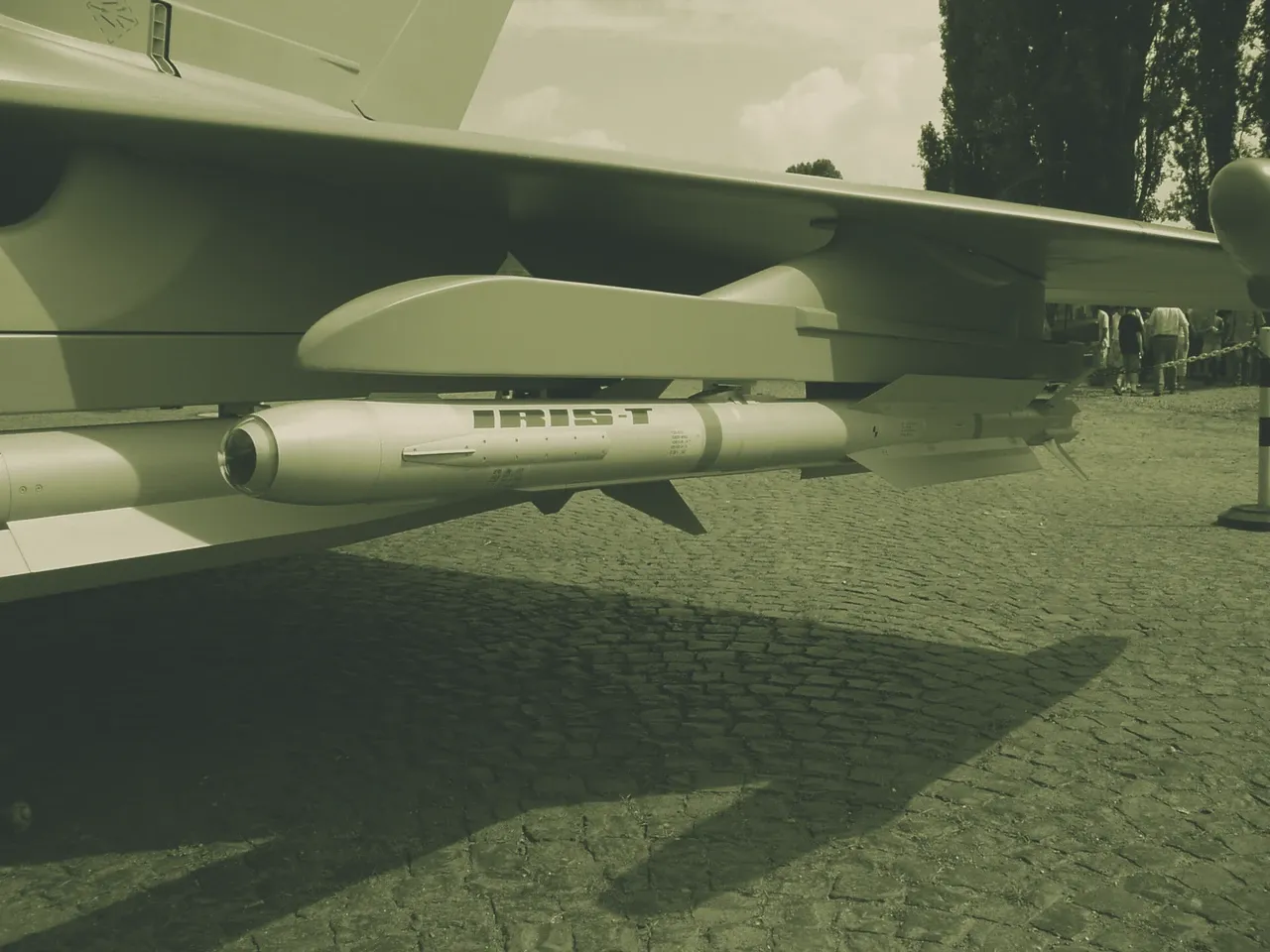
Germany's medium-range air-defense missile system, combat-proven in Ukraine — a road-mobile, vertical-launch SAM with a highly successful record against cruise missiles and unmanned systems.
Overview
The IRIS-T SLM (Surface-Launched Medium-range) is a German mobile medium-range surface-to-air missile system developed by Diehl Defence and HENSOLDT. Part of the broader IRIS-T SL family, it uses a passive-infrared-seeking interceptor derived from the widely fielded IRIS-T air-to-air missile and an advanced 360-degree AESA radar. The system was rushed into the hands of Ukraine in October 2022—its first operational user—where it quickly proved itself against Russian cruise missile and drone barrages and became the most combat-validated Western medium-range SAM since the Gulf War. A dozen allied nations have followed with orders, making the SLM a cornerstone of European integrated air and missile defence.
Development
Diehl Defence developed the IRIS-T SLM as a surface-launched evolution of the IRIS-T air-to-air missile, integrating a larger booster, a vertical-cold-launch canister, and the HENSOLDT TRML-4D radar. The system was first shown in the mid-2010s and completed live-fire tests by 2021. When Russia’s full-scale invasion of Ukraine created an urgent need for modern point and area air defence, Berlin expedited delivery of the first fire unit; it arrived in Ukraine in October 2022, making the SLM an operational system years ahead of its planned entry into German service, as documented by Army Recognition. Serial production for both Ukraine and a rapidly growing order book from NATO and allied states is now underway at Diehl.
Design & capabilities
The IRIS-T SLM is built around a wheeled 8×8 transporter-erector-launcher carrying eight canisterized missiles and a separate fire-control vehicle equipped with the HENSOLDT TRML-4D AESA radar. The radar provides 360-degree coverage and high automation, enabling the battery to search, track, and engage multiple targets simultaneously. Each missile uses an imaging infrared seeker with thrust-vector control; after a cold-launch ejection it ignites its motor and executes a high-off-boresight intercept. The combination of passive IR homing, high agility, and rapid reaction makes the system particularly effective against low-flying cruise missiles and drones.
The missile’s kill envelope is approximately 40 km in range and up to 20 km in altitude, though Diehl markets a “system range” of 60 km when the radar’s detection capability is included. The primary target set covers aircraft, helicopters, cruise missiles, and unmanned aerial systems. A limited tactical-ballistic-missile defence capability is frequently cited by the manufacturer, but this remains contested in open-source analysis. The IRIS-T SL family also includes the short-range SLS variant and the extended-range SLX under development.
Variants
- IRIS-T SLM — Medium-range variant with ~40 km engagement envelope.
- IRIS-T SLS — Short-range variant, often integrated on lighter vehicles for point defence.
- IRIS-T SLX — Extended-range variant in development, targeting a substantially larger engagement footprint.
Combat record / operational use
Ukraine has been the sole combat user of the IRIS-T SLM since October 2022. Diehl Defence stated that by June 2024 the system had achieved over 240 confirmed intercepts against Russian cruise missiles and Shahed-type loitering munitions, with Ukrainian operators reporting an intercept rate near 99 % — a wartime claim that has not been independently audited but is consistent with the system’s high reported availability and sortie rates. The batteries have been deployed to protect cities such as Kyiv and critical infrastructure, and their performance has spurred a broad allied procurement wave. No IRIS-T SLM has been visually confirmed destroyed in combat, though the true operational loss picture remains unknown.
Advantages
- World-leading combat-validated hit rate against massed cruise-missile and drone attacks.
- Passive infrared seeker is immune to traditional radar jamming and provides fire-and-forget engagement.
- Highly automated 360-degree TRML-4D radar enables rapid response and multi-target engagement with a small crew.
- Road-mobile 8×8 launchers are quickly relocated, complicating enemy targeting.
- Strongly backed by a large and diversified order book, signalling a robust production pipeline.
Drawbacks / limitations
- Limited anti-ballistic-missile capability; no verified combat intercept of a theater ballistic missile exists, and the IR-seeker’s effectiveness against fast-moving ballistic targets is analytically questionable.
- Maximum engagement range (~40 km) is shorter than that of long-range systems such as Patriot or SAMP/T, limiting the defended area per battery.
- Interceptor unit cost (€1–4.4 million) is high relative to the cheap drones it often faces, contributing to the cost-exchange challenge.
- Dependence on a single German manufacturer (Diehl) and radar supplier (HENSOLDT) creates a potential bottleneck if demand continues to surge.
Counterparts
- Patriot PAC-3 (USA) — the Western long-range standard, with a broader missile-defence envelope.
- S-400 Triumf (Russia) — Moscow’s flagship long-range layered SAM, a frequent adversary in the Ukraine theatre.
Outlook
The IRIS-T SLM has moved from a niche German program to one of the fastest-proliferating air-defence systems in the Western inventory. With orders from more than ten nations—including the Baltic states, Bulgaria, Austria, and Norway—and continuous wartime feedback driving incremental improvements, the SLM will be the backbone of European medium-range air defence through the 2030s. The major open question is whether its future SLX variant can close the gap toward a credible anti-ballistic capability and compete with the next-generation SAMP/T NG and the Patriot successor.
Key specifications
| Spec | Value |
|---|---|
| Type | Mobile medium-range SAM system |
| Engagement range | ~40 km (missile envelope); claimed system range ~60 km |
| Engagement altitude | ~20 km |
| Target set | aircraft, helicopters, cruise missiles, UAS; limited TBM (contested) |
| Interceptor(s) | IRIS-T SL (SLM, SLS, SLX in development) |
| Radar / fire control | HENSOLDT TRML-4D AESA (360°) |
| Reaction time | not publicly established (high automation claimed) |
| Simultaneous engagements | multiple (360° coverage, high automation) |
| Mobility | wheeled 8×8 TEL; road-mobile |
Sources
- Army Recognition — IRIS-T SLM Medium-Range Air-Defense Missile System Technical Data. https://www.armyrecognition.com/military-products/army/air-defense-systems/air-defense-vehicles/iris-t-slm-medium-range-air-defense-missile-system-technical-data
- Großwald Systems — IRIS-T SLM: Range, Specs, Operators & Combat Record. https://www.grosswald.org/grosswald-systems-iris-t-slm-surface-to-air-missile-systems/
- Norsk luftvern — Assessing the IRIS-T SL’s Tactical Ballistic Missile Defense Capability: A Critical Review. https://norskluftvern.com/2025/08/01/assessing-the-iris-t-sls-tactical-ballistic-missile-tbm-defense-capability-a-critical-review/
- Diehl Defence — Drone Defence / Counter-UAS (IRIS-T SLM). https://new.diehl.com/defence/en/products/drone-defence-counter-uas
- Global Military — IRIS-T SLM Specs & Operators (2026). https://www.globalmilitary.net/missiles/iris-t-slm/