Trump Gives Up on Ukraine: America Keeps Its Missiles as Kyiv Runs Out of Patriots
On Newsmax, Trump said the U.S. is keeping its new munitions and will let allies buy again once it is "really stocked." Kyiv, out of Patriot interceptors, cannot wait that long.
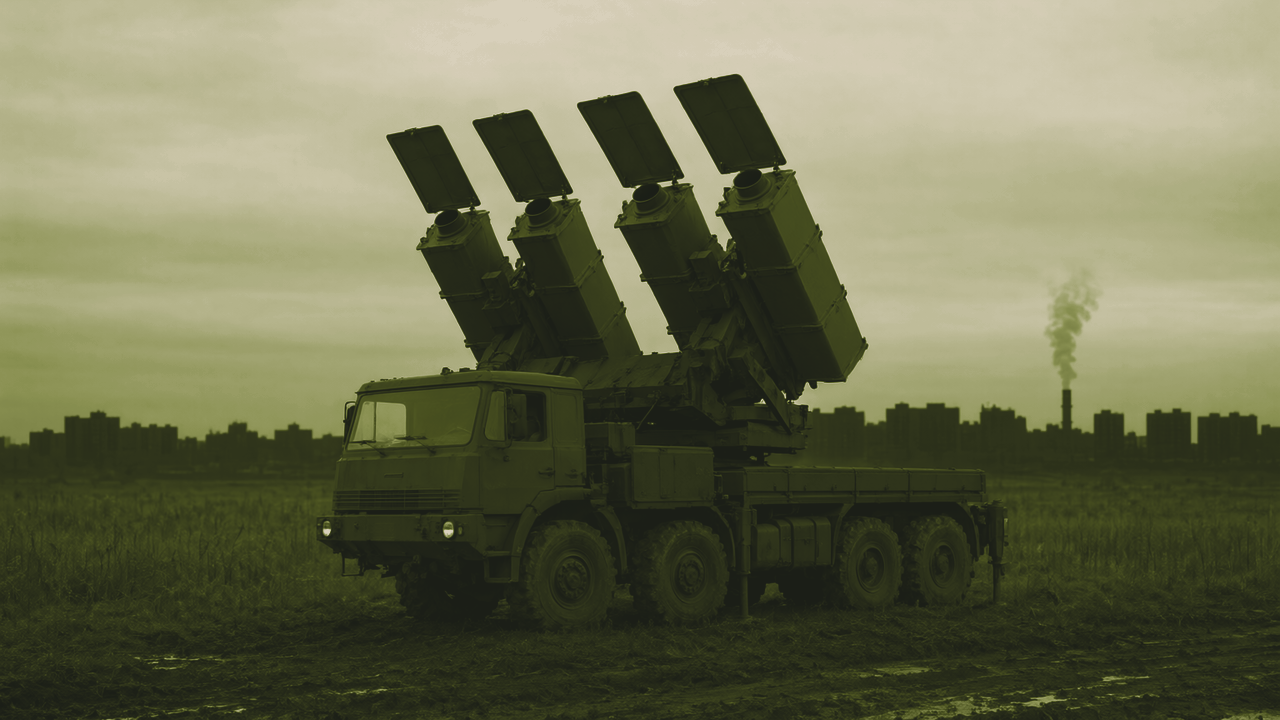
On Newsmax, Trump said the U.S. is keeping its new munitions and will let allies buy again once it is "really stocked." Kyiv, out of Patriot interceptors, cannot wait that long.
Donald Trump has given up on Ukraine, and in his Oct. 15 interview with Newsmax he explained the mechanics. Speaking from the White House on "Finnerty," he recalled telling the European Union, "I'm not going to give you anything. You have to pay," and said the arrangement had worked: "They've been paying us and we send them munitions and that works." Then came the line that matters: "But over the last period of time, we just take the munitions for ourselves because we have to have for ourselves. ... And once we are stocked, really stocked, we will start letting our allies buy them from us."
Trump named no country in that sentence, no weapon and no date, and he announced no formal suspension. The context leaves little doubt about what he meant. He had just accused Joe Biden of handing Ukraine "massive amounts of patriots, of tomahawks of everything" without making anyone pay. The paying customer he described is Europe, which buys American weapons for Kyiv mainly through NATO's Prioritized Ukraine Requirements List, or PURL. The scheme delivered $6.7 billion in weaponry in its first year, and direct U.S. military aid has been suspended since Trump's inauguration, the Kyiv Independent reported. Earlier in the interview Trump was blunter: "We're building up ammunition very, very rapidly, by the way. We're keeping it for ourselves."
The words capped a week of pressure. Trump announced a diesel deal with Vladimir Putin on Oct. 9 and said on Oct. 10 that "it's time for Ukraine to get a new president." That weekend the State Department and the Pentagon warned Kyiv and European capitals that Washington could suspend intelligence sharing and European purchases of U.S. weapons for Ukraine unless Kyiv stopped striking Russian energy sites, two European officials told CNN.
Ukraine struck Rosneft's Ryazan refinery on Oct. 15 anyway, after Volodymyr Zelenskyy told the Financial Times: "The block (on attacking refineries) is out. We're done." Trump called the strikes "a disgrace," said "I'm not a big fan of Zelenskyy" and judged him "more difficult to deal with than Putin." Of any settlement, he said: "they're not going to do it with him."
The same day, a source told CNN that Ukraine had run out of Patriot interceptors, among the few weapons able to stop Russian ballistic missiles. Reuters and AP led their accounts of the interview with the insults and left out the munitions passage. That passage is the policy news.
Frequently Asked Questions
What did Trump say about selling weapons to U.S. allies?
In his Oct. 15 Newsmax interview, Trump said the United States has recently been taking new munitions "for ourselves" and that "once we are stocked, really stocked, we will start letting our allies buy them from us." He named no country, weapon or date and announced no formal suspension.
What is PURL, and why does it matter for Ukraine?
PURL, NATO's Prioritized Ukraine Requirements List, lets allies pay for U.S. weapons that go to Ukraine. It delivered $6.7 billion in weaponry in its first year, the Kyiv Independent reported. Direct U.S. military aid has been suspended since Trump's inauguration. A NATO official said on Oct. 12 that PURL supplies were still arriving.
Has Ukraine run out of Patriot interceptors?
A source told CNN on Oct. 15 that Ukraine has run out. A Ukrainian official told The Washington Post that only a couple remained after an Oct. 7 supply of ten was used up. Patriot is one of the few systems able to stop ballistic missiles.
Why did Trump call Ukraine's refinery strikes a disgrace?
Trump said the strikes push up world oil and diesel prices. Ukraine resumed them on Oct. 15 with an attack on Rosneft's Ryazan refinery, after Zelenskyy said Russia kept hitting Ukraine's power grid during Trump's energy ceasefire.
Who ordered the Starshield restrictions in Ukraine?
Two U.S. officials and a Western official told Reuters the order came from inside the White House. A senior U.S. official denied the request came from Trump. Terminals were capped at 100 mph (160 kph), which Ukrainian officials say is too slow for interceptor and mid-range strike drones.
Which Kremlin talking points did Trump repeat?
On Newsmax, Trump said Zelenskyy does not want to settle, that Ukraine needs an election, that its refinery strikes are a disgrace, that the war would not have happened without a rigged 2020 election, and that U.S. missiles sent to Ukraine were sold on the open market. Russian officials, including Putin, Peskov and Lavrov, have made each of those arguments.
AI-generated summary, reviewed by an editor. More on our AI guidelines.
Read next — from the Lexicon
Below this point
- Oct. 9 to 14: a diesel deal, a new-leader demand, threats to PURL
- 600 PAC-3 MSE a year: what "really stocked" means
- Ukraine's last Patriot interceptors
- Moscow reads the week
- Brussels and Nov. 3
- What to watch
- Watch the interview
Oct. 9 to 14: a diesel deal, a new-leader demand, threats to PURL
The pressure came as a string of dated, public decisions. Trump announced his diesel deal with Putin on Oct. 9, and Russia lifted a diesel export ban that had been in place since July. Mark Galeotti, who heads the Mayak Intelligence consultancy, called the deal an "astonishing birthday present" for Putin, who had turned 74 two days earlier. On Oct. 10 Trump said Ukraine should find "a new leader who can make a deal." On Oct. 11 he declared on Truth Social: "Effective immediately, there is an ENERGY CEASEFIRE in the War between Russia and Ukraine. Both parties have agreed. Do not break it!"
The threats came the same weekend. "They called all the top military officials with threats," a Ukrainian official told the Kyiv Independent. "They're telling everyone that they're going to turn off both the intelligence sharing and PURL." Another official said the calls reached Pavlo Palisa, the deputy head of the President's Office for military affairs, and Mykhailo Drapatyi, Ukraine's commander-in-chief. A U.S. official told CNN that American negotiators had reminded Kyiv that Washington supplied munitions and intelligence, so Ukraine should not take actions that hurt American consumers.
Then a warning failed to arrive. When Russia fired ballistic missiles at Kyiv early on Oct. 13, Ukraine "received no advance warning from our partners," Zelenskyy said. U.S. officials blamed "bad weather," sources told CBS News. Ukrainian officials rejected that explanation, though the same sources said the U.S. system appeared to work again when the next wave came early on Oct. 14 and that intelligence sharing had not stopped overall. That second attack, more than 39 ballistic missiles by Zelenskyy's count, targeted all three of Kyiv's combined heat and power plants. Trump denied a cutoff: "We are helping them, and we are sharing intel." The cause of the gap is disputed. Its timing, days after the threats, is not.
Starshield followed. On Oct. 14 the terminals of Ukraine's military Starlink service were capped at 100 mph, or 160 kph, which Ukrainian officials say is too slow for mid-range strike drones and for the interceptor drones they fly against jet-powered Shaheds. Two U.S. officials and a Western official told Reuters the order came from inside the White House; a senior U.S. official denied that the request came from Trump. Elon Musk, whose SpaceX maintains the satellites, wrote that "any limits on speed or usage are decided by the US military and ultimately POTUS."
600 PAC-3 MSE a year: what "really stocked" means
"Really stocked" is a production schedule, and it runs in years. Bloomberg reported in September that Washington had warned allies of delivery delays of up to five years as it rebuilds stocks spent in the war against Iran, which the United States and Israel launched on Feb. 28. The United States is estimated to have used more than half of its most advanced Patriot variants and a third of its Tomahawks. The Congressional Budget Office said it had probably used as much as two-thirds of its missile-defense interceptor inventory since June 2025. Germany's order for Tomahawks and the Typhon launcher is unlikely to be filled within five years.
Lockheed Martin is working to raise annual output of the PAC-3 MSE, the most advanced Patriot interceptor, from about 600 to 2,000. Even at the higher rate, new missiles go first to an American inventory that, by the CBO's estimate, may have lost up to two-thirds of its interceptors. Allies come after that rebuild, by Trump's own account.
In September Bloomberg found one exception to the delays: weapons Europe had bought for Ukraine through NATO and EU channels were still being delivered. With direct U.S. aid suspended, that exception is how American weapons still reach Ukraine. Trump's Oct. 15 formula, munitions for America first and allied purchases once the shelves are full, would close it. He did not say he had done so. Three days before the interview, a NATO official said that "support for Ukraine via PURL continues to arrive." Read beside the weekend threats to PURL, the president's answer tells Europe where its orders now stand.
Several of Trump's answers on Oct. 15 track statements Russian officials have made for years. The comparison below sets them side by side.
Same script: the Kremlin line and Trump on Newsmax
Kyiv is the obstacle to peace
Accused Ukraine's leadership and Zelenskyy personally of "not wanting to make peace."
"He doesn't want to settle. He says he wants to settle, but he doesn't." And: "I find Zelenskyy to be more difficult to deal with than Putin."
Record: On Oct. 12 Peskov said Moscow does "not want a ceasefire" and rejected Zelenskyy's offer of a 60-day truce to hold elections.
Zelenskyy has to be replaced
"A temporary administration could be introduced in Ukraine under the auspices of the U.N, the United States, European countries and our partners," he said, to "hold democratic elections and bring to power a capable government."
"I think you need an election." Five days earlier: "I think it's time for Ukraine to get a new president."
Record: Ukrainian law bars elections in wartime. Moscow calls Zelenskyy illegitimate on that basis.
Ukraine's refinery strikes are the provocation
Called Ukraine's strikes on oil facilities "a direct and crude challenge to President Trump."
"I think that's a disgrace." Zelenskyy, he said, is "not doing a good service for the world."
Record: During Trump's "energy ceasefire," Russia fired more than 39 ballistic missiles overnight into Oct. 14, by Zelenskyy's count, in an attack that targeted all three of Kyiv's combined heat and power plants.
The war traces back to a "stolen" 2020 election
"If he had been president, if they hadn't stolen victory from him in 2020, the crisis that emerged in Ukraine in 2022 could have been avoided."
"If the election weren't rigged ... That war would have never happened."
Record: Trump lost the 2020 election. AP called Putin's remark his bluntest endorsement yet of Trump's refusal to accept that defeat.
Western weapons leak onto the black market
Claimed one-fifth of Western weapons sent to Ukraine ended up on the black market for resale to terrorists and rebel groups.
"Biden was giving them missiles, and they were being sold on the open market right after they went to Ukraine."
Record: "What we're not seeing is any evidence of significant diversion," Pentagon policy chief Colin Kahl told Congress in 2023. A 2024 study by the Global Initiative Against Transnational Organized Crime found very little evidence that Western weapons sent to Ukraine reach the black market.
2014 was Washington's doing
Described Ukraine's 2014 revolution as a CIA-engineered coup and accused the West and Kyiv of starting the war that year.
"It really began with Barack Hussein Obama when they made them give up Crimea."
Record: Russian troops seized Crimea in 2014, after the Maidan uprising ousted Ukraine's pro-Russian president.
Trump quotes are from Newsmax's "Finnerty" broadcast of Oct. 15, 2026, except the Oct. 10 remark, reported by AP. Russian statements as reported by Meduza, AP, Reuters, Politico Europe and The Moscow Times.
Ukraine's last Patriot interceptors
The supply question has already become a battlefield shortage. The source who spoke to CNN said "almost all the ballistic missiles from the last strike were not intercepted due to lack of the (interceptor) missiles." A Ukrainian official told The Washington Post that "only a couple" of Patriot missiles remained after an Oct. 7 supply of ten was used up. The accounts differ on the last few rounds and agree on the condition: Kyiv cannot meet repeated ballistic salvos with what it holds.
Zelenskyy has tied the refinery campaign to that shortage. He told the Financial Times he could halt strikes on Russian energy only if Ukraine received more Patriot interceptors at a minimum, and that Washington answered his request for more air defense by weakening Starlink's service. The Patriot production licence he announced in September never materialized, CNN found.
The drones widen the gap. Russia launched more than 850 drones between midnight and Thursday morning, Zelenskyy said, "at a time when the speed of our defensive capabilities is being artificially restricted." Ukraine's chargé d'affaires in Washington, Denys Sienik, explained why the Starshield cap mattered: "Speed is critical for logistics and for intercepting the jet-powered Shahed drones." On Thursday he told NBC News that previous speeds had resumed for the moment, and told CNN that service had improved without being fully restored.
Here the technology and the front meet. Ukraine's defense against Russia's winter air campaign rests on American-controlled inputs: Patriot interceptors, which Europe can buy for Kyiv but cannot yet build under licence; launch warnings that rely on U.S. satellite detectors; and Starshield, which, Musk wrote, the U.S. government owns and controls. In one week Washington threatened or throttled each of them.
Moscow reads the week
Moscow drew its conclusions before the interview aired. Trump's call for a new Ukrainian president topped Russian state television news, AP found. Galeotti judged that casting Zelenskyy as the obstacle to peace was "benefit No. 1 for Putin." Tatiana Stanovaya of the Carnegie Russia and Eurasia Center argued that Putin would see "more favorable conditions for intensifying military pressure, aimed primarily at triggering an internal political breakdown in Ukraine rather than achieving a battlefield breakthrough." Dmitry Medvedev, deputy head of Russia's Security Council, kept the emphasis on force: "Only our guys, ballistics and Geranium (drones) make victory closer."
Two of Trump's factual claims on Newsmax fail against the record. He said Biden gave Ukraine "probably $350 billion worth of equipment and cash." The special inspector general overseeing U.S. support counted more than $187 billion made available from February 2022 through June 2025, a span that includes the first months of Trump's own term. The Kiel Institute tallied about $133 billion in direct bilateral U.S. aid over the same period. Trump also said missiles "were being sold on the open market right after they went to Ukraine." Colin Kahl, then the Pentagon's policy chief, told Congress in 2023: "What we're not seeing is any evidence of significant diversion."
Brussels and Nov. 3
Europe now pays for Ukraine's American weapons, and Washington decides whether they ship. Kaja Kallas, the EU's foreign policy chief, drew the line this week: "We see that we have to pressure the aggressor to stop the war, not the victim to surrender." She added: "Squeezing Ukraine is not the right approach." British Defence Secretary Wes Streeting, reassured by Defense Secretary Pete Hegseth that Starlink access had been restored, said: "We need President Trump engaged on Ukraine." Zelenskyy took his case for air defense to the EU summit in Brussels.
Washington's clock runs to Nov. 3. Diesel prices have hit records since the Iran war began, Reuters noted, and Republicans face midterm elections in less than three weeks. Trump told Newsmax the Iran war "will be over very soon" and predicted that "oil will go dropping like a rock." His diesel deal and his demands on Ukraine's refinery strikes serve that price target while Kyiv tries to keep its power grid running into winter.
Zelenskyy told Piers Morgan: "It's painful when President Trump chooses one side, not our side." The week's record backs him. A president whose officials threatened to cut off intelligence and PURL, whose White House ordered the cap on Ukraine's drone link by the account of two U.S. officials, who struck a deal to buy the aggressor's diesel and who wants the defender to change its president has not stayed in the middle. Trump has given up on Ukraine. Europe is left paying for weapons that, in Trump's words, America will sell again once it is "really stocked."
What to watch
- Whether the White House or the Pentagon confirms or denies a pause in PURL deliveries, and whether NATO's Oct. 12 assurance still holds.
- The next Patriot interceptor delivery to Ukraine, if one comes, and any movement on licensed European production.
- Starshield speed limits for Ukraine's interceptor and strike drones.
- Whether U.S. launch warnings arrive before Russia's next ballistic salvo.
- The Pentagon's answer to the bipartisan senators who asked it to investigate the Starlink and intelligence disruptions.
- The Nov. 3 midterms, and whether Trump's position on Ukraine changes after them.
Watch the interview
Newsmax's 10-minute clip of Trump's interview with host Rob Finnerty. The munitions passage starts at about the five-minute mark.

Marcus Schuler
Marcus Schuler edits BattlePolicy, a daily defense-technology brief connecting the companies and capabilities behind modern war to the contest among Europe, the US, Russia, and China.