Ukraine Cut Direct Chinese Drone-Part Imports to 28%. The Rest Sits Where Pentagon Rules Tighten in 2027
Ukrainian drone makers have replaced many Chinese parts with their own. Magnets, battery cells, chips and thermal sensors still come from China, and magnets are the first of those parts US sourcing rules police, from Jan. 1.
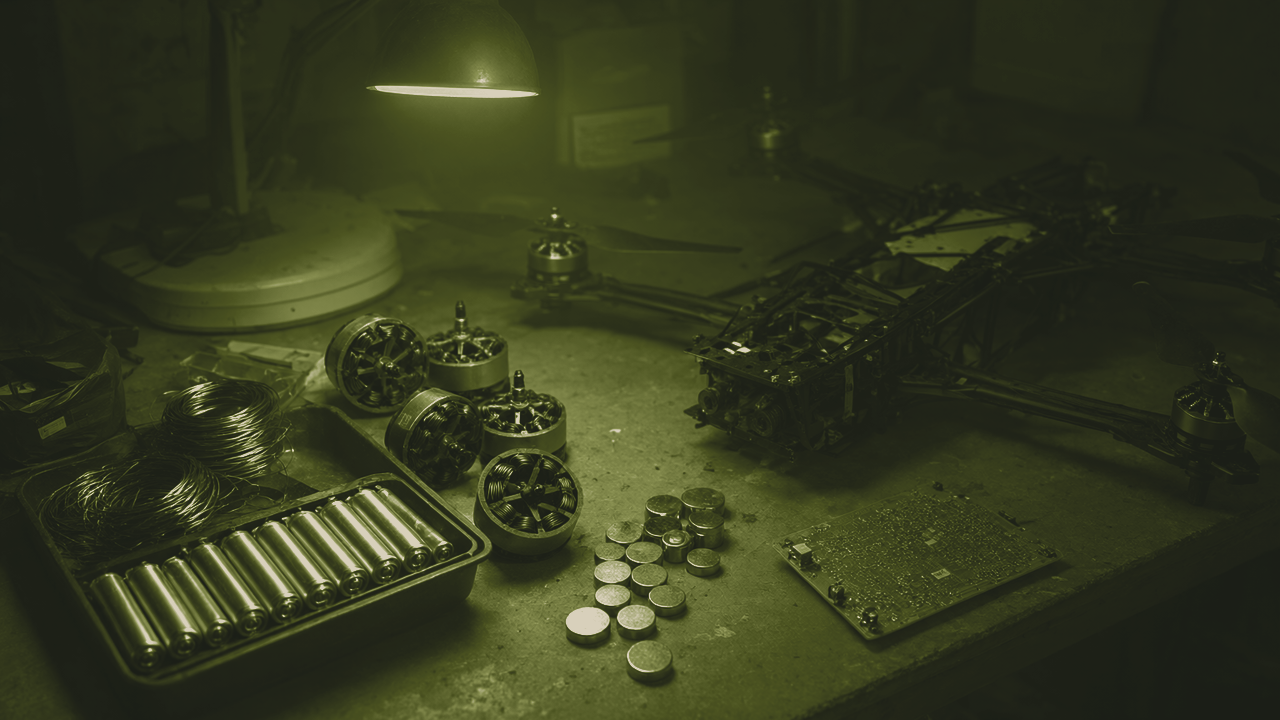
Ukrainian drone makers have replaced many Chinese parts with their own. Magnets, battery cells, chips and thermal sensors still come from China, and magnets are the first of those parts US sourcing rules police, from Jan. 1.
Ukraine Customs' 28%
Ukraine has pushed China out of the drone parts it can make itself, and the dependence that remains sits in a layer Washington is only starting to regulate, beginning with magnets. Ukraine Customs data put China's share of the country's imported drone parts at nearly 90% at the start of 2024. In January through August 2026, it was 28%. Those figures record where shipments arrive from. They do not record where every component was made.
On Oct. 14, Defense Secretary Pete Hegseth told the AUSA conference in Washington: "We've learned a lot from Ukraine, but you can't use everything that's in Ukraine because of all the Chinese components involved in it." The customs figure and the warning are both accurate. Ukraine has displaced Chinese suppliers wherever domestic production can compete, and the inputs it cannot yet replace are still Chinese.
A dozen Ukrainian manufacturers told the Associated Press that magnets, motors, chips, thermal sensors and battery cells still largely come from China. AP also found that many parts recorded as imports from Poland and the Czech Republic were very likely made in China and routed through those countries, so the customs decline overstates how much Chinese content has left Ukrainian drones.
Replacing the rest is expensive. Oleksandr Yakovenko of TAF Industries estimated that switching entirely to Western alternatives could raise costs by as much as 60% and cut production by a similar amount, a tradeoff he and other executives called unviable. Washington's own deadline lands first: on Jan. 1, 2027, the Pentagon's magnet restriction extends to the full mine-to-magnet supply chain.
Frequently Asked Questions
How much of Ukraine's drone-part imports still come directly from China?
Ukraine Customs data put China's direct share of imported drone parts at nearly 90% at the start of 2024 and 28% in January through August 2026. AP found that many parts recorded as coming from Poland and the Czech Republic were likely made in China, so the figure overstates the decline.
Which drone parts can Ukraine not yet replace?
Ukrainian manufacturers told AP that magnets, motors, chips, thermal sensors and battery cells still largely come from China. Ukraine assembles batteries but imports the cells, and its motors need imported magnets and copper.
What would a full switch to Western parts cost?
Oleksandr Yakovenko of TAF Industries estimated that replacing Chinese components entirely could raise costs by as much as 60% and cut production by a similar amount.
What did Hegseth say about Ukrainian drones?
At the AUSA conference on Oct. 14, Defense Secretary Pete Hegseth said the US had learned a lot from Ukraine but "you can't use everything that's in Ukraine because of all the Chinese components involved in it."
Which US sourcing deadlines are coming?
On Jan. 1, 2027 the DFARS magnet restriction extends to the full mine-to-magnet supply chain. Drone Dominance Phase III, planned from February 2027, adds a DFARS-compliant magnet sourcing plan; Chinese cells and rare-earth feedstock remain acceptable at the program minimum through Phase III.
AI-generated summary, reviewed by an editor. More on our AI guidelines.
Read next — from the Lexicon
Below this point
- Vyriy's domestic components
- Odd Systems' 4 million sensors
- Ukraine's 2026 FPV orders
- Washington's January and February 2027 rules
- Taiwan's "pink" motors
- What to watch

Marcus Schuler
Marcus Schuler edits BattlePolicy, a daily defense-technology brief connecting the companies and capabilities behind modern war to the contest among Europe, the US, Russia, and China.