GRID-REF 37°47′N 122°25′W
DISPATCH 02/26 · 9 Jun 2026
BATTLEPOLICY
Startup to front line. Strategy to consequence.
Lexicon · USA

Starshield

SpaceX's Starshield is a government/military satellite-communications constellation built on the Starlink bus—providing secure, high-assurance connectivity and hosting classified payloads for US national-security users.
Starshield
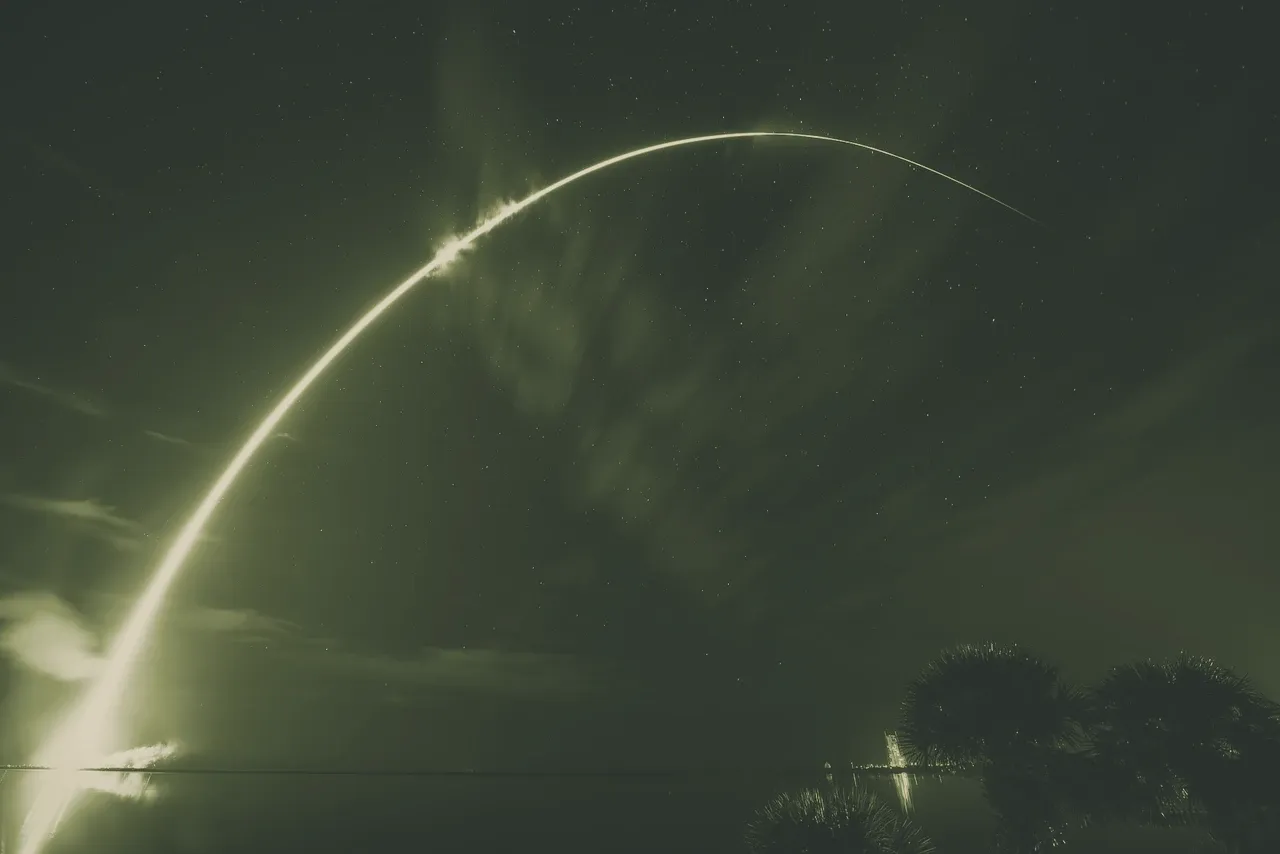
FIG.01 · USA Image - A SpaceX Falcon 9 launching Starlink-derived satellites. Photo by U.S. Space Force photo by Joshua Conti, Public domain, via Wikimedia Commons.jpg).
SpaceX's secure government/military satellite-communications constellation—built on the Starlink bus for high-assurance connectivity, Earth observation, and hosted classified payloads.

Overview

Starshield is the classified, government-only derivative of SpaceX’s commercial Starlink constellation. It provides a proliferated low-Earth-orbit mesh network purpose-built for U.S. national-security users, coupling optical inter-satellite links with high-assurance cryptography. While civil Starlink delivers broadband to consumers, Starshield is the dedicated secure line that carries sensitive military traffic, hosts Earth-observation and signals-intelligence payloads, and, increasingly, forms the physical backbone of the Space Force’s sensor-to-shooter data transport layer. SpaceX explicitly distinguishes the two networks, noting that Starshield alone adds the “additional high-assurance cryptographic capability” required by defense customers FedScoop.

Development

The classified contract that underpins Starshield was awarded in 2021, but the program remained unacknowledged until late 2023 when SpaceX published a product page and began discussing its government-only architecture Wikipedia. The first operational batch of the related NRO proliferated architecture—built on Starshield buses—reached orbit in May 2024 as NROL-146 NASASpaceFlight. Through 2024–2025 the constellation scaled rapidly; by early 2026 public reporting logged roughly 13 NRO-type launch batches. In May 2026 the U.S. Space Force selected Starshield for the $2.29-billion Space Data Network (SDN) Backbone, the core transport layer for the Pentagon’s Combined Joint All-Domain Command and Control effort SpaceNews Air & Space Forces.

Design & capabilities

Starshield uses the same flat-panel satellite bus and Falcon 9 launch cadence as commercial Starlink, but integrates a modular “hosted payload” interface that lets each spacecraft carry classified sensors alongside its communications payload SpaceX. The operational communications bands are not publicly disclosed; amateur trackers have observed related emissions near 2025–2110 MHz, though the precise military-allocated spectrum remains classified Wikipedia. The constellation achieves global coverage through inter-satellite laser links, creating a resilient mesh that can route traffic around jamming or kinetic losses. High-assurance encryption is baked into the terminal-to-bus link, and the bus supports rapid on-orbit software updates.

Variants

Public reporting distinguishes at least three mission types on the Starshield bus: the core secure SATCOM variant, which provides encrypted connectivity to tactical users; an Earth-observation variant that reportedly incorporates Northrop Grumman-supplied electro-optical and radar payloads for the NRO’s proliferated architecture; and a “hosted payload” variant that carries undisclosed sensors for signals-intelligence or missile-warning tasks. The Space Data Network backbone satellites, still in procurement, are expected to be an enhanced SATCOM configuration with higher-bandwidth laser terminals optimized for theater-level data fusion.

Combat record / operational use

The system that Ukraine operates for battlefield internet is civil Starlink, not Starshield, a distinction that SpaceX and the Pentagon enforce to prevent an adversary from obtaining a Starshield terminal FedScoop. In U.S. hands, Starshield began to appear in operational use during 2024–2025: Army Reserve units started migrating Starlink terminals to Starshield service plans to gain “higher-assurance bandwidth” for exercises and real-world logistics U.S. Army Reserve. The NRO’s Starshield-based proliferated constellation—launched from May 2024 onwards—provides a persistent eye on global hot spots, sharply increasing the cadence of overhead reconnaissance. The May 2026 $2.29-billion SDN Backbone award positions Starshield as the connective tissue for sensor-to-shooter workflows, directly linking space-based sensors to joint-force shooters under the Golden Dome architecture.

Advantages

  • Proliferated LEO architecture delivers resilience; losing a handful of satellites has no network-wide effect.
  • Optical inter-satellite links create a mesh that can route around jamming or destruction without ground-station dependency.
  • High-assurance cryptography separates government traffic from the open Starlink network.
  • Modular hosted-payload interface allows rapid reconfiguration for imaging, SIGINT, or missile-warning missions without developing a new bus.
  • Leverages SpaceX’s high-cadence launch and mass-manufacturing, enabling rapid reconstitution of the constellation.

Drawbacks / limitations

  • The exact frequency bands and encryption standards are classified, making independent security evaluation impossible.
  • Reliance on a single commercial vendor for launch and bus production exposes the program to corporate decisions and supply-chain risk.
  • Mature Starlink anti-satellite (ASAT) testing by China and Russia raises questions about survivability in a contested space environment, though the proliferated design is intended to mitigate that.
  • Unit cost is not publicly established, complicating affordability comparisons with dedicated military SATCOM systems such as AEHF.

Counterparts

Outlook

Starshield is rapidly transitioning from a secret-enabled capability to the spine of the U.S. military’s space-to-shooter data network. With the SDN Backbone contract underway and the NRO’s proliferated constellation set to swell to “hundreds” of satellites by the late 2020s, Starshield’s footprint will only grow. The major near-term challenge is hardening the constellation against emerging anti-satellite threats while maintaining the rapid refresh rate that makes a proliferated architecture viable.

Key specifications

Spec Value
Type / function Government/military SATCOM constellation (secure broadband + hosted payloads/ISR)
Frequency band(s) / orbit Low Earth orbit; secure RF bands not publicly disclosed (unofficial observation ~2025–2110 MHz)
Coverage / effective range Global via proliferated LEO mesh with optical inter-satellite links
Host platform Starlink-derived bus launched on Falcon 9
Primary effect Resilient, encrypted connectivity with high-assurance cryptographic capability
Key subsystems Optical inter-satellite links; high-assurance encryption; modular hosted-payload interface

Sources

  1. FedScoop — “SpaceX differentiates between Starlink and Starshield for government” — https://fedscoop.com/spacex-starlink-starshield-government-military-satellite-internet/
  2. U.S. Army Reserve — “Army Reserve Soldiers use SpaceX's Starshield technology” — https://www.usar.army.mil/News/News-Display/Article/4271149/army-reserve-soldiers-use-spacexs-starshield-technology-for-faster-more-conveni/
  3. SpaceNews — “SpaceX wins $2.29 billion Space Force contract for military data network” — https://spacenews.com/spacex-wins-2-29-billion-space-force-contract-for-military-data-network/
  4. Air & Space Forces Magazine — “Space Force Awards Contract to SpaceX for Starshield” — https://www.airandspaceforces.com/space-force-contract-spacex-starshield/
  5. Wikipedia — “SpaceX Starshield” — https://en.wikipedia.org/wiki/SpaceX_Starshield
  6. NASASpaceFlight — “SpaceX launches missile tracking satellites for MDA and SDA (USSF-124)” — https://www.nasaspaceflight.com/2024/02/ussf-124/
  7. SpaceX — “Starshield” (official product page) — https://www.spacex.com/starshield/
FIELD DISPATCH · WEEKLY

BattlePolicy Weekly — free.

Defense tech, startups, and security — weekly. No paywall.

Related
Ukraine · USA · Funding · Swarmer · drones · defense tech · venture capital · Pentagon

Ukraine turned its drone war into an industry. Now Wall Street is pricing it.

Swarmer's Nasdaq debut, a wave of Western venture money and a Pentagon FPV contract show Ukrainian defense tech crossing from battlefield to balance sheet, at a valuation that has outrun the revenue.

Ukraine · USA · Funding · Swarmer · drones · defense tech · venture capital · Pentagon
USA · Autonomy · Shifters · Ace Capital Partners

Shifters raises $10.2M to put robots first into tunnels and rubble

The US-Israeli startup raised a $10.2 million seed led by Ace Capital Partners to scale ground robots that enter tunnels and rubble before troops.

USA · Autonomy · Shifters · Ace Capital Partners
USA · Policy · AI · Anthropic · autonomous weapons · Pentagon

Trump orders faster military AI and bars vendors from switching off fielded models

A new national security memo tells the Pentagon to onboard frontier commercial AI at speed, strips vendors of the power to shut it down mid-mission, and resets the rules for autonomous weapons within 90 days.

USA · Policy · AI · Anthropic · autonomous weapons · Pentagon