Ukraine's FP-7 Enters Combat as Fire Point Builds an Iskander Interceptor
Ukraine's first announced FP-7 combat launch gives Kyiv a domestic ballistic strike weapon. Fire Point's faster FP-7.x interceptor faces a harder test, and both depend on production Ukraine has not yet shown.
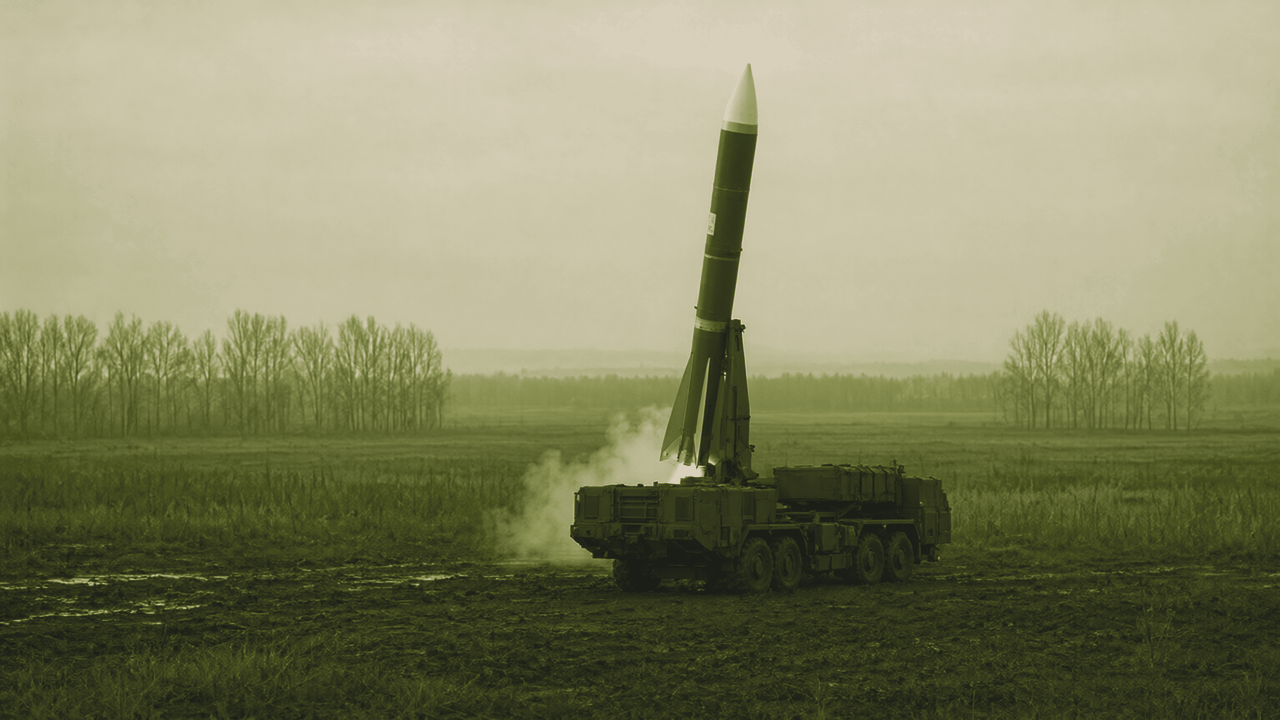
The first announced FP-7 combat launch gives Kyiv a domestic ballistic strike weapon. Its faster interceptor variant faces a harder test, and both need production Ukraine has not yet shown.
The FP-7's first combat use, announced by President Volodymyr Zelensky on Oct. 1, gives Ukraine a domestic ballistic weapon for the General Staff's new priority of striking Russian missile and drone launch sites. Fire Point is also turning a faster variant of the same missile into an interceptor meant to stop Iskanders. Both answer Ukraine's dependence on U.S. missiles, and both depend on output. Zelensky released launch footage without naming a target, location, unit or outcome. Asked what the missile struck, his communications adviser told the Kyiv Independent: "We're not telling."
Fire Point's Oct. 1 launch
Fire Point, founded in Kyiv in 2022, builds the FP-1 long-range drone and the FP-5 Flamingo cruise missile and is one of the Ukrainian military's largest contractors. The FP-7 and the longer-range FP-9 were officially announced in September 2025, and the first FP-7 test launch followed in February 2026.
In August, chief executive Iryna Terekh put the count at about 15 test launches, with final Defense Ministry certification under way. At a Sept. 10 conference in Poland, she projected service "within weeks." The design derives from the Soviet-era 48N6 interceptor used by the S-300 and S-400, rebuilt with modern components.
Fire Point lists a 250-kilometer range, a 200-kilogram payload, a top speed of 1,500 meters per second, a 60-kilometer ceiling and 14-meter accuracy. It does not say how it measured accuracy, and none of the figures has been independently verified. The published numbers also keep moving: earlier accounts gave 200 kilometers and 150 kilograms, and an account of a Terekh interview published Sept. 25 put the range at 300 kilometers.
The announcement settles one open question. Zelensky had named a weapon called "Pelican" among those used in a Sept. 20 strike on Moscow, and whether that was the FP-7 remains unclear; BattlePolicy's Sept. 28 analysis found no confirmed FP-7 combat record. Zelensky now claims one. His statement ended on the larger question: "Next up: production."
Frequently Asked Questions
What is the FP-7?
A Ukrainian tactical ballistic missile built by Fire Point. The company lists a range of up to 250 kilometers, a 200-kilogram payload and a top speed of 1,500 meters per second; none of those figures has been independently verified.
What did the first FP-7 combat launch hit?
Ukraine has not said. Zelensky announced the first combat use on Oct. 1 with launch video, and his communications adviser told the Kyiv Independent: "We're not telling."
How does the FP-7 compare with ATACMS?
ATACMS flies about 300 kilometers. Fire Point co-founder Denys Shtilerman has called the FP-7 an ATACMS analogue with a possibly larger warhead at no more than half the cost.
What is the FP-7.x?
A faster variant of the FP-7 that Fire Point is developing as the interceptor for Freyja, a Ukrainian-European anti-ballistic project. Fire Point plans a first ballistic interception by mid-2027 and targets a cost below €1 million per interceptor.
Why does production matter so much?
Ukrainian military intelligence estimates Russia builds 55 to 60 Iskander-M missiles a month. Shtilerman has said two or three ballistic missiles a month "will not affect the front," and Fire Point has published no FP-7 output figure.
AI-generated summary, reviewed by an editor. More on our AI guidelines.
Read next — from the Lexicon
Below this point
- FP-7 and ATACMS
- Russian launch sites and 55 to 60 Iskanders a month
- FP-7.x and Freyja's 2027 interception
- Patriot licenses and Fire Point's output
- Fire Point's next disclosures

Marcus Schuler
Marcus Schuler edits BattlePolicy, a daily defense-technology brief connecting the companies and capabilities behind modern war to the contest among Europe, the US, Russia, and China.