Ukraine’s Missile Leverage Depends on Sustained Production
Fire Point’s FP-7 tests and delayed Danish propellant plant show how technology access, procurement and factory output condition Kyiv’s negotiating leverage.
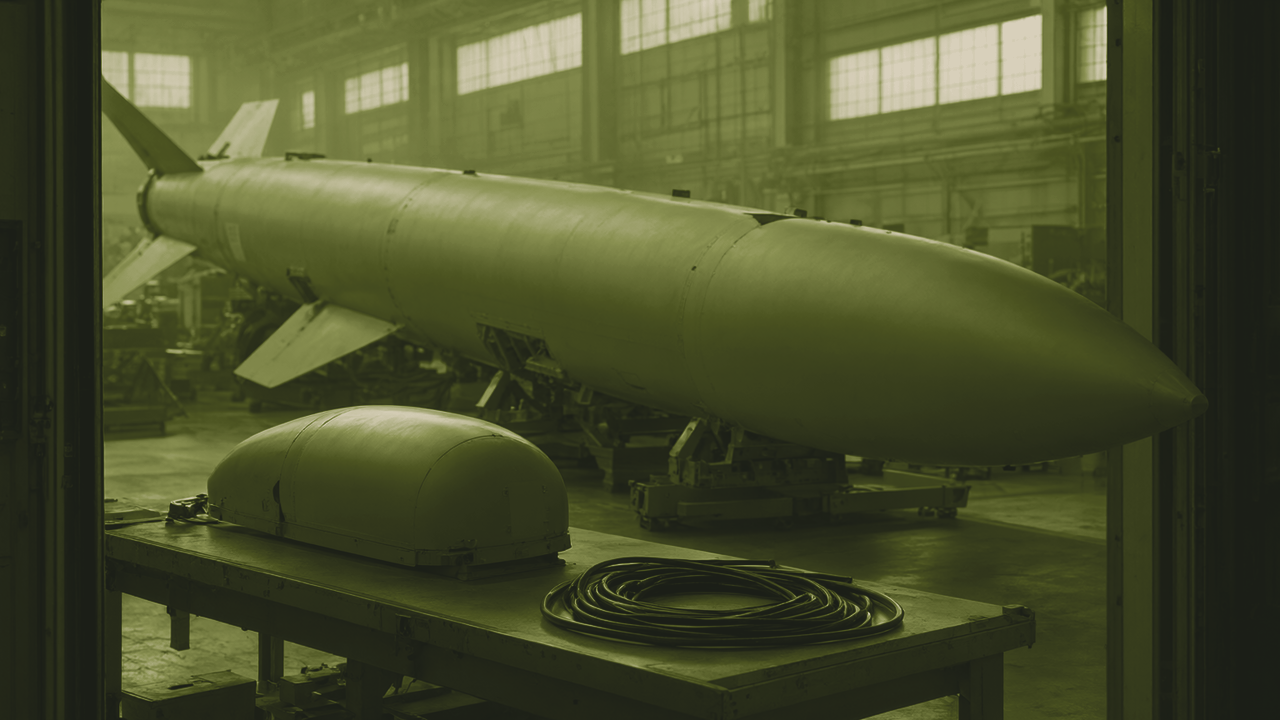
Fire Point’s FP-7 tests and delayed Danish propellant plant show how technology access, procurement and factory output condition Kyiv’s negotiating leverage.
Ukraine needs partner technology it can turn into sustained missile production to strengthen its negotiating position, former intelligence chief Valerii Kondratiuk argued in a Sept. 26 Ukrainska Pravda interview. The former head of Ukraine’s military intelligence directorate and Foreign Intelligence Service described domestic ballistic programs that still face technological limits.
His proposition joins two requirements. Partners could provide guidance technology that Ukraine struggles to develop, while Ukrainian manufacturers could turn that access into larger production runs. Kondratiuk assessed that the resulting strike capacity would raise Russia’s cost of continuing the war and strengthen Kyiv’s position in negotiations. His assessment offers no assurance that greater damage would produce Russian concessions.
Fire Point CEO Iryna Terekh supplied a near-term test of the industrial premise on Sept. 10. She said the FP-7 had completed two test phases, would move into combat-condition testing and could be ready for deployment within weeks. The forecast described work still to be completed.
Terekh’s Aug. 19 account of Fire Point’s Danish propellant plant exposed the longer production horizon. The planned construction budget had risen about threefold to €150 million after the original building failed requirements, while operations moved to late 2027. Ukraine may gain negotiating weight from missiles, but scheduled capability and delivered output remain separated by testing, contracting and factory construction.
Frequently Asked Questions
What did Valerii Kondratiuk argue in the interview?
In his Sept. 26 Ukrainska Pravda interview, Kondratiuk argued that partner guidance technology and larger Ukrainian missile production could raise Russia’s cost of war and strengthen Kyiv’s negotiating position. This is his assessment, not evidence of Russian concessions.
What are Fire Point’s current FP-7 and FP-9 specifications?
Fire Point’s product pages list the FP-7 at up to 250 kilometers with a payload of up to 200 kilograms, and the FP-9 at up to 850 kilometers with up to 800 kilograms. These are manufacturer claims, not independently demonstrated combat performance.
Has Pelican been confirmed as the FP-7 ballistic missile?
No. Zelensky named Pelican without specifying its type. RBC-Ukraine’s unnamed sources described it as an aircraft-type drone, while Al Jazeera said it could not independently verify the competing reports.
When will Fire Point’s Danish propellant plant begin production?
CEO Iryna Terekh put the target at late 2027 after the original building failed production requirements. She announced a project budget of €150 million. Both the commissioning date and future capacity remain company projections.
What does the figure of 50 FP-9 missiles per month mean?
Analyst Fabian Hoffmann used it as a conditional example in a Kyiv Independent interview: that volume could put greater pressure on Russia if the missiles were sufficiently accurate. It is not an achieved production rate or a Fire Point forecast.
AI-generated summary, reviewed by an editor. More on our AI guidelines.
Read next — from the Lexicon
Below this point
- FP-7 and FP-9
- Terekh’s Request for Guidance Technology
- Vojens, Late 2027
- Flamingo’s Recorded Salvos
- FP-7 Certification and the 2027 Plant

Marcus Schuler
Marcus Schuler edits BattlePolicy, a daily defense-technology brief connecting the companies and capabilities behind modern war to the contest among Europe, the US, Russia, and China.