S-300
The Soviet-built S-300 family of long-range SAMs — a road-mobile system that continues to anchor Ukraine's air defense and has been repurposed by Russia for ground strikes in the Ukraine war.
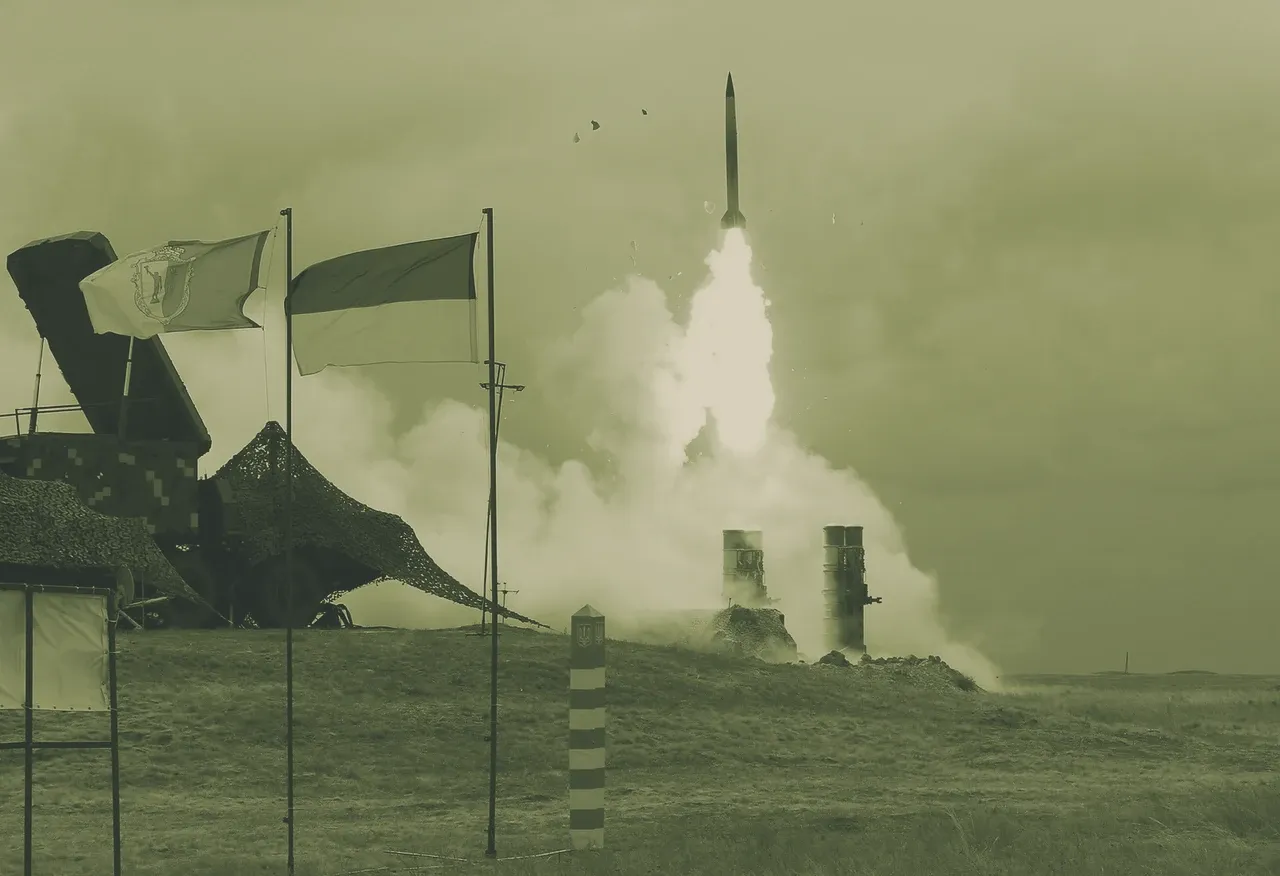
The Soviet-era S-300 family of long-range road-mobile SAMs: Ukraine's eroding air-defense backbone, repurposed by Russia as an improvised surface-to-surface bombardment weapon in the 2022–2026 Ukraine war.
Overview
The S-300 is a sprawling family of Soviet-designed mobile surface-to-air missile systems that entered service in the late 1970s and, decades later, remains the most numerically significant long-range air-defense asset in both Russian and Ukrainian inventories. The P-series (NATO SA-10 Grumble) defends strategic sites against aircraft, cruise missiles and, in later versions, short-range ballistic missiles, while the tracked S-300V (SA-12 Gladiator/Giant) was purpose-built for the army’s anti-ballistic-missile mission. Despite being superseded in production by the S-400, the system endures as Ukraine’s depleting backbone and, ironically, as a weapon Russia has pressed into surface-to-surface bombardment in the Ukraine war.
Development
NPO Almaz (today Almaz-Antey) initiated S-300P development in 1967 to replace the S-25 and S-75 and counter the emerging cruise-missile threat, according to CSIS Missile Threat and a detailed Wikipedia entry. The first P-series battery became operational in 1978, and by 1987 over 80 systems guarded mainly the Moscow region. The design forked repeatedly: the towed S-300PT gave way to the self-propelled S-300PS/PM (1985) with the 75 km 5V55R missile; the export PMU line evolved through the PMU-1 (1993, first land-based use of the 150 km 48N6) and PMU-2 Favorit (1997, 195 km, limited ATBM); in parallel, the army received the tracked S-300V (1983-88) with dedicated anti-ballistic interceptors. Main-line production ended around 2011, and all subsequent export orders have been filled from refurbished stock.
Design & capabilities
A S-300 battery combines a long-range surveillance radar, a low-altitude detection radar, an engagement radar and several transporter-erector-launchers into a single networked fire unit. The standard P-line setup employs a 36D6 “Tin Shield” panoramic radar (range 180-360 km, up to 120 targets) and a 76N6 “Clam Shell” low-altitude set, while the 30N6 “Flap Lid” engagement radar simultaneously tracks up to 24 targets and guides two missiles each against up to six targets, as Wikipedia details. Later PMU-1/2 batteries add the 64N6 “Big Bird” battle-management radar. Missiles use semi-active homing and track-via-missile guidance; the launchers perform cold vertical launches and are road-mobile on 8×8 MAZ-7910 TELs (the S-300V rides on a tracked MT-T chassis). Interceptor families cover the full engagement envelope: 5V55K (47 km), 5V55R (75 km), 48N6 (150 km) and 48N6E2 (195 km) all carry 133-150 kg high-explosive fragmentation warheads, while the S-300V’s 9M83/9M82 projectiles provide a dedicated ABM layer. The system can engage targets closing at up to ~10,000 km/h, with low-altitude coverage down to ~25 m and a maximum altitude of ~27,000 m for later PMU-series interceptors.
Variants
The S-300 family spans an exceptionally broad range of sub-types: - S-300P/PT (towed/semi-trailer, 5V55K) → S-300PT-1/-1A (cold launch, 5V55KD, ~75 km) - S-300PS/PM (self-propelled 8×8 TELs, 5V55R) — the most numerous variant and Ukraine’s core system - S-300PMU (export, 1985); S-300PMU-1 (1993, 48N6, 150 km, limited ATBM) - S-300PMU-2 Favorit (1997, 48N6E2, 195 km, improved ABM — Iran’s variant) - S-300V family (army, tracked, 9M82/9M83, ABM-capable; export S-300VM marketed as Antey-2500) - S-300F Fort naval series
Combat record / operational use
The S-300 has seen its most intense combat on both sides of the Russia-Ukraine war. Ukraine’s inherited network of S-300PT/PS/PMU and S-300V1 systems, regenerated after 2014, formed the long-range backbone that helped deny Russia air superiority from February 2022. However, attrition has been severe: Russia has prioritized hunting the launchers and radars, and a 6 January 2025 Iskander-M strike destroyed the command post and 30N6 radar of an S-300PS battery near Pavlohrad, described by Military Watch Magazine as “one of Ukraine’s last.” By May 2026 Ukrainian analysts identified air-defense depletion, not Russian missile volume, as Kyiv’s core problem, with Soviet-era stocks running out and Western Patriot transfers unable to replace losses fully (UNN).
Russia, meanwhile, repurposed the S-300 as a bombardment weapon. Starting in July 2022, with a surplus of some 7,000 aging S-300 missiles (GUR estimate), Russian forces fired radar-guided missiles on ballistic trajectories at Mykolaiv, Kharkiv, Zaporizhzhia and other cities. Army Recognition reported GPS-retrofitted salvos, while GlobalSecurity.org and Defence Blog documented ranges of 110-120 km and flight times under two minutes, giving defenders almost no warning. The practice, confirmed by UK Defence Intelligence and local officials, continued into 2024 and 2025, though the small ~133 kg fragmentation warhead yields limited destructive effect and high miss probability.
Beyond Ukraine, Iran’s S-300PMU-2 batteries, delivered in 2016, were systematically destroyed: one unit was hit near Isfahan in April 2024, and the three survivors were knocked out in Israel’s October 2024 Operation Days of Repentance, as U.S. and Israeli officials told TWZ. By February 2026, satellite imagery showed S-300PMU-2 units redeployed around Tehran and Isfahan after Iran claimed losses were replaced (Military Watch Magazine).
Advantages
- Long reach and high-speed intercept: 48N6-series missiles engage targets out to 150-195 km at closing speeds up to ~10,000 km/h, with simultaneous multi-target engagement per fire unit.
- Layered envelope covers targets from tree-top height (~25 m) to high altitude (~27 km), with early ABM capability in later variants.
- Road-mobile, shoot-and-scoot deployment complicates suppression; the tracked S-300V can accompany field armies.
- Massive magazine depth: Soviet-scale production (~28,000 missiles) gave both Russia and Ukraine deep, if aging, stockpiles that kept Ukraine’s network alive well into the war and allowed Russia to expend thousands as bombardment rounds.
- Proven deterrent value: Ukraine’s inherited dense S-300 network was assessed as Europe’s largest SAM array and was a primary impediment to Russian airpower in 2022.
Drawbacks / limitations
- Age and unsustainability: Ukraine cannot manufacture S-300 missiles, and in April 2023 Pentagon leak assessments projected frontline stocks “completely reduced” within weeks; every loss is effectively irreplaceable.
- Vulnerable to modern stand-off strike: Israeli strikes destroyed Iran’s S-300PMU-2 batteries in 2024, and Russian Iskander-M strikes have repeatedly eliminated Ukrainian S-300 components, as Military Watch Magazine notes.
- Inaccurate and indiscriminate as a surface-to-surface weapon: ballistic-trajectory GPS-retrofitted missiles carry a small 133 kg fragmentation warhead with little high-explosive effect, and UK Defence Intelligence has highlighted the high miss probability and civilian-casualty risk.
- Radar-dependent guidance (semi-active/track-via-missile) keeps emitters on and targetable; NATO has trained extensively against Greek S-300PMU-1 systems, eroding the system’s survivability against Western SEAD.
- Production ceased for the main P-line around 2011; all new export deliveries rely on refurbished stocks, limiting modernisation and spare-parts availability.
Counterparts
- Patriot PAC-3 (USA)
- HQ-9B (China)
Outlook
The S-300’s trajectory through 2026 is managed obsolescence under fire. For Ukraine it is a wasting asset — irreplaceable interceptors, launchers attrited by precision strikes, and a forced migration to Patriot/SAMP-T and FrankenSAM hybrids as Soviet-era stocks deplete. For Russia the family serves a dual purpose: an enormous but aging SAM park superseded by S-400/S-500 procurement, and a disposable bombardment stockpile being burned against Ukrainian cities. The October 2024 destruction of Iran’s batteries — coupled with NATO’s deep familiarity with the system — has dented its reputation as a top-tier strategic shield, pushing operators toward Chinese systems and indigenous designs even as refurbished S-300s soldier on across more than a dozen countries.
Key specifications
| Spec | Value |
|---|---|
| Type | Mobile long-range SAM system (family) |
| Engagement range | ~25–195 km (missile-dependent: 5V55K ~47 km, 5V55R ~75 km, 48N6 ~150 km, 48N6E2 ~195 km; S-300V 6–100 km vs aircraft, ~40 km vs ballistic targets) |
| Engagement altitude | ~25 m – ~27,000 m (~89,000 ft) for PMU-series missiles |
| Target set | Aircraft, helicopters, UAVs, cruise missiles; later variants add short-range ballistic missiles |
| Interceptor(s) | 5V55K/5V55R/48N6/48N6E2 (HE-frag warheads, 133–150 kg); S-300V: 9M83/9M82 |
| Radar / fire control | 36D6 Tin Shield (surveillance), 76N6 Clam Shell (low-altitude), 30N6 Flap Lid (engagement, tracks 24 targets, engages 6); 64N6 Big Bird (PMU-1/2); 9S32 Grill Pan (S-300V) |
| Reaction time | Not publicly established (one missile every ~3 s; setup ~30 min for PT-1 configuration) |
| Simultaneous engagements | Up to 6 targets per fire unit (12 missiles); modernized battalions up to 24–36 targets with up to 72 missiles in flight |
| Mobility | P-line 8×8 wheeled MAZ-7910 TELs (S-300V on tracked MT-T chassis); all road-mobile shoot-and-scoot |
Sources
- CSIS Missile Threat — S-300 — https://missilethreat.csis.org/defsys/s-300/
- Wikipedia — S-300 missile system — https://en.wikipedia.org/wiki/S-300_missile_system
- TWZ (The War Zone) — Israeli Strikes Knocked Out All Of Iran’s S-300 Air Defense Systems: Officials — https://www.twz.com/news-features/israeli-strikes-knocked-out-all-of-irans-s-300-air-defense-systems-officials
- Army Recognition — Russia Repurposes S-300 Surface-to-Air Missiles for Ground Attacks Against the City of Kharkiv — https://www.armyrecognition.com/focus-analysis-conflicts/army/conflicts-in-the-world/russia-ukraine-war-2022/russia-repurposes-s-300-surface-to-air-missiles-for-ground-attacks-against-the-city-of-kharkiv
- Defence Blog — Russia uses Soviet-era air defense missiles to engage ground targets — https://defence-blog.com/russia-uses-soviet-era-air-defense-missiles-to-engage-ground-targets/
- GlobalSecurity.org — S-300 / S-400 – Surface-to-Surface — https://www.globalsecurity.org/military/world/russia/s-300pmu-ssm.htm
- Military Watch Magazine — Iran Deploys Russian S-300 Long Range Air Defences Around Capital — https://militarywatchmagazine.com/article/iran-deploys-russian-s300-capital
- Military Watch Magazine — Russian Iskander-M Ballistic Missile Strike Takes Out One of Ukraine’s Last S-300 Air Defence Systems — https://militarywatchmagazine.com/article/russian-iskanderm-takes-out-ukraine-s300
- UNN — Russia is unable to continuously escalate massive strikes on Kyiv, but the main problem is the depletion of air defense – expert — https://unn.ua/en/news/russia-is-unable-to-continuously-escalate-massive-strikes-on-kyiv-but-the-main-problem-is-the-depletion-of-air-defense-expert
- EurAsian Times — Russia Using S-300 Air Defense Missiles To Attack Ground Targets In Ukraine — https://www.eurasiantimes.com/russia-uses-s-300-air-defense-missiles-to-attack-ground-targets-in-ukraine/