FP-5 Flamingo
Ukraine's homegrown deep-strike cruise missile — a 3,000 km-range, heavy-warhead missile built for mass production at low cost to hit Russian military-industrial targets.
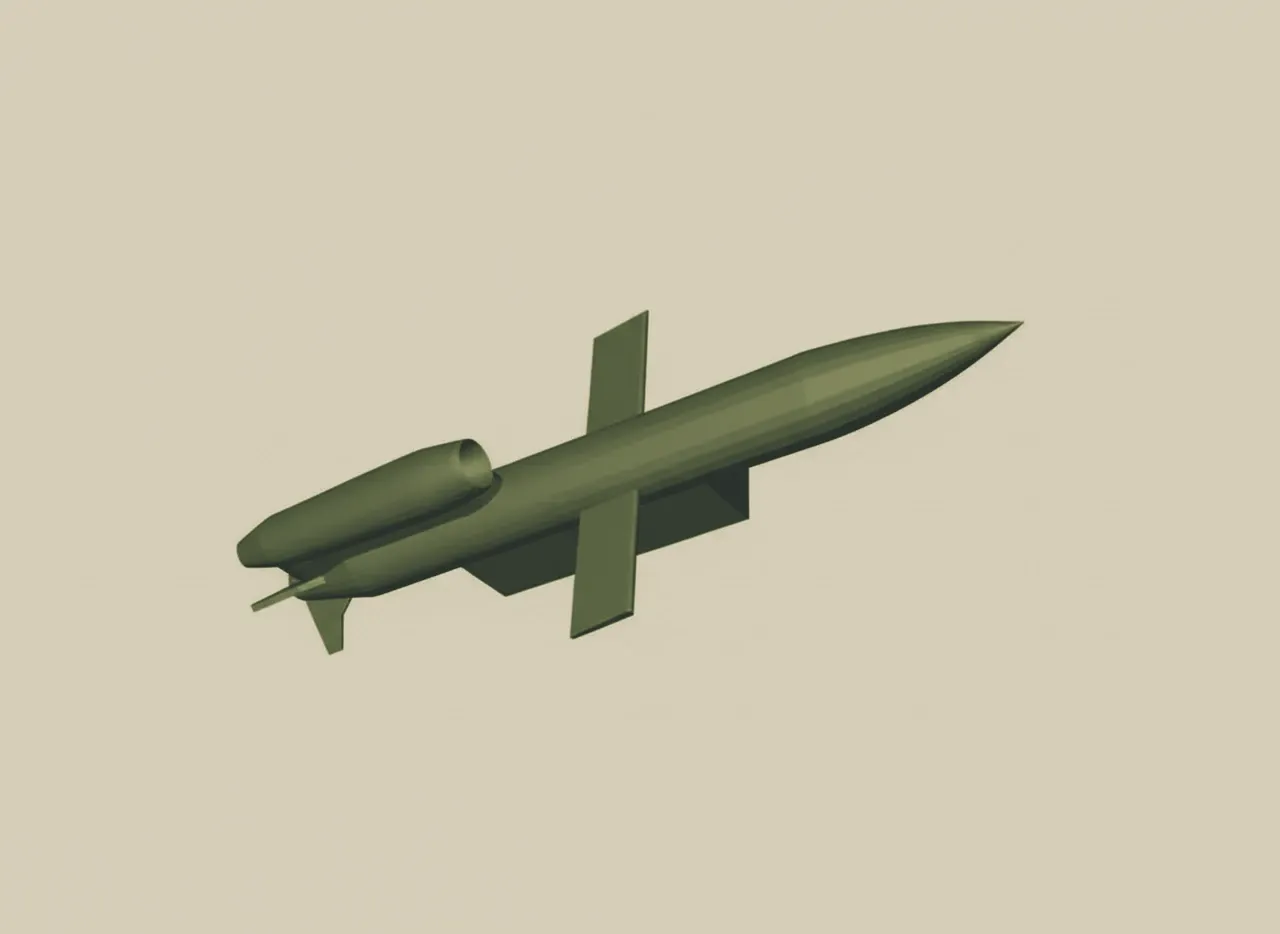
Ukraine's homegrown heavy cruise missile, built to strike deep inside Russia with a one-tonne warhead at a fraction of the cost of Western equivalents — a "big, cheap, and numerous" engineering gamble that has already blown up ammunition bunkers and missile factories.
Overview
The FP-5 Flamingo (Фламінго) is a Ukrainian ground-launched, long-range cruise missile developed by the post-2022 defence startup Fire Point. It carries a claimed ~1,150 kg warhead out to a manufacturer-stated range of 3,000 km, intentionally built as a cheap, mass-producible weapon to bring the whole of European Russia within reach — including 90% of Russia’s arms-manufacturing capacity, according to Ukrainian analysis Wikipedia. The missile’s radical cost engineering — recycled trainer-jet engines, a simple fiberglass airframe, and GNSS-only guidance — puts its unit price at roughly half a million dollars, a fraction of a Tomahawk. After a secret development programme, the Flamingo was publicly revealed by Associated Press factory access in August 2025 and entered combat weeks later; by mid-2026 it had struck targets as distant as Cheboksary and Votkinsk, although its accuracy and mass-production claims remain under intense scrutiny Covert Shores AP.
Development
Fire Point was founded after the full-scale Russian invasion in 2022, drawing personnel from construction, game design, and architecture. While the company first made its reputation with the FP-1 deep-strike drone, work on a heavy cruise missile began as Western partners refused to supply long-range weapons The War Zone. The design lineage is intertwined with the UK-registered, UAE-based Milanion Group, which exhibited an identical FP-5 at IDEX 2025; analysts suggest the arrangement allowed Ukraine to buy up AI-25 engines on the global market under cover of a commercial display Wikipedia. The missile broke cover on 17–18 August 2025 when AP journalists visited the factory, and President Zelenskyy declared serial production on 20 August. By autumn the company claimed a rate of 2–3 missiles per day, targeting 7 per day later in 2026 The War Zone. A February 2026 Russian strike temporarily halted output, but production resumed soon after Wikipedia. The programme’s political dimension deepened when Ukraine’s National Anti-Corruption Bureau (NABU) launched an investigation into alleged price inflation on Fire Point’s FP-1 contracts, with questions also raised about links to Zelenskyy-associate Timur Mindich — a probe that froze a Czech crowdfunded purchase of a Flamingo missile Kyiv Independent, corruption probe.
Design & capabilities
The FP-5 is a large, conventionally shaped cruise missile with a 6-metre wingspan and a launch weight of approximately 6,000 kg Covert Shores. The airframe is made of fiberglass composite that can be laid up in about six hours. Power comes from a refurbished Ivchenko AI-25TL turbofan — the same engine used on the L-39 Albatros trainer — boosted off a short rail launcher by a solid-fuel rocket motor; the engine is sourced from global stocks and even scrapyard airframes, though Fire Point says it substitutes titanium parts where necessary Covert Shores. A purpose-built low-bypass replacement engine, intended to solve the AI-25TL’s poor sea-level efficiency, was nearing completion in March 2026 with production targeting 2027 Militarnyi, engine. Guidance relies on a GPS/GNSS satellite-navigation system with a CRPA anti-jam antenna array backed by an inertial navigation system; there is no TERCOM or DSMAC terrain-matching, which limits precision in heavy jamming Covert Shores. Fire Point claims a circular error probable (CEP) of ~14 metres under ideal conditions, but open-source documentation has recorded frequent wide misses and the chief designer has publicly acknowledged accuracy problems at low altitude Ukrainska Pravda. The missile cruises at 850–900 km/h with a launch preparation time of 20–40 minutes, and its large radar cross-section and 6-tonne takeoff weight make it a conspicuously unstealthy target Defense Express. Warhead options centre on a repurposed ~925 kg Mk 84-class general-purpose or BLU-109-type penetrating bomb with an explosive fill of approximately 430 kg; a cluster warhead is in development Wikipedia Covert Shores.
Variants
The Flamingo family currently consists of a single baseline missile, but plans exist for a cluster-warhead variant and other warhead types Wikipedia. A separate export lineage is represented by the identical FP-5 exhibited by Milanion Group at IDEX 2025, which shares the same designation and specifications. The forthcoming Ukrainian-built engine, once productionised, will create a second propulsion variant.
Combat record / operational use
Flamingo’s first known combat launch occurred on 30 August 2025, when at least three missiles targeted an FSB border post at Armyansk, Crimea; one reached the area but missed into the water Ukrainska Pravda. On 23 September 2025 four missiles struck the Skif-M machine-tool plant in Russia, with satellite imagery confirming all four hit the site and one left a 25-metre blast crater after penetrating a roof Wikipedia. Kyiv and Moscow both confirmed the Flamingo’s first use against Russian territory proper on 9 October 2025, and Russia claimed its first shoot-down the next day Wikipedia. A November 2025 attack on the Oryol CHP plant failed to air defences, but on 12 February 2026 at least six missiles struck the GRAU ammunition arsenal at Kotluban in Volgograd Oblast; one missile destroyed a 1,200 m² bunker with secondary detonations — the type’s first confirmed kill, acknowledged by Ukraine’s General Staff Kyiv Independent, Kotluban. On 20 February 2026 Flamingos hit the Votkinsk ballistic-missile plant (Yars ICBM and Iskander engine production) at a distance of ~1,400 km, with open-source analysts assessing a direct hit on the casings workshop Ukrainska Pravda. A 28 March 2026 strike on the Promsintez explosives plant at Chapaevsk missed, with two missiles falling near the workshops Ukrainska Pravda. On 5 May 2026 Zelenskyy announced Flamingo “Deep Strike” launches beyond 1,500 km, including against the VNIIR-Progress plant in Cheboksary that produces Kometa jam-resistant antennas for Russian guided weapons; the same facility was struck again by a Flamingo on 10 June 2026, its anti-drone netting offering no defence against a cruise missile Militarnyi, Cheboksary.
Advantages
- Claimed 3,000 km range with a ~1,150 kg warhead replicates a Tomahawk-class deep-strike capability at a fraction of the cost — roughly $500,000–1 million per missile The War Zone Wikipedia.
- The “big, cheap, and numerous” design philosophy exploits salvaged AI-25 engines and a six-hour composite airframe, enabling claimed production rates of up to 3 missiles per day at the peak Covert Shores.
- A heavy penetrator warhead has demonstrated the ability to destroy hardened ammunition bunkers and factory workshops that drones cannot touch, as seen at Kotluban and Votkinsk Ukrainska Pravda Kyiv Independent, Kotluban.
- Industrial base: Fire Point employs 3,500 people and already produces roughly half of Ukraine’s deep-strike drone fleet, supported by a Danish-backed solid-fuel plant that began operations in December 2025 Kyiv Independent, opening doors Wikipedia.
- The missile brings 90% of Russia’s arms-manufacturing capacity into Ukraine’s targeting envelope without requiring Western permission for each sortie Wikipedia.
Drawbacks / limitations
- Open-source strike audits document a poor hit rate: of 23 visible launches through early May 2026, only six missiles reached target areas and just two clearly destroyed their objectives Ukrainska Pravda.
- The missile’s size, six-tonne weight and lack of any radar-cross-section reduction make it an easy target for integrated air defences; Russia claimed multiple interceptions and destroyed a production line in February 2026 Defense Express Wikipedia.
- Guidance is limited to GNSS plus INS without terrain-contour or scene-matching systems, which compromises precision in GPS-denied environments Covert Shores.
- A 20–40-minute launch preparation time increases vulnerability of the firing unit compared with Western cruise missiles that launch more rapidly.
- A credibility gap separates production claims (2–3 missiles per day) from the scant two-dozen documented launches, and the full 3,000 km range remains unproven as of mid-2026 Ukrainska Pravda.
- The ongoing NABU corruption probe and the suspension of the Czech crowdfunded purchase have introduced reputational and funding risk Kyiv Independent, corruption probe.
Counterparts
Outlook
The Flamingo programme stands at a critical juncture. Its documented 2026 strikes against Kotluban, Votkinsk, and Cheboksary prove that the concept can deliver a heavy warhead deep into Russia against exactly the bunker- and factory-class targets for which it was designed. A purpose-built engine currently in development would solve the AI-25TL’s inefficiency, and a family of warheads — including cluster munitions — would broaden its target set. However, the missile’s combat accuracy remains inconsistent, Russian air defences are adapting, and the production rate has already been disrupted once by a direct strike on a manufacturing line. Equally important, the NABU investigation and suspended Czech purchase risk poisoning the funding environment at a time when Fire Point needs to bridge the gap between startup maker and reliable state arsenal. If the accuracy problem can be solved and the corruption cloud lifted, the Flamingo could mature into the low-cost mass complement to Neptune that Ukraine’s deep-strike campaign needs — a realisation of the “big, cheap, and numerous” cruise-missile model outlined by Western analysts.
Key specifications
| Spec | Value |
|---|---|
| Type | Ground-launched long-range heavy cruise missile |
| Range | ~3,000 km (manufacturer claim); longest demonstrated strikes ~1,400–1,500 km |
| Speed (Mach / km·s⁻¹) | ~850–900 km/h cruise, ~950 km/h max (claimed) |
| Warhead (type & weight) | ~1,150 kg claimed; likely ~925 kg Mk 84-class HE or BLU-109-type penetrator (~430 kg explosive fill); cluster warhead in development |
| Guidance | GPS/GNSS with CRPA anti-jam antenna + INS backup; no TERCOM/DSMAC |
| Accuracy (CEP) | ~14 m claimed ideal; OSINT-documented strikes show frequent wide misses |
| Launch platform(s) | Truck/trailer-mounted short rail launcher with solid rocket booster |
| Propulsion | Refurbished Ivchenko AI-25TL turbofan + solid-fuel booster; purpose-built engine in development |
| Length / diameter / launch weight | ~12–14 m length, 6 m wingspan, ~6,000 kg launch weight; fuselage diameter not publicly established |
Sources
- Wikipedia — FP-5 Flamingo — https://en.wikipedia.org/wiki/FP-5_Flamingo
- Covert Shores (H I Sutton) — Dance Of The Flamingos: Ukraine's FP-5 Heavy Cruise Missile — https://www.hisutton.com/Ukrainian-FP-15-Flamingo-Cruise-Missile.html
- Associated Press — A Ukrainian startup develops long-range drones and missiles to take the battle to Russia — https://apnews.com/article/ukraine-drones-weapons-industry-russia-7201ab851544c394ee454407058b10ba
- Kyiv Independent — Exclusive: Maker of Ukraine's prized Flamingo cruise missile facing corruption probe — https://kyivindependent.com/exclusive-maker-of-ukraines-prized-flamingo-cruise-missile-facing-corruption-probe/
- Kyiv Independent — Mired in controversy, Ukraine's Flamingo missile maker steps into the limelight — https://kyivindependent.com/faced-with-teetering-international-support-ukraines-star-drone-and-missile-maker-opens-its-doors/
- The War Zone — Ukraine Aims To Build Thousands Of Flamingo Long-Range Cruise Missiles A Year — https://www.twz.com/news-features/ukraine-aims-to-build-thousands-of-flamingo-long-range-cruise-missiles-a-year
- Ukrainska Pravda — Where is Flamingo? Analysis of all known attacks using Ukrainian FP-5 cruise missiles — https://www.pravda.com.ua/eng/articles/2026/05/03/8032901/
- Militarnyi — Fire Point to Create New Engine for Flamingo Cruise Missiles — https://militarnyi.com/en/news/fire-point-to-create-new-engine-for-flamingo-cruise-missiles/
- Kyiv Independent — Ukrainian-made 'Flamingo' cruise missiles strike major Russian missile storage arsenal, General Staff confirms — https://kyivindependent.com/tambov-draft/
- Defense Express — Two Possible Drawbacks of Ukraine's FP-5 Flamingo Cruise Missile — https://en.defence-ua.com/analysis/two_possible_drawbacks_of_ukraines_fp_5_flamingo_cruise_missile-15526.html
- Militarnyi — Flamingo Missile Strikes Kometa Antenna Manufacturer VNIIR-Progress in Cheboksary — https://militarnyi.com/en/news/flamingo-missile-strikes-kometa-antenna-manufacturer-vniir-progress-in-cheboksary/