Ukraine stopped 642 of 729 Russian weapons on June 2. It could not stop the ballistic missiles.
Russia's June 2 barrage on Kyiv and Dnipro confirmed an air war split into two tiers with opposite economics, and Russia is firing into the one Ukraine cannot defend.
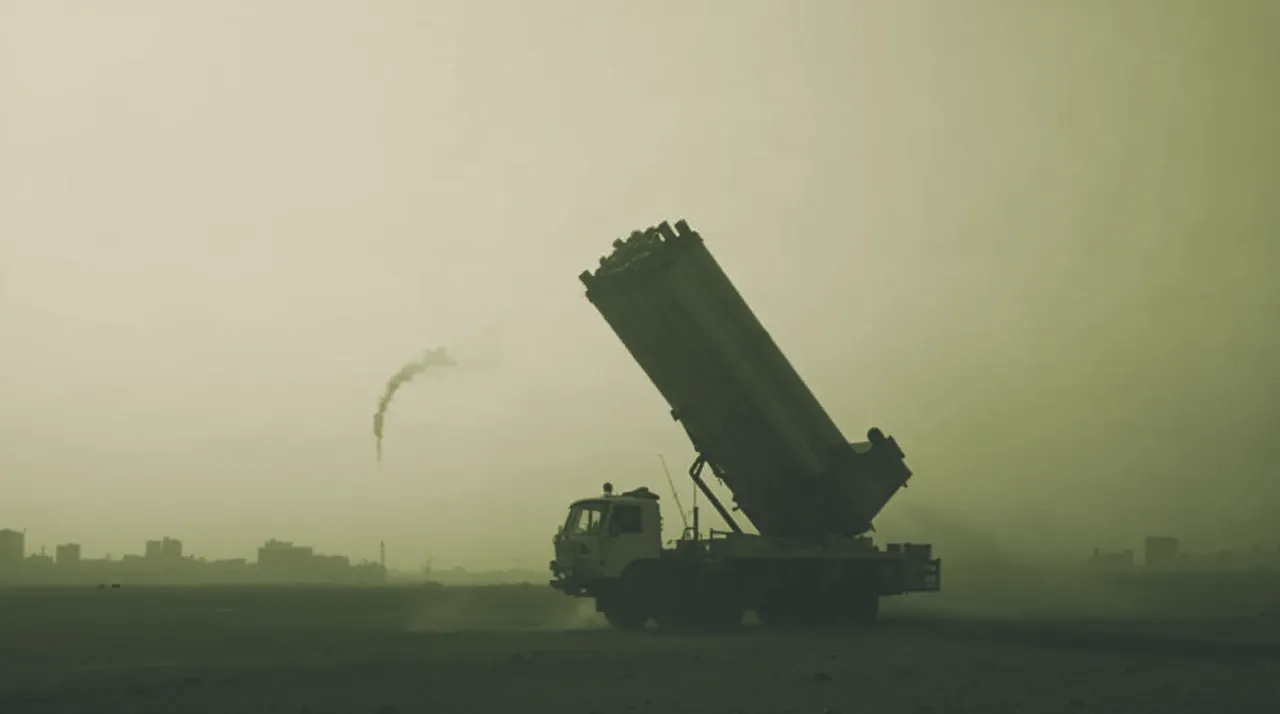
The overnight barrage on Kyiv and Dnipro confirmed an air war split into two tiers with opposite economics. Russia is now firing into the one Ukraine cannot defend, and the only counter is a $3.9 million interceptor the United States half-spent defending Israel.
Ukraine's Air Force shot down or suppressed 642 of the 729 missiles and drones Russia launched overnight on June 2, an interception rate near 88 percent. The barrage still killed at least 17 people, a toll the BBC put at 18 as rescuers pulled bodies from a collapsed apartment block in Dnipro. About 30 of the weapons that got through were ballistic missiles, and on the Air Force's own breakdown those were the ones its defenses stopped least often. The ballistic tier, not the overall interception rate, is the part of the air war Ukraine cannot yet defend.
729 weapons, 642 stopped
The Air Force logged 73 missiles and 656 drones in the overnight tally, per the Kyiv Independent and Euromaidan Press. Drones were 656 of the 729 weapons. The 73 missiles broke down into 33 Iskander-M ballistic missiles, 27 Kh-101 cruise missiles, five Kalibr cruise missiles, and eight 3M22 Tsirkon hypersonic anti-ship missiles, while the drone wave added Shahed and Gerbera platforms, Italmas munitions, Banderol loitering weapons, and Parodiya decoys. Air defenses stopped 40 missiles and 602 drones.
The hits clustered in the category the defenders missed: 30 ballistic missiles, three cruise missiles, and 33 drones struck 38 locations, the Air Force said. Kyiv lost six people, with 64 injured, including two children, the State Emergency Service said. Dnipro was worse. Eleven died there, among them a child, and a rescuer was killed in what the Guardian described as the second strike of a "double tap," timed for the emergency crews arriving at the first.
President Volodymyr Zelensky tied his response directly to the gap. "If Ukraine is not protected from ballistic and other missile strikes, these attacks will continue," he wrote, renewing an appeal he first sent the White House and Congress on May 26 for Patriot interceptors. "Europe needs its own anti-ballistic defense so that this war can finally end."
Why the ballistic missiles get through
The intercept breakdown splits by weapon type. Ukraine knocked down 26 of the 27 Kh-101 cruise missiles and 602 of 656 drones, according to Euromaidan Press's account of the Air Force tally. It stopped only 11 of the 33 Iskander-M ballistic missiles, and the official count recorded no Tsirkon intercepts.
Cruise missiles and Shaheds fly low and comparatively slow, which gives layered defenses, fighters, electronic warfare, and mobile fire groups time to engage. A ballistic missile re-enters on a steep trajectory at several times the speed of sound, collapsing that engagement window. Kyiv intercepted about 90 percent of all incoming weapons across May, an AFP analysis of Air Force data found, "but struggles to down ballistic missiles." The one system in Ukraine's inventory that reliably kills them is the US Patriot firing PAC-3 interceptors, which the Guardian described as "the only air defence system capable of blocking fast-moving enemy ballistic missiles."
Russia is firing more into that gap
Russia is steering its mix toward the weapons Ukraine cannot stop. Moscow can build a little over 300 missiles a month, including up to 60 Iskander-M and up to 10 Kinzhal ballistic missiles, Euromaidan Press wrote, citing Ukraine's military intelligence directorate. Analysts it interviewed, including Federico Borsari of the Center for European Policy Analysis and Mykola Bielieskov of the National Institute for Strategic Studies, said the Kremlin is shifting emphasis to ballistic production precisely because of the global shortage of ballistic interceptors. In February, close to 300 missiles were fired in a single month, a record 121 of them ballistic.
The battlefield and the startup story — free in your inbox every week. No paywall.
Subscribe Free →Russia pairs the ballistics with drone saturation, a record 8,150 long-range drones in May by AFP's count, to exhaust crews and air-defense missiles before the missiles arrive. The June 2 package also went after energy and critical infrastructure in Kharkiv and an industrial site in Zaporizhzhia, the Kyiv Independent noted, the signature of a campaign aimed at the grid as much as at morale. What caps the strategy is launch capacity, not warheads. The bottleneck for Kinzhal strikes is the number of available MiG-31K aircraft, Justin Bronk of the Royal United Services Institute told Euromaidan Press, and Ukrainian drones are now hunting the Iskander transporter-erector launchers that fire the ground-launched ballistics. Russia's monthly missile count moves in peaks and troughs, which suggests the largest strikes have to be spaced apart while stocks rebuild. The June 2 barrage fit that rhythm. Russia hit Kyiv on May 24 with about 90 missiles and 600 drones, killing two in the capital, then waited nine days, threatening "systematic strikes" on Ukrainian "decision-making centers" in the interval, the Kyiv Independent said.
$3.9 million a shot, and half the US stockpile gone in five days
The interceptor that closes Ukraine's gap is expensive and rationed. A PAC-3 MSE costs the US Army about $3.9 million and has sold abroad for as much as $6.25 million. Lockheed Martin delivered 620 of them in 2025 at a baseline rate near 600 a year, and a framework agreement signed in January aims to roughly triple annual output to 2,000 by the end of the decade. The US Army booked a $4.76 billion production contract in April that runs to June 2030, The Defense Post detailed.
The same stockpile was drawn down hard elsewhere this year. Defending Israel during the US-Israeli campaign against Iran that opened in late February, the United States fired more than 800 Patriot interceptors in about five days, more than it had launched across nearly three years in Ukraine. A CSIS assessment cited by Fox News found Washington spent close to half its Patriot inventory in the conflict, with estimates running from 1,060 to 1,430 of about 2,330 interceptors, and a rebuild measured in years. Since returning to office, President Donald Trump has halted direct US transfers to Ukraine, so European allies now buy Patriots from American stocks to pass on, the BBC noted.
Ukraine's $2,500 answer, and where it stops
Ukraine has largely closed the cheap tier with its own industry. Domestic interceptor drones, led by Wild Hornets' "Sting" at about $2,500 each, now down Shaheds at scale, with Ukrainian firms producing up to 1,000 a day by early 2026 and one two-person crew downing 23 in a single engagement, per The War Zone and Defense News. Sting-class interceptors have destroyed roughly 4,000 Shahed-type drones since their first kill a year ago. That domestic output is the main reason drones and cruise missiles now account for most of the intercepts rather than the hits.
The cost exchange runs in opposite directions at the two tiers. At the bottom, a $2,500 interceptor drone kills a Shahed that costs Russia tens of thousands of dollars. At the top, Ukraine has to spend a roughly $3.9 million PAC-3 to stop a 9M723 Iskander that Euromaidan Press, citing 2024 and 2025 procurement orders, valued near $3 million. So the defender pays more per shot than the attacker at the tier that matters most, and only when an interceptor is on hand.
It does not scale to ballistics. A $2,500 quadcopter cannot catch a Mach-5 warhead, and nothing in the cheap tier substitutes for a PAC-3. Germany sent Ukraine another IRIS-T system this week, useful against drones and cruise missiles but not rated as a ballistic interceptor by experts the Kyiv Independent cited. That is why Zelensky's ask splits in two: keep scaling the cheap interceptors for the saturation tier, and ask allies for Patriots for the ballistic one. His call for a European anti-ballistic shield aims at the same shortfall. Switzerland is already weighing Patriot alternatives amid US delivery delays, the Defense Post wrote, a sign that European states lack their own defense against the weapon Russia is building more of.
What to watch
What happens next turns on supply and attrition. The United States has to decide whether to route any of its ramped PAC-3 output to Ukraine or hold it for its own inventory and allied orders, and foreign military sales drove 94 percent of a recent PAC-3 contract, Aerotime found. Ukraine is meanwhile trying to cap Russia's ballistic launch rate by destroying the MiG-31K aircraft and Iskander launchers that Bronk identified as the real bottleneck. No one has fielded a low-cost ballistic interceptor yet. The Army's production contract runs to June 2030, and Ukraine is asking for interceptors now.
Frequently Asked Questions
How many missiles and drones did Russia launch at Ukraine on June 2?
Ukraine's Air Force logged 729 weapons: 73 missiles and 656 drones. Air defenses downed or suppressed 642 of them, while about 30 ballistic missiles, three cruise missiles, and 33 drones struck 38 locations, per the Kyiv Independent and Euromaidan Press.
Why can Ukraine stop drones and cruise missiles but not ballistic missiles?
Cruise missiles and Shahed drones fly low and relatively slow, leaving defenders time to engage, while ballistic missiles re-enter at several times the speed of sound. AFP found Ukraine downed about 90 percent of incoming weapons in May but struggles with ballistics, and the Guardian notes the US Patriot firing PAC-3 interceptors is the only system in Ukraine's inventory that reliably stops them.
Why are Patriot interceptors in short supply?
The United States fired more than 800 Patriot interceptors in about five days defending Israel against Iran, roughly half its stockpile, per a CSIS assessment cited by Fox News. A PAC-3 MSE costs the US Army about $3.9 million, and Lockheed Martin is only ramping output from about 600 a year toward a planned 2,000 by the end of the decade, per Military Times.
What is Ukraine doing about the cheaper Shahed drones?
Ukrainian firms build domestic interceptor drones such as Wild Hornets' "Sting" at about $2,500 each, producing up to 1,000 a day by early 2026 and destroying roughly 4,000 Shahed-type drones, per The War Zone and Defense News.
Does the German IRIS-T sent this week close the gap?
No. Experts cited by the Kyiv Independent do not rate IRIS-T as a ballistic-missile interceptor, though it is effective against drones and cruise missiles.
How many people were killed in the June 2 attack?
At least 17, a toll the BBC put at 18 as rescuers recovered bodies from the rubble. Six were killed in Kyiv and 11 in Dnipro, with more than 100 injured, according to the Kyiv Independent and Ukrainian officials.
AI-generated summary, reviewed by an editor. More on our AI guidelines.

Marcus Schuler
Marcus Schuler edits BattlePolicy, a daily defense-technology brief connecting the companies and capabilities behind modern war to the contest among Europe, the US, Russia, and China.