Europe Signed €7.3 Billion of Air Defense on Monday. None of It Reaches Ukraine This Winter.
Greece and Sweden committed €7.3 billion to new air defense on Monday, one day before EU ministers meet to ask Athens for the Patriot interceptors it already owns.
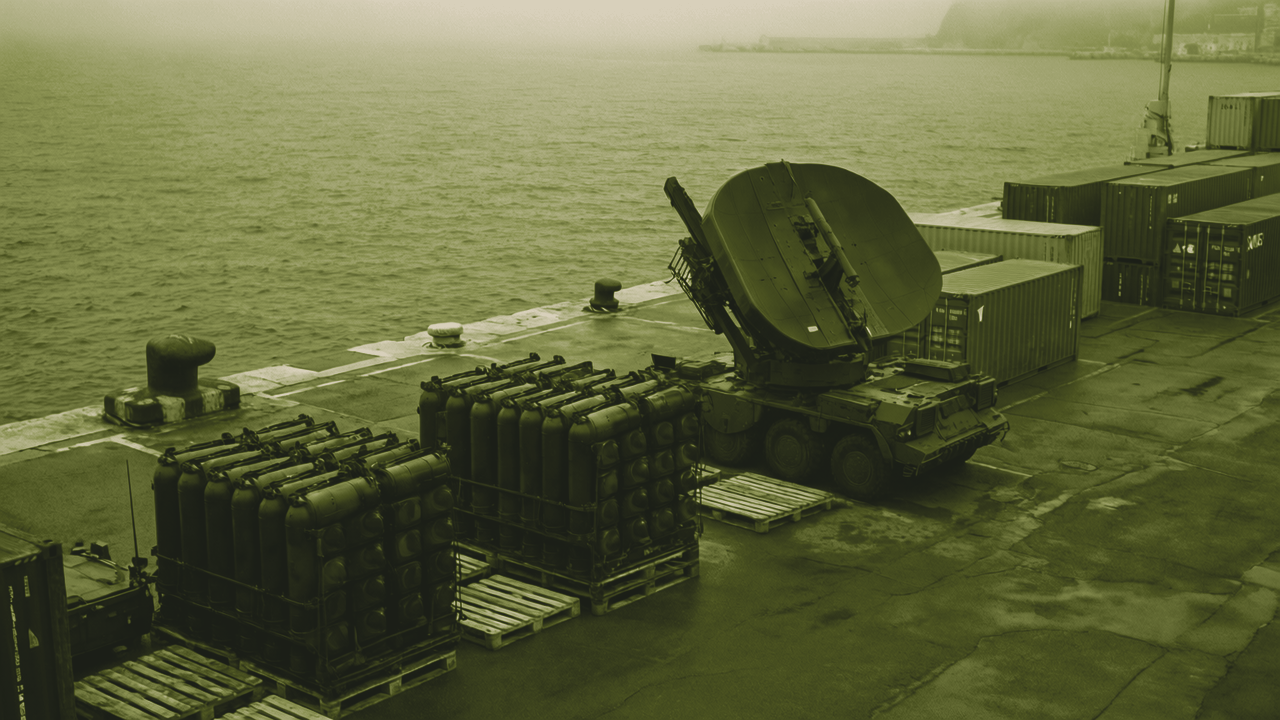
Athens and Stockholm bought layered air defense the day before EU ministers meet to ask Greece and Spain for Patriot rounds Kyiv needs in the next four months.
Europe committed roughly €7.3 billion to air defense on Monday, and not one interceptor from either contract will be available to Ukraine before spring. Greece signed a €3.035 billion agreement in Tel Aviv for an Israeli-built national shield that reaches full capability in 2029. Sweden signed a €4.3 billion contract in Stockholm for four frigates whose first hull arrives in 2030. On Tuesday, EU defence ministers meet in County Wicklow, Ireland, where the European Commission is expected to press Greece and Spain to transfer Patriot interceptors out of their existing stocks to Ukraine, EU officials told Euronews. The two days, set side by side, describe the shape of European rearmament: governments can sign for future shields far faster than they can move present rounds.
Two contracts, one afternoon
Israel's Defence Ministry called Achilles Shield the largest defence export agreement in the history of Israeli-Greek relations. It bundles David's Sling, Israel Aerospace Industries' Barak MX and Rafael's SPYDER with multi-mission radars and an AI-enabled national command centre, per Al Jazeera, with a separate €26 million package for Rafael's Drone Dome. Delivery runs in stages across 35 months.
Sweden's order, signed aboard the French Navy frigate Amiral Ronarc'h with President Emmanuel Macron and Prime Minister Ulf Kristersson watching, buys four Naval Group FDI hulls carrying Aster 30 and CAMM-ER. Defence Minister Pål Jonson said the ships will triple Sweden's current air-defense capability. Naval News reported the delivery schedule: HMS Luleå in 2030, then Norrköping, Trelleborg and Halmstad through 2034.
Frequently Asked Questions
What did Greece and Sweden actually sign on 31 August?
Greece signed a €3.035 billion agreement in Tel Aviv for the Israeli-built Achilles Shield air-defense network, and Sweden signed a €4.3 billion contract in Stockholm for four Naval Group FDI frigates, per Naval News and Greece's defence ministry.
Why can't that spending help Ukraine this winter?
Neither contract delivers hardware in time. Achilles Shield reaches full capability in 2029 after a 35-month build, and Sweden's first frigate arrives in 2030 with the last in 2034, per Naval News.
How many Patriot interceptors does Ukraine need?
President Zelenskyy declassified figures showing 675 interceptors received in 2023, 364 in 2025 and 264 projected this year, against a stated winter requirement of at least 300, per EU Insider. He put Russian ballistic-missile production near 100 a month.
Why is Greece reluctant to hand over its Patriots?
Prime Minister Mitsotakis has argued the six batteries are critical to Greek airspace, per Euronews. Meta-Defense also reports that integrating the new Israeli systems with those existing Patriot batteries is the main technical challenge of the Achilles Shield build.
Is the Patriot shortage disputed?
Yes. AP reported that US stocks in Europe are "beyond critical" on the account of two officials, while NATO spokesperson Col. Martin O'Donnell said that is "simply not the case" and Pentagon spokesman Sean Parnell called shortage claims false.
What would actually close the gap?
Production, not budget. CSIS estimates about 600 Patriot missiles built this year against a 2,000-a-year goal for 2030, per AP. MBDA and RTX are due to open the first European Patriot-missile plant in September, and France and Italy have authorised licensed Aster 30 production in Ukraine.
AI-generated summary, reviewed by an editor. More on our AI guidelines.
Below this point
- 264 interceptors against 100 missiles a month
- The shield needs the batteries Europe wants back
- 943 rounds in 96 hours
- Delivery speed has become the procurement criterion
- What to watch
264 interceptors against 100 missiles a month
Ukraine's problem is not which architecture to buy. It is arithmetic inside a four-month window. President Volodymyr Zelenskyy declassified the delivery figures ahead of the Kyiv summit: 675 American Patriot interceptors in 2023, 364 in 2025, and 264 projected for this year, against a stated winter requirement of at least 300. He put Russian ballistic-missile production near 100 a month. EU Insider set those numbers beside the result: Ukraine's interception rate against ballistic missiles has fallen from above 70 percent toward nothing, and during one recent bombardment of Kyiv no incoming missile was stopped at all.
The cheap layer is failing on a separate axis. Zelenskyy said Russia fired about 800 jet-powered drones in four days out of nearly 1,500 of all types, and that Ukraine was leaning on combat aircraft to bring them down. Serhii Beskrestnov, his adviser on defence technology, counted more than 2,500 jet Shaheds launched during August against roughly 1,500 in July, and noted that production date stamps on the airframes place them in combat within days of leaving the plant at Yelabuga. The Guardian put the new variant's cruising speed at 200 to 250 mph against 115 mph for the piston version, which is what carries it past Ukraine's inexpensive interceptors. Defence Minister Yevhen Khmara told reporters on 29 August that four candidate interceptors had finished field testing and now have to be built in the thousands.
So the demand runs across the whole price curve at once, and both Monday contracts answer it at national scale on a schedule measured in years.
The shield needs the batteries Europe wants back
Greece's position contains a detail that makes Tuesday's request harder than it looks. Prime Minister Kyriakos Mitsotakis has previously refused to transfer any of the country's six Patriot batteries, arguing they are critical to Greek airspace, according to Euronews. Achilles Shield does not weaken that argument. It entrenches it.
The programme is not designed to replace those batteries. Meta-Defense reported that integrating SPYDER AiO, Barak MX and David's Sling with the US Patriot batteries Greece already operates is the main technical challenge of the build, with data links, sensors and command chains determining whether the result works as one network or as a scatter of batteries guarding separate sectors. Greece's defence ministry says the network will tie into its Patriots, Belharra frigates, Rafale fighters and F-16s.
An architecture designed around existing Patriot batteries gives Athens a technical reason, not merely a political one, to keep them for the 35 months it takes to finish. Spain has moved further: Prime Minister Pedro Sánchez pledged five Patriot missiles earlier this year, per Euronews.
943 rounds in 96 hours
The reason nobody can simply buy their way out sits in American production. The Iran conflict consumed 65 percent of US Patriots, roughly 1,500 of the nation's 2,330 interceptors, the Center for Strategic and International Studies told AP, which reported that stocks in Europe are "beyond critical" on the account of two officials. EU Insider recorded the burn rate: the United States and its Gulf partners fired 943 Patriot rounds in the first 96 hours of that war, more than Lockheed Martin builds in a year. Mark Cancian of CSIS estimated about 600 missiles produced this year against a goal of 2,000 a year by 2030.
That assessment is contested, and the dispute belongs in the record. US Army Col. Martin O'Donnell, a senior NATO military spokesperson, said it is "simply not the case" that Patriot numbers in Europe are beyond critical, and chief Pentagon spokesman Sean Parnell called claims of American munition shortages false.
The allocation picture is less ambiguous. NATO stated in February that its Prioritised Ukraine Requirements List had supplied roughly 75 percent of all missiles fired by Ukraine's Patriot batteries since the mechanism began. Washington awarded Raytheon $22.9 billion on 17 August to lift cruise-missile production, but a contract signed in August does not put rounds on a Ukrainian launcher in December. Berlin will release further Patriots only against a guarantee that German arsenals refill within six to eight months, a condition resting on the same American line.
Brussels moved the instrument it controls, releasing a €6.1 billion air-and-missile-defence envelope from the €90 billion Ukraine loan. "Europe stands with Ukraine and we will deliver what it needs, when it needs it," Commission President Ursula von der Leyen said. Defence Commissioner Andrius Kubilius framed the package as enabling Kyiv to procure urgently needed systems. Money reserves production slots. It does not compress component lead times, and the US Government Accountability Office found one missile programme whose electronic-component lead time stretched from 19 to 34 months in two years.
Delivery speed has become the procurement criterion
Read the two Monday contracts as buying decisions and the same variable decides both. Naval Group went from Sweden's May selection to signature in under four months on a line already producing for the French and Hellenic navies. Israel's three systems are in operational service at home. Neither buyer waited for newer European capacity to mature, and both routed money outside the industrial base that EU programmes are trying to build.
That collides with policy. France is pushing to time-limit the exemptions that let Kyiv spend EU loan money on non-European equipment, including American Patriots, Euronews reported, and Paris builds the Franco-Italian SAMP/T that is Europe's closest Patriot substitute. The exemptions exist precisely because EU alternatives cannot always match cost, production volume or delivery time. Stockholm crossed no border to reach Naval Group. Athens crossed one to reach Rafael.
Sweden's naval reasoning cuts against a simpler reading. Navy chief Rear Adm. Johan Norlén, writing in Svenska Dagbladet, drew on discussions with Ukrainian naval commanders and Black Sea operations to argue for a hybrid force, "uncrewed where possible, crewed where required." Uncrewed vessels denied sea areas; larger crewed warships still enforce sea control and intercept complex air attacks. The same division holds in the air, where cheap drone interceptors cannot substitute for Patriot and Patriot cannot economically absorb every Shahed.
What to watch
Tuesday's Wicklow meeting is informal and is not expected to produce formal conclusions, an EU diplomat told Euronews, so the measure of progress is narrow: whether Greece or Spain releases rounds despite national stockpile concerns. The European External Action Service is separately asking Japan and South Korea to share stocks, though diplomats expect tensions with China to cap what either provides.
Three dates carry more weight than the meeting. MBDA and RTX are due to open the first European Patriot-missile plant in September, per NATO. France and Italy have authorised licensed Aster 30 production in Ukraine with progressive SAMP/T NG deployment from 2027. And Kyiv has still to decide whether the next tranche of the €90 billion loan buys Patriots or SAMP/T NG.
Until one of those converts into delivered rounds, Europe will keep signing for shields that arrive at the end of the decade while the interceptors that matter this winter stay in national magazines.

Marcus Schuler
Marcus Schuler edits BattlePolicy, a daily defense-technology brief connecting the companies and capabilities behind modern war to the contest among Europe, the US, Russia, and China.