The Wire · live GRID-REF 37°47′N 122°25′W
DISPATCH 03/26 · 26 Aug 2026
BattlePolicy
Startup to front line. Strategy to consequence.
Lexicon · Israel

Barak MX

Israel's modular, multi-layer air and missile defense system — a single battle-management core that mixes short-, medium- and long-range interceptors for land and naval deployments, now combat-proven and rapidly expanding its export footprint.
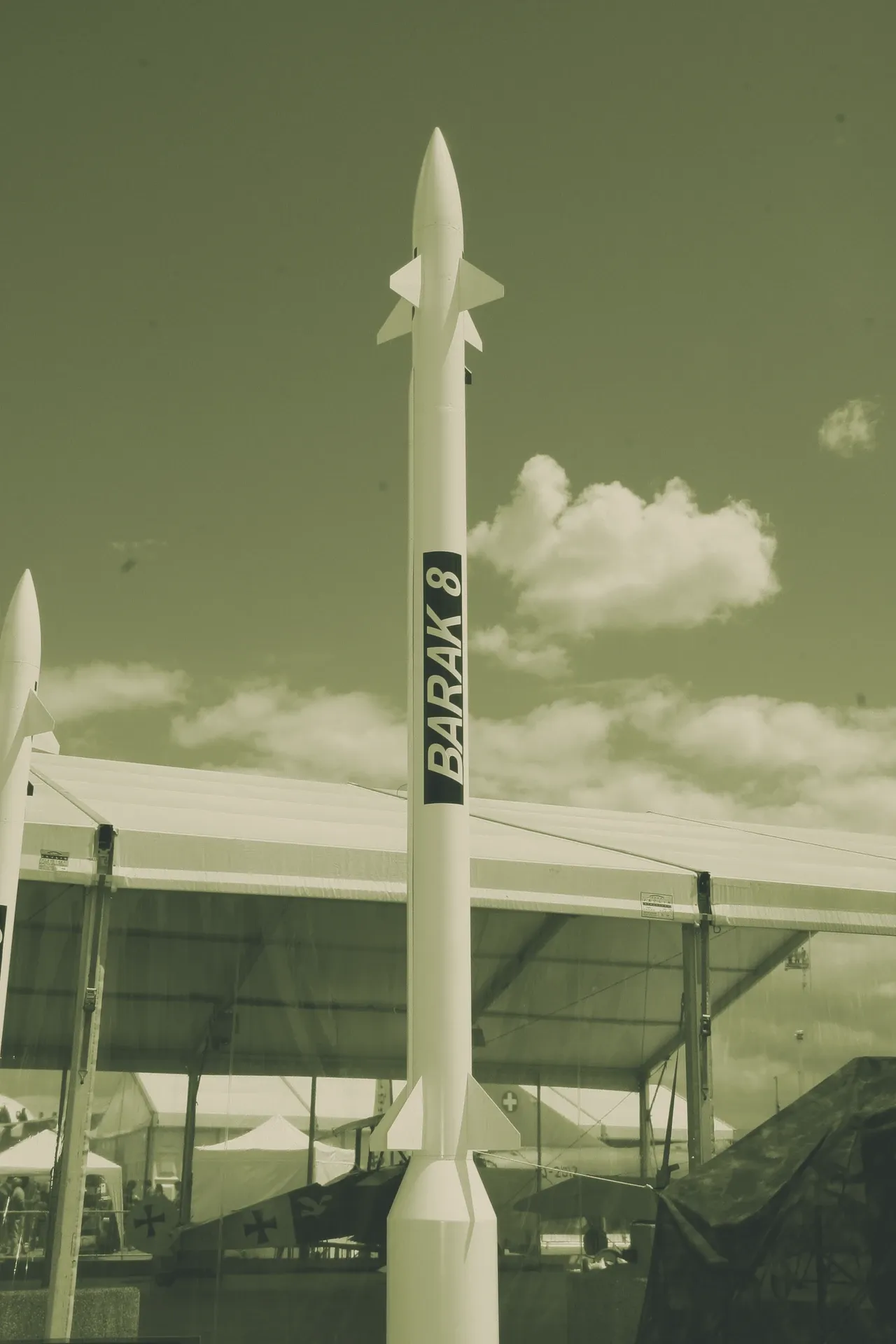
Barak MX
FIG.01 · Israel Image - Barak-8 missile displayed at the Paris Air Show. Photo by Georges Seguin (Okki), CC BY-SA 3.0, via Wikimedia Commons.
Israel’s modular, multi-layer air and missile defense system — one battle-management core that mixes short-, medium- and long-range interceptors for land and naval deployments, combat-proven and rapidly expanding its export footprint.

Overview

Barak MX is a modular, multi-tier surface-to-air missile system developed by Israel Aerospace Industries (IAI) as an in-house evolution of the earlier Barak 1 and the Indian–Israeli Barak 8 family. It integrates four interceptor variants — short-range SR, medium-range MR, long-range LR and extended-range ER — under a single battle-management center, enabling a scalable layered defense against fighters, helicopters, UAVs, cruise and anti-ship missiles, glide bombs and tactical ballistic missiles. The system is fielded in land-mobile, deployable and stationary configurations as well as a naval vertical-launch variant known as Barak Magen, and has been exported to seven countries on three continents.

Development

IAI launched Barak MX to consolidate the technology gains from Barak 8, the joint India–Israel MRSAM/LRSAM program, into a fully IAI-owned architecture. The core milestones were achieved in quick succession: the Barak ER interceptor completed its test series in March 2021, the first live-fire from a Sa’ar 6 corvette occurred in November 2022 against a cruise-missile surrogate, and the system entered Israeli service in 2023, according to Wikipedia. The land-based battery for the Israeli Air Force’s Air Defense Division followed in 2025, making Barak MX Israel’s first multi-domain air-defense system to be deployed in both naval and ground configurations.

Design & capabilities

Barak MX is built around a fully digital architecture that allows a single battery to fire any mix of interceptor variants from a common vertical-launch unit. Army Technology details the engagement envelope: Barak SR reaches about 15 km, MR about 35 km, LR about 70 km, and ER about 150 km with a booster, covering altitudes up to roughly 30 km for the ER tier. Each round — approximately 4.5 m long, 0.225 m body diameter (0.54 m with booster) and around 275 kg for the Barak 8 baseline, per Wikipedia — carries an active RF seeker, a dual-pulse smokeless motor, thrust-vector control and a two-way datalink, enabling high maneuverability (ER cited at ~50 g) and fire-and-update engagements against saturation and low-RCS threats.

The system’s Intelligence, Surveillance, Target Acquisition and Reconnaissance (ISTAR) backbone relies on ELTA’s fully digital AESA GaN multi-mission radars, such as the ELM-2084 and ELM-2138, coupled with the Barak Battle Management Center (BMC). The BMC can also integrate third-party sensors, giving customers a path to NATO interoperability; Slovakia’s configuration, for instance, includes Terma integration highlighted in the €560 million deal reported by Breaking Defense. All components are mounted on high-mobility trucks, with launcher emplacement and displacement claimed in under two minutes.

Variants

  • Barak MX land — offered in mobile, deployable and stationary battery sets, each mixing SR, MR, LR and ER interceptors.
  • Barak Magen — the naval vertical-launch configuration fitted to Israel’s Sa’ar 6 corvettes.
  • Interceptor variants — Barak SR (~15 km), MR (~35 km), LR (~70 km) and ER (~150 km), all vertically launched and sharing a common seeker/datalink architecture.
  • Related Barak 8 family — the India-Israeli MRSAM (land, ~70 km) and LRSAM (naval, ~100 km), plus the Barak-8ER growth path to ~150 km, which fed directly into Barak MX development and remains in large-scale co-production in India.

Combat record / operational use

The Barak family’s operational record began with the precursor Barak 8: on 2 July 2022, Barak interceptors from the Sa’ar 5 corvette INS Eilat downed two Hezbollah reconnaissance UAVs approaching the Karish gas field, as documented by Wikipedia and Wikipedia.

Barak MX itself saw its first wartime action in the June 2025 Twelve-Day War between Israel and Iran (Operation Rising Lion / Am Kalavi). On 16 June 2025, the Israeli Navy’s Barak Magen aboard Sa’ar 6 corvettes intercepted Iranian UAVs, marking the system’s first operational kills. Three days later, on 19 June 2025, the land-based “Barak” battery of the IAF Air Defense Division scored its first intercept, making Barak MX the first multi-domain Israeli air-defense system combat-proven at sea and on land simultaneously, per Wikipedia.

In the South Asian theater, the Barak 8 lineage fought during the May 2025 India–Pakistan conflict. Indian media, cited by Firstpost, reported that an IAF MRSAM squadron at Sirsa Air Force Station intercepted Pakistani Fatah-II rockets on 10 May 2025, an engagement credited with shielding Delhi. Additionally, a single unnamed official — documented by Wikipedia — claimed that an Azerbaijani Barak 8 battery intercepted an Armenian Iskander near Baku at the close of the 2020 Nagorno-Karabakh war; Russia’s MoD and Azerbaijan itself denied any Iskander launches were detected, leaving the claim disputed.

Advantages

  • Scalable layered defense — one battle-management core mixes interceptors from 15 km to 150 km, allowing a customer to build a layered IADS incrementally; this architecture was decisive for Slovakia (six batteries, €560 million) and Thailand, as reported by Breaking Defense and Breaking Defense.
  • Combat-proven in multi-domain operations — naval and land intercepts in the 2025 Iran-Israel war and the 2022 Karish gas field engagement give the family a credible, publicly attested operational record, per Wikipedia and Wikipedia.
  • Advanced interceptor technology — active RF seeker, dual-pulse motor and thrust-vector control on every round provide high terminal-phase energy and fire-and-update flexibility against maneuvering, saturation and low-RCS threats (manufacturer claims, partially validated in Indian and Israeli tests).
  • Ballistic-missile defense credit — the Barak 8 lineage demonstrated ballistic-missile intercepts in combat when Indian MRSAM engaged Pakistani Fatah-II rockets in May 2025, as detailed by Firstpost.
  • Export momentum — contracts with Morocco, Colombia, Azerbaijan, Slovakia, Cyprus and Thailand sustain wide production scale and give customers a Patriot-alternative with strong Israeli technical backing, as shown by the $1.2 billion Azerbaijani deal reported by Globes.

Drawbacks / limitations

  • Upper-tier ceiling — the ER interceptor tops out at ~150 km range and ~30 km altitude, sufficient only for tactical ballistic missiles; MRBM/IRBM-class threats still require David’s Sling and Arrow in Israeli service, according to Wikipedia and Globes.
  • Contested combat claims — the reported Azerbaijani Iskander intercept in 2020 rests on a single unnamed source and is denied by Russia and Azerbaijan, rendering it unverified, as noted by Wikipedia.
  • Unpublished performance parameters — simultaneous engagement capacity, reaction time and single-shot kill probability are not publicly established; most available figures are manufacturer claims without independent validation, per Army Technology and Globes.
  • Politically exposed supply chain — France excluding Israeli firms from defense exhibitions and Denmark’s decision not to select Barak MX in October 2025 (reported by Breaking Defense) show that procurement can hinge on geopolitics rather than system performance.
  • Cost-exchange dilemma — battery packages range from ~€93 million per battery (Slovakia) to over $100 million for a system; against low-cost drone swarms, the interceptor-to-attrition math remains unfavorable, a concern noted by Globes.

Counterparts

Outlook

Barak MX has pivoted within a single year from a promising export SAM to a combat-validated multi-domain system, and Israel is using that record aggressively. The first Slovak battery was delivered ahead of schedule in April 2026, with Defense Minister Katz citing a “significant surge in global demand” and forecasting further agreements, as reported by ASDNews. Thailand’s December 2025 purchase opened the Asian market, and IAI is courting additional NATO customers. The growth path points toward integrating the ER tier with ELTA multi-mission radars as a lower-cost Patriot alternative for mid-sized states, while the Indian Barak 8 production line — with a 1,000-kit MRSAM order and fresh naval contracts in 2025 — continues to furnish scale and industrial depth. Risks persist: Denmark’s 2025 rejection underlines the political sensitivity of Israeli arms in Europe, and the economics of shooting down cheap drones with premium interceptors remain unresolved.

Key specifications

Spec Value
Type Modular integrated air and missile defense system (land, naval and mobile configurations)
Engagement range ~15 km (SR) · ~35 km (MR) · ~70 km (LR) · ~150 km (ER)
Engagement altitude Up to ~20 km (MR/LR) · ~30 km (ER)
Target set Fixed-/rotary-wing aircraft, UAVs, cruise missiles, anti-ship missiles, glide bombs, tactical ballistic missiles
Interceptor(s) Barak SR · Barak MR · Barak LR · Barak ER (all vertically launched)
Radar / fire control ELTA AESA GaN multi-mission radars (ELM-2084, ELM-2138) · Barak BMC; third-party sensor integration supported
Reaction time Not publicly established (vertical launch operation, launcher emplacement/displacement claimed under 2 min)
Simultaneous engagements Multiple simultaneous interceptions claimed (exact channel count not publicly established)
Mobility High-mobility trucks (land version); naval VLS aboard corvettes/frigates/destroyers

Sources

  1. Wikipedia — Barak MX. https://en.wikipedia.org/wiki/Barak_MX
  2. Wikipedia — Barak 8. https://en.wikipedia.org/wiki/Barak_8
  3. Army Technology — BARAK MX Air Defence System, Israel. https://www.army-technology.com/projects/barak-mx-air-defence-system-israel/
  4. Globes — Azerbaijan buys $1.2b Israel Aerospace Barak missile system. https://en.globes.co.il/en/article-azerbaijan-buys-12b-israel-aerospace-barak-missile-system-1001462371
  5. Breaking Defense — Israel signs $583 million deal to sell Barak air defense to Slovakia. https://breakingdefense.com/2024/12/israel-signs-583-million-deal-to-sell-barak-air-defense-to-slovakia/
  6. Breaking Defense — Thailand to acquire Israel’s IAI Barak MX Air Defense System. https://breakingdefense.com/2025/12/thailand-to-acquire-israels-iai-barak-mx-air-defense-system/
  7. The Defense Post — Israel, Morocco Sign $500 Million Air Defense Deal. https://thedefensepost.com/2022/02/15/israel-morocco-missile-deal/
  8. ASDNews — Israel MOD Delivers IAI’s BARAK MX to Slovak Armed Forces. https://www.asdnews.com/news/defense/2026/04/30/israel-mod-delivers-iais-barak-mx-slovak-armed-forces
  9. Firstpost — Barak 8: India’s air defence system that intercepted Pakistan’s Fatah-II missile. https://www.firstpost.com/explainers/barak-8-missiles-india-air-defence-system-pakistan-fatah-ii-missile-13887289.html
  10. Israel Ministry of Defense — Israel MOD Seals 560 Million Euro Agreement: Barak MX Sold to Slovakia. https://mod.gov.il/en/press-releases/press-room/israel-mod-seals-560-million-euro-agreement-barak-mx-integrated-air-defense-system-produced-by-iai-sold-to-slovakia-in-landmark-agreement
🔒 The Analyst Section on Barak MX is for BattlePolicy Pro members. Below the line: procurement and contract history, the suppliers and companies behind the system, our head-to-head analyst view of the systems it actually competes with, and the BattlePolicy assessment note. Unlock the full file with BattlePolicy Pro →
Related
Israel · software · command-softwarePro

UVision CORTEX

UVision's CORTEX is a battle-intelligence and mission-management layer, launched in June 2026, that fuses sensor feeds and routes targets to the company's Hero, Viper and Peregrine loitering munitions, letting one operator supervise many munitions across air, land and sea.

Israel · Space · counter-uavPro

D-Fend EnforceAir

D-Fend's EnforceAir is an Israeli counter-drone system that detects a rogue drone's radio protocol, takes over its control link and lands it at a predefined safe spot - no jamming, no shooting. Motorola Solutions agreed in June 2026 to buy D-Fend for $1.5 billion.