Anduril Barracuda
Anduril's Barracuda is a family of low-cost, turbojet-powered autonomous cruise missiles — Barracuda-100, -250 and -500 — built for mass production, with a Pentagon order for at least 3,000 rounds and co-production lines planned in Poland and Taiwan.
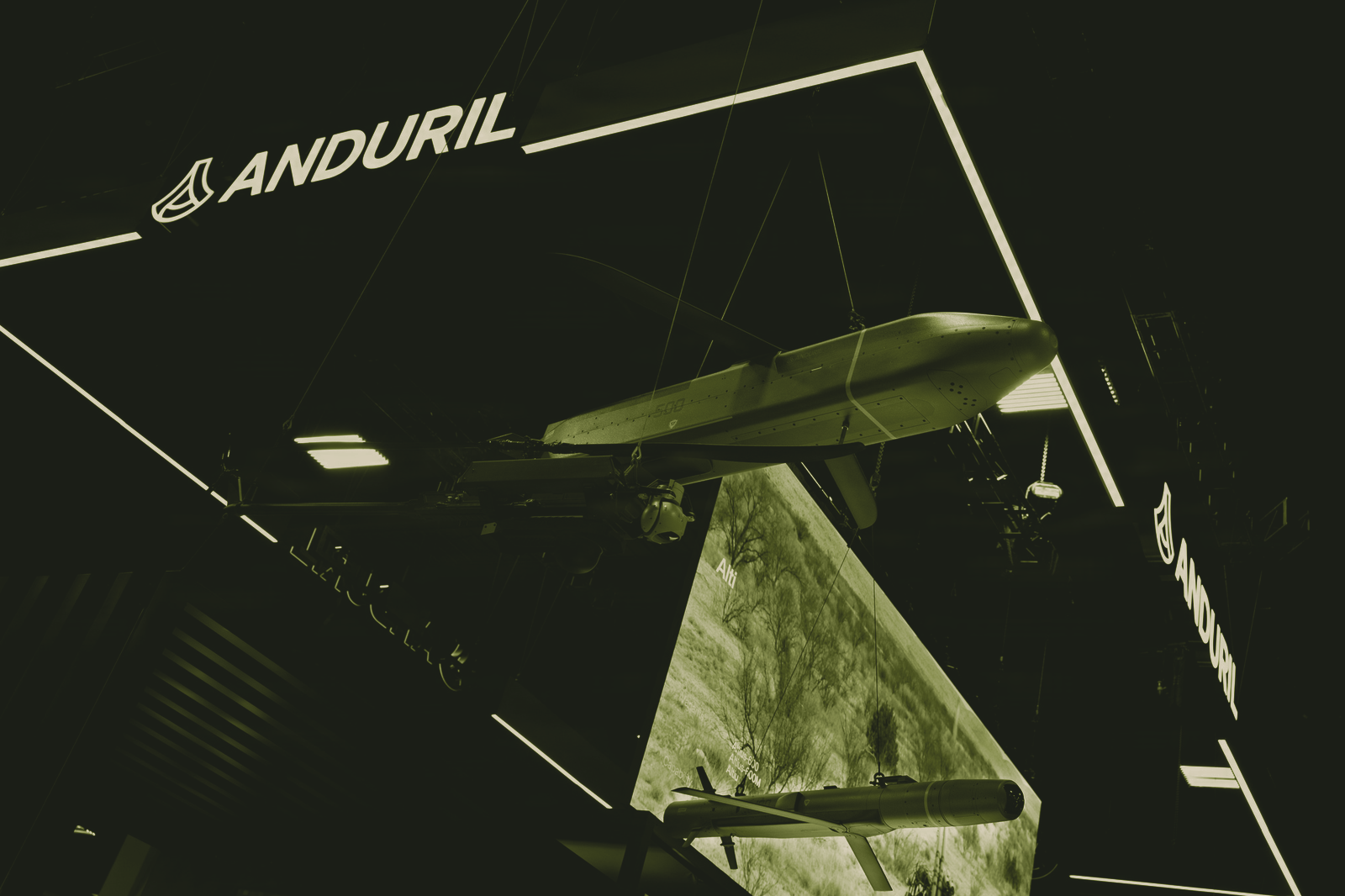
Anduril's Barracuda is a family of low-cost, turbojet-powered autonomous cruise missiles designed to be built by the thousands from commercial components — the leading US bet that production rate, not exquisite performance, wins the munitions race.
Overview
The Barracuda is a family of air-breathing autonomous air vehicles (AAVs) developed by Anduril Industries, unveiled in September 2024 in three sizes — Barracuda-100, Barracuda-250 and Barracuda-500 — whose suffix numbers indicate the weight class in pounds, according to Designation-Systems.net. The cruise-missile variants with explosive warheads carry an "M" suffix (Barracuda-100M/-250M/-500M). All versions are powered by a single small turbojet with a top speed around 500 knots and accept modular payloads for strike, jamming or decoy roles.
The family's significance is industrial as much as military. Anduril told reporters at the unveiling that a Barracuda takes 50 percent less time to produce, requires 95 percent fewer tools and 50 percent fewer parts than competing cruise missiles, making it roughly 30 percent cheaper on average, per Air & Space Forces Magazine. That thesis has since attracted a US Army framework order for at least 3,000 surface-launched rounds, a co-production line in Taiwan, and — announced on July 6, 2026 — Europe's first Barracuda production line at PGZ's WZL-2 plant in Bydgoszcz, Poland, reported by Defense News.
Development
Barracuda grew out of the Enterprise Test Vehicle (ETV) program that the US Air Force Armament Directorate and the Defense Innovation Unit launched in 2024 to develop low-cost, modular, mass-producible test vehicles from commercial off-the-shelf components. Designation-Systems.net records that contracts went to four companies — Anduril, Integrated Solutions for Systems, Leidos Dynetics and Zone 5 Technologies — with Anduril entering the Barracuda-500. Anduril publicly unveiled the family on September 12, 2024, stating that all three variants were already flying, per Air & Space Forces Magazine.
In September 2024 Anduril executed an end-to-end ETV flight test of the Barracuda-500, and in March 2025 the Air Force and DIU selected Anduril and Zone 5 Technologies to continue into the program's second phase, by which point the effort had shifted toward a mass-producible low-cost weapon. In September 2025 the US Air Force allocated the formal designation AGM-189A to the Barracuda-500M, according to Designation-Systems.net. Anduril has meanwhile demonstrated a ground-launched Barracuda-500 by adding a solid-rocket booster, the basis of the Surface-Launched Barracuda-500M (SLB-500M) now under US Army contract and slated for Polish co-production.
Design & capabilities
Barracuda's defining design choice is manufacturability. Anduril says the missiles assemble with ten or fewer common hand tools by a commercial automotive or consumer-electronics workforce, with about 70 percent openly available commercial parts and the remainder de-risked through competing open-architecture designs, according to The Aviationist. Forecast International reports a production cycle as short as roughly 30 hours per round and a reported unit cost around $200,000 — against Tomahawk- and JASSM-class weapons costing well over $1 million each.
In performance terms the family offers configurations with more than 500 nautical miles of range, more than 100 pounds of payload, 5 g of maneuverability and over 120 minutes of loitering time, per Anduril's unveiling release. Guidance combines GPS-coordinate targeting with autonomous terminal guidance; rounds can optionally run Anduril's Lattice mission-autonomy software, which lets operators designate targets and enables coordinated behavior — including swarm employment where some rounds act as decoys or sensors for others, as Forecast International and Defence24 describe. Poland's defense minister called the weapon "precise, resistant to electronic warfare, fast, and inexpensive to produce," per Janes; independent verification of its EW resistance is not publicly established.
The surface-launched SLB-500M fires from a standard 20-foot ISO container holding up to 16 all-up rounds, using a solid-rocket booster before the turbojet takes over and wings deploy for cruise, per The Aviationist. Air launch options span fighter internal bays and external hardpoints as well as palletized "Rapid Dragon"-style release from C-130/C-17 transports.
Variants
- Barracuda-100 / -100M — the smallest member, in the AGM-114 Hellfire size class, for rotorcraft and light fixed-wing use plus ground launch. Anduril-claimed range figures cited by Designation-Systems.net are over 160 km air-launched and over 110 km ground-launched with a ~16 kg (35 lb) payload; other sources cite up to ~120 nm, so figures should be treated as approximate.
- Barracuda-250 / -250M — a slimmer mid-size round sized for internal carriage in fifth-generation fighter bays and Common Launch Tubes, or external carriage; over 370 km air-launched and over 280 km ground-launched with the same ~16 kg payload class, per the same source.
- Barracuda-500 / -500M (AGM-189A) — the largest variant: 100+ lb (45+ kg) warhead, range beyond 500 nautical miles (~926 km) air-launched, 190-500 kt speed, per Janes. Defence24 estimates roughly 700 km when ground-launched.
- SLB-500M — the containerized surface-launched Barracuda-500M with booster, ordered by the US Army and selected for Polish co-production as the locally built "Polonised" variant, whose final Polish specifications PGZ said were still to be determined as of November 2025, per Janes.
Combat record / operational use
No combat use is publicly documented; the record so far is a flight-test and production history. The September 2024 ETV test saw a Barracuda-500 launched vertically from a ground cell to emulate palletized air launch, fly autonomously for more than 30 minutes, capture a GPS target identified in Lattice and complete autonomous terminal guidance, per The Aviationist. The Barracuda-100M completed flight tests for the US Army's High Speed Maneuverable Missile program in May and July 2025, demonstrating high-g maneuvers and speeds above 500 knots, according to Anduril. Prototype surface launches of the boosted Barracuda-500 followed in 2025, per Designation-Systems.net.
Operational fielding is contracted but not yet delivered: the US Army expects first SLB-500M rounds in the first half of 2027 under the May 2026 framework, per Defence Blog, and Polish deliveries depend on a production line that begins with assembly at WZL-2 Bydgoszcz. BattlePolicy covered the Poland agreement on July 8, 2026.
Advantages
- Reported ~$200,000 unit cost — a fraction of Tomahawk/JASSM-class weapons — enables procurement and expenditure by the thousand (Forecast International).
- Built from ~70 percent commercial components with common tooling; assembly in roughly 30 hours rather than months, and shared subsystems across all three variants keep one production line for the whole family.
- Launch flexibility: fighter bays, external hardpoints, palletized transport-aircraft release, and 16-round containerized ground launch without dedicated infrastructure (The Aviationist).
- Lattice-enabled autonomy supports coordinated multi-round employment — mixed salvos of strikers, decoys and sensors designed to saturate air defenses.
- Industrial traction on three continents: US Army framework order, Taiwan co-production, Polish production line with an EU-funding (SAFE) pathway.
Drawbacks / limitations
- The ~45 kg warhead of the largest variant is roughly a tenth of a Tomahawk's payload; Defence24 notes it cannot defeat hardened targets and suits soft targets — vehicles, logistics, air-defense and artillery systems — in volume.
- Subsonic (≤500 kt) and non-stealthy by high-end standards; survivability rests on mass, autonomy and saturation rather than penetration performance, which remains combat-unproven.
- Accuracy (CEP), warhead options and most detailed specifications are not publicly established; PGZ itself said the Polish variant's technical specification was still open as of November 2025.
- Reliance on commercial supply chains cuts cost but, as Forecast International cautions, may introduce component-sourcing vulnerabilities at scale, and rapid-build reliability is unproven in sustained operations.
- No combat record: effectiveness against layered air defenses and heavy electronic warfare is untested.
Counterparts
- Castelion Blackbeard (US low-cost ballistic strike peer)
- JASSM (US high-end air-launched standoff)
- Tomahawk (US ship-launched land-attack)
- FP-5 Flamingo (Ukrainian low-cost heavy cruise missile)
- Taurus KEPD 350 (European high-end penetrator)
- Kh-101 (Russian air-launched cruise missile)
Barracuda does not compete head-to-head with any of these on single-round performance; it occupies the space between one-way attack drones and traditional cruise missiles. Against exquisite weapons like JASSM or Taurus it trades warhead weight and penetration features for cost and production rate; against Ukraine's FP-5 Flamingo it is smaller-warhead but faster to produce and autonomy-rich; against Castelion's Blackbeard it is the air-breathing rather than ballistic expression of the same low-cost-mass thesis.
Outlook
Barracuda's trajectory is defined by contracted scale on three continents: the May 2026 US Army framework (minimum 3,000 rounds over three years), Taiwan's NCSIST plan for local mass production of a co-developed Barracuda-500 within about 18 months of its September 2025 unveiling, per Reuters, and the July 2026 PGZ agreement to assemble and later fully produce the SLB-500M in Bydgoszcz — "thousands" of rounds for the Polish Armed Forces, per Defense News. That comes on top of the June 2025 partnership to integrate a European Barracuda variant into Rheinmetall's Battlesuite framework. Whether factories deliver at the promised rate, and whether a 45 kg-warhead missile shifts battlefield outcomes, are the open questions.
Key specifications
| Spec | Value |
|---|---|
| Type | Family of low-cost turbojet-powered autonomous cruise missiles / AAVs (Barracuda-100/-250/-500; "M" = munition variants) |
| Range | -100: >160 km air / >110 km ground; -250: >370 km air / >280 km ground; -500: >926 km (500 nm) air, ~700 km ground (est., Defence24) — Anduril-claimed figures |
| Speed (Mach / km·s⁻¹) | Up to ~500 kt (~930 km/h, ~Mach 0.75); -500M listed at 190-500 kt |
| Warhead (type & weight) | Conventional; ~16 kg (35 lb) on -100M/-250M; 45+ kg (100+ lb) on -500M |
| Guidance | GPS-coordinate targeting with autonomous terminal guidance; optional Lattice mission autonomy incl. collaborative/swarm behavior |
| Accuracy (CEP) | Not publicly established |
| Launch platform(s) | Fighter internal bays/hardpoints (F-35, F-16, F-15, F/A-18 cited), palletized C-130/C-17 (Rapid Dragon-type), 20-ft containerized ground launcher (16 rounds), booster-assisted surface launch |
| Propulsion | Single small turbojet (~670 N class on AGM-189A, per Designation-Systems.net); solid-rocket booster for surface launch |
| Length / diameter / launch weight | AGM-189A: ~2.82 m long, ~200 kg (reference figures; sources vary); diameter not publicly established |
Sources
- Anduril Industries — "Anduril Unveils Barracuda-M Family of Cruise Missiles." https://www.anduril.com/news/anduril-unveils-barracuda
- Anduril Industries — "Barracuda-500 Selected to Move Forward on the Enterprise Test Vehicle Prototype Project." https://www.anduril.com/news/barracuda-500-selected-to-move-forward-on-the-enterprise-test-vehicle-prototype-project
- Anduril Industries — "Barracuda-100M Completes Another Successful Flight Test for Army High Speed Maneuverable Missile." https://www.anduril.com/news/barracuda-100m-completes-successful-flight-test-for-army-high-speed-maneuverable-missile
- Air & Space Forces Magazine — "Anduril Unveils New Low-Cost Cruise Missiles Meant for Large-Scale Production." https://www.airandspaceforces.com/anduril-unveils-new-low-cost-cruise-missiles/
- Designation-Systems.net — "Anduril AGM-189 Barracuda-500." http://www.designation-systems.net/dusrm/m-189.html
- The Aviationist — "Anduril to Supply 3,000 Container-Launched Barracuda-500M Cruise Missiles to the U.S. Army." https://theaviationist.com/2026/05/16/anduril-to-supply-surface-launched-barracuda-500m-us-army
- Forecast International (DSM) — "Barracuda-500M: Affordable Cruise Missiles at Scale." https://dsm.forecastinternational.com/2026/05/20/barracuda-500m-affordable-cruise-missiles-at-scale/
- Military Times — "US Army to receive thousands of Barracuda-500M cruise missiles in Anduril deal." https://www.militarytimes.com/industry/techwatch/2026/05/15/us-army-to-receive-thousands-of-barracuda-500m-cruise-missiles-in-anduril-deal/
- Defense News — "Polish defense giant PGZ to produce Anduril's Barracuda cruise missile." https://www.defensenews.com/global/europe/2026/07/07/polish-defense-giant-pgz-to-produce-andurils-barracuda-cruise-missile/
- Janes — "Poland to build Barracuda-500M cruise missiles in agreement with Anduril Industries." https://www.janes.com/defence-intelligence-insights/defence-news/weapons/poland-to-build-barracuda-500m-cruise-missiles-in-agreement-with-anduril-industries
- Defence Blog — "Polish plant to build Anduril's Barracuda cruise missiles." https://defence-blog.com/polish-plant-to-build-andurils-barracuda-cruise-missiles/
- Reuters — "Taiwan shows off first missile to be jointly manufactured with US arms maker." https://www.reuters.com/business/aerospace-defense/taiwan-shows-off-first-missile-be-jointly-manufactured-with-us-arms-maker-2025-09-17/
- CNN — "Taiwan unveils first missile jointly developed with American arms company." https://www.cnn.com/2025/09/18/asia/taiwan-new-cruise-missile-anduril-intl-hnk-ml
- Rheinmetall — "Strategic partnership" (Anduril-Rheinmetall, June 18, 2025). https://www.rheinmetall.com/en/media/news-watch/news/2025/06/2025-06-18-strategic-partnership
- Defence24 — "Po co Polsce Barracuda? Wyprodukujemy tani pocisk do F-16 i F-35." https://defence24.pl/sily-zbrojne/po-co-polsce-barracuda-wyprodukujemy-tani-pocisk-do-f-16-i-f-35
🔒 The Analyst Section on Anduril Barracuda is for BattlePolicy Pro members. Below the line: procurement and contract history, the suppliers and companies behind the system, our head-to-head analyst view of the systems it actually competes with, and the BattlePolicy assessment note. Unlock the full file with BattlePolicy Pro →