Patriot Can't Keep Up. Ten Nations Just Bet Europe's Missile Shield on a Ukrainian Interceptor.
Ten nations adopted Fire Point's FREYJA as Europe's anti-ballistic program, France licensed Aster and SCALP production inside Ukraine, and five companies signed on to build the layer above it. The air-defense pipeline just reversed direction.
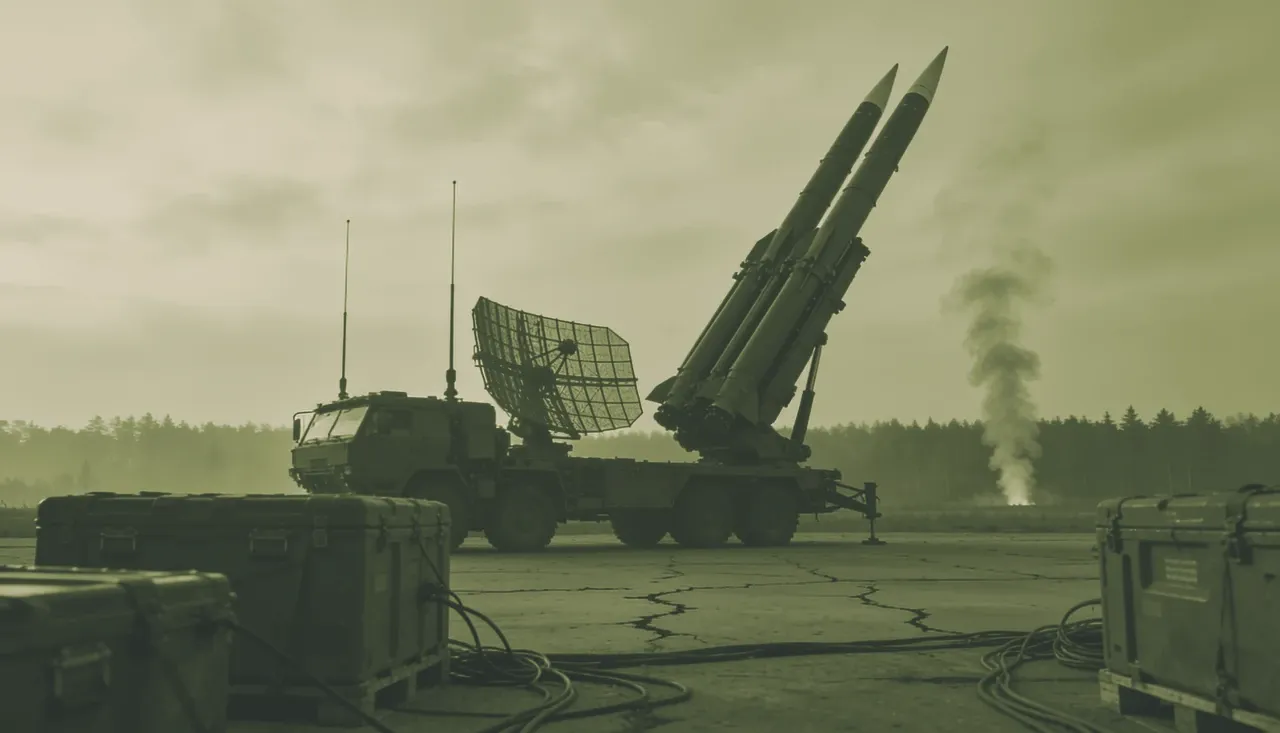
In one Paris news cycle, Europe's air-defense relationship with Ukraine reversed direction. France licensed its interceptor for production inside Ukraine, ten governments adopted a Fire Point missile as the core of a European anti-ballistic program, and five companies signed on to build the layer above it.
What happened
For three years the air-defense pipeline ran one way: Western systems flowed into Ukraine, and Kyiv asked for more than anyone would send. On July 13 in Paris, the direction flipped. Ukraine and nine European countries, Denmark, France, Germany, Italy, the Netherlands, Norway, Spain, Sweden and the United Kingdom, signed a declaration establishing an Integrated Anti-Ballistic Missile Coalition whose flagship program is built around a Ukrainian missile, Defense News reported. The system is called FREYJA, it centers on the FP-7.X interceptor from Fire Point, the company behind Ukraine's deep-strike drone campaign, and President Volodymyr Zelensky wants it operational within 12 months.
The coalition was one of three interlocking moves in barely 24 hours. French President Emmanuel Macron announced that Ukraine will receive licenses to produce the Aster 30 interceptor that arms the Franco-Italian SAMP/T system, plus SCALP cruise missiles and AASM Hammer guided bombs, the first time Paris has licensed weapons production inside Ukraine, per the Kyiv Independent, alongside 16 Rafale fighters slated for 2028-2029. And on July 14, at the coalition's inaugural meeting at the French foreign ministry, Airbus Defence and Space, MBDA Deutschland, Safran Electronics & Defense, Thales and the Dutch startup Destinus signed a letter of intent to build Bliksem EXO, a European exo-atmospheric interceptor for the upper layer FREYJA does not reach.
The battlefield supplied the same-day argument. Overnight into July 14, Russia fired eight Iskander-M and S-400 ballistic missiles, two Kh-59/69 cruise missiles and 135 attack drones at Ukraine; air defenses stopped five of the ballistic missiles, per Ukraine's General Staff. The Associated Press noted it was the first claimed ballistic intercept in almost two weeks, likely by Patriot batteries running short of ammunition during the Iran war.
An interceptor built to meet its target 15 miles up
FREYJA's logic starts with what Ukraine cannot buy. Patriot interceptors are the only proven counter to Russia's Iskanders and Kinzhals in Ukrainian service alongside SAMP/T, and the United States and its allies fired hundreds of PAC-2 and PAC-3 rounds in the opening phase of the Iran war, POLITICO reported. During recent barrages Ukraine ran so low it could not engage ballistic targets at all. Zelensky told leaders in Paris that Ukraine needs 300 Patriot interceptors for the coming winter. On July 6 he had written that air defenses stopped drones and cruise missiles that night, "but unfortunately not Russian ballistic missiles," blaming insufficient interceptor supplies after a 68-missile, 351-drone attack on Kyiv.
The FP-7.X is Fire Point's answer: a composite-body interceptor 7.25 meters long, designed to fly at 1,500 to 2,000 meters per second, reach targets up to 200 kilometers away and carry a warhead of up to 150 kilograms, according to specifications reported by RBC-Ukraine. Defense News reports the missile is designed to meet a ballistic target at roughly 15 miles altitude. Fire Point says its interceptors could cost a fraction of a Patriot round, per Al Jazeera, which also carried the caveat that matters: the system has yet to intercept anything in combat.
Aviation expert Anatolii Khrapchynskyi told RBC-Ukraine that FREYJA is less a launcher-radar-command triad than an integration architecture, a network that fuses European radars, sensors and guidance with cheap Ukrainian effectors, closer in concept to a pan-European Iron Dome than to a single battery. That division of labor is explicit. "We in Ukraine have the missiles, but these are only parts of the system," Zelensky said, with partners supplying the radar, tracking and command-and-control layers Ukraine lacks. The design brief per POLITICO: integrate with existing NATO-standard radars, command posts and data links, and deliver a mass-produced alternative to the PAC-3.
Aster, SCALP, AASM: three licenses and 16 Rafales
"We, for our part, have decided to authorise the licensed production of Aster missiles used in the SAMP/T systems that France develops jointly with Italy," Macron said at the joint press conference, per European Pravda, adding that several other countries have taken similar license decisions. The move follows Donald Trump's July 8 pledge of a Patriot production license for Ukraine, a permission previously held only by Germany and Japan, POLITICO noted, and one Defense News reported could take years to translate into missiles.
Ukraine already operates two baseline SAMP/T systems, one supplied by France and one by Italy, and France's chief of the defense staff, Gen. Fabien Mandon, has claimed the system is intercepting adapted Russian missiles that Patriot now struggles against, The War Zone reported. Demand for the Aster 30 extends beyond SAMP/T operators; the missile also arms French, Italian and British warships, where it forms the core of the Royal Navy's Sea Viper. The War Zone assessed that a domestic pipeline would give Kyiv a hedge against shortages and delays elsewhere, with the possibility of exporting interceptors later, while cautioning that high-end anti-air missiles carry production lead times of months if not years, that initial funding is unsettled, and that a line inside Ukraine puts SAMP/T manufacturing knowledge closer to Russian intelligence collection.
Macron paired the licenses with near-term hardware: a first batch of SAMP/T NG batteries, systems and missiles arriving in coming weeks, radar systems, and pilot training for the Rafale tranche starting within months, per Defense News.
Destinus, founded in 2021, takes the prime seat
In the Bliksem EXO consortium, European Security & Defence reported, Destinus, a Katwijk-based company founded in 2021, serves as consortium lead and prime contractor, responsible for system integration and the exo-atmospheric kill vehicle. MBDA Deutschland takes the booster, launcher and canister; Safran the seeker and guidance; Airbus command-and-control; Thales the radar and sensor chain. Destinus closed a 50 million euro bank financing in late 2025 that brought its total capital raised toward 400 million euros, EU-Startups wrote, and it is the only startup among the five signatories.
The system is designed to intercept medium- and intermediate-range ballistic missiles in the midcourse phase, above the atmosphere, by direct kinetic impact and without an explosive warhead, according to the consortium's announcement. The companies say it would address threats including Oreshnik-class missiles with separating and maneuvering re-entry vehicles, and would fill what they describe as the missing upper layer of the European Sky Shield Initiative. "Europe has strong lower-layer missile defences, but it still lacks a sovereign European upper layer," Destinus CEO Mikhail Kokorich said. Under the letter of intent, the five companies plan to sign a binding consortium agreement within three months, begin joint engineering in August 2026 and test the kill vehicle in space in 2027. The document creates no obligation to procure, supply or fund anything, the consortium acknowledged.
Defense News listed the companies present at the coalition's founding: Fire Point and Destinus alongside Diehl Defence, Eurosam, HENSOLDT, Kongsberg Defence & Aerospace, Leonardo, MBDA, Saab, Safran, Thales and Weibel Scientific. Two of the twelve are startups, and both hold design leadership, Fire Point on the FREYJA interceptor and Destinus on Bliksem EXO.
Poland, the Baltics, Finland and the US did not sign
The declaration describes the coalition as "purely defensive." Poland, the Baltic states and Finland, the countries nearest Russia, did not sign, and neither did the United States, Al Jazeera noted. Olesia Horiainova of the Ukrainian Security and Cooperation Centre described the project to Al Jazeera as a new European air-defense architecture taking shape outside the scope of NATO and the EU, with Ukraine playing a central role, and not a substitute for the German-led European Sky Shield Initiative, whose reliance on American Patriots and Israeli Arrow 3s kept France out.
POLITICO pointed to the collapse of FCAS, the Franco-German-Spanish fighter program, as the cautionary precedent for ambitious cross-border projects. Al Jazeera noted that Germany ordered Arrow 3 in 2023, activated its first battery in December 2025, and does not expect full capability before 2030. The founding declaration itself commits to no timeframe, The Associated Press reported; the 12-month target is Zelensky's, and whether Europe can field the system that fast will depend on decision-making speed and EU bureaucracy, Horiainova said.
"Ballistic missile strikes have become Russia's final bet," Zelensky said in Paris, per Kyiv Post. He warned that the ballistic threat will grow as military cooperation between Russia, Iran and North Korea deepens, United24 Media reported. The coalition's next meeting is expected to take place in Ukraine, per Kyiv Post, and the declaration's first deliverables are common operational requirements, joint technical working groups and a roadmap toward first operational capabilities.
What to watch
- The Bliksem clock. A binding consortium agreement is due within three months of the July 14 letter of intent, joint engineering starts in August, and the space test of the kill vehicle is promised for 2027. The binding agreement is the first checkable milestone.
- SAMP/T NG deliveries "in the coming weeks" and whether the promised missiles arrive before the winter strike campaign, per Macron's timeline.
- FREYJA's first intercept. The FP-7.X has not yet downed anything in combat, per Al Jazeera. A live ballistic kill, or a public test, inside the 12-month window is the program's proof point.
- Where the lines get built. Reuters reported via European Pravda that Ukrainian Patriot interceptor production would most likely be set up in a European country, with Germany an option. Watch whether Aster follows the same offshore logic or goes into Ukraine proper.
- Winter interceptor math. Zelensky's stated need is 300 Patriot rounds; last night's five-of-eight against Iskanders was the first claimed ballistic intercept in two weeks, per AP. The gap between those two numbers is the war's most consequential shortage.
Frequently Asked Questions
What is FREYJA?
FREYJA is a planned anti-ballistic missile defense program launched in Paris on July 13, 2026 by Ukraine and nine European countries. It centers on the FP-7.X interceptor from Ukraine's Fire Point, with European partners supplying radars, tracking and command-and-control, per Defense News. President Zelensky wants it operational within 12 months.
Which countries joined the Anti-Ballistic Missile Coalition?
Denmark, France, Germany, Italy, the Netherlands, Norway, Spain, Sweden, the United Kingdom and Ukraine signed the founding declaration, per the Elysee announcement reported by the Kyiv Independent. Poland, the Baltic states, Finland and the United States are notably absent, per Al Jazeera.
What weapons will Ukraine build under French license?
France approved licensed production of the Aster 30 interceptor used in SAMP/T air-defense systems, SCALP cruise missiles and AASM Hammer guided bombs, per European Pravda and The War Zone. Macron also confirmed 16 Rafale fighters for 2028-2029 and near-term SAMP/T NG deliveries.
What is Bliksem EXO?
A planned European exo-atmospheric interceptor against medium- and intermediate-range ballistic missiles, announced July 14. Dutch startup Destinus leads the consortium as prime contractor, with Airbus Defence and Space, MBDA Deutschland, Safran Electronics & Defense and Thales as partners, per European Security & Defence. A kill-vehicle space test is planned for 2027.
Has the FP-7.X interceptor been used in combat?
No. Fire Point says its interceptor could cost a fraction of a Patriot round, but Al Jazeera notes the system has yet to prove itself in combat. Reported specifications: 7.25 meters long, speeds of 1,500 to 2,000 meters per second, range up to 200 kilometers, warhead up to 150 kilograms, per RBC-Ukraine.
AI-generated summary, reviewed by an editor. More on our AI guidelines.

Marcus Schuler
Marcus Schuler edits BattlePolicy, a daily defense-technology brief connecting the companies and capabilities behind modern war to the contest among Europe, the US, Russia, and China.