Terra Closes Africa's Largest Seed Round and Points It at London
The Nigerian drone maker raised $52 million on a pitch about defense sovereignty, then aimed its expansion at Western capital and procurement institutions.
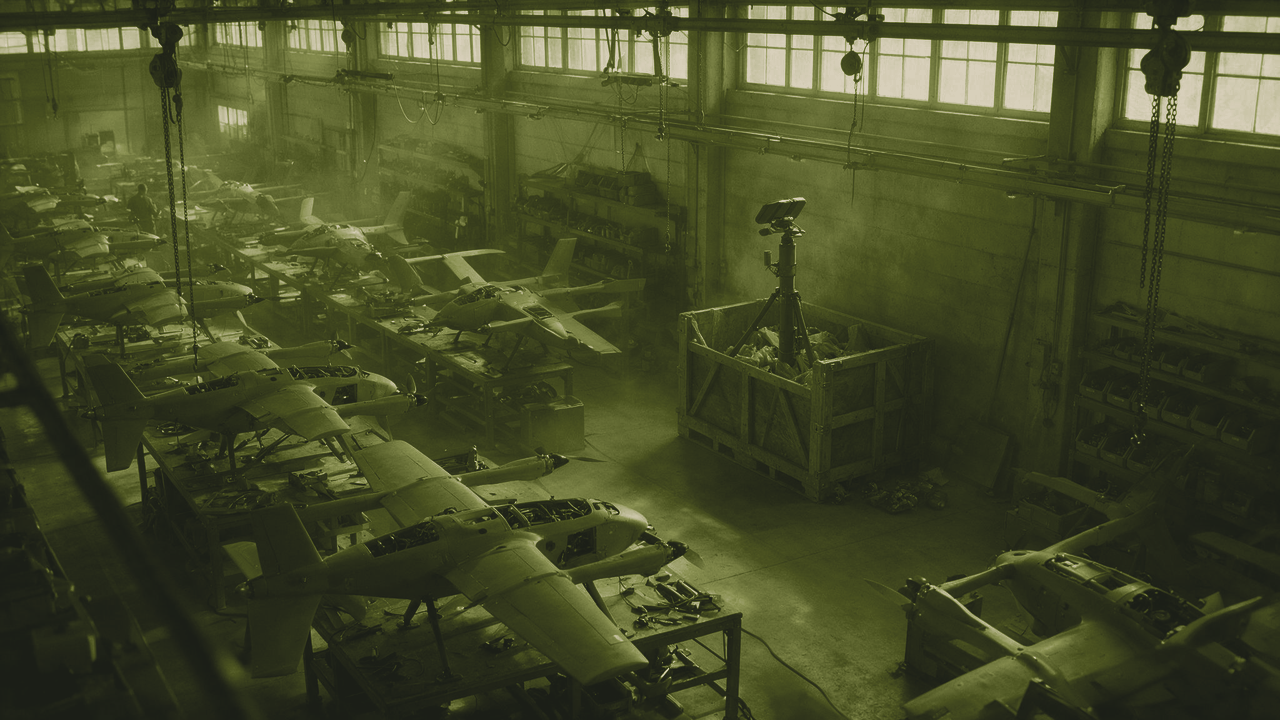
The Nigerian drone maker raised $52 million on a pitch about defense sovereignty, then aimed its expansion at Western capital and procurement institutions.
Terra Industries added $18 million to close its seed round at $52 million, the company announced in an Aug. 17 release. TechCabal called it Africa's largest seed round. Norleo Space Investments and angel investor Grant Gordon joined existing backers 8VC, Silent Ventures, Nova Global, Belief Capital and SV Angel.
Frequently Asked Questions
How much has Terra Industries raised, and from whom?
Terra closed its seed round at $52 million after adding $18 million, the company announced on Aug. 17. It came in three tranches: $11.75 million led by 8VC in January, a $22 million extension led by Lux Capital in February, and the final top-up. New investor Norleo Space Investments and angel investor Grant Gordon joined existing backers Silent Ventures, Nova Global, Belief Capital and SV Angel, per TechCabal.
What does Terra actually build?
A vertically integrated line rather than a single product, according to Launch Base Africa: the Archer vertical-takeoff drone, the Kama interceptor, the Kallon solar sentry tower, the Iroko quadcopter and the Druma ground robot. All of it runs on ArtemisOS, Terra's own software for threat detection, mission planning and coordinated response.
Where are the factories, and how much can they produce?
Pax-1 in Abuja, Nigeria runs 15,000 square feet. Pax-2 in Ghana is 34,000 square feet and opens in the fourth quarter, targeting 50,000 aerial systems a year by 2028, the company said. Business Insider Africa noted that number is a company target rather than current output, and that the funding does not make the plant operational.
Is the $100 million in bookings revenue Terra has already earned?
No. Terra projects more than $100 million in contract bookings and eight-figure revenue by year end. iAfrica described those as projections rather than reported results. The company has previously put commercial revenue above $2.5 million.
Why does a London office matter for an African defense company?
Chief executive Nathan Nwachuku said it "puts us in the rooms where global defense decisions are made." Terra is also opening in San Francisco and establishing a Washington presence for US government engagement. iAfrica flagged the tension with the company's founding sovereignty argument, that Global South infrastructure is best protected by systems built in the regions they protect.
How does Terra's funding compare with Western defense-tech firms?
It remains small. Launch Base Africa put Terra's $52 million against Anduril at $2.5 billion or more, Shield AI above $1 billion and Saronic at $830 million.
AI-generated summary, reviewed by an editor. More on our AI guidelines.
Below this point
5 more sections.
The money arrived in three tranches over eight months. An $11.75 million round led by 8VC brought Terra out of stealth in January. A $22 million extension led by Lux Capital followed in February. Chief executive Nathan Nwachuku said that financing valued the company in the nine-figure range, though Terra disclosed no valuation for the final tranche, per Launch Base Africa.
Terra, also known as Terrahaptix, builds its hardware around ArtemisOS, its own software for threat detection, mission planning and coordinated response. The Archer vertical-takeoff drone carries a claimed 1,000-kilometer range, 13-hour endurance and nine-pound payload. Kama, an interceptor reaching 300 kilometers per hour, has been trialled by several West African militaries, Nwachuku told Tectonic Defense. The line also includes the Kallon solar sentry tower, the Iroko quadcopter and the Druma ground robot. Those systems protect power plants, mines and other assets worth about $11 billion across several African countries, according to the company.
Manufacturing stays on the continent. Pax-1 in Abuja runs 15,000 square feet. The 34,000-square-foot Pax-2 in Ghana opens in the fourth quarter and targets 50,000 aerial systems a year by 2028. Business Insider Africa noted that figure is a company target, not current output, and that the round does not make the plant operational.
The offices go elsewhere. Terra is opening in London and San Francisco and establishing a Washington presence for US government engagement. London "puts us in the rooms where global defense decisions are made," Nwachuku said. That sits beside the sovereignty case the company was built on, that imported Chinese, Russian and European systems leave governments with equipment they cannot service and data they do not control, a tension iAfrica flagged.
Terra projects more than $100 million in bookings and eight-figure revenue by year end, against prior commercial revenue above $2.5 million. Those are forecasts. Pax-2's fourth-quarter opening is the next dated test of whether they become delivered hardware.

Marcus Schuler
Marcus Schuler edits BattlePolicy, a daily defense-technology brief connecting the companies and capabilities behind modern war to the contest among Europe, the US, Russia, and China.