A third drone and 50 grams of hexogen turned up beside Europe's Ukraine air bridge
The attempted attack on the airfield that loads ammunition onto Ukraine's Antonov freighters was larger than one drone with a broken detonator.
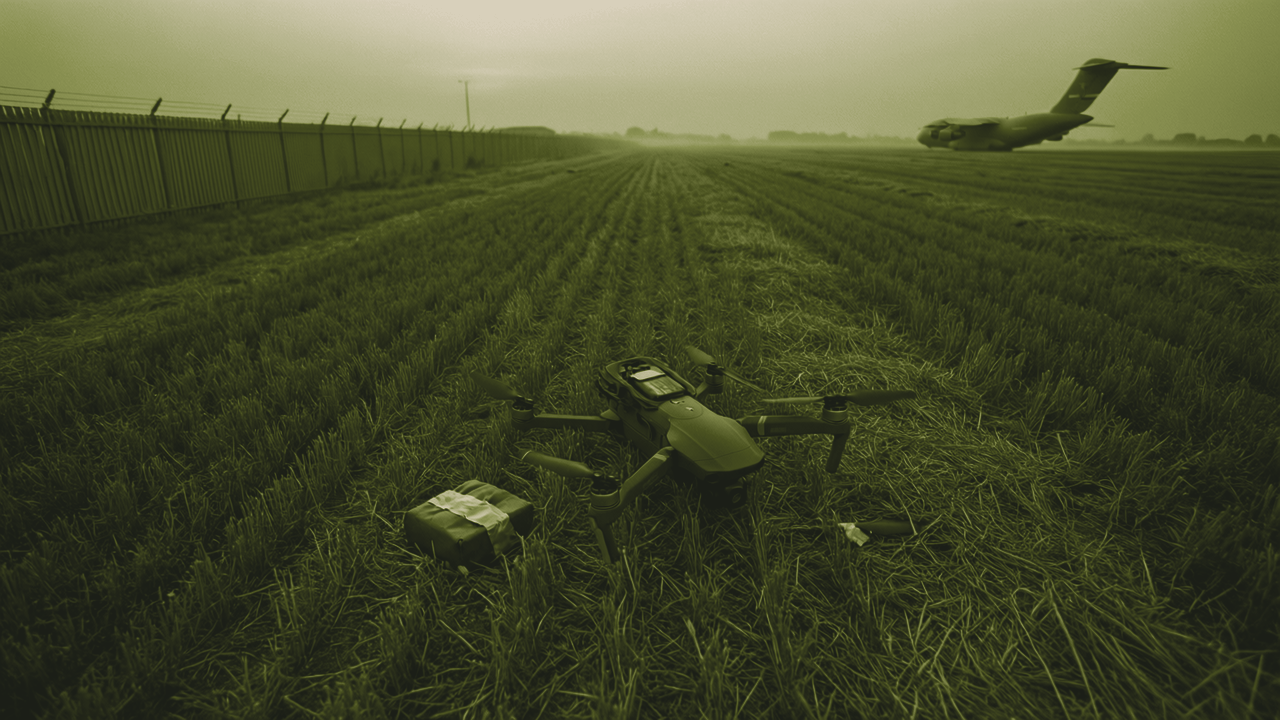
The attempted attack on the airfield that loads ammunition onto Ukraine's Antonov freighters was larger than one drone with a broken detonator.
Investigators recovered a third drone near Leipzig/Halle Airport and about 50 grams of a substance first assessed as the military explosive hexogen, NDR, WDR and Süddeutsche Zeitung reported Aug. 25. They now assume several drones were used in the Aug. 4 attempt, not one.
The defective drone lay in a field at Kabelsketal, on the airport's western boundary, and was found on the evening of Aug. 14. The suspected explosive surfaced at the same spot a day later. Security sources told the three outlets the attackers may have planned a far larger attack than has been made public. Der Spiegel separately described traces of a military explosive said to be hexogen.
Frequently Asked Questions
What did investigators find on Aug. 14?
A third drone, defective, in a field at Kabelsketal on the western boundary of Leipzig/Halle Airport, per NDR, WDR and Sueddeutsche Zeitung. A day later they found about 50 grams of a substance first assessed as the military explosive hexogen at the same spot.
How many drones were involved in the Aug. 4 attempt?
Investigators now assume several, not one, according to the same three outlets. The first was found on airport grounds beside a Ukrainian Antonov Airlines freighter, a second is believed to have struck a DHL cargo aircraft, and the third turned up in the Kabelsketal field ten days later.
Is the DHL collision confirmed?
No. NDR, WDR and Sueddeutsche Zeitung reported that an examination ruled out a bird strike. Der Spiegel and FAZ say investigators have since leaned toward a bird strike or something similar. No part of that drone has been recovered.
Why does Leipzig/Halle Airport matter militarily?
It hosts NATO's Strategic Airlift International Solution, which gives member states access to Antonov cargo aircraft, and is DHL's largest European air hub, per POLITICO. The Antonov freighter the first drone was set to attack had been loaded with ammunition the previous day, Tagesschau wrote.
Has anyone been blamed?
No. Chancellor Friedrich Merz withheld attribution on Tuesday and said the government would set out its findings shortly, per Die Welt. Security sources cited by NDR, WDR and Sueddeutsche Zeitung suspect Russian intelligence involvement in the planning. Russia rejects any responsibility and has called the incident a fabricated provocation, per Reuters.
What has Germany fielded in response?
A drone-defense research center at Cochstedt, which Merz cited as evidence the government had moved correctly, per Die Welt. He named no fielded perimeter defense and no specific countermeasure.
AI-generated summary, reviewed by an editor. More on our AI guidelines.
Below this point
6 more sections.
The first quadcopter was found beside a Ukrainian Antonov Airlines freighter on Aug. 4, its bomb inert because the detonator had broken off. That aircraft had been loaded with ammunition the day before, Tagesschau wrote.
A second drone is believed to have struck a DHL freighter 21 minutes later, at fence height and several hundred kilometers per hour, after the aircraft aborted its landing. The crew saw an object about 30 centimeters across seconds before the impact. Nothing of that drone has been recovered, and Der Spiegel and FAZ now say investigators lean toward a bird strike, which contradicts the earlier finding.
North of the airport, an antenna and electronics were taped to a tree. Nearby burned earth and metal parts are being treated as a possible detonation site, and a drone motor and rotor turned up in an Aug. 11 search.
Leipzig/Halle hosts NATO's Strategic Airlift International Solution, which gives member states access to Antonov aircraft, and is DHL's largest European air hub, according to POLITICO. Stopping a hobby-class airframe carrying military-grade RDX, launched from a neighboring field, is not the procurement problem intercepting a Shahed is.
Germany's fielded answer so far is a drone-defense research center at Cochstedt. Chancellor Friedrich Merz cited it Tuesday as evidence the government had moved correctly. Germany has come "increasingly into the crosshairs of hybrid attackers," he said, and the perpetrators "will pay for it," per Die Welt. He named no countermeasure and no author.
Hans-Jakob Schindler of the Counter Extremism Project told BR the complexity points to a state actor, Russia first among the suspects, with the DNA traces the strongest indicator. Merz said the government will set out its findings shortly.

Marcus Schuler
Marcus Schuler edits BattlePolicy, a daily defense-technology brief connecting the companies and capabilities behind modern war to the contest among Europe, the US, Russia, and China.