Turkiye's First Navy Drone Boat Just Laid Smart Mines With Nobody Aboard
MARLIN shifts a dangerous shallow-water mission from crewed warships to autonomy software carried by a modular unmanned hull.
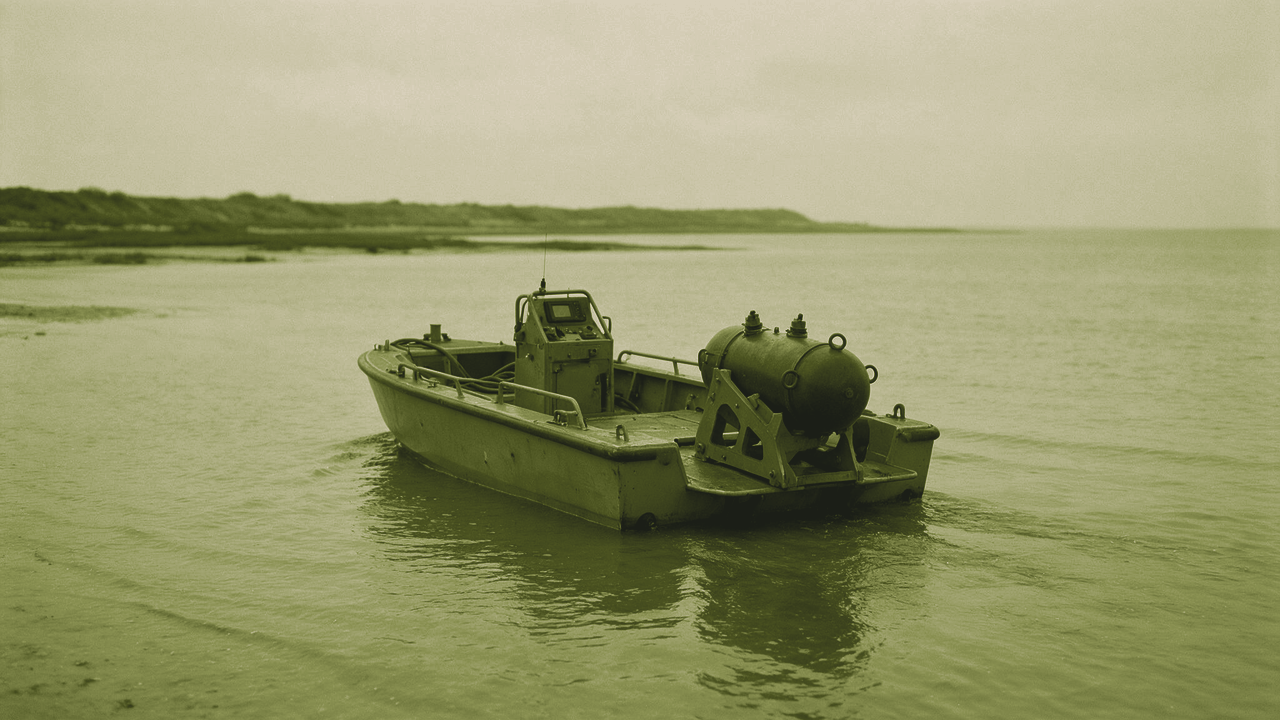
MARLIN shifts a dangerous shallow-water mission from crewed warships to autonomy software carried by a modular unmanned hull.
Turkiye's MARLIN unmanned surface vessel released MALAMAN smart bottom mines under remote control and in fully autonomous mode, Anadolu Agency announced on Aug. 17. The demonstration gave the Turkish Navy's first operational USV a mine-laying mission with no crew aboard.
Frequently Asked Questions
What did MARLIN actually demonstrate?
It released MALAMAN smart bottom mines both under remote control and in fully autonomous mode, Anadolu Agency announced on Aug. 17. Naval News called it the first reported pairing of MARLIN with the MALAMAN mine.
What is MALAMAN?
A Turkish-developed smart sea bottom mine that can deploy from surface vessels, submarines, aircraft and unmanned platforms. Its electronic module and firing mechanism use pressure, magnetic and acoustic data to detect and classify targets, per Naval News.
At what depths does the mine work?
Between 5 and 100 meters, Naval News reported. Its composite casing is designed to blend with the seabed, and its dimensions allow deployment through a 533 mm submarine torpedo tube.
Who builds MARLIN?
Sefine Shipyard and ASELSAN, under the coordination of Turkiye's Presidency of Defence Industries. MARLIN was the first unmanned surface vessel to enter the Turkish Navy's inventory, per TRT World.
What else can MARLIN do?
Its modular payload architecture has supported anti-surface warfare, anti-submarine warfare and electronic warfare configurations, and the vessel has taken part in missile firing trials, according to Naval News.
Why does unmanned mine laying matter?
Mine laying has traditionally required dedicated minelayers, submarines, aircraft or adapted surface combatants. A USV can run the mission without exposing a crew, which Naval News assessed as significant in contested shallow water.
AI-generated summary, reviewed by an editor. More on our AI guidelines.
Below this point
6 more sections.
MALAMAN detects and classifies targets using pressure, magnetic and acoustic data in its electronic module and firing mechanism. The mine works at depths from 5 to 100 meters. Its composite casing is built to blend with the seabed, while its dimensions permit launch through a 533 mm submarine torpedo tube, Naval News detailed.
The mine can deploy from surface vessels, submarines, aircraft and unmanned platforms. Earlier work included fit checks aboard the Turkish Navy's REIS-class submarines. Naval News described the MARLIN demonstration as the first reported pairing of the vessel and MALAMAN.
The integration required more than bolting mines to a hull. Engineers designed and produced a mine carriage and release arrangement, then integrated mission-planning interfaces and algorithms for autonomous mine laying, Anadolu disclosed. The effort took one year of coordinated work aligned with Turkish Navy operational needs, TRT World stated.
Sefine Shipyard and ASELSAN developed MARLIN under the coordination of Turkiye's Presidency of Defence Industries. Its modular payload architecture has already carried anti-surface warfare, anti-submarine warfare and electronic warfare configurations. The vessel has also taken part in missile firing trials.
Mine laying has traditionally depended on dedicated minelayers, submarines, aircraft or adapted surface combatants. Sending MARLIN instead removes the crew from a mission considered especially dangerous in contested waters, Naval News assessed. The pairing matters most in shallow water, where bottom mines are commonly used and a small surface vessel can work close to shore.
MALAMAN can already go out from a submarine, an aircraft or a crewed ship. MARLIN adds the delivery route that risks no one.

Marcus Schuler
Marcus Schuler edits BattlePolicy, a daily defense-technology brief connecting the companies and capabilities behind modern war to the contest among Europe, the US, Russia, and China.