J-10C
China's workhorse 4.5-generation single-engine multirole fighter — a delta-canard design with an AESA radar, active in PLAAF and Pakistani service, and credited with the type's first air-to-air kill in 2025.
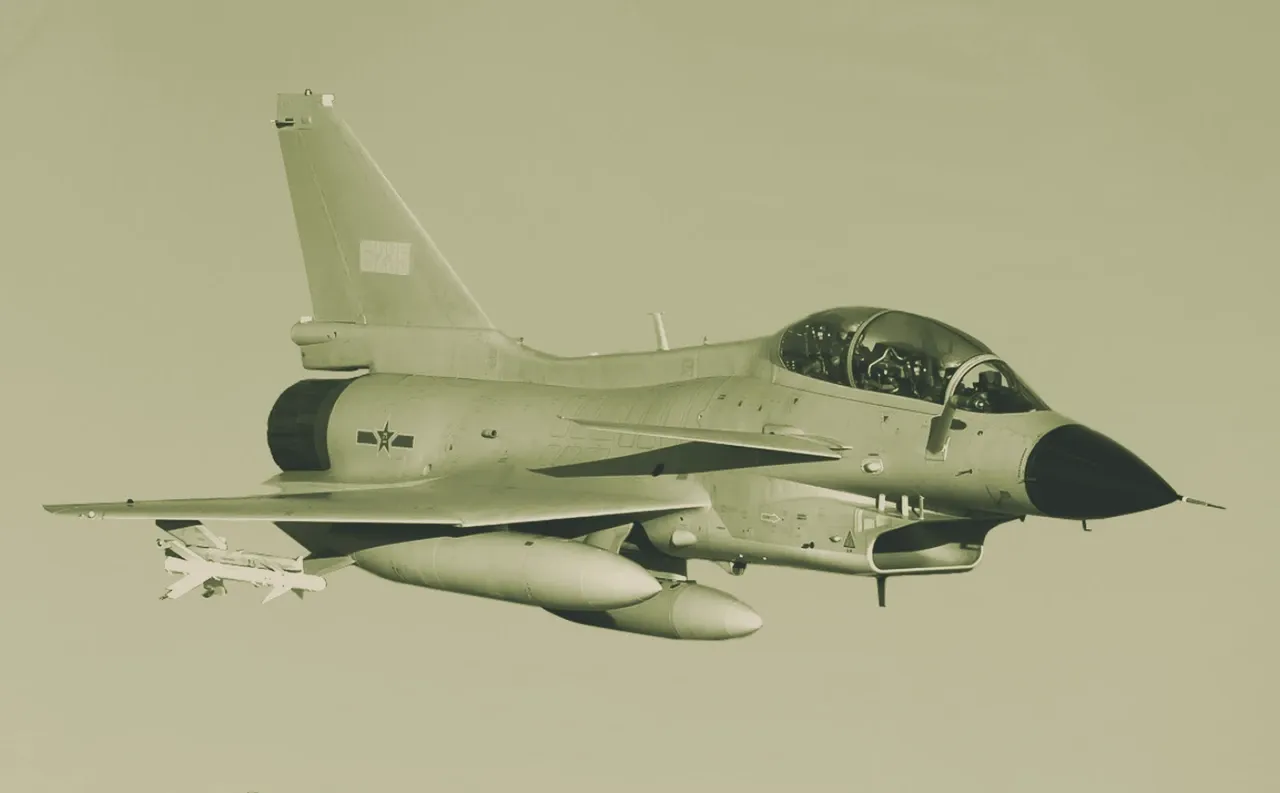
Overview
The Chengdu J-10C (export designation J-10CE) is the principal current variant of China’s J-10 “Vigorous Dragon” (Menglong) family. It is a single-engine, canard-delta multirole fighter that entered PLAAF service in 2018 and today forms a large part of China’s fourth-generation fighter fleet alongside the heavier J-11/J-16 family and the stealthy J-20. Pakistan has been the launch export customer, inducting the J-10CE from 2022 and giving the type its combat debut in the 2025 India–Pakistan air clashes. The aircraft is built by AVIC’s Chengdu Aircraft Corporation and is offered as a lower-cost 4.5-generation alternative to Western and Russian twins.
Development
The J-10 programme began in the 1980s and produced the J-10A (service ~2004–06) with an AL-31FN engine and mechanically scanned radar, followed by the J-10B with a diverterless supersonic inlet, PESA radar and IRST. The J-10C, which emerged in the late 2010s, upgraded the J-10B airframe with an indigenous AESA radar, a Chinese WS-10B engine and modern avionics, creating a 4.5-generation fighter in the same class as the latest F-16 or Rafale. According to Airforce Technology, the J-10C is a thorough modernisation that rectifies earlier performance and sensor shortfalls, bringing it in line with contemporary Western multirole types.
Design & capabilities
The J-10C retains the delta wing with a close-coupled canard planform of the original J-10, giving it high instantaneous turn rates and good high-alpha agility. It is powered by a single Shenyang WS-10B afterburning turbofan, replacing the earlier Russian AL-31FN and giving China engine sovereignty over the production fleet. The fire-control radar is an AESA set (Chinese designation not publicly disclosed) integrated with an infrared search-and-track (IRST) system and a helmet-mounted sight. The sensor suite feeds a pair of primary air-to-air weapons: the PL-15 long-range active-radar-homing BVR missile and the PL-10 high-off-boresight infrared missile, as well as an internal 23 mm cannon. For surface attack, the type carries a range of precision-guided munitions and anti-ship missiles on its approximately 11 hardpoints. TECHi notes that the J-10C’s combat radius varies from around 550 km in a demanding ground-attack profile to over 1,000 km in an air-defence configuration with external fuel, while a ferry range of roughly 3,200 km is achievable with drop tanks.
Variants
The J-10 family spans the baseline J-10A, the intermediate J-10B (PESA radar, diverterless inlet), the current J-10C and its export equivalent J-10CE, plus two-seat trainer versions of earlier blocks. The J-10C is the definitive modernisation, with AESA radar, WS-10B engine and the latest avionics; earlier variants remain in service in secondary roles.
Combat record / operational use
The J-10’s combat debut came not with the PLAAF but with the Pakistan Air Force. In May 2025, amid renewed India–Pakistan hostilities, Pakistani J-10CEs were reported by multiple outlets to have downed at least one Indian Dassault Rafale — the first time a Chinese-built fighter was credited with a kill against a top-tier Western type. The engagement is said to have been fought at long range using the PL-15E BVR missile. Aerospace Global News reported that Pakistan’s employment of the PL-15E from the J-10CE surprised Indian planners, while Bulgarian Military noted that the shootdown instantly validated the platform’s lethality and reversed earlier scepticism. Attribution remains anchored largely in Pakistani claims and partial Indian acknowledgements; no fully independent battle-damage assessment has been released. Prior to this clash, neither the J-10C nor any other J-10 variant had seen air-to-air combat, though PLAAF J-10s have participated in Southern-Theatre patrols and intercepts.
Advantages
- AESA radar and PL-15 BVR missile provide a credible long-range air-to-air engagement capability.
- High-agility delta-canard airframe with helmet-mounted sight and IRST enhances close-in combat.
- Domestically produced WS-10B engine eliminates reliance on Russian powerplants.
- Competitive flyaway cost (~$40–50 M) makes it an attractive export package; Pakistan’s acquisition including weapons and training was around $76 M per aircraft.
- Combat-proven debacle against a modern Western fighter boosts its reputation, though the kill claims remain officially unverified.
Drawbacks / limitations
- Single engine implies higher vulnerability in contested airspace compared to twins.
- Payload is less than that of heavy twins such as the J-16 or F-15EX; internal fuel capacity is limited (4,950 L), restricting persistence without drop tanks.
- Combat radius is mission-dependent and can fall to ~550 km when heavily loaded for strike.
- The airframe lacks widespread stealth treatment, making it detectable by modern integrated air-defence systems.
- Performance and radar specifications are not publicly disclosed, complicating independent appraisal.
Counterparts
- F-35A Lightning II (USA)
- Su-57 Felon (Russia)
- Dassault Rafale (France) — the aircraft it reportedly defeated in 2025, and a comparable omnirole 4.5-generation canard-delta.
- Eurofighter Typhoon — another canard-delta multirole fighter with similar weight class.
- J-20 Mighty Dragon — China’s stealthy higher-end fighter that operates alongside the J-10C in PLAAF’s high-low mix.
Outlook
J-10C production continues as the backbone of China’s single-engine fighter fleet, complementing the stealthy J-20 and the heavy J-16. Export momentum is building: Pakistan’s operational experience demonstrates the type’s competitiveness, and interest from Egypt and other potential buyers has been reported. Further block upgrades — particularly to the engine and electronic warfare suite — are likely as China consolidates its indigenous aero-engine capabilities.
Key specifications
| Spec | Value |
|---|---|
| Crew | 1 |
| Length / wingspan | 16.9 m / ~9.75 m |
| Max speed | ~Mach 2.0–2.2 (~2,327 km/h) |
| Service ceiling | ~18,000 m |
| Combat radius / range | ~550–1,000 km (internal); ferry ~3,200 km with tanks |
| Payload | Not publicly established (4,950 L internal fuel) |
| Hardpoints | ~11 |
| Radar / sensors | AESA fire-control radar (model undisclosed); IRST; helmet-mounted sight |
| Powerplant | 1 × WS-10B afterburning turbofan |
| Armament | 23 mm cannon; PL-15/PL-15E BVR, PL-10 SR, PGMs, anti-ship missiles |
Sources
- Airforce Technology — J-10 (Jian 10) Vigorous Dragon Multirole Tactical Fighter. https://www.airforce-technology.com/projects/j-10/
- TECHi — The Chengdu J-10C Fighter Jet: Specifications, Impact, and Global Positioning. https://www.techi.com/chengdu-j10c-fighter-jet/
- National Interest — China’s J-10 Fighter Jet Could Reshape the Indo-Pacific. https://nationalinterest.org/blog/buzz/chinas-j-10-fighter-jet-could-reshape-indo-pacific-hk-022326
- Aerospace Global News — India Dassault Rafale shootdown: Pakistani missile underestimated. https://aerospaceglobalnews.com/news/india-dassault-rafale-shootdown-pakistan-missile/
- Bulgarian Military — Chinese J-10C surges Chengdu stock price by 40 percent in days. https://bulgarianmilitary.com/2025/05/12/chinese-j-10c-surges-chengdu-stock-price-by-40-percent-in-days/
- Wikipedia — Chengdu J-10. https://en.wikipedia.org/wiki/Chengdu_J-10