HAL Tejas
India's home-built fighter — four decades in the making — the Tejas is a light, agile single-engine delta jet that finally gave India an indigenous combat aircraft. The Mk1A adds AESA radar and beyond-visual-range missiles; the bigger Mk2 is coming. The flagship of India's defence self-reliance.
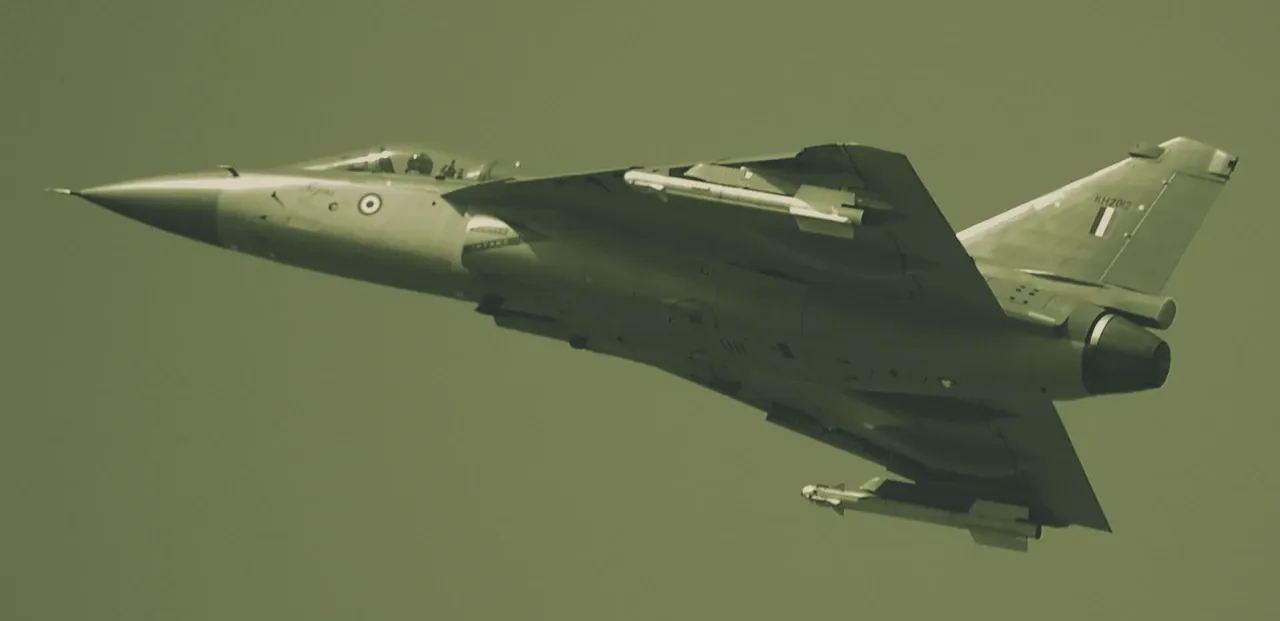

India's home-built fighter, four decades in the making — the Tejas (Sanskrit for "radiance") is a light, agile single-engine delta jet that finally gave India an indigenous combat aircraft after one of the longest fighter-development sagas in aviation history. The Mk1A version adds an AESA radar and beyond-visual-range missiles, and the larger, more powerful Mk2 is in development. More than a warplane, the Tejas is the flagship of India's drive for defence self-reliance — and, increasingly, a candidate for export.
Overview
The Tejas (designated LCA, Light Combat Aircraft) is a single-engine, tailless delta-wing multirole fighter developed by India's Aeronautical Development Agency (ADA) and built by Hindustan Aeronautics Limited (HAL). It is a light, relatively inexpensive fourth-generation (Mk1A: 4.5-generation) jet — powered by a single GE F404 turbofan, reaching about Mach 1.6 — designed to give the Indian Air Force a domestically-produced fighter to replace ageing MiG-21s. After a famously protracted development, it entered service in 2016, and the improved Mk1A (with an AESA radar, electronic-warfare suite, beyond-visual-range missiles and aerial refuelling) is now in production, with the larger, F414-powered Mk2 under development. The Tejas is the centrepiece of India's "self-reliance" (Atmanirbhar Bharat) push in defence, intended both to equip the IAF and to compete for export orders.
🔒 The full HAL Tejas file is for BattlePolicy Pro members. Below the line: development history, design and capabilities, variants, the combat record, advantages and limitations, comparable systems, outlook, the full specifications table, our sourcing, and the analyst assessment — procurement, suppliers and the BattlePolicy verdict. Unlock the full file with BattlePolicy Pro →
Below this point
- Development
- Design & capabilities
- Variants
- Combat record / operational use
- Advantages
- Drawbacks / limitations
- Counterparts
- Outlook
- Key specifications
- Sources
- Analyst Section
- Procurement & contracts
- Suppliers & related companies
- Comparable systems — analyst view
- Analyst note