FA-50 Fighting Eagle
The affordable fighter conquering the export market — KAI's FA-50 is a light, supersonic combat jet (born from the T-50 trainer) that delivers much of an F-16's mission at a fraction of the cost. Poland, the Philippines and Malaysia are buying it; Block 20 jets add AESA radar and aerial refuelling.
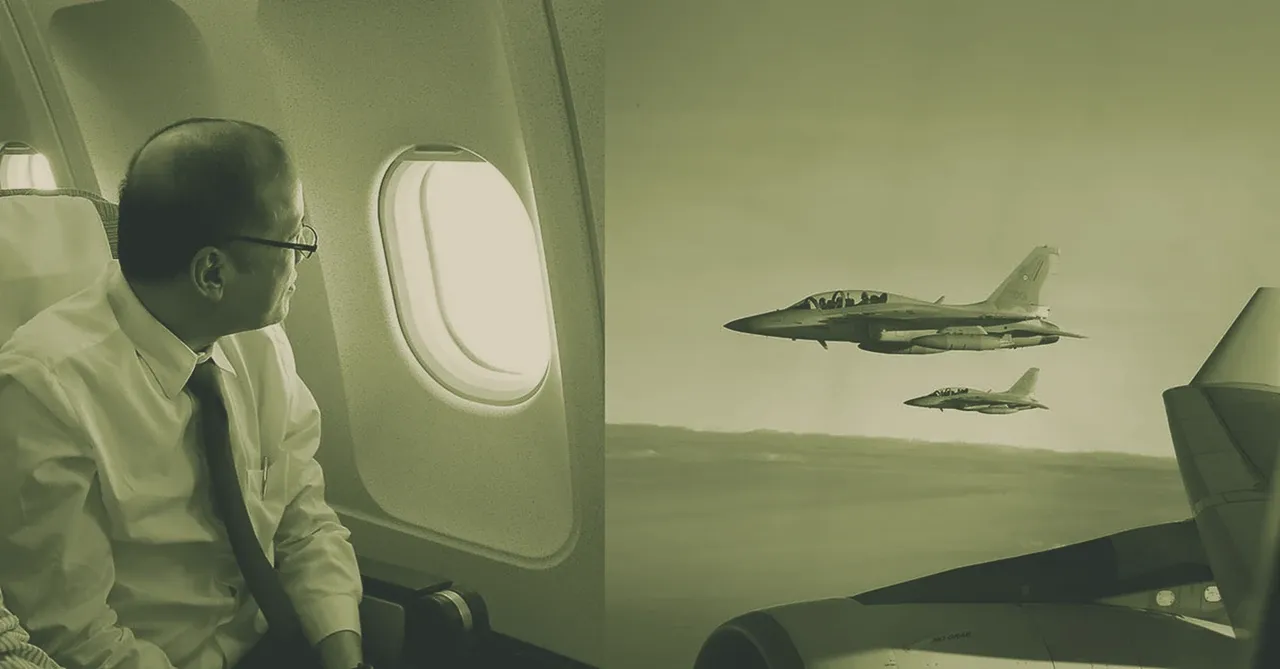
The affordable fighter conquering the export market — KAI's FA-50 is a light, supersonic combat jet, born from the T-50 trainer, that delivers a useful slice of an F-16's mission at a fraction of the cost and complexity. It has become one of the world's hottest defence exports: Poland, the Philippines, Malaysia, Thailand, Iraq and others have bought it, and newer Block 20 versions add AESA radar, aerial refuelling and a much wider weapons suite — turning a trainer-derived light attack jet into a credible budget fighter for air forces that cannot afford fleets of frontline aircraft.
Overview
The FA-50 Fighting Eagle is a light combat aircraft built by Korea Aerospace Industries (KAI), developed from the T-50 Golden Eagle supersonic trainer (itself designed with Lockheed Martin and visually F-16-like). It is a single-engine, supersonic (around Mach 1.5) jet that bridges the gap between an advanced trainer and a frontline fighter: cheap to buy and operate, easy to maintain, and capable of light air-defence, ground-attack and lead-in fighter training. Armed with an internal cannon and carrying air-to-air and air-to-ground weapons across multiple hardpoints, the FA-50 lets smaller or budget-constrained air forces field a real combat jet — and lets larger ones train pilots and fly lighter missions affordably. Its export success has been remarkable, making it the commercial breakout of South Korea's aerospace industry and a stablemate to KAI's larger KF-21 Boramae fighter.
Development
The FA-50 grew out of the T-50 Golden Eagle, which KAI developed with Lockheed Martin and first flew in 2002, producing a family of trainer and light-attack variants (T-50, TA-50, FA-50), per Wikipedia. The armed FA-50 entered service in the mid-2010s and quickly found export demand: the Philippines (which has used it in combat), Thailand (T-50TH), Iraq, Indonesia, and then the landmark Poland order in 2022 for 48 aircraft (12 early jets plus 36 of an advanced Polish Block 20 configuration), followed by Malaysia (18 Block 20), per Defence Industry Europe and MILMAG. The newer Block 20 is a major step up — adding an AESA radar, aerial refuelling, more fuel and an expanded weapons range — and KAI has proposed a single-seat F-50 to compete more directly for F-16-class roles. Over 219 of the T-50/FA-50 family have been built, with potential large deals (such as Egypt) in prospect.
Design & capabilities
The FA-50 is a compact, single-engine supersonic jet (a single General Electric F404 turbofan) with handling and a layout reminiscent of the F-16 — unsurprising given the T-50's Lockheed Martin heritage. It carries a 20mm three-barrel cannon and weapons across seven hardpoints, including air-to-air missiles (AIM-9, and on Block 20 beyond-visual-range options being integrated, with Meteor proposed) and a range of air-to-ground munitions (guided bombs, rockets), plus targeting and EW pods. The baseline relied on a mechanical radar; the Block 20 fits a modern AESA radar (Raytheon PhantomStrike or LIG Nex1), an aerial-refuelling capability for greater reach, more internal fuel, and integration of a wider weapons set — closing much of the gap to a frontline light fighter. Its core value proposition is economy: far cheaper to acquire and fly than an F-16 or larger fighter, simple to support, and able to double as a lead-in fighter trainer, so an air force gets training and a usable combat capability from one affordable airframe. The trade-off is that it is a light combat aircraft — shorter range, smaller payload and less capability than a full fighter — best suited to lighter missions, training and budget-constrained forces.
Variants
- T-50 Golden Eagle: the supersonic advanced trainer (base of the family).
- TA-50: light-attack/lead-in fighter trainer.
- FA-50: the armed light combat aircraft.
- FA-50 Block 10 / Block 20: Block 20 adds AESA radar, aerial refuelling, more fuel and weapons.
- FA-50PL (Poland), FA-50PH (Philippines) and other national configurations.
- F-50 (proposed): a single-seat development for more fighter-like roles.
Combat record / operational use
The FA-50 has seen real combat use, most notably with the Philippine Air Force, which has employed FA-50PHs in air strikes against insurgent groups (including in the 2017 Marawi conflict) — demonstrating its light-attack utility. It serves as a frontline light fighter and lead-in trainer across a growing list of operators, and its rapid export spread (Poland, Malaysia, Thailand, Iraq, Indonesia and others) is its defining "operational" story: air forces choosing an affordable, supportable combat jet to build or sustain capability they could not otherwise afford. Poland's adoption — buying FA-50s as an interim/companion fleet while awaiting F-35s and additional aircraft — illustrates the type's role as a fast, cheap way to field combat airpower. As a light aircraft, it is not built for high-end air combat, but for the many missions and budgets where a full fighter is unnecessary or unaffordable.
Advantages
- Affordable — far cheaper to buy and operate than an F-16 or frontline fighter.
- Dual-use — light combat aircraft and lead-in fighter trainer in one airframe.
- Combat-capable — supersonic, cannon plus air-to-air and air-to-ground weapons on seven hardpoints.
- Modernized (Block 20) — AESA radar, aerial refuelling, expanded weapons close the gap to a light fighter.
- Export success — adopted by many air forces; KAI's commercial breakout and a fast-delivery option.
Drawbacks / limitations
- Light aircraft limits — shorter range, smaller payload and less capability than a full fighter.
- Single engine, modest size — constrains growth, endurance and high-end performance.
- Not for high-end air combat — outmatched by frontline fighters in contested airspace.
- Capability depends on block/fit — earlier jets lack the AESA/refuelling of Block 20.
- Engine/components imported — relies on US-supplied engine and some systems.
Counterparts
The FA-50 competes in the light-fighter/lead-in market with the Italian Leonardo M-346FA, the Indian Tejas, the Chinese/Pakistani JF-17, and — in the role it most often fills affordably — the venerable F-16 (which it resembles and partly substitutes for). It is the lighter, cheaper stablemate to KAI's own KF-21 Boramae, and trains pilots who may go on to fly fighters like the F-35. Its distinction is value: a supersonic, genuinely combat-capable jet at light-aircraft cost, now upgradable (Block 20) toward true light-fighter capability — the combination that has made it one of the most successful defence exports of the decade and a pillar of South Korea's aerospace rise.
Outlook
The FA-50 is the commercial spearhead of South Korea's aerospace industry and a beneficiary of strong global demand for affordable airpower. Its trajectory is continued exports (with large prospects like Egypt), the maturation of the AESA-equipped Block 20, integration of beyond-visual-range weapons, and the possible single-seat F-50 for more fighter-like roles — broadening the type from light-attack/trainer toward a credible budget fighter. The variables to watch are how far the upgrades close the gap to frontline fighters, the scale of further orders, and the FA-50's place alongside KAI's KF-21 in Korea's expanding combat-aircraft lineup. For air forces priced out of frontline fighters, the FA-50 is the pragmatic answer — affordable, supportable, combat-capable — and for South Korea it is proof, like the K2 and K9, that its defence industry can win on cost, speed and capability in the global market.
Key specifications
| Spec | Value |
|---|---|
| Type | Light combat aircraft / lead-in fighter trainer |
| Origin | South Korea — KAI (with Lockheed Martin, T-50 design) |
| First flight (T-50) | 2002 |
| Engine | 1 × General Electric F404 turbofan |
| Max speed | ~Mach 1.5 |
| Cannon | 20mm three-barrel |
| Hardpoints | 7 (air-to-air and air-to-ground) |
| Block 20 | AESA radar, aerial refuelling, more fuel/weapons |
| Built | 219+ T-50/FA-50 family |
| Operators | South Korea, Poland, Philippines, Malaysia, Thailand, Iraq, Indonesia, others |
| Status | In service / production |
Sources
- KAI T-50 Golden Eagle — Wikipedia
- Philippines signs $700M contract with KAI for 12 FA-50PH Block 20 — Defence Industry Europe
- The Philippines Ordered 12 FA-50PH Block 20 Aircraft — MILMAG
- South Korea develops new single-seat FA-50 variant — Army Recognition
- South Korea could export up to 100 FA-50 to Egypt — Army Recognition
- KAI T-50/FA-50 — Aviation Week
🔒 The Analyst Section on FA-50 Fighting Eagle is for BattlePolicy Pro members. Below the line: procurement and contract history, the suppliers and companies behind the system, our head-to-head analyst view of the systems it actually competes with, and the BattlePolicy assessment note. Unlock the full file with BattlePolicy Pro →