Saab JAS 39 Gripen
Sweden's homegrown lightweight multirole fighter—a single-engine, canard-delta design built for dispersal operations and low operating costs, fielded in classic C/D and next-generation E/F variants.
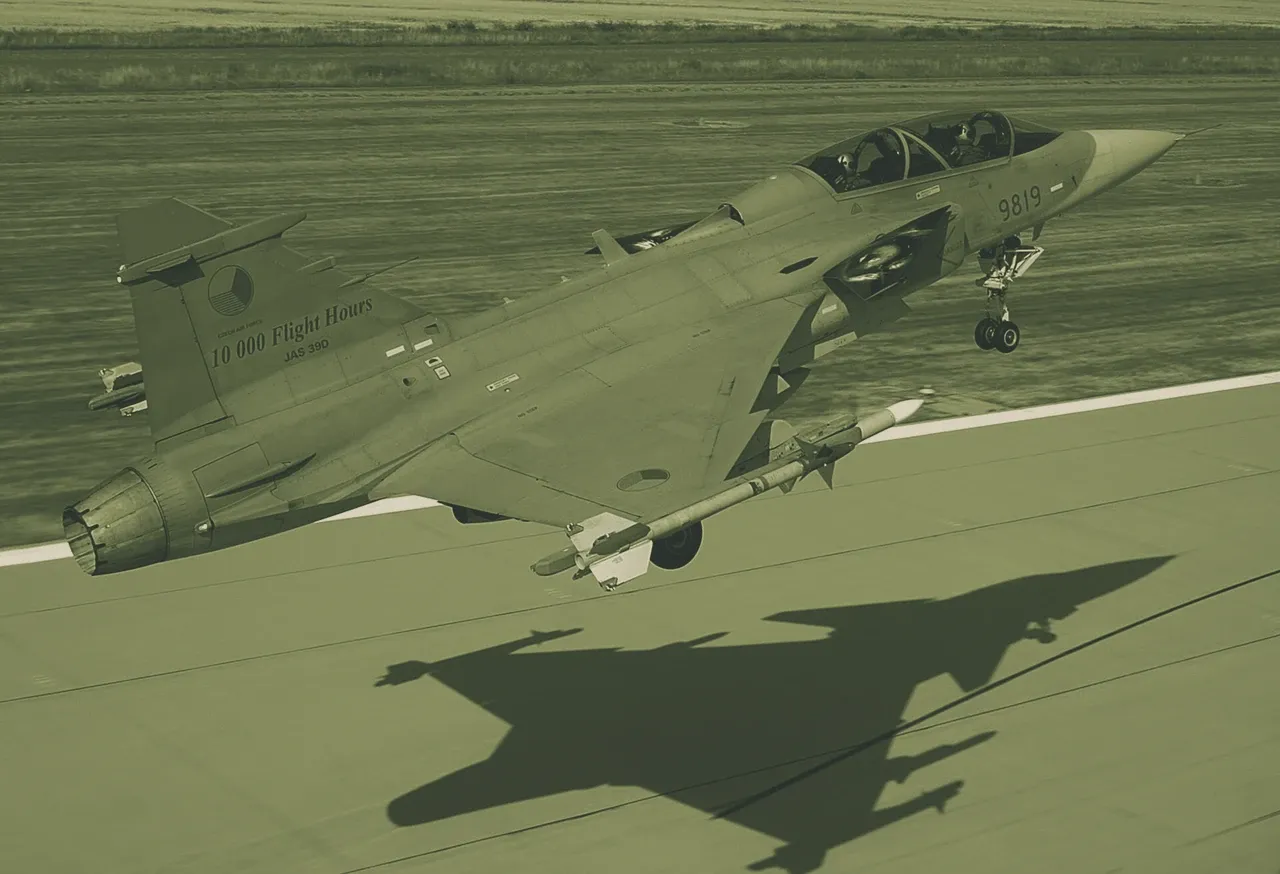
Sweden's homegrown lightweight multirole fighter — a single-engine, canard-delta design purpose-built for dispersed road-base operations, low operating cost, and swift turnarounds, now serving across two major generations in multiple air forces.
Overview
The Saab JAS 39 Gripen (“Griffin”) is a single-engine, canard-delta multirole fighter developed by Saab AB in Linköping. Conceived to replace the Viggen with a smaller, more affordable airframe that could operate from dispersed highway strips, the Gripen entered service in 1996 and has since evolved through the 4th-generation C/D standard into the substantially re-engined, AESA-equipped 4.5-generation Gripen E/F. Seven air arms currently fly the type, with Ukraine slated to become its first combat operator in the late 2020s.
Development
Sweden’s Defence Materiel Administration initiated the JAS (Jakt, Attack, Spaning — fighter, attack, reconnaissance) programme in the late 1970s, seeking a single platform to replace the Draken and Viggen fleets. The first prototype flew on 9 December 1988, and the initial operational Gripen A reached the Swedish Air Force in 1996, according to a timeline compiled by Wikipedia. A thorough redesign produced the NATO-interoperable C/D variant, which added in-flight refuelling, a full-colour cockpit, and an upgraded PS-05/A radar; deliveries of the C/D began around 2003 Saab Gripen C-series. The next-generation Gripen E (single-seat) and F (twin-seat) embarked on a separate development track, flying for the first time in 2017 and entering service with Sweden in 2019, powered by a GE F414G engine and built around the Raven ES-05 AESA radar Saab Gripen E-series.
Design & capabilities
The Gripen’s canard-delta layout and relaxed-stability fly-by-wire system yield a small radar cross-section by 4th-gen standards and permit operations from 800 m stretches of reinforced highway. C/D models are powered by a single Volvo RM12 (a licence-built GE F404 derivative producing ~80.5 kN with afterburner), while the E/F mounts the substantially more powerful GE F414G generating ~98 kN Saab Gripen C-series; Saab Gripen E-series. The C/D carries a mechanical PS-05/A radar with look-down/shoot-down capability, whereas the E/F introduces the Raven ES-05 AESA with a swashplate-mounted array that widens the field of regard plus a nose-mounted IRST. Both generations share an internal 27 mm Mauser BK-27 cannon and a modular mission computer that enables quick software-defined role changes. The E/F’s ten hardpoints (vs. the C/D’s eight) and increased internal fuel lift combat radius from roughly 800 km to about 1,300 km, while the airframe retains the ability to re-arm and refuel in under 10 minutes with a conscript ground crew Bundeswehr JAS 39 C/D data.
Variants
- Gripen A/B – original single-/twin-seat baseline; retired or used for training.
- Gripen C/D – NATO-interoperable multirole standard with in-flight refuelling, colour cockpit, and improved avionics; backbone of the Swedish, Czech, Hungarian, South African, and Thai fleets.
- Gripen E/F – next-generation variant with GE F414G engine, Raven ES-05 AESA, Meteor compatibility, higher payload, and expanded range; Sweden and Brazil are the launch customers, with Ukraine planning acquisition.
Combat record / operational use
The Gripen has not recorded an air-to-air kill in operational service, though it has been a regular participant in NATO air-policing missions. Czech Gripens have deployed to the Baltic region since 2009, and Hungarian Gripens have contributed to the same mission since 2015 Wikipedia operational history. Sweden’s accession to NATO in March 2024 brought its own Gripen C/D and E units into the Alliance’s integrated air-policing framework. The most significant future operational development is the Swedish government’s 2024 announcement to donate 16 Gripen C/D airframes to Ukraine and to initiate a sale of up to roughly 150 Gripen E, with deliveries projected from 2027–28, which would mark the type’s first exposure to contested airspace Kyiv Post.
Advantages
- Designed from the outset for road-base dispersal, enabling operations from short highway strips and austere airstrips.
- Low operating cost (estimated at roughly $5,000–$6,500 per flight hour for the C/D) and a 10-minute turnaround achievable by a small conscript crew.
- High sortie generation rates and field-level maintainability, proven in cold-weather Nordic conditions.
- Gripen E adds a mechanically scanned AESA with a wide field of regard and full Meteor beyond-visual-range missile integration, bridging the radar-generation gap with larger 4.5-gen fighters.
- Compact, cost-effective platform for nations seeking modern multirole capability without the infrastructure burden of heavyweight fighters.
Drawbacks / limitations
- Modest payload and combat radius compared with twin-engine 4.5-gen counterparts; the C/D can carry roughly half the external load of a Rafale or F-15EX.
- The C/D’s PS-05/A mechanical radar lacks AESA beam-agility and multi-target handling, limiting performance in dense electronic environments.
- Gripen E/F production remains relatively low-volume, with operator fleets in the dozens rather than hundreds, restricting economies of scale and combat-mass availability.
- No combat record in contested airspace; the type’s combat survivability against modern IADS and air-to-air threats remains untested.
Counterparts
- Su-57 Felon (Russia)
- J-20 Mighty Dragon (China)
Outlook
The Gripen E/F production line is expanding to meet the combined requirements of Sweden (60 aircraft), Brazil (36 as F-39), and the planned Ukrainian fleet, with delivery timelines stretching into the 2030s. Saab continues to integrate advanced weapons—including the MBDA Meteor, SPEAR 3, and long-range stand-off missiles—while exploring further sensor and electronic-warfare upgrades for the E/F backbone. The type’s low operating cost and road-base pedigree sustain its appeal among small to medium-sized air forces, but its strategic relevance will ultimately depend on how it performs in high-threat environments and whether the E/F can achieve the production scale that the design’s economics promise.
Key specifications
| Spec | Value |
|---|---|
| Crew | 1 (C/E) / 2 (D/F) |
| Length / wingspan | 14.9 m / 8.4 m (C/D); 15.2 m / 8.6 m (E/F) |
| Max speed | Mach 2 (~2,470 km/h) both generations |
| Service ceiling | ~15,240 m (50,000 ft) |
| Combat radius / range | ~800 km (C/D); ~1,300 km (E/F) |
| Payload | ~5,300 kg (C/D); ~7,200 kg (E/F) |
| Hardpoints | 8 (C/D) · 10 (E/F) |
| Radar / sensors | PS-05/A mechanical (C/D); Raven ES-05 AESA + IRST (E/F) |
| Powerplant | 1× Volvo RM12 (~80.5 kN) (C/D); 1× GE F414G (~98 kN) (E/F) |
| Armament | 27 mm Mauser BK-27; A2A — MBDA Meteor, AIM-120, IRIS-T; A2G — GBU-12/16/49, RBS-15 (anti-ship), Brimstone/SPEAR (integrating) |
Sources
- Gripen C-series — Saab. https://www.saab.com/products/gripen-c-series
- Gripen E-series — Saab. https://www.saab.com/products/gripen-e-series
- Saab JAS 39 Gripen — Wikipedia. https://en.wikipedia.org/wiki/Saab_JAS_39_Gripen
- JAS 39 Gripen C/D technical data — Bundeswehr. https://www.bundeswehr.de/en/ace21-jas-39-gripen-c-d-5605560
- Sweden Gives Ukraine 16 Gripens, Plans Sale of 22 More — Kyiv Post. https://kyivpost.com/post/77044