Su-30SM
The Su-30SM — Russia’s twin-seat, thrust-vectoring multirole Flanker — combines long-range strike and air superiority with a dedicated weapons-system officer, and forms the backbone of Russian and several allied air forces.
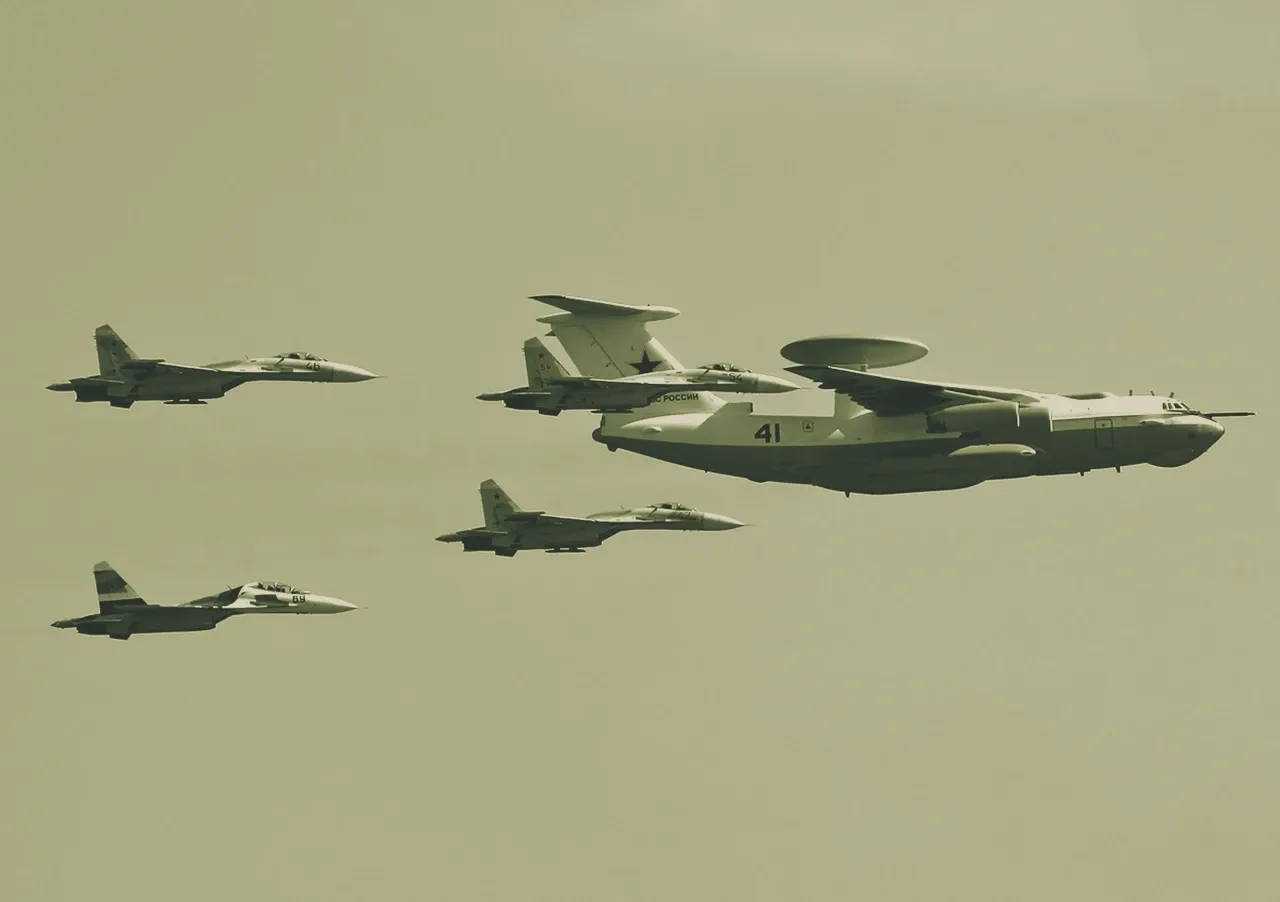
Russia’s twin-seat, thrust-vectoring multirole Flanker — a long-range strike and air-superiority fighter with a dedicated weapons-system officer, derived from the export-oriented Su-30MKI and in Russian service since 2012.
Overview
The Sukhoi Su-30SM (NATO reporting name "Flanker-H") is a twin-engine, two-seat multirole fighter derived from the Su-30 family and built by the Irkut Corporation. It marries high payload and long range with thrust-vectoring engines, a passive-array (PESA) radar, and a rear-seat weapons-system officer who off-loads the pilot during complex strike and air-combat missions. The aircraft entered Russian Aerospace Forces (VKS) service in 2012, with an upgraded Su-30SM2 following from 2022. Export variants equip the air arms of India, Kazakhstan, Belarus, Armenia, Myanmar and Algeria, making the Su-30SM/SM2 one of the most numerous modern Flanker derivatives globally.
Development
Russia developed the Su-30SM as a domestically tailored version of the Su-30MKI, which had been co-developed with India and first flew in the late 1990s. Irkut’s Su-30SM prototype took to the air in September 2012, according to Airforce Technology, and the type reached frontline VKS units the same year. The subsequent Su-30SM2 upgrade, which brings commonality with the single-seat Su-35S, was ordered for Russian Naval Aviation and began deliveries in 2022. Production and upgrade work are shared among the Irkut Aviation Plant and United Aircraft Corporation (UAC) facilities inside Rostec.
Design & capabilities
The Su-30SM is a large, twin-tandem-seat canard-delta design with a maximum take-off weight of around 34,500 kg and 12 external hardpoints capable of carrying up to 8,000 kg of stores. Thrust-vectoring Saturn AL-31FP engines give the aircraft exceptional agility, while the rear-seat weapons-system officer handles sensors, long-range engagement and stand-off weapons. The baseline N011M Bars PESA radar can detect fighter-size targets at beyond-visual-range and track multiple threats simultaneously; the SM2 version reportedly moves to an Irbis-E-class radar with greater range and resistance to electronic countermeasures. A 30 mm GSh-30-1 cannon is mounted internally, and typical air-to-air loads include R-73/R-74 infrared, R-77 active-radar and R-27 semi-active missiles, while the SM2 adds integration of the very-long-range R-37M. Air-to-surface weapons encompass Kh-29, Kh-31 and Kh-59 guided munitions. The aircraft’s unrefuelled range reaches approximately 3,000 km, allowing it to operate at extended combat radii when configured with external tanks.
Variants
- Su-30SM – baseline domestic version with AL-31FP engines and N011M Bars radar.
- Su-30SM2 – upgraded model for Russian Naval Aviation featuring AL-41F1S engines, a more capable radar and R-37M long-range missile compatibility.
- Su-30MKI – Indian Air Force variant, licence-built by HAL; the basis for the Russian SM design but with indigenised avionics and different operational equipment.
Combat record / operational use
Russian Su-30SMs have been active in the Syrian theatre since 2015, performing air-superiority patrols and precision strikes. In the full-scale invasion of Ukraine the type has flown both offensive counter-air and ground-attack sorties, and open-source intelligence has documented at least several airframe losses as part of the broader attrition of Russia’s Flanker fleet, reported by Asia Times. The type’s two-seat crew configuration has proved valuable for managing high-workload stand-off weapon employment in contested airspace. The Indian Air Force’s Su-30MKI, a very close relative, has seen no combat in the Russo-Ukrainian war but remains the IAF’s principal air-superiority platform.
Advantages
- Large payload and generous fuel volume enable long-range strike and loiter.
- Two-seat cockpit divides piloting from sensor-and-weapon management, improving crew situational awareness.
- Thrust-vectoring gives high-angle-of-attack agility unmatched by most Western fighters.
- Proven integration of a wide range of Russian air-to-air and air-to-ground munitions.
- Affordable unit cost compared with Western 4.5-generation twins; suited for mass deployment.
Drawbacks / limitations
- The Bars PESA radar is a generation behind contemporary AESA sets in tracking and electronic-protection performance.
- A large radar cross-section makes the aircraft conspicuous to modern airborne and ground-based sensors.
- Heavy reliance on Russian-source engines and avionics leaves operators exposed to sanctions and supply-chain disruption.
- Maintenance is manpower-intensive and the operational tempo can be constrained by engine life and airframe fatigue life.
- No low-observable features; survivability in a dense integrated-air-defence environment depends heavily on stand-off tactics.
Counterparts
- F-35A Lightning II (USA)
- J-20 Mighty Dragon (China)
Outlook
The Su-30SM will stay in production and serve as the high-end twin-seat element of Russian VKS and Naval Aviation. The SM2 upgrade brings modest sensor and engine improvements, but the fundamental airframe remains a fourth-generation design that increasingly relies on stand-off weapons to offset its radar signature. Exports are challenged by US sanctions and the growing availability of Chinese fighters, yet the type continues to attract orders from states seeking a capable, relatively inexpensive multirole workhorse. The Indian Su-30MKI, with its own upgrade pathway, will remain the subcontinental heavyweight for years to come.
Key specifications
| Spec | Value |
|---|---|
| Crew | 2 (tandem) |
| Length / wingspan | 21.9 m / 14.7 m (est.) |
| Max speed | Mach 2 (~2,120 km/h) (est.) |
| Service ceiling | ~17,300 m (est.) |
| Combat radius / range | Combat radius not cleanly published; max range ~3,000 km |
| Payload | ~8,000 kg |
| Hardpoints | 12 |
| Radar / sensors | N011M Bars PESA (SM2 upgraded) |
| Powerplant | 2 × Saturn AL-31FP thrust-vectoring afterburning turbofans (SM2: AL-41F1S class) |
| Armament | 1 × 30 mm GSh-30-1 cannon; A2A – R-73/R-74, R-77, R-27, R-37M (SM2); A2G – Kh-29, Kh-31, Kh-59 |
Sources
- Airforce Technology – Su-30SM Multirole Fighter Aircraft, Russian Federation. https://www.airforce-technology.com/projects/su-30sm-multirole-fighter-aircraft/
- Wikipedia – Sukhoi Su-30. https://en.wikipedia.org/wiki/Sukhoi_Su-30
- Asia Times – Russia's Su-35 deal gives Iran wings–but not backing (loss figures). https://asiatimes.com/2025/10/russias-su-35-deal-gives-iran-wings-but-not-backing/