GRID-REF 37°47′N 122°25′W
DISPATCH 02/26 · 9 Jun 2026
BATTLEPOLICY
Startup to front line. Strategy to consequence.
Lexicon · USA

F-15EX Eagle II

The F-15EX Eagle II is a 4.5-generation heavyweight twin-engine fighter derived from the Strike Eagle / QA, built to haul extreme payloads of air-to-air and standoff munitions, and to serve as the USAF’s new homeland-defense and high-end missile truck.
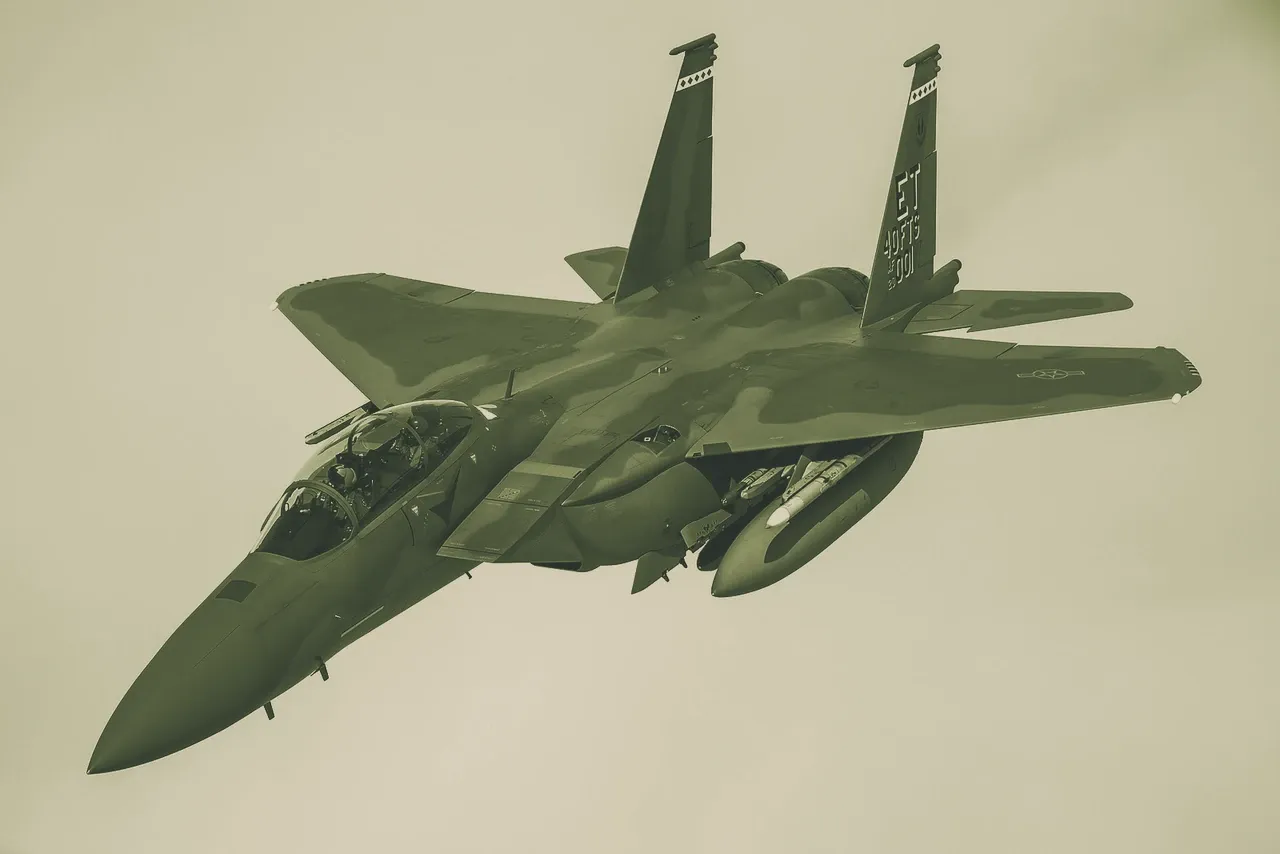
F-15EX Eagle II
FIG.01 · USA Image - F-15EX Eagle II. Photo by Ethan Wagner, Public domain, via Wikimedia Commons.
Boeing’s 4.5-generation twin-engine heavyweight — a direct descendant of the Strike Eagle and the Qatari F-15QA, fielded by the U.S. Air Force as a high-payload standoff missile carrier and homeland-defense interceptor.

Overview

The F-15EX Eagle II is the newest production member of the F-15 family, a twin-engine, two-seat multirole fighter that combines the airframe of the advanced F-15QA with American-specific mission systems. It is optimised to carry an unprecedented air-to-air load — up to 22 medium-range missiles in some configurations — while also hauling large stand-off strike munitions. The USAF acquired the EX to replace ageing F-15C/D Eagles in the air-defense and homeland-defense role and to complement the stealth F-35 during high-intensity operations, where a “missile truck” that can offload large salvos from stand-off ranges is increasingly valued. Poland became the first export customer for the F-15EX “Advanced Eagle” configuration.

Development

Boeing developed the F-15EX by building on the F-15QA, which was originally built for the Qatar Emiri Air Force and first flew in 2019. The U.S. Air Force selected the F-15EX in 2020 as the most cost-effective way to recapitalise the F-15C/D fleet, leveraging the hot production line in St. Louis. The first jet was delivered in 2021, and the type achieved initial operational capability (IOC) in July 2024.[^1] To power the aircraft, the Air Force awarded a $1.6 billion sole-source contract to General Electric for F110-GE-129 engines, which offer commonality with other USAF F-15 and F-16 fleets, as reported by Breaking Defense. The programme of record envisions 98–104 jets for the USAF and the Air National Guard, with full operational capability targeted for 2027.

Design & capabilities

The Eagle II is the heaviest fighter in the current tranche, with a maximum takeoff weight of ~36,740 kg — well above the F-35A’s 31,800 kg — and a payload capacity of 13,380 kg across 12 + hardpoints.[^2] Its twin GE F110-GE-129 engines (each producing ~131 kN in afterburner, as detailed in Defense News) push the aircraft to Mach 2.5, and the airframe carries enough internal fuel for a combat radius of approximately 1,270 km. The flight-deck can be operated by a single pilot, but the two-seat canopy and second station allow the flexibility of a dedicated weapons-systems officer.

The sensor suite centres on the Raytheon AN/APG-82(V)1 active electronically scanned array (AESA) radar, which provides long-range detection, simultaneous air-to-air and air-to-ground modes, and high resistance to jamming. The Eagle Passive/Active Warning and Survivability System (EPAWSS) gives the aircraft a modern electronic-warfare capability, integrating radar warning, jamming, and decoy dispensing. The combination allows the F-15EX to operate in contested electromagnetic environments while providing protection comparable to that of far younger designs. The cockpit is fully digital, with large-area displays and advanced mission computers adapted from the F-15QA.

Weapons carriage is the aircraft’s defining feature. Boeing states the aircraft can carry up to 22 AIM-120 AMRAAMs in an air-defence loadout; the carriage trials for hypersonic munitions, such as the AGM-183A ARRW, are also underway, positioning the EX as a potential stand-off strike launcher.

Combat record / operational use

No combat record is publicly established. As of 2025–26, the F-15EX is flying in USAF operational test and evaluation and has begun integrating into National Guard air-defense alert units, a process tracked by Air & Space Forces Magazine. The type has not yet deployed overseas.

Advantages

  • Enormous payload — 13,380 kg and up to 22 AAMs in an air-dominance configuration, far exceeding any other Western fighter.
  • High speed and range — Mach 2.5 top speed and a combat radius of ~1,270 km, allowing rapid intercept and stand-off launch profiles.
  • Mature airframe — derived from a lineage with thousands of combat hours, so logistics commonality with existing F-15E/K/SG/QA fleets lowers per-hour costs.
  • Modern sensor/EW package — AN/APG-82(V)1 AESA and EPAWSS give the EX situational awareness and survivability comparable to 4.5-generation contemporaries.
  • Two-seat flexibility — can be flown single-pilot or with a weapons-systems officer, enabling complex mission management and growing into future crewed-uncrewed teaming roles.

Drawbacks / limitations

  • High cost — ~$90 million flyaway, making every loss expensive, and limiting fleet size.
  • Large radar signature — the airframe is not low-observable; in dense threat environments the aircraft relies on stand-off weapons and EW, not stealth.
  • Twin-engine maintenance — two engines raise sustainment costs compared with single-engine 4.5-gen alternatives.
  • Limited production run — the USAF programme of record is ~100 aircraft, preventing the economies of scale that reduce per-unit cost in the F-35A fleet.
  • Unproven in combat — no combat data exists to validate the survivability of the EPAWSS-plus-payload concept against modern integrated air defences.

Counterparts

  • Su-57 Felon (Russia) — 5th-generation twin-engine stealth fighter, competing in the high-end air-superiority bracket.
  • J-20 Mighty Dragon (China) — 5th-generation twin-engine stealth fighter, China’s premier air-superiority platform.

Outlook

The F-15EX is likely to serve for decades as the USAF’s high-capacity missile truck, augmenting the stealthy F-35 and F-22 during offensive counter-air and defensive operations. With the service’s Next-Generation Air Dominance programme still in development, the EX offers a near-term, low-risk path to keep the F-15C/D replacement on schedule. Export interest beyond Poland is plausible, particularly among operators of the advanced F-15 variants who may seek an upgrade path. The aircraft’s future relevance will depend heavily on the integration of ever larger and more capable weapons — including hypersonic missiles — and on the maturation of the EPAWSS electronic-warfare suite to keep the large, non-stealthy airframe viable in the increasingly dense sensor nets of potential adversaries.

Key specifications

Spec Value
Crew 1–2 (single-pilot operable)
Length / wingspan 19.4 m / 13.0 m
Max speed Mach 2.5 (~2,655 km/h)
Service ceiling ~18,000 m (60,000 ft)
Combat radius / range ~1,272 km / ~3,900 km ferry
Payload ~13,381 kg (29,500 lb)
Hardpoints 12 + stations
Radar / sensors AN/APG-82(V)1 AESA; EPAWSS EW suite
Powerplant 2 × GE F110-GE-129 afterburning turbofans (~131 kN each)
Armament 1 × 20 mm M61 Vulcan; AIM-120, AIM-9X, AIM-260 (planned); JDAM, JASSM-ER, JSOW; hypersonic-carriage tested

Sources

  1. Boeing — “F-15EX Eagle II” official page. https://www.boeing.com/defense/fighters-and-bombers/f-15ex-eagle
  2. Air & Space Forces Magazine — “F-15EX Eagle II” platform profile. https://www.airandspaceforces.com/weapons-platforms/f-15ex/
  3. Breaking Defense — “General Electric bests Pratt & Whitney in $1.6B F-15EX engine competition.” https://breakingdefense.com/2021/10/general-electric-bests-pratt-whitney-in-1-6b-f-15ex-engine-competition/
  4. Defense News — “GE will provide all F-15EX engines under $1.6B contract.” https://www.defensenews.com/air/2021/10/29/ge-will-provide-all-f-15ex-engines-under-16b-contract/
  5. Wikipedia — “Boeing F-15EX Eagle II.” https://en.wikipedia.org/wiki/Boeing_F-15EX_Eagle_II

[^1]: The first delivery occurred in March 2021, and IOC was declared in July 2024, as confirmed by Boeing and Air Force public statements cited in the platform profile by Air & Space Forces Magazine. [^2]: Payload, hardpoint count, and MTOW figures are sourced from the Boeing product card and the Air & Space Forces Magazine technical summary.

FIELD DISPATCH · WEEKLY

BattlePolicy Weekly — free.

Defense tech, startups, and security — weekly. No paywall.

Related
Ukraine · USA · Funding · Swarmer · drones · defense tech · venture capital · Pentagon

Ukraine turned its drone war into an industry. Now Wall Street is pricing it.

Swarmer's Nasdaq debut, a wave of Western venture money and a Pentagon FPV contract show Ukrainian defense tech crossing from battlefield to balance sheet, at a valuation that has outrun the revenue.

Ukraine · USA · Funding · Swarmer · drones · defense tech · venture capital · Pentagon
USA · Autonomy · Shifters · Ace Capital Partners

Shifters raises $10.2M to put robots first into tunnels and rubble

The US-Israeli startup raised a $10.2 million seed led by Ace Capital Partners to scale ground robots that enter tunnels and rubble before troops.

USA · Autonomy · Shifters · Ace Capital Partners
USA · Policy · AI · Anthropic · autonomous weapons · Pentagon

Trump orders faster military AI and bars vendors from switching off fielded models

A new national security memo tells the Pentagon to onboard frontier commercial AI at speed, strips vendors of the power to shut it down mid-mission, and resets the rules for autonomous weapons within 90 days.

USA · Policy · AI · Anthropic · autonomous weapons · Pentagon