GRID-REF 37°47′N 122°25′W
DISPATCH 02/26 · 9 Jun 2026
BATTLEPOLICY
Startup to front line. Strategy to consequence.
Lexicon · China

J-16

China's homegrown heavy multirole strike fighter — a twin-seat, twin-engine Flanker derivative packing an AESA radar and very-long-range air-to-air missiles, and the PLAAF's primary deep-strike and standoff platform.
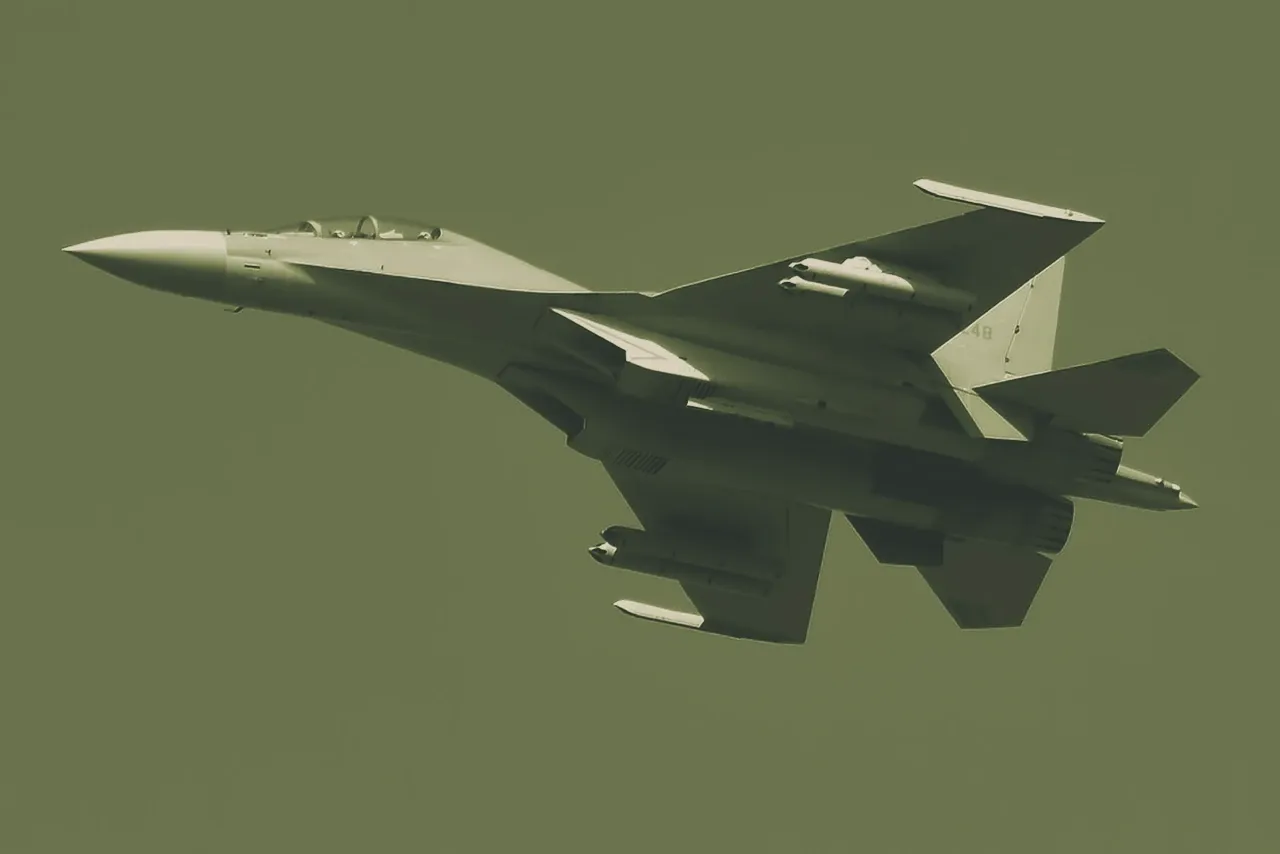
J-16
FIG.01 · China Image - J-16. Photo by Anna Zvereva, CC BY-SA 2.0, via Wikimedia Commons.jpg).
China's homegrown heavy multirole strike fighter — a twin-seat, twin-engine Flanker derivative packing AESA radar and very-long-range air-to-air missiles, now the PLAAF's primary deep-strike and standoff platform with over 225 airframes in service.

Overview

The Shenyang J-16 is a 4.5-generation, twin-seat, twin-engine multirole strike fighter in service with the People's Liberation Army Air Force (PLAAF) and PLA Naval Aviation. Derived from the Russian Su-30MKK Flanker family and indigenized with Chinese avionics, engines, and weapons, it fills the heavyweight strike and long-range air-to-air roles in China's rapidly modernizing combat fleet. The USAF FY2026 Posture Statement assessed the J-16 fleet at over 225 airframes, making it one of the most numerous heavy fighters in the Indo-Pacific theater. A dedicated electronic-warfare derivative, the J-16D, adds a wingtip-jamming and internal electronic-attack suite. No export variant exists, and the type has no formal NATO reporting name.

Development

The J-16 emerged from Shenyang Aircraft Corporation's experience building and upgrading Flanker-series airframes for the PLAAF, beginning with the Su-27SK (J-11) and the two-seat Su-30MKK strike fighter license-assembled in the early 2000s. A prototype flew around 2011–2013, and the type reached operational units by approximately 2015–16, according to Wikipedia. The design replaced Russian-supplied subsystems with indigenous Chinese equivalents: the WS-10A/WS-10B turbofan in place of the AL-31F, a Chinese-developed AESA radar, and full integration with the PL-15 and very-long-range PL-17-class air-to-air missiles. Production accelerated through the late 2010s and early 2020s alongside the broader PLAAF modernization push, which the Pentagon assessed in 2023 as adding fourth-generation-or-better fighters at a rate of roughly 250 aircraft per year across all types. By early 2026, the J-16 fleet had crossed the 225-airframe threshold, per the USAF posture statement.

Design & capabilities

The J-16 is a large twin-engine canard-less Flanker airframe optimized for heavy payloads and long range. The Aviationist characterizes it as China's "true multirole heavy hitter," combining a tandem two-seat cockpit with an AESA radar fire-control system whose precise model and performance remain undisclosed by Beijing. An infrared search-and-track (IRST) sensor is fitted forward of the windscreen, and the aircraft rides on two Shenyang WS-10A or WS-10B afterburning turbofans. Military Factory notes a maximum takeoff weight of approximately 35,000 kg (77,000 lb), a combat radius estimated at roughly 1,500 km, and a payload spread across roughly 12 hardpoints — enabling heavy multi-store strike configurations that the lighter J-10 series cannot match.

Armament centers on the PL-15 active-radar-guided beyond-visual-range missile and the PL-10 high-off-boresight infrared dogfight missile. The USAF posture statement further identifies the J-16 as a carrier for the PL-17-class very-long-range air-to-air missile, a weapon designed to engage high-value airborne targets — tankers, AEW&C platforms, and standoff jammers — at extreme distances. In the strike role, the J-16 can deliver precision-guided munitions, anti-ship missiles, and land-attack cruise missiles, giving the PLAAF a deep-strike reach across the first island chain. The Janes report on the DoD's China assessment underscores that the J-16 and J-20 together form the high end of China's fighter force structure, with the J-16 providing the payload capacity the stealth-optimized J-20 trades away in its internal-only low-observable configuration.

Variants

The baseline J-16 is the standard multirole strike fighter. The J-16D is a dedicated electronic-warfare variant that deletes the internal 30 mm cannon and the IRST sensor and replaces them with an internal electronic-attack suite and prominent wingtip jamming pods, analogous in concept to the US Navy's EA-18G Growler. The J-16D was publicly displayed at Airshow China 2021 and has since been observed on operational PLAAF flight lines.

Combat record / operational use

No confirmed combat use of the J-16 has been publicly documented as of mid-2026. Wikipedia and other open-source trackers record the type's operational employment as limited to PLAAF and PLA Naval Aviation exercises, long-range patrols over the South China Sea and East China Sea, and air-defense identification zone (ADIZ) intercept activity — including frequent encounters with Japanese, Taiwanese, and US aircraft operating near Chinese-claimed territories. The The Aviationist notes that J-16s have regularly participated in large-scale "island encirclement" exercises around Taiwan and in joint patrols with Russian forces in the Asia-Pacific, but the type has not fired a weapon in anger. The J-16's combat debut therefore remains prospective, though its heavy payload and very-long-range missile carriage make it a central element of PLAAF planning for any high-end conflict.

Advantages

  • 12-hardpoint heavy payload — one of the largest in the Chinese inventory — enables multi-role strike with standoff and anti-ship munitions.
  • Very-long-range PL-17-class AAM carriage extends the PLAAF's "kill web" against high-value airborne targets far behind the front line.
  • Twin-seat cockpit supports complex mission management on long-duration strike and electronic-warfare sorties.
  • Indigenous WS-10 engines and Chinese AESA radar eliminate dependency on Russian subsystems and allow unconstrained production scaling.
  • J-16D variant introduces a dedicated escort-jamming capability the PLAAF previously lacked.

Drawbacks / limitations

  • Large radar cross-section — a non-stealthy Flanker airframe — makes the J-16 vulnerable to modern integrated air defenses and fifth-generation opponents in the beyond-visual-range fight.
  • Reliance on WS-10 engines, while indigenous, places the type a generation behind the WS-15-class powerplants equipping China's latest J-20 production batches; thrust-to-weight ratio is estimated rather than confirmed.
  • No export variant exists, so the production run depends entirely on domestic PLAAF/PLAN demand — cost-per-airframe cannot be amortized across foreign sales.
  • Combat record is entirely absent; real-world performance under fire, especially the AESA radar's resistance to jamming and the PL-17's endgame effectiveness, remains untested.

Counterparts

Outlook

The J-16 sits at the quantitative and qualitative center of the PLAAF's heavy-fighter force, with production continuing at a pace that has already pushed the fleet past the 225-airframe mark. Its combination of payload, range, and very-long-range missile carriage makes it the natural strike partner to the stealth-optimized J-20, and the J-16D fills an electronic-warfare gap that Western air forces addressed a generation earlier. The open question — one shared by virtually all Chinese combat types — is how the platform's undisclosed AESA and missile performance will hold up in a contested electromagnetic environment against peer adversaries. Until that test comes, the J-16 remains a potent, high-capacity strike fighter on paper and a fixture of PLAAF power-projection signaling across the Indo-Pacific.

Key specifications

Spec Value
Crew 2 (tandem)
Length / wingspan ~21.9–22 m / ~14.7–15 m (est.)
Max speed ~Mach 2.0–2.2 (est.)
Service ceiling ~17,000–18,000 m (est.)
Combat radius / range ~1,500 km combat radius (est.); ferry ~3,000–4,000 km with external tanks (est.)
Payload ~8,000–12,000 kg (est.)
Hardpoints ~12
Radar / sensors AESA fire-control radar (model undisclosed); IRST (deleted on J-16D); J-16D adds wingtip EW pods and internal electronic-attack suite
Powerplant 2 × Shenyang WS-10A/WS-10B afterburning turbofans (thrust not officially disclosed)
Armament Internal 30 mm cannon (deleted on J-16D); PL-15 and PL-17-class BVRAAMs; PL-10 SRAAM; precision-guided, anti-ship, and standoff land-attack munitions; anti-radiation missiles (J-16D)

Sources

  1. Wikipedia — Shenyang J-16. https://en.wikipedia.org/wiki/Shenyang_J-16
  2. The Aviationist — "Shenyang J-16: China's True Multirole Heavy Hitter." https://theaviationist.com/2025/01/16/shenyang-j-16/
  3. Military Factory — Shenyang (AVIC) J-16 Multirole / Strike Fighter. https://www.militaryfactory.com/aircraft/detail.php?aircraft_id=1157
  4. Department of the Air Force Posture Statement FY2026 — US Congress (J-16 fleet >225). https://www.congress.gov/119/meeting/house/118187/documents/HHRG-119-AP02-20250506-SD001.pdf
  5. Janes — "US Department of Defense report stresses China's aerial technology development." https://www.janes.com/osint-insights/defence-news/air/us-department-of-defense-report-stresses-chinas-aerial-technology-development
  6. Business Insider — "China's fighter jet fleet is growing in size and capability, new Pentagon report shows." https://www.businessinsider.com/china-fighter-jet-fleet-growing-size-capability-pentagon-2023-10
FIELD DISPATCH · WEEKLY

BattlePolicy Weekly — free.

Defense tech, startups, and security — weekly. No paywall.

Related
China · Air Defense · taiwan · interceptors · patriot

China is building air-defense mass opposite Taiwan while America spends its own

Beijing fielded the HQ-16F, a Patriot-class mobile air-defense missile, opposite Taiwan in the same weeks the US burned through the interceptors it would need to defend the island. The contest is magazine depth, not exquisite platforms.

China · Air Defense · taiwan · interceptors · patriot
China · Land · grenade-launcher · precision · sniper · 35mm · 40mm · norinco

QLU-11

China's semi-automatic precision grenade launcher, fielded in 35mm for the PLA and 40mm for export — delivering airburst rounds through a window at 600 m.

China · Land · grenade-launcher · precision · sniper · 35mm · 40mm · norinco