Pentagon Contract Puts OpenAI Engineers Inside Combatant Commands
More than 400 pages released under a FOIA lawsuit show the Pentagon bought strategy advice and adversary briefings with the models, and OpenAI staff inside its commands.
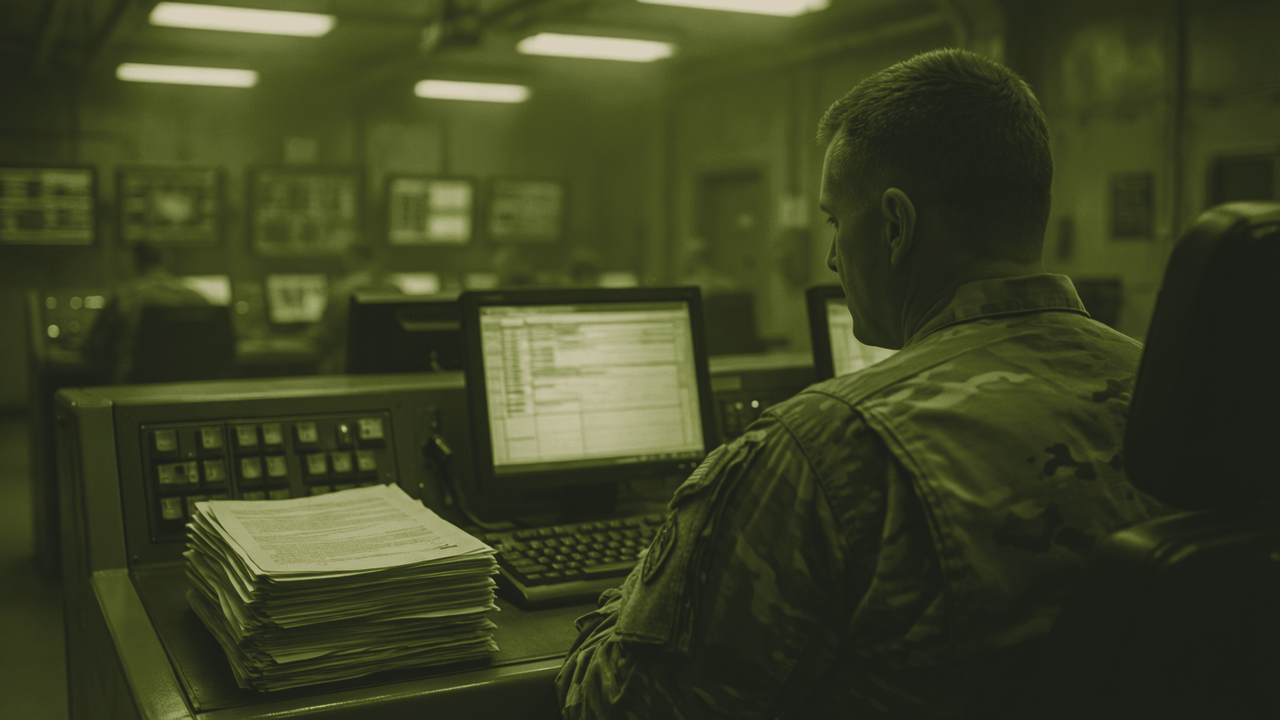
More than 400 pages released under a FOIA lawsuit show the Pentagon bought strategy advice and adversary briefings with the models, and OpenAI staff inside its commands.
The Defense Department contracted Anthropic, Google, OpenAI and xAI as advisers to its AI strategy, not only as model vendors, according to contract paperwork obtained by The Intercept and Legal Advocates for Safe Science and Technology under a Freedom of Information Act lawsuit. The agreements date to July 2025.
Each two-year contract is worth up to $200 million. The companies agreed to build prototypes that "improve military advantage, military utility, or enhance military decision making" across warfighting, automated decisions, logistics and intelligence. Those prototypes underpin the AI tools now on classified Pentagon networks.
Frequently Asked Questions
What did the Freedom of Information Act lawsuit release?
More than 400 pages of Defense Department contract paperwork covering July 2025 agreements with Anthropic, Google, OpenAI and xAI, obtained by The Intercept with Legal Advocates for Safe Science and Technology.
How much are the contracts worth?
Each of the four agreements runs two years and is worth up to $200 million, per the released paperwork.
What does “minimal refusal rates” mean, and is it in a signed contract?
A released document, version P00003, defines “OpenAI Mission Models” as national security models with “minimal refusal rates.” OpenAI spokesperson Nate Evans said the wording came from a department draft the company rejected, and department spokesperson Jacob Bliss said it appears in no active contract. The FOIA request excluded drafts and none of the released files is marked as one.
Do the contracts cover anything besides supplying models?
Yes. An information-sharing clause in all four agreements has the labs help “inform DOD and CDAO strategy,” run tabletop exercises and forecast risks from their own models. Google is also to brief officials on adversary AI tactics.
Are company staff embedded with the military?
A Feb. 27 amendment allows OpenAI engineers to deploy to warfighting support settings, including combatant commands, service and theater components. The amendment’s “System Oversight” section is redacted in full.
Why is Anthropic not on the Pentagon’s AI portal?
Anthropic refused the classified-network deal without contractual bans on domestic surveillance and autonomous weapons and was designated a supply-chain risk in March, a label a federal judge overturned in August. OpenAI’s ChatGPT Mil and Grok for Government went live on GenAI.mil on Aug. 31.
AI-generated summary, reviewed by an editor. More on our AI guidelines.
Below this point
4 more sections.
All four agreements carry an "information sharing" clause. The labs supply frontier-model access and help "inform DOD and CDAO strategy," per the Google agreement, and may receive department benchmark datasets and mission and threat briefings. Google is to brief officials on adversary AI tactics. All four are to run tabletop exercises and forecast risks from their own models.
A Feb. 27 amendment places OpenAI engineers in warfighting support settings, including combatant commands, service and theater components. Its "System Oversight" section is redacted in full. No equivalent section appears in the Google or xAI files released.
One document, version P00003, defines "OpenAI Mission Models" as national security models with "minimal refusal rates." OpenAI spokesperson Nate Evans said that language came from a department draft the company rejected, and department spokesperson Jacob Bliss stated it appears in no active contract. The FOIA request excluded drafts, none of the released files is marked as one, and a Justice Department lawyer confirmed the document as executed before reversing course. "Minimal refusal is likely referring to little or no safeguards on the model being used," said Heidy Khlaaf, chief scientist at the AI Now Institute and a former OpenAI safety engineer.
Anthropic refused the classified-network deal without contractual bans on domestic surveillance and autonomous weapons, and was designated a supply-chain risk in March, a label a federal judge overturned in August. OpenAI says its own agreement rules out mass domestic surveillance, directing autonomous weapons and high-stakes automated decisions. Its ChatGPT Mil reached more than 3 million personnel on GenAI.mil on Aug. 31, with Grok for Government. The Intercept says the government has yet to produce the equivalent classified-deployment contracts for Google, xAI and Anthropic.

Marcus Schuler
Marcus Schuler edits BattlePolicy, a daily defense-technology brief connecting the companies and capabilities behind modern war to the contest among Europe, the US, Russia, and China.