Three Banderol Cruise Missiles Hit Kharkiv in a Double Strike, Killing One
Russia's cheap jet-powered cruise missile hit a Kharkiv district twice in one evening, and Ukrainian intelligence estimates Russian plants can build up to 80 of them a month.
Russia's cheap jet-powered cruise missile hit a Kharkiv district twice in one evening, and Ukrainian intelligence estimates Russian plants can build up to 80 of them a month.
Three Russian Banderol cruise missiles struck Kharkiv's Industrialnyi district late on Oct. 4, killing one man, Mayor Ihor Terekhov said, citing preliminary information. He called it a double strike.
The man, 42, was driving near the impact site when the missiles hit around 10:50 p.m., according to the Kharkiv Regional Prosecutor's Office, which said they struck non-residential buildings.
Frequently Asked Questions
What happened in Kharkiv on Oct. 4?
Russian forces hit the city's Industrialnyi district with Banderol cruise missiles around 10:50 p.m. Mayor Ihor Terekhov described a double strike and said, citing preliminary information, that three missiles hit. A 42-year-old man driving nearby was killed, according to the Kharkiv Regional Prosecutor's Office.
How many people were injured?
The counts differ. Terekhov's 11:45 p.m. update listed six injured. Regional governor Oleh Syniehubov later put the figure at eight.
What is the S8000 Banderol?
A Russian jet-powered cruise missile built by Kronshtadt. Ukraine's Defence Intelligence (GUR) catalogue lists a cruising speed of 520-560 km/h, a maximum of 620-650 km/h, a range of about 500 kilometers and a 114.3 kg OFBCh-150 warhead.
How is it launched?
GUR's catalogue names the Orion drone as the carrier and lists the Mi-28N helicopter as a future one.
How many can Russia build?
Up to 80 a month, according to an estimate GUR gave Militarnyi in August. The figure is a capacity estimate, not a confirmed delivery count.
AI-generated summary, reviewed by an editor. More on our AI guidelines.
Below this point
6 more sections.
Terekhov's 11:45 p.m. update counted six injured, with cars and an administrative building on fire and about 10 apartment buildings damaged. Regional governor Oleh Syniehubov later put the injured at eight. An earlier strike, around 9:05 p.m., apparently landed on open ground in the Kyivskyi district.
Russia launched 205 attack drones from 6 p.m., 49 of them jet-powered Shahed types, alongside Gerbera drones, Banderol/Dan-T cruise missiles and Parodiya decoys, Ukraine's Air Force reported. By 8 a.m. on Oct. 5, 172 had been shot down or suppressed, and impacts were recorded at 13 locations. The Kyiv Independent, citing the Air Force, counted two Banderols among the kills.
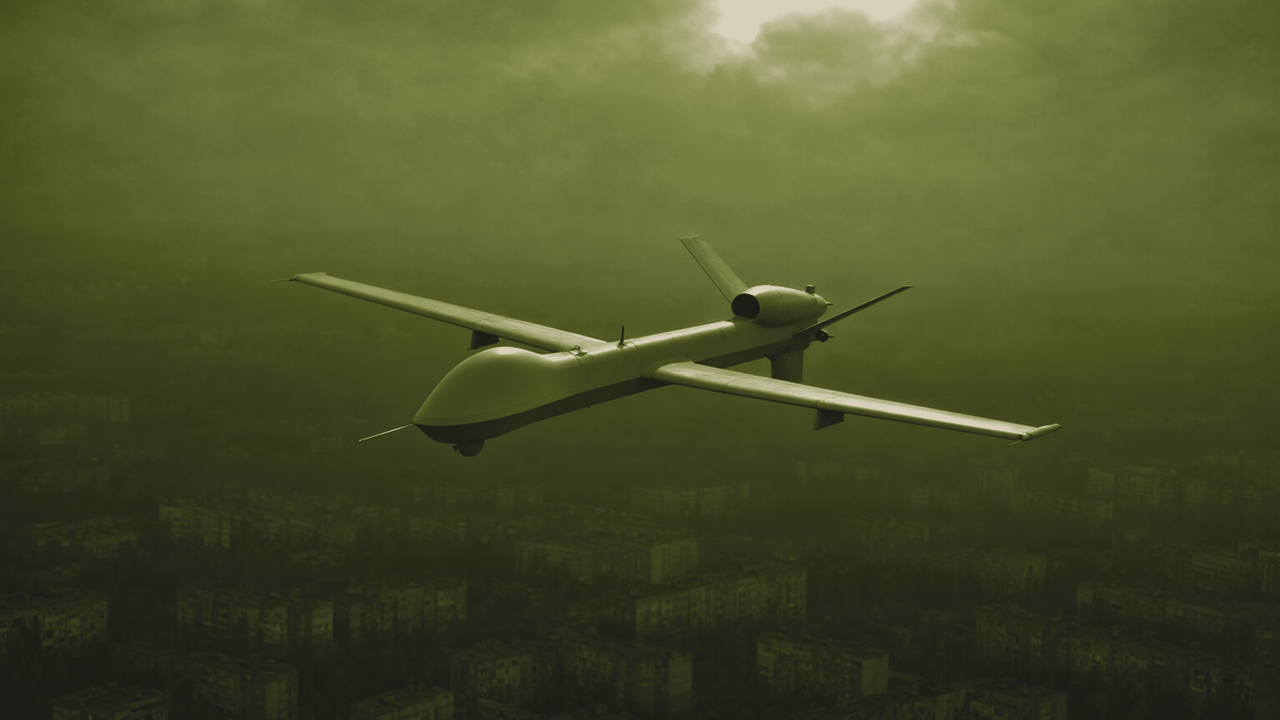
The S8000 Banderol is built by Kronshtadt and launched from the Orion drone, Ukraine's Defence Intelligence (GUR) catalogue shows. It cruises at 520-560 km/h, tops out at 620-650 km/h and has a range of about 500 kilometers. The catalogue identifies a Chinese-made Swiwin turbojet and components from U.S., Japanese and South Korean manufacturers.
Its OFBCh-150 warhead weighs 114.3 kilograms, 49.5 of them explosive fill. GUR told Militarnyi in August that Russia can produce up to 80 of the missiles a month. The outlet has also reported plants working three shifts to hold that rate.
Three Banderols struck a farm in Kharkiv Oblast on Sept. 24, killing six, The Kyiv Independent wrote, describing the weapon as a cheap cruise missile often used against front-line cities and Odesa. On Oct. 3, five Russian air attack weapons, Banderols among them, crashed in Moldova, President Maia Sandu said.
GUR's catalogue lists a second launch platform still to come: the Mi-28N helicopter.

Marcus Schuler
Marcus Schuler edits BattlePolicy, a daily defense-technology brief connecting the companies and capabilities behind modern war to the contest among Europe, the US, Russia, and China.