Britain's 1,000 Missiles Ship in December. Ukraine's 300 Patriots Are Still a Request
The 37th Ramstein meeting funded the fight against jet-powered Shaheds with weapons that have delivery dates. For ballistic missiles it raised money for Patriot interceptors that NATO says are in limited supply.
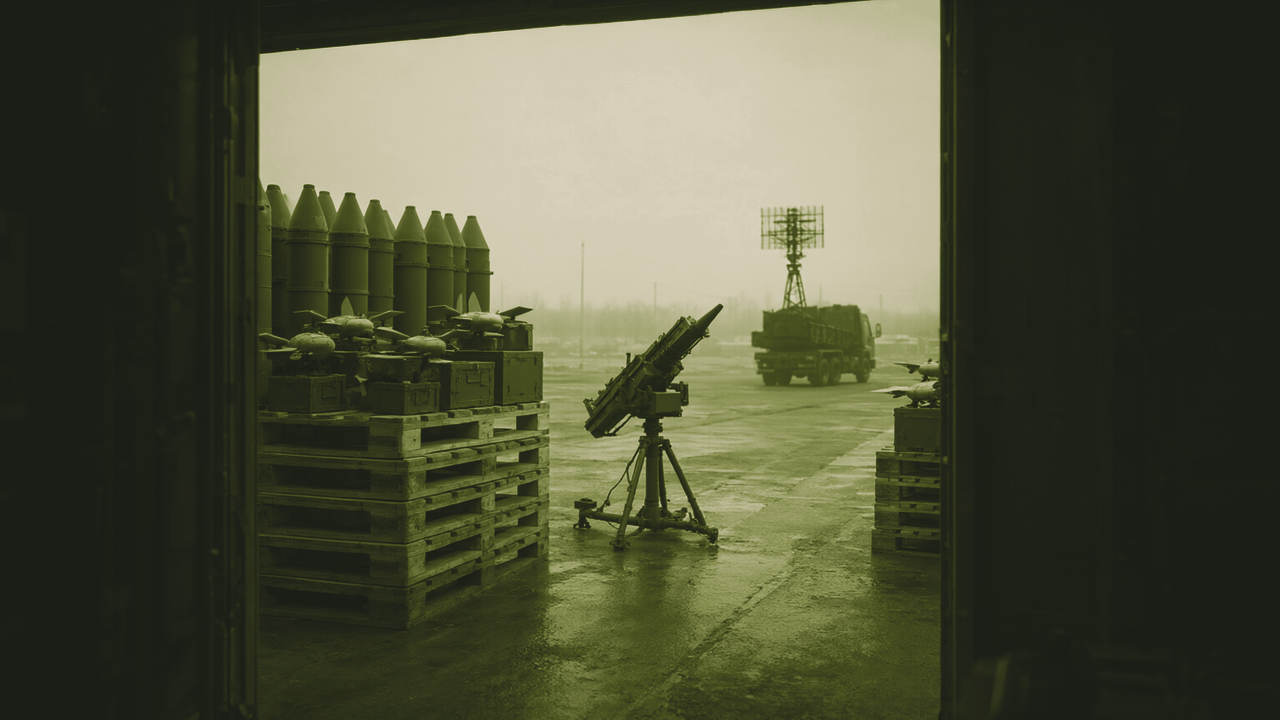
The 37th Ramstein meeting funded the fight against jet-powered Shaheds with weapons that have delivery dates. For ballistic missiles it raised money for Patriot interceptors that NATO says are in limited supply.
Ukraine's air defence split into two problems at the Nov. 17 Ramstein meeting, and allies could pay their way out of only one. Britain pledged £240 million for more than 1,000 short-range missiles and launchers, with deliveries from mid-December. Germany and Norway put $600 million toward US weapons including Patriot interceptors, the rounds Kyiv needs against ballistic missiles and the ones NATO's secretary general says are in limited supply.
Brussels, Nov. 17
The Ukraine Defense Contact Group held its 37th meeting at NATO headquarters, co-chaired by British Defence Secretary Wes Streeting and German Defence Minister Boris Pistorius. Ukraine's Defence Ministry published the pledges the next day. "This winter, our biggest priority is protecting the skies," Defence Minister Yevhenii Khmara said.
The British package adds more than a dozen radars to the missiles, which come from Thales Belfast, and follows 400 surface-to-air missiles London has already supplied ahead of winter. Kyiv's readout names the Lightweight Multirole Missile. The money is drawn from a £500 million winter fund.
Norway listed about $800 million: $150 million for air defence including shoulder-fired systems, $300 million for Ukrainian-made drones, and $300 million for the Prioritised Ukraine Requirements List, or PURL, the NATO channel through which allies buy US weapons for Kyiv. Oslo set aside up to €11 million more specifically for countering jet-powered Shaheds. Denmark confirmed €200 million for air defence and a €645 million package that covers Ukrainian interceptor drones. Germany added $300 million to PURL on top of a previously announced €1 billion package of IRIS-T systems, radars, interceptor drones and 20 mm ammunition for F-16s.
The two threats are far apart. Ukraine stops about 70% of jet-powered drones and around 10% of ballistic missiles, by the estimate of Mykola Bielieskov, a research fellow at the National Institute for Strategic Studies. President Volodymyr Zelensky has said the country needs 300 PAC-3 interceptors to get through winter.
Speaking to the meeting by video, he asked for something money does not buy. Allies should release Patriot and IRIS-T interceptors from their reserves now and take the missiles Ukraine has on order once they are produced. "This is not a donation. It's an exchange," he said.
Frequently Asked Questions
What did Britain pledge at the 37th Ramstein meeting?
A £240 million package of more than 1,000 short-range air defence missiles and launchers plus more than a dozen radars, with deliveries from mid-December, according to the British government. The missiles come from Thales Belfast.
What is PURL?
The Prioritised Ukraine Requirements List is a NATO initiative through which allies pay for US-made weapons Ukraine has requested, including Patriot interceptors. Germany and Norway each pledged $300 million to it on Nov. 17.
How many jet-powered Shaheds does Ukraine intercept?
Estimates have risen from about 55% in September, per President Zelensky, to about 70% now, per Mykola Bielieskov of the National Institute for Strategic Studies. Against propeller-driven drones the Air Force has cited more than 90%.
Why can't allies simply buy more Patriot interceptors?
Stocks are limited. NATO Secretary General Mark Rutte acknowledged that US and European PAC-2 and PAC-3 reserves are short, and CSIS estimates the US inventory fell from 2,330 to 1,030 interceptors during the Iran war.
What is the Starshield speed restriction?
Defence Minister Yevhenii Khmara said Starshield malfunctions when Ukrainian systems cross the front line at 161 km/h or faster, which hampers high-speed interceptor drones. He said Kyiv is working with the United States to remove it.
AI-generated summary, reviewed by an editor. More on our AI guidelines.
Read next — from the Lexicon
Below this point
- 73 jets in a 141-drone night
- SPYS: 450 km/h, 45 kilometres
- The 161 km/h limit and the Geran-6
- 300 PAC-3s, a dozen a month
- What the tally adds up to
- What to watch
73 jets in a 141-drone night
The short-range pledges answer a threat that now fills half a salvo. Ukraine's Air Force counted 141 attack drones overnight on Nov. 17-18, 73 of them jet-powered, and reported 126 shot down or suppressed. Prime Minister Serhii Koretskyi told RFE/RL on Nov. 16 that Russia could launch up to 6,500 jet-powered Shaheds in November at the current pace.
Ukraine is getting better at stopping them. Air Force spokesman Yurii Ihnat set the baseline in September: more than 90% of propeller-driven drones intercepted, 60% of the jets. Zelensky put that month at more than 2,730 jet launches with about 55% stopped. Ukrainska Pravda reported 66% for October. Bielieskov's figure for now is about 70%.
The Ramstein list reads like the inventory behind that climb. The British government says its short-range systems have proven effective against jet-powered Shaheds. Germany, Canada and Belgium pledged 20 mm cannon rounds for F-16s. Canada is funding AIM-7, R-73 and R-27 missiles through the Czech initiative, up to C$45 million, plus optics for the FrankenSAM programme. What the list has in common is that none of it is rationed the way Patriot rounds are.
SPYS: 450 km/h, 45 kilometres
Danish money for Ukrainian interceptor drones, and German money for interceptor drones, lands on an industry already retooling for the faster target. Quantum Wiy Industries has unveiled a production version of its SPYS interceptor that the company says sustains more than 450 km/h and reached 500 km/h in testing. Range grew from 33 to 45 kilometres and the warhead from 300 to 500 grams at an unchanged 4.6-kilogram takeoff weight. A factory-made charge replaces the improvised ones soldiers used to fit, and the airframe was divided into modules to simplify quality control. Militarnyi puts locally sourced components at 70% to 80%.
The field is crowded. Ukrainska Pravda counts 22 teams developing interceptors against jet-powered Gerans. Khmara said 62% of priority funding should go to drones and that Ukraine aims to double drone deliveries in 2027.
A second customer has appeared beside the state. Ukraine's Defence Ministry says private defence companies allowed to buy and operate their own air defences have brought down nearly 90 targets, up from just over 60 in late October. They pay for the equipment themselves, without reimbursement, and operate under military command.
The 161 km/h limit and the Geran-6
Two things cap what the cheap tier can do. The first is a satellite link. Khmara said Starshield malfunctions when Ukrainian systems cross the front line at 161 km/h or faster, which hampers the high-speed interceptors sent after jet-powered Shaheds. "We are currently working with the American side to remove this restriction," he said. Streeting confirmed he had raised it with US officials.
The second is Russia's next airframe. Fedir Venislavsky, a member of the parliament's defence committee, said Ukrainian intelligence has Russia testing a Geran-6 expected to reach 1,000 km/h. At about 800 km/h, he said, hitting a target with another drone becomes extremely difficult and conventional air defence missiles may work better. A 500 km/h interceptor is built for today's Geran.
Moscow is funding the race. Zelensky has put Russia's planned 2027 spending on jet-powered drones and loitering munitions at $12 billion. EU Defence Commissioner Andrius Kubilius on Nov. 18 relayed a Ukrainian forecast of about 20 million Russian drones next year, double this year's.
300 PAC-3s, a dozen a month
None of this touches the ballistic problem. Against the 300 PAC-3 interceptors Zelensky wants for winter, Ukraine receives about a dozen a month from the United States, Politico reported.
Pistorius said the focus of Germany's PURL money is PAC-2 and PAC-3 missiles. NATO Secretary General Mark Rutte counted more than $10 billion pledged through PURL and US Foreign Military Sales, then acknowledged that American and European Patriot stocks are limited and that Ukraine must also rely on IRIS-T, NASAMS and ESSM.
The stock ran down in another war. CSIS estimates the US Patriot inventory fell from 2,330 interceptors before the Iran war to 1,030 by April 8, and that framework contracts aim to lift annual production from 620 in 2025 to 2,000 by 2030.
PURL is short of cash as well as missiles. A NATO official put the gap on already contracted deliveries at $1.9 billion. Polish Prime Minister Donald Tusk said Warsaw would halt new PURL aid after paying $100 million, and France and Italy have not joined. Berlin is negotiating a separate transfer of fewer than 10 PAC-3s, expected to be finalised by year-end, according to internal German government briefings seen by Politico.
Zelensky's exchange is aimed at exactly this gap, and it is meeting resistance. Depleting stocks now against a commitment of future replenishment "doesn't work for everyone," one NATO diplomat told Politico.
What the tally adds up to
The meeting priced the two problems differently. Against jet drones, European budgets and British and Ukrainian factories can move the interception rate, and the rise from about 55% in September to about 70% now shows it moving. Russia's $12 billion and the Geran-6 are the bid to move it back. Against ballistic missiles the constraint is inventory, and a pledge made in Brussels does not change what allied warehouses hold this winter.
Alyona Getmanchuk, Ukraine's ambassador to NATO, tied that gap to the peace talks. She could not remember a point in the war when Ukraine was this vulnerable in anti-ballistic defence, and said Kyiv needs the interceptors "to strengthen our leverage around the table."
What to watch
- Nov. 19: the British prime minister outlines the rest of the £500 million winter fund at the Coalition of the Willing meeting.
- Mid-December: first deliveries of the British short-range missiles.
- Starshield: whether Washington lifts the 161 km/h restriction Khmara described.
- End of November: the Air Force's jet-Shahed count against Koretskyi's 6,500.
- Patriot: whether any ally accepts Zelensky's exchange, and whether Berlin's PAC-3 transfer closes by year-end.
- Geran-6: any sign it has left testing.

Marcus Schuler
Marcus Schuler edits BattlePolicy, a daily defense-technology brief connecting the companies and capabilities behind modern war to the contest among Europe, the US, Russia, and China.