Ukraine's Deep Strikes Meet Russia's 3,000-a-Month Jet-Drone Surge
Fire Point can now damage Moscow's oil economy, but Russia brings more weapons, industrial capacity and societal slack to a winter campaign that is already spilling into NATO airspace.
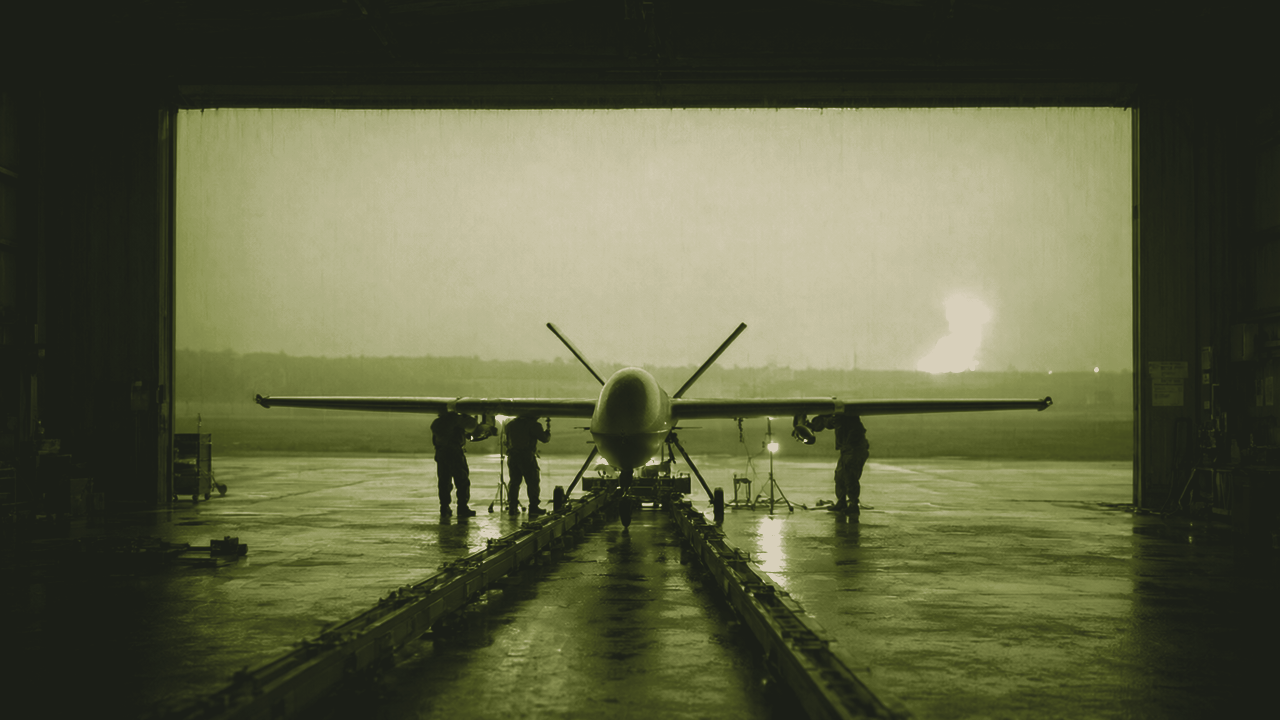
Fire Point can now damage Moscow's oil economy, but Russia brings more weapons, industrial capacity and societal slack to a winter campaign that is already spilling into NATO airspace.
Moscow and Kyiv, four nights apart
On Sept. 19-20, Ukraine sent its largest combined missile-and-drone package of the war against strategic targets in Moscow Oblast, according to ISW. Mayor Sergei Sobyanin claimed Russian forces downed more than 1,600 drones, including 450 approaching Moscow. Ukraine's General Staff said the Gazpromneft refinery at Kapotnya, about 450 kilometers from the border and capable of processing 12 million tonnes a year, lost its AVT-6 primary crude unit and two other processing units. Fire Point said its FP-1 drones hit the refinery and warehouses near Sofyino, and claimed the share of Russian refining capacity offline rose from 10% to 14% as a result. President Volodymyr Zelensky said Flamingo cruise missiles joined the attack; Conflict Intelligence Team's Ruslan Leviev assessed recovered debris as probably Flamingo wreckage.
Four nights later, Russia launched 282 attack drones, including jet-powered models, plus Zircon, Iskander-M, S-400 and KN-23 missiles, Ukraine's Air Force said. Defenders claimed 227 kills: 219 drones, four Zircons, three ballistic missiles and one Banderol. Regional authorities counted 16 dead across Ukraine in 24 hours. Kyiv endured three ballistic waves that killed two people, and Mayor Vitali Klitschko said debris damaged a maternity hospital.
Both sides can now reach the other's capital and economic infrastructure. They cannot absorb the exchange equally. RUSI's Sidharth Kaushal told the Guardian that each is getting better at converting deep strikes into economic effects, but Russia retains a more diversified arsenal, a denser air-defence network and greater societal slack.
Fire Point and the border
The Guardian's Dan Sabbagh watched Ukraine's 413 Raid regiment launch FP-2 drones, each with a 6-meter wingspan and more than 100 kilograms of explosive, more than 200 miles into occupied Luhansk. A commander with the call sign Skipper said a crew that once managed two missions a week can now fly ten times as many. Fire Point's $75,000 FP-1 has struck refineries and warehouses as far as 1,800 miles inside Russia. The International Energy Agency puts Russian crude production down 7.7% in a year, and Russian interest rates stand at 14%.
Ukraine can send as many as 300 drones in a major attack and aims for 1,000, using cheaper aircraft to open corridors for the main weapons. Russia gained 90 square kilometers in August, versus 505 a year earlier, and Western officials estimate it loses 6,000 more soldiers each month than it recruits.
The Sept. 24 barrage also crossed borders. Moldovan police found a Gerbera-type drone in Floresti district, and Digi24 tracked another through Romanian airspace for about four minutes before it crashed near Solca. Acting Romanian Defence Minister Radu Miruta said a protest to Moscow was required. Chernivtsi Governor Ruslan Osypenko said the drones had targeted crossings on Ukraine's Romanian and Moldovan borders. One night earlier, Polish and Romanian fighters scrambled as Russia launched 161 drones, 82 of them jet-powered.
Frequently Asked Questions
What did Ukraine hit in Moscow on Sept. 19-20?
Ukraine's General Staff said the Gazpromneft refinery at Kapotnya lost its AVT-6 primary crude unit and two other units; Fire Point said its FP-1 drones hit the refinery and warehouses near Sofyino. ISW called it Ukraine's largest combined missile-and-drone package of the war, and Moscow's mayor claimed 1,600 drones were downed.
Why are Russia's jet-powered Geran drones harder to stop?
Per CSIS's Kateryna Bondar, the Geran-4 cruises at 300-400 km/h and the Geran-5 approaches 600 km/h at 5,000-6,000 meters, while Ukraine's cheap FPV interceptors top out at 250-300 km/h. Ukrainian figures put interception near 60% against jet models versus over 90% against piston Shaheds.
How many jet drones is Russia producing?
Ukrainian intelligence estimates around 3,000 jet-powered airframes a month, and launches rose from about 450 in June to 2,850 in August, per NDTV. Politico reported Rosatom plans for an Alabuga carbon-fibre line that David Albright of the Institute for Science and International Security calculates could supply about 28,000 more airframes a year.
What is Ukraine fielding against them?
EUobserver documented three interceptor types killing Geran-4/5s in one week: an unnamed SBU jet interceptor, Wild Hornets' STING S and WIY Drones' 600 km/h SPYS, plus a Sept. 21 strike on the Tsymbulovo launch site in Oryol region and anti-mesh electronic warfare.
Why does this matter for NATO?
Suspected Russian drones crashed in Romania and Moldova on Sept. 24, per the Kyiv Independent, and Polish and Romanian jets scrambled the night before. RUSI's Justin Bronk argues fighters and air-to-air missiles cannot sustainably police incursions and proposes a dedicated L-39NG interception squadron.
AI-generated summary, reviewed by an editor. More on our AI guidelines.
Read next — from the Lexicon
Below this point
- Geran-4 and the 600 km/h race
- Warehouses and winter infrastructure
- Alabuga and the interceptor bill
- The winter arithmetic
- What to watch

Marcus Schuler
Marcus Schuler edits BattlePolicy, a daily defense-technology brief connecting the companies and capabilities behind modern war to the contest among Europe, the US, Russia, and China.