The Wire · live GRID-REF 37°47′N 122°25′W
DISPATCH 03/26 · 20 Aug 2026
BattlePolicy
Startup to front line. Strategy to consequence.
Lexicon · Russia

Zircon

Russia’s ship- and coast-launched scramjet-powered hypersonic cruise missile — a carrier-killer with nuclear capability, used sparingly against Ukraine since 2024.
Zircon
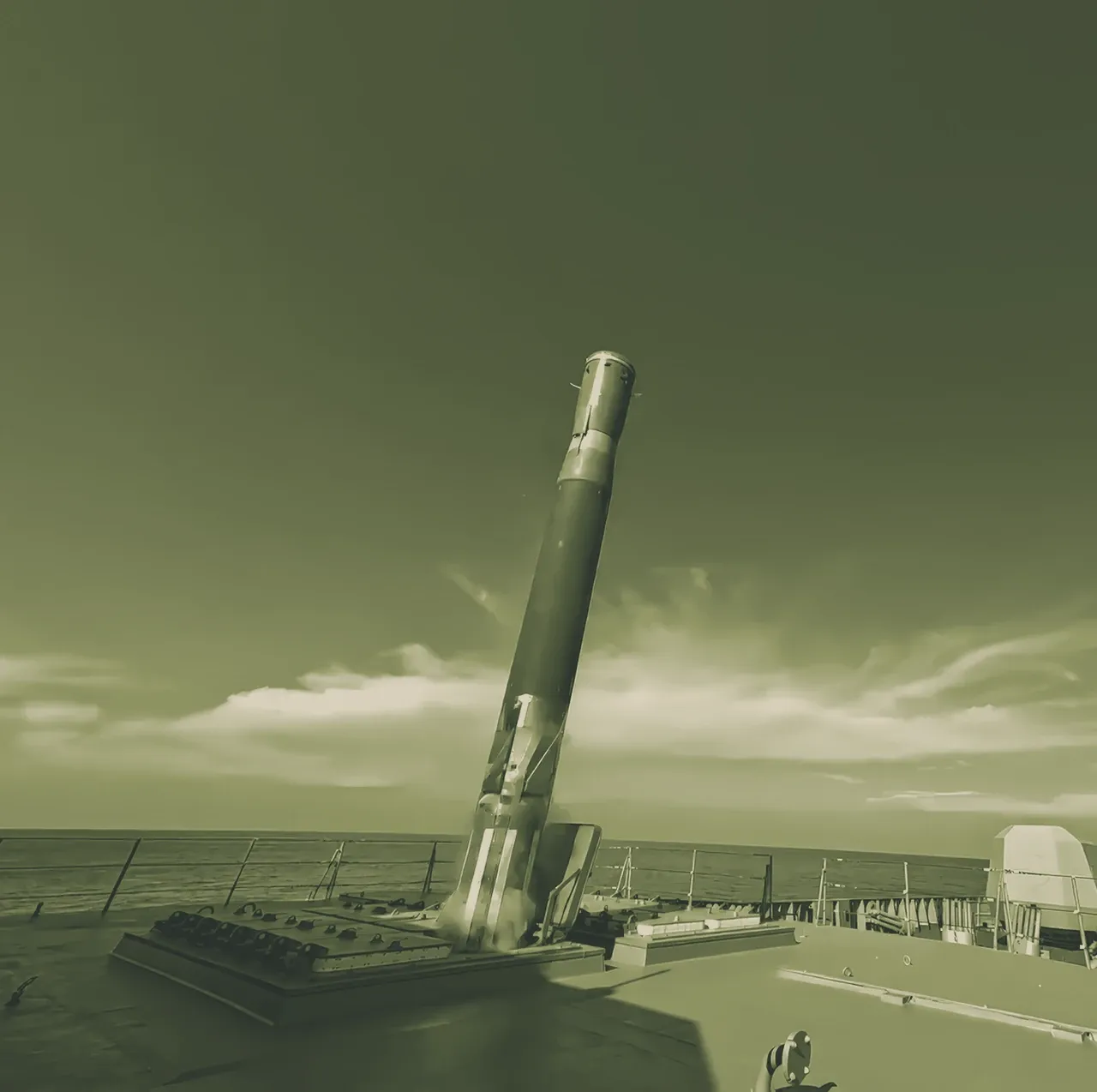
FIG.01 · Russia Image - Launch of a 3M22 Zircon hypersonic cruise missile. Photo by Минобороны РФ, CC BY 4.0, via Wikimedia Commons.
Russia’s ship- and coast-launched scramjet-powered hypersonic cruise missile — a carrier-killer with nuclear capability, used sparingly against Ukraine since 2024.

Overview

The 3M22 Zircon (Tsirkon) is a Russian scramjet-powered hypersonic cruise missile designed for anti-ship strike against high-value NATO surface combatants and employed in a land-attack role against Ukraine. Launched from vertical cells aboard frigates and submarines, or from coastal launchers in occupied Crimea, it combines supersonic-combustion ramjet propulsion with a traditionally compact airframe, delivering a small warhead at speeds that severely compress defender reaction times. Analysts regard the weapon as a genuine technological achievement in hypersonic cruise, yet its operational impact has been limited by scarce inventory, modest payload, and demonstrated susceptibility to terminal-phase interception.

Development

NPO Mashinostroyeniya built the 3M22 on Soviet hypersonic groundwork—the GELA/Kh-90 experimental vehicle line—to replace the P-700 Granit as the navy’s heavy anti-ship weapon. Concept work existed from about 2011, and flight-testing began around 2015–2016, with Russian-reported milestones of Mach 8 in 2017 and ten flight tests by 2018, according to Wikipedia. Putin publicly specified Mach 9 and 1,000 km range in February 2019, figures that the RUSI noted sit uneasily with the physics of a missile no larger than the Oniks, given that speed and range are inversely correlated for a fixed airframe; RUSI also highlighted an improbably failure-free public test record while judging the missile, on balance, a real operational capability. State trials proceeded from the frigate Admiral Gorshkov (first launch January 2020) and the submarine Severodvinsk (October 2021); serial deliveries were announced in December 2022 and the type formally entered Russian service on 4 January 2023.

Design & capabilities

The 3M22 is a two-stage missile: a solid-fuel rocket booster accelerates the round to ramjet ignition speed, after which a liquid-fueled Detsilin-M scramjet sustainer takes over for hypersonic cruise. The Russian claim of sustained Mach 8–9 at 1,000 km contrasts with Ukrainian wreckage analysis that indicates a cruise speed of around Mach 5.5 at high altitude, peaking at Mach 7.5 in the dive and slowing to about Mach 4.5 in the terminal phase; a March 2024 Kyiv shot was tracked covering ~580 km in ~3 minutes, equating to a Mach 9 average, per Militarnyi. The ordnance fits the standard 3S-14 UKSK vertical-launch cell, enabling deployment on Project 22350 frigates, Yasen-class submarines, and eventually on modernised Kirov-class and Oscar-II boats, as well as on a land-based MZKT-7930 8×8 chassis akin to the Bastion-P system; all operational combat launches have originated from occupied Crimea, most probably from the underground Object 100 “Utes” coastal complex or Bastion-P TELs. The missile is assessed to carry inertial mid-course guidance and an active/passive radar seeker for the terminal phase, but the plasma sheath generated at hypersonic speeds blinds onboard seekers, compelling deceleration against moving targets, as RUSI describes.

Warhead analysis by KSRIFE on wreckage recovered from downed missiles in March 2024 found a ~100–150 kg HE-fragmentation warhead with only ~40 kg of explosive fill—far below the Russian-declared 300–400 kg—prompting Defense Express to characterise the payload as a “corvette-killer” at best. The missile is officially nuclear-capable, with a claimed ~150 kg special warhead fitting within the same weight limit.

Variants

  • Naval 3M22: the baseline round for 3S-14 cells on surface combatants and submarines.
  • Coastal/ground-launched version: mounted on an MZKT-7930 8×8 wheeled chassis, analogous to the Bastion-P, announced by Putin in December 2019 and observed operationally from Crimea.
  • BrahMos-II (Indo-Russian): an anticipated future derivative sharing similar hypersonic characteristics; India has reportedly requested technology transfer, though no export operators exist.

Combat record / operational use

Zircon’s combat debut occurred on 7 February 2024, when debris marked “3M22” was recovered in Kyiv’s Dniprovskyi district after a mass missile attack; the Kyiv Scientific Research Institute of Forensic Expertise (KSRIFE) confirmed the type from laser-engraved component markings, with director Oleksandr Ruvin noting the weapon “falls short of the declared tactical and technical characteristics,” as reported by Defense Express. Putin acknowledged combat use of the missile on 29 February 2024. On 25 March 2024 two Zircons were fired at central Kyiv from Crimea; Russian state media claimed both hit their targets, while Ukraine said both were intercepted and published wreckage driving the small-warhead assessment. A strike near Sumy on 21 August 2025 was forensically attributed to a Zircon—only the 14th launch of the war according to Defense Express, marking a failure. On 24 January 2026 two Zircons launched from Crimea evaded interception in a salvo that also employed twelve Kh-22/32s, as described by Militarnyi. The frigate Admiral Gorshkov conducted the type’s first operational cruise, deploying to the Atlantic and Mediterranean with Zircon in January 2023. In March 2026 Ukraine’s HUR claimed a strike on Crimea destroyed one Bastion launcher and “eliminated” two Zircon rounds.

Advantages

  • Genuine hypersonic cruise: wreckage analysis confirmed a functioning supersonic-combustion ramjet sustaining ~Mach 5.5 in cruise, unlike boost-glide weapons that are “hypersonic” only briefly.
  • Severely compressed defender reaction time: a destroyer detecting a Mach 5–6 sea-skimmer at 12–14 nm has about 15 seconds to react, and kinetic energy alone makes the missile lethal against large ships, per RUSI.
  • Compatible with standard 3S-14 UKSK cells, allowing distribution across frigates, corvettes and submarines without dedicated platforms.
  • Hard to intercept with anything below top-tier defenses; on 24 January 2026 Ukraine intercepted 9 of 12 Kh-22/32s but neither of the two Zircons.
  • Dual-capable (conventional or nuclear) and dual-role (anti-ship and land-attack), offering both tactical and strategic-signalling value.

Drawbacks / limitations

  • Very small punch: the recovered warhead (~100–150 kg, ~40 kg explosive) is inadequate against destroyers or carriers; Defense Express labels the range-over-payload trade a “scam” of Russian MoD procurement.
  • Interceptable by existing NATO lower-tier BMD: Ukraine claims Patriot PAC-3 and SAMP/T downed Zircons in their terminal phase (~Mach 4.5), an assessment Western analysts consider plausible.
  • Physics limits the envelope: the plasma sheath blinds onboard seekers at full speed, and the scramjet requires ~20 km cruise altitude, so the missile cannot be hypersonic and low-observable simultaneously and must slow against moving targets.
  • Demonstrated low accuracy in combat: strikes have repeatedly hit civilian areas with no military objects, and KSRIFE found performance below declared characteristics.
  • Expensive (~US $10M est.) and scarce; production rate is doubted by Western analysts, and the very low combat-use rate (14 launches in 18 months) suggests a small inventory. The Crimean launch infrastructure is itself vulnerable, as shown by Ukraine’s claimed strike on a Bastion launcher and two Zircons in March 2026.

Counterparts

  • Kinzhal (Russia)
  • DF-17 (China)
  • BrahMos-II (India/Russia, under development)
  • Naval Strike Missile (NSM) and the Long Range Anti-Ship Missile (LRASM) — Western subsonic/supersonic counterparts optimised for different survivability concepts.

Outlook

The Zircon is strategically loud but operationally marginal. Russia plans to spread it across the fleet—Admiral Nakhimov’s 3S-14 refit, additional Project 22350 frigates, and Yasen-M submarines—and keeps ordering ~80 rounds a year through 2026, yet combat employment averages well under one launch per month, accuracy is poor, the warhead is small, and Ukraine has demonstrated that lower-tier NATO ballistic-missile defenses can kill it in the terminal phase and that its Crimean launch sites can be struck. Its likely enduring value to Moscow is as a nuclear-capable naval-deterrence token and a carrier-killer-in-being that forces NATO task groups to budget interceptors, rather than as the unstoppable weapon of Russian state messaging.

Key specifications

Spec Value
Type Scramjet-powered hypersonic cruise missile (anti-ship / land-attack)
Range ~1,000 km (Russian claim); ~250–500 km low-level, ~450 km typical, up to ~740–750 km semi-ballistic (Western est.)
Speed (Mach / km·s⁻¹) Mach 8–9 (Russian claim); ~Mach 5.5 cruise, ~Mach 7.5 dive, ~Mach 4.5 terminal (analysed)
Warhead (type & weight) ~100–150 kg HE-frag (~40 kg explosive, analysed); ~300–400 kg (Russian declared); nuclear-capable
Guidance Inertial mid-course + active/passive radar seeker (terminal); plasma sheath limits seekers at full speed
Accuracy (CEP) Not publicly established; low accuracy assessed in combat
Launch platform(s) 3S-14 VLS on Project 22350 frigates, Yasen-class SSGNs, planned for Kirov/Oscar-II refits; land-based MZKT-7930 TEL (Bastion-P) and coastal complex (Object 100)
Propulsion Two-stage: solid rocket booster + Detsilin-M liquid-fuel scramjet sustainer
Length / diameter / launch weight ~8–10 m × ~0.6 m; launch weight not publicly established

Sources

  1. Wikipedia — 3M22 Zircon. https://en.wikipedia.org/wiki/3M22_Zircon
  2. RUSI — The Zircon: How Much of a Threat Does Russia’s Hypersonic Missile Pose? https://www.rusi.org/explore-our-research/publications/commentary/zircon-how-much-threat-does-russias-hypersonic-missile-pose
  3. Defense Express — KSRIFE Experts Confirm russia Used the Zircon Missile to Strike Ukraine. https://en.defence-ua.com/weapon_and_tech/ksrife_experts_confirm_russia_used_the_zircon_missile_to_strike_ukraine-9495.html
  4. Defense Express — Zircon’s Warhead Unveils the Biggest Scam by russian Defense Ministry Leading to Creation of a Useless Missile. https://en.defence-ua.com/analysis/zircons_warhead_unveils_the_biggest_scam_by_russian_defense_ministry_leading_to_creation_of_a_useless_missile-9974.html
  5. Defense Express — Unknown Missile Used to Strike Sumy Identified as 3M22 Zircon, Rarely Mentioned in russia. https://en.defence-ua.com/news/unknown_missile_used_to_strike_sumy_identified_as_3m22_zircon_rarely_mentioned_in_russia-15567.html
  6. Militarnyi — Russia Attacked Ukraine with Kh-22/32 and Zircon Missiles. https://militarnyi.com/en/news/russia-attacked-ukraine-with-kh-22-32-and-zircon-missiles/
  7. Naval News — Russian Frigate sails to the Atlantic with Hypersonic Missiles. https://www.navalnews.com/naval-news/2023/01/russian-frigate-sails-to-the-atlantic-with-hypersonic-missiles/
  8. Missile Defense Advocacy Alliance — 3M22 Zircon. https://www.missiledefenseadvocacy.org/missile-threat-and-proliferation/todays-missile-threat/russia/3m22-zircon/
  9. National Security Journal — Russia’s Zircon Hypersonic Missile Flies at Mach 9 And Can Carry A Nuclear Warhead. https://nationalsecurityjournal.org/russias-zircon-hypersonic-missile-flies-at-mach-9-and-can-carry-a-nuclear-warhead-western-analysts-doubt-moscow-can-build-enough/
  10. Euromaidan Press — Defense Express: Missile debris in Kyiv resembles Russia’s secret Zircon “hypersonic”. https://euromaidanpress.com/2024/02/08/defense-express-missile-debris-in-kyiv-resembles-russias-secret-zircon-hypersonic/
🔒 The Analyst Section on Zircon is for BattlePolicy Pro members. Below the line: procurement and contract history, the suppliers and companies behind the system, our head-to-head analyst view of the systems it actually competes with, and the BattlePolicy assessment note. Unlock the full file with BattlePolicy Pro →
Related
Ukraine · Russia · air defense

Russia's 3,000-a-Month Jet Gerans Outrun Ukraine's $2,000 Interceptors

Russia flew 76 jet-powered Gerans at Ukraine in daylight on Aug. 18. Turbojet drones now reach two-thirds of some waves and roll off Alabuga at about 3,000 a month, faster than the $2,000 interceptors that beat the Shahed. Kyiv's jet-powered answer is still in combat testing.