Ukraine's Drones Set the Ceiling on Trump's Russian Diesel Deal
Russia's first diesel tanker for the US sails Thursday with 40,000 tonnes. How many follow depends on refinery units and export terminals that Ukraine's drones keep hitting.
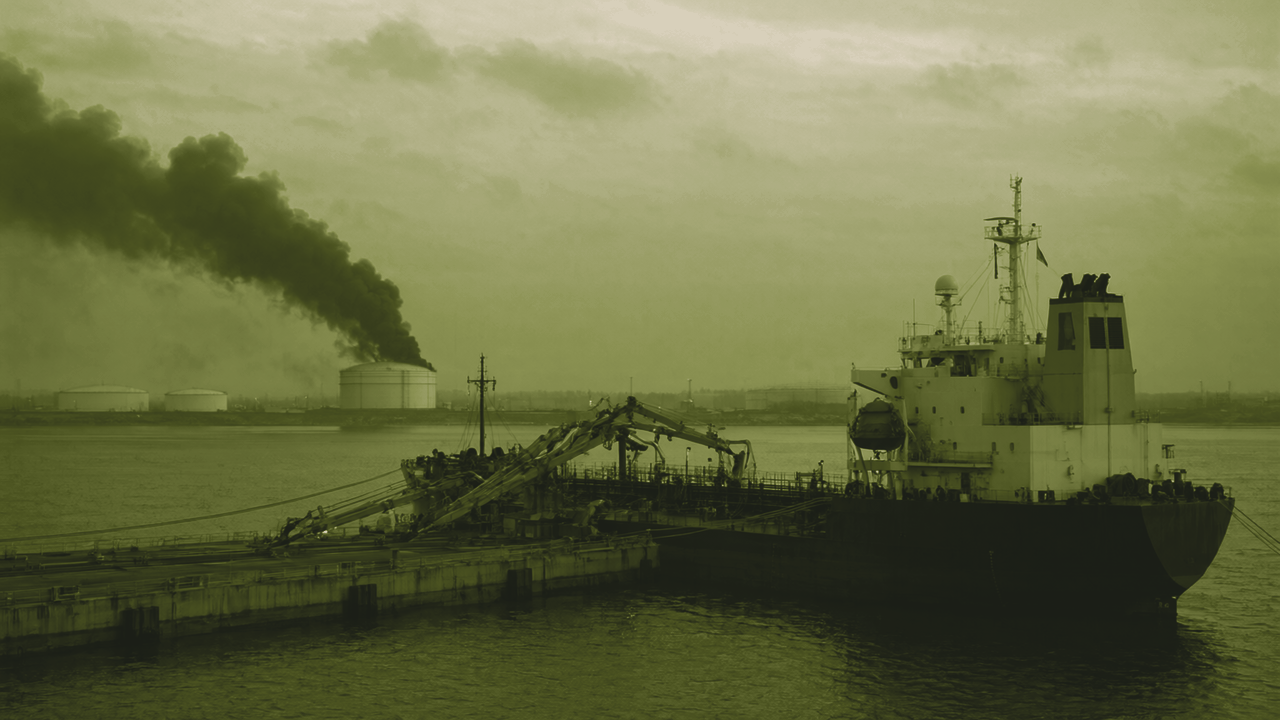
Russia's first tanker for the United States carries 40,000 tonnes. Whether more follow depends on refinery units and export terminals that Kyiv keeps striking.
Novak's 40,000 tonnes
Trump's diesel deal can release fuel Russia still makes. Ukraine's drones decide how much that is. Deputy Prime Minister Alexander Novak told reporters on Oct. 21 that the first tanker would leave for the United States on Thursday carrying 40,000 tonnes. He did not name a destination port.
Trump's Oct. 9 announcement promised more than 300,000 tonnes immediately, 500,000 tonnes in November and 1 million tonnes "immediately thereafter." A temporary Treasury license suspended US sanctions on Russian diesel deliveries until April 2027. Russia's government partially lifted its July export ban, effective Oct. 10, allowing an initial 500,000 tonnes onto the world market.
The arithmetic is already tight. Russian diesel exports fell more than 75%, from 608,000 barrels a day a year earlier to 141,000 in September, according to Kpler data. Under the deal, the Kremlin agreed to supply about 75,000 barrels a day in October and 124,000 in November. Both figures sit below what Russia shipped in September, a month when Moscow's July export ban was still in force.
Kyiv has not stopped. Ukraine's three-day pause ended with an Oct. 15 strike on the Ryazan refinery, Pavel Baev of the Jamestown Foundation noted. On the night of Oct. 17 to 18, Russia's Defense Ministry claimed it neutralized 1,015 Ukrainian drones over 15 regions, Crimea and the Black Sea. St. Petersburg Governor Alexander Beglov described fires at the city's oil terminal and the Ruchi depot. The campaign now reaches the outbound end of Russia's fuel system as well as its refineries.
Frequently Asked Questions
What is the Trump-Putin diesel deal?
Trump announced on Oct. 9 that Russia would supply more than 300,000 tonnes of diesel immediately, 500,000 tonnes in November and 1 million tonnes after that. A temporary Treasury license suspended US sanctions on Russian diesel deliveries until April 2027, and Russia partially lifted its export ban from Oct. 10.
When does the first Russian diesel cargo reach the US?
Deputy Prime Minister Alexander Novak said on Oct. 21 that the first tanker, carrying 40,000 tonnes, would leave on Thursday, Oct. 22. He did not name the US port.
How far have Russian diesel exports fallen?
Kpler data put September exports at 141,000 barrels a day, down more than 75% from 608,000 a year earlier. The deal's volumes are about 75,000 barrels a day in October and 124,000 in November.
Why are Ukraine's refinery strikes hard for Russia to repair?
Ukraine increasingly targets secondary units such as catalytic crackers and hydrotreaters. Columbia University's Tatiana Mitrova said a fuel tank can be fixed in weeks, while a secondary unit needs parts from outside Russia and takes at least several months.
Which drones is Ukraine using against distant refineries?
Zelensky said an upgraded AN-196 RS Liutyi, with a range of about 2,500 km, hit the Ukhta refinery on Oct. 9. Militarnyi identified the FP-6, an upgraded Fire Point FP-1, in the Omsk strike and estimated its range at up to 3,400 km.
AI-generated summary, reviewed by an editor. More on our AI guidelines.
Read next — from the Lexicon
Below this point
- Kpler's 141,000 barrels a day
- FP-6 and the secondary units
- St. Petersburg's loading terminal
- Moscow's 305.5 billion rubles
- Patriots and the November tranche
- What to watch
Kpler's 141,000 barrels a day
The November commitment does not add supply so much as relabel part of what Russia was already exporting. September was a restricted month, so the comparison does not prove November's volumes impossible. It shows that an authorized shipment is not the same as a recovered export stream, and the test is whether deliveries rebuild while Russian domestic demand is still met.
Kpler's Matt Smith doubts they can. "It seems unlikely that they'll be able to bring the volume of diesel back to the market that they are talking about without an energy ceasefire," he said. The agreement removes a policy restriction. It cannot restore refining capacity.
The global hole is larger than anything Moscow has offered. Kpler estimates the diesel deficit at about 1 million barrels a day. Smith puts lost global diesel exports at roughly the same figure, including a drop of about 540,000 barrels a day through Hormuz, so Ukraine's campaign bites into a market already drained by the Iran war. AAA recorded US retail diesel at $6.32 a gallon on Oct. 20, up from $3.48 at the start of the year by the Energy Information Administration's count. Russian cargoes cannot close that gap.
FP-6 and the secondary units
Ukraine's targeting now imposes repair times longer than the interval between the deal's tranches. Tatiana Mitrova of Columbia University's Center on Global Energy Policy said Ukrainian swarms number in the hundreds, against dozens earlier in the war, and reach deeper into Russia. Kyiv has also learned to hit harder equipment. A destroyed fuel tank takes a couple of weeks to fix; a secondary refining unit needs parts from supply chains outside Russia and takes at least several months. "You cannot just order it on Alibaba," she said.
The International Energy Agency's figures, as cited by Geopolitical Monitor, show a Ukrainian strike on a Russian refinery every three days on average in the first eight months of 2026. Throughput fell to 3.8 million barrels a day in June, the lowest in more than 20 years. Simone Chiusa, writing for the same outlet, traced a shift toward secondary units such as catalytic crackers and hydrotreaters, with repeated drone waves against a single site to overwhelm protective netting and air defenses. Those units turn distilled fractions into finished diesel. A refinery that keeps its distillation column but loses its hydrotreater struggles to turn crude into finished diesel.
The weapons have stretched to match. President Volodymyr Zelensky said on Oct. 9 that an upgraded AN-196 RS Liutyi, with a range of about 2,500 kilometers, hit Lukoil's Ukhta refinery, some 1,900 kilometers from the border. Militarnyi identified the drone used against Omsk, Russia's largest refinery, as the FP-6, an upgraded Fire Point FP-1 with a new trapezoidal wing, and estimated its range at up to 3,400 kilometers. The outlet reported that Fire Point co-owner and chief designer Denis Shtilerman had announced a wing that also serves as a fuel tank.
Volume is rising with range. Ukraine's Defense Ministry said on Oct. 4 that production and procurement of long-range strike drones tripled in 2026. Defense Minister Yevhen Khmara claimed the strikes had disabled more than 51% of Russian refining capacity. That is a Ukrainian government assessment, not an independent measurement, but Kpler's export series points the same way.
St. Petersburg's loading terminal
The Oct. 18 raid moved the pressure from making fuel to shipping it. From bystander imagery, the strike appears to have reached a tank at the center of Peterburgskiy Neftyanoy Terminal, a petroleum-product loading terminal on the port's central waterfront, The Maritime Executive assessed. The same terminal was hit in June.
The imagery does not show that the terminal stopped working or how much loading was lost. What it shows is a second point of exposure. The diesel deal is measured in tanker loads, and Kyiv can now subtract from those loads twice: at the hydrotreater and at the jetty.
Moscow's 305.5 billion rubles
Diesel sales bring Moscow revenue, but the fuel crisis is draining the budget from another side. Russia's Finance Ministry attributed a 17.2% fall in January-to-September oil and gas revenue, to 5.47 trillion rubles, mainly to a stronger ruble and higher compensation to refineries. Not all of that decline belongs to Ukraine's drones.
The compensation is the damper, which pays refiners part of the gap between export prices and a lower domestic benchmark. Damper payments rose from 197.3 billion rubles in August to 305.5 billion in September, Chiusa found. Higher world fuel prices, as a rule, raise that bill.
The shortage reaches beyond diesel. Stanimir Dobrev, writing for RUSI, counted fuel-availability notices at 11 of Russia's 27 international airports. Kerosene is a different product, but the notices point to the same broken refining chain that has to supply Novak's tankers.
Patriots and the November tranche
Kyiv's drone industry now helps decide whether an American presidential deal delivers what it advertised. Zelensky has offered to pause refinery strikes if Russia stops attacking Ukraine's energy system or if Washington supplies more Patriot interceptors. The campaign has become currency in two negotiations at once: with Moscow over energy strikes, and with Washington over air defense.
That leverage has limits. Political scientist Robert Pape found that punishment campaigns rarely coerce governments, because economies adapt by substituting, rationing and importing, Chiusa noted. Russia has answered with counter-punishment: Zelensky counted 76 Russian attacks on Ukraine's energy, oil and gas sectors in the week after Trump announced his energy ceasefire.
Washington has already paid out. Trump signed an executive order on Oct. 16 exempting Russia from key sanctions and tariffs under the Graham Act, three days after 12 senators urged him to reverse the diesel deal. Moscow banks the sanctions relief before it has shown it can sustain the supply.
What to watch
- Thursday's tanker. Its destination port and arrival date, the first proof that a cargo can move under the deal.
- The November tranche. Whether Russia ships the promised 500,000 tonnes, or whether exports stall near September's 141,000 barrels a day.
- Terminal strikes. A second hit on a Baltic loading terminal would show the St. Petersburg raid was a pattern, not a one-off.
- The Oslo understanding. Zelensky said a meeting with US envoy Steve Witkoff in Oslo on Tuesday reached an agreement to resolve intelligence-sharing and Starshield problems; whether it holds while the strikes continue.
- Nov. 3. The midterms set Trump's clock. The IEA expects diesel supplies to stay constrained well into 2027, which outlasts it.

Marcus Schuler
Marcus Schuler edits BattlePolicy, a daily defense-technology brief connecting the companies and capabilities behind modern war to the contest among Europe, the US, Russia, and China.