Britain's £400 Million CORVUS Deal Buys Tekever's Update Cycle. The AR5 Still Has to Survive.
CORVUS replaces Watchkeeper's 54-aircraft buy with up to 24 AR5s, a contract built for service-life updates and a Swindon line. Another 1,025 small drones hedge the question of whether the larger aircraft can survive.
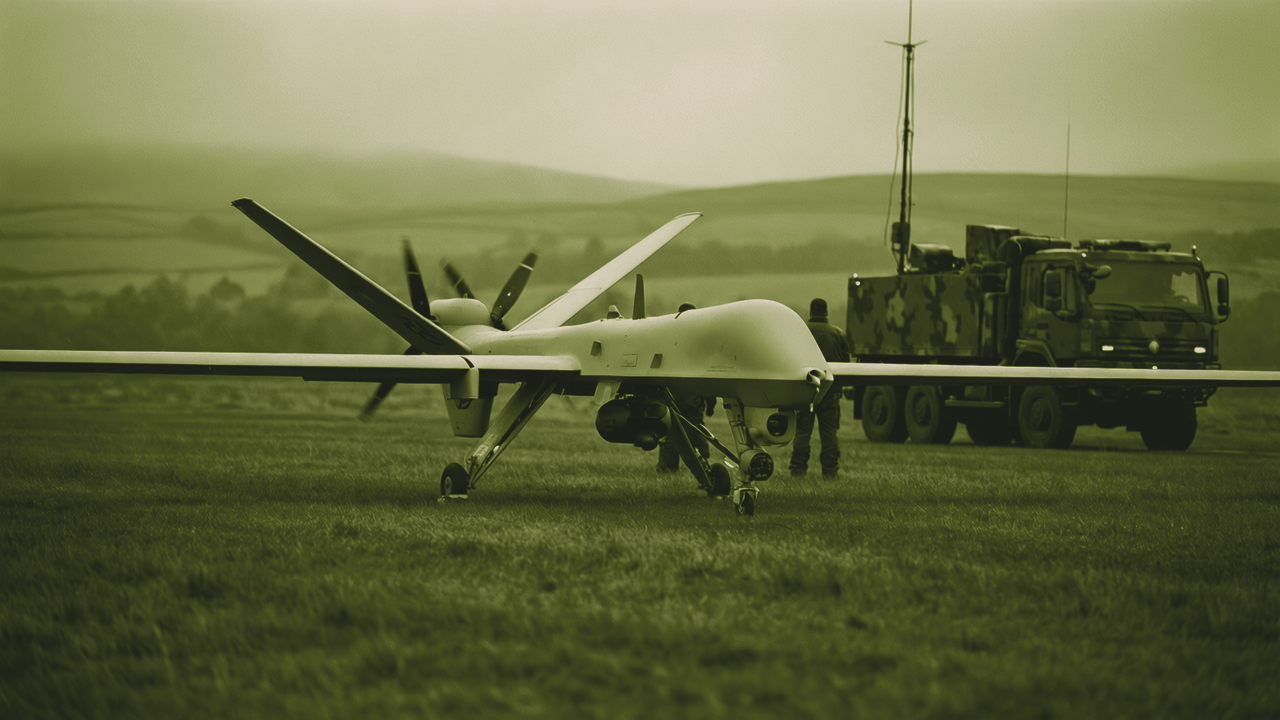
CORVUS replaces Watchkeeper's 54-aircraft buy with up to 24 AR5s, a contract built for service-life updates and a Swindon production line. Another 1,025 small drones hedge the question of whether the larger aircraft can survive.
16 September at DVD
Britain's CORVUS contract trades a large fleet for a smaller one whose design and support model are meant to keep changing with the battlefield. At Defence Vehicle Dynamics on 16 September, Defence Readiness and Industry Minister Luke Pollard confirmed an up-to-£400m contract with Tekever, starting with six AR5 aircraft and rising to as many as 24 by 2029. The AR5 replaces Watchkeeper, a 54-aircraft programme that entered service in 2014.
Tekever signed the contract the same day in Bristol. The company says CORVUS will begin entering service later this year and draws on more than 50,000 operational flight hours accumulated in Ukraine since 2022. The MoD had selected the AR5 in July; the signature turns that choice into a ten-year programme and anchors production at a new Tekever factory in Swindon.
The AR5 can carry 50kg of cameras and sensors, and the contract will support more than 1,000 skilled jobs by 2030 across Bristol, Swindon, Lydd, London, Southampton, Edinburgh and West Wales Airport, according to the ministry. Pollard paired it with a separate £16m purchase of 1,025 small drones: 245 sub-250g Evolve Dynamics FOXE-NATOs with infrared cameras, 670 Skydio X10 INTLs supplied by Marlborough Communications, and 110 SONORA trainers from Brigantes Consulting and Harmattan AI. He called the combination a "David and Goliath" mix.
The announcement describes a force structure, not a single replacement aircraft. CORVUS supplies persistent surveillance at range. Project Rapstone moves smaller systems from industry to the front line within 24 months, toward the government's goal of doubling Army fighting power by 2027.
Frequently Asked Questions
What is Project CORVUS?
CORVUS is the British Army's replacement for the Watchkeeper surveillance drone. The MoD signed a contract worth up to £400m with Tekever on 16 September 2026 to field the AR5, starting with six aircraft and rising to up to 24 by 2029.
What can the Tekever AR5 do?
Per UK Defence Tech, the AR5 has a 7.3-metre wingspan, cruises at 100 km/h, stays aloft up to 20 hours, carries up to 50kg of sensors and uses a satellite link for an effective range beyond 1,000km. Tekever says its systems have flown more than 50,000 operational hours in Ukraine since 2022.
Why did Britain retire Watchkeeper?
Watchkeeper entered service in 2014, nine years after contract award, lost eight of 54 aircraft in crashes and flew 1,191 hours from 2018 to 2022 against an annual target of 6,000, per UK Defence Tech. Lt Gen Robert Magowan told lawmakers the war in Ukraine had shown it was no longer fit for operational purpose.
Does each AR5 cost £16.7 million?
No. £400m divided by 24 is about £16.7m, but £400m is a ten-year ceiling that also covers support and updates, not a unit price. UK Defence Tech says the original CORVUS tender was priced around £130m.
What else did the MoD buy alongside CORVUS?
A separate £16m deal for 1,025 small drones: 245 Evolve Dynamics FOXE-NATOs, 670 Skydio X10 INTLs via Marlborough Communications and 110 SONORA trainers from Brigantes Consulting and Harmattan AI, under Project Rapstone, per the MoD.
AI-generated summary, reviewed by an editor. More on our AI guidelines.
Below this point
- Watchkeeper's 54 aircraft
- The AR5's 50,000 hours
- Raybird's 40-kilometre warning
- The £400m ceiling
- Rapstone and StormShroud
- Six tests through 2029

Marcus Schuler
Marcus Schuler edits BattlePolicy, a daily defense-technology brief connecting the companies and capabilities behind modern war to the contest among Europe, the US, Russia, and China.