Jet Drones Top Half of Russia's Night Attack Again as a DTEK Plant Halts Generation
By the Air Force's count Ukraine stopped a smaller share of the jets than of the other drones, and the Energy Ministry says the strikes left more than 500,000 people without electricity.
By the Air Force's count Ukraine stopped a smaller share of the jets than of the other drones, and the Energy Ministry says the strikes left more than 500,000 people without electricity.
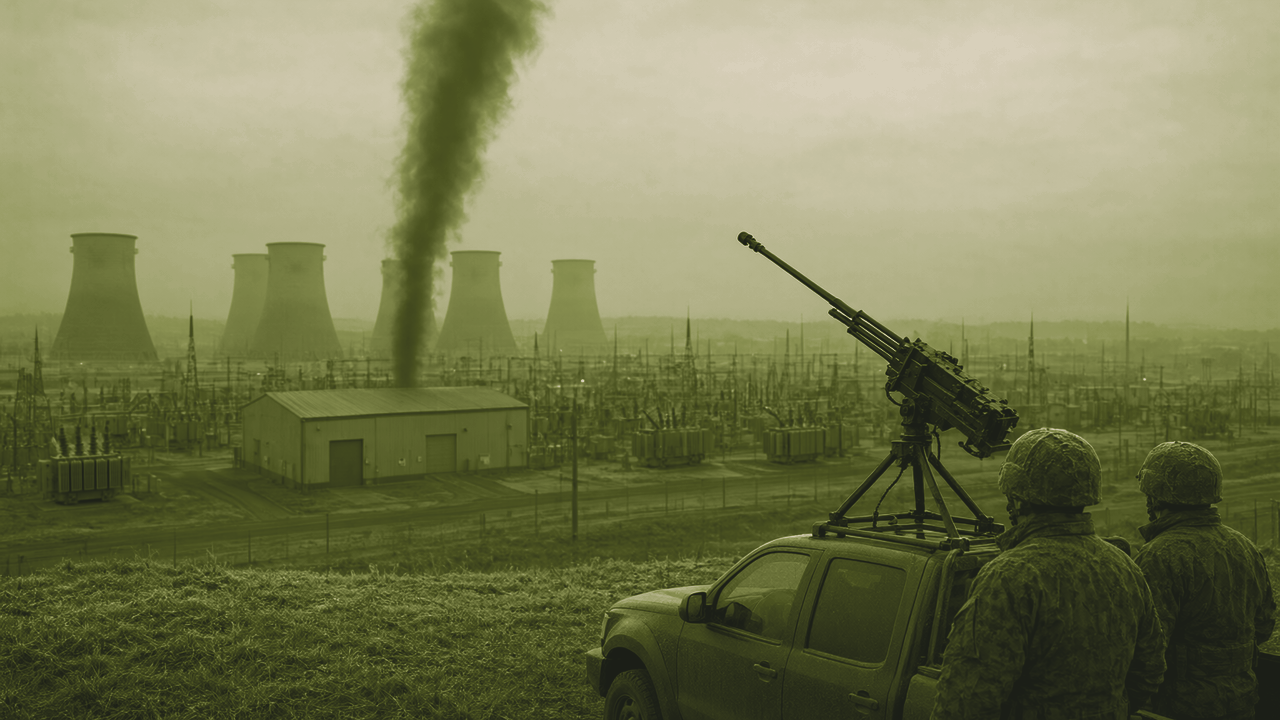
Russia launched 176 drones at Ukraine overnight Oct. 22-23, including 92 jet-powered Shaheds, Ukraine's Air Force stated. Jets made up more than half the force for a second night running, after 110 of 210 the night before, by its count.
By 8 a.m., defenses had shot down or electronically suppressed 140 drones, including 68 jets. The Air Force figures imply a 74% neutralization rate for the jets against 86% for the other drones and decoys, 72 of 84. The count was preliminary, with 10 strike drones still airborne. Hits landed at 19 locations and debris fell at 13 others.
Read next — from the Lexicon
Below this point
6 more sections.
One thermal power plant halted electricity generation after significant equipment damage, DTEK said. The company did not identify the plant. It puts the number of attacks on its thermal plants since the full-scale invasion at more than 230.
More than 500,000 Ukrainians lost electricity after attacks on energy facilities in six regions, Ukraine's Energy Ministry announced. Ukrenergo listed new outages in eight regions and set hourly power cuts and industrial capacity limits in some of them through the end of Oct. 23. Emergency cuts also covered Kyiv and the surrounding region, DTEK added.
Russia now produces an estimated 4,000 Geran-4 and Geran-5 jet drones a month, twice its roughly 2,000 Geran-2 output, Ukraine's Defence Intelligence (HUR) disclosed, up from about 3,000 jets in August per Militarnyi's earlier reporting. The agency attributed the shift to mobile fire groups intercepting the slower Geran-2s. In early October HUR said Russia had replaced the Chinese Telefly TF-TJ2000A turbojet in the Geran-4 with a domestic engine.
The jets cross the front at altitudes of 5,000 to 8,000 meters, beyond the reach of MANPADS and other air defenses, said a battalion commander on the Zaporizhzhia front who uses the call sign Ramses. Ukrainska Pravda, reporting from his command post, tracked one at 500 km/h and wrote that Russia sends them across that sector one at a time at 20-30 minute intervals.
Twenty-two teams are developing high-speed interceptors, 12 of them with state funding, and seven interceptors are in combat use, according to Brave1 head Andrii Hrytseniuk. The government has ordered well over 1,000 of the new interceptors, he said, but production is still being ramped up.
Russia's 4,000 jets a month set the pace: Hrytseniuk said scaling interceptors against the conventional Shahed took six months, and this time, in his words, "we're not talking days or weeks."

Marcus Schuler
Marcus Schuler edits BattlePolicy, a daily defense-technology brief connecting the companies and capabilities behind modern war to the contest among Europe, the US, Russia, and China.