Trump Presses Kyiv Over Diesel. Putin Says Sanctions, Not Strikes, Keep It Off the Market
The G7 will release up to 100 million barrels as Ukraine's drones keep hitting Russian refineries. Putin put the campaign's cost at 1% of GDP and said a strike pause would not return Russian diesel while sanctions stand.
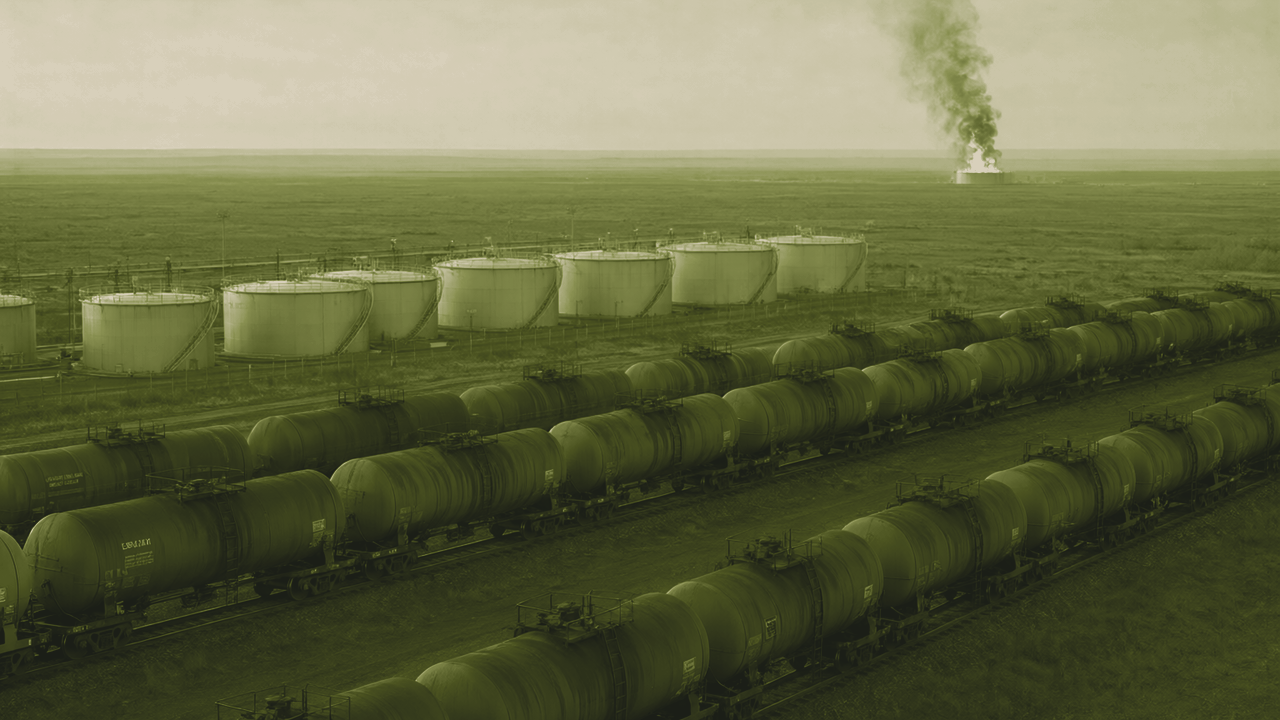
The G7 will release up to 100 million barrels as Ukraine's drones keep hitting Russian refineries. Putin put the campaign's cost at 1% of GDP and said a strike pause would not return Russian diesel while sanctions stand.
Valdai, then the G7
Washington wants Kyiv to stop hitting Russian refineries so diesel prices fall, but Vladimir Putin said on Oct. 1 that a pause would not send Russian diesel back to the world market while sanctions remain. Speaking at the Valdai forum, Putin said Ukraine's refinery strikes had "partly achieved" their goal and cost Russia about 1% of GDP. Russia has enough diesel for its own needs, he added, but sanctions would keep any surplus off the global market even if the strikes stopped: "How is our diesel supposed to reach the global market with sanctions still in place? It can't." He called the proposed swap, an end to Russian strikes on Ukrainian ships in return for an end to Ukrainian strikes on refineries, absurd.
A day later the G7 agreed to release up to 100 million barrels of diesel and crude through the International Energy Agency over four months, with "a front-loaded substantial diesel release within the first 20 days." The deal followed President Donald Trump's threat to ban U.S. diesel exports, and the leaders' statement commits members to "refrain from export restrictions on energy and energy products between G7 countries." Western reserves are now covering part of a gap that Ukraine's campaign helped open. The one concession Washington keeps asking of Kyiv would not, by Putin's account, close it.
Volgograd and Samara, overnight
Ukraine kept striking while the G7 talked. Ukraine's General Staff said its forces hit the Lukoil-Volgogradneftepererabotka refinery and the "Samara" line-production control station near Prosvet overnight Oct. 1-2. The Samara station blends crude grades into Urals, Russia's main export blend. Volgograd governor Andrei Bocharov described a "massive drone attack on industrial infrastructure" without naming facilities, and Russia's Defense Ministry claimed it intercepted 646 Ukrainian drones. Zelensky called the strikes Ukraine's "long-range sanctions."
On Sept. 30 Russia's government extended its diesel export ban for producers to Oct. 31, citing domestic market stability during the harvest. Trump's verdict that day: "diesel is really hurt much more, not by the Middle East, but by what's going on in Russia."
Frequently Asked Questions
What did the G7 agree on Oct. 2?
To release up to 100 million barrels of diesel and crude through the International Energy Agency over four months, with a front-loaded diesel release in the first 20 days. Members also committed to refrain from energy export restrictions between G7 countries.
What did Putin say about Ukraine's refinery strikes?
At the Valdai forum on Oct. 1, Putin estimated the strikes had cost Russia about 1% of GDP and had partly achieved Kyiv's goal. He said sanctions would keep Russian diesel off the global market even if the strikes stopped.
Are Ukraine's strikes the main cause of high diesel prices?
Trump says so. Energy analysts name the Iran war and wider oil-market disruption as the leading drivers. Argus Media's Benedict George said the refinery attacks turned diesel from one of several very big problems into the biggest problem for the global oil system.
How much diesel did Russia export before the ban?
About 1 million barrels a day before the summer attacks, according to Bloomberg. Russia's government has extended its diesel export ban for producers to Oct. 31.
What did Ukraine hit on Oct. 2?
Ukraine's General Staff said its forces struck the Lukoil refinery in Volgograd and the Samara station near Prosvet, which blends crude into Urals, Russia's main export blend. Russia's Defense Ministry claimed it intercepted 646 Ukrainian drones overnight.
AI-generated summary, reviewed by an editor. More on our AI guidelines.
Read next — from the Lexicon
Below this point
- 100 million barrels against 1 million a day
- Twenty-one refineries in August
- 17.1 trillion rubles for 2027
- The pause Washington wants
- What to watch
100 million barrels against 1 million a day
The G7's volume sits close to the size of Russia's missing diesel, though the match is rough. Russian diesel exports ran about 1 million barrels a day before the summer attacks, according to Bloomberg. Released evenly over four months, 100 million barrels comes to roughly 830,000 barrels a day, and part of the release is crude. Oil analyst Andy Lipow framed it more directly: 100 million barrels of diesel over four months "would essentially replace Russian exports which have been banned as Ukrainian drone strikes have severely reduced Russian refining capacity." He estimated the release could cut diesel prices by 25 cents a gallon for a time but "does little to increase refinery capacity."
That relief is small against the climb since winter. U.S. diesel averaged $6.37 a gallon, up 70% since late February, and AAA recorded a record $6.53 on Sept. 22.
Trump's diagnosis overshoots the evidence. Energy analysts name the Iran war and wider disruption to oil markets as the leading drivers of higher prices, and Energy Secretary Chris Wright pointed to lost diesel exports from the Middle East and China. Argus Media's Benedict George put Ukraine's share precisely: the refinery attacks made diesel "the biggest problem for the global oil system, whereas before it was one of several very big problems." Ukraine's drones deepened a shortage they did not start. Trump's claim that without them "we wouldn't have a diesel problem" goes further than that.
Twenty-one refineries in August
The campaign now reaches export logistics as well as fuel output. Ukrainian drone forces hit 21 Russian refineries in August, a wartime record, according to DeepStrike UA data and Unmanned Systems Forces statistics; Omsk, Perm and Tyumen were struck for the first time in the war. Bloomberg estimated on Aug. 28 that Russia's output of gasoline, jet fuel, diesel and other products had fallen more than 30%. Ukraine's military claims more than 45% of refining capacity is knocked out, the figure BattlePolicy's Sept. 21 analysis tested against Russian repair times.
Volgograd is Lukoil's largest refinery in southern Russia, and strikes earlier this year damaged its primary and secondary units and halted production for a time. Samara is a different kind of target. Hitting the station that blends Urals moves the campaign from what Russia refines to what it ships, although no source yet shows what the Oct. 2 strike did to throughput.
Russia is compensating with crude. Bloomberg vessel-tracking data show crude exports averaging 3.71 million barrels a day in the four weeks to Sept. 27, the most since early August, because damaged refineries leave more oil to sell. Urals traded above $110 a barrel in mid-September, against $59 assumed in Russia's budget. The swap does not cover the loss. Raiffeisenbank analysts put combined crude and product exports at about 28 million tonnes a month, the lowest since the pandemic, and judged that higher oil prices were unlikely to make up much of the shortfall.
17.1 trillion rubles for 2027
Moscow is also paying in its budget. Government documents seen by Reuters set 2027 defense spending at 17.1 trillion rubles, about $202 billion, roughly 27% above the 13.5 trillion originally planned and 6.9% of GDP. An official involved in drafting the budget told Vlast that the refinery and warehouse attacks "happened in the spring and summer, right when the budget was being prepared," adding: "This budget is overwhelmingly geared toward the military."
The same documents doubled the 2026 deficit estimate to 3.2% of GDP from 1.6% and cut expected 2026 oil and gas revenue to 7.6 trillion rubles from 8.9 trillion. The strikes are one pressure among several in those numbers. Putin's 1% is Moscow's own figure for what they have cost.
The pause Washington wants
Washington's pressure lands on Kyiv, while the obstacle Putin named is the sanctions regime. Trump said in mid-September that Zelensky "has to stop knocking out diesel fuel in Russia." Treasury Secretary Scott Bessent wrote that American farmers, truckers and businesses "should not be left carrying the burden" of a global diesel shortage.
Zelensky has offered a narrower deal. After meeting Trump on Sept. 22, he said Kyiv would stop striking Russian refineries and energy facilities if Moscow stopped attacking Ukraine's energy infrastructure. Putin rejected the swap as it was put to him and named sanctions, not Ukrainian drones, as what keeps Russian diesel off the market. Taken at his word, a Ukrainian pause would give up a weapon Putin himself prices at 1% of GDP and leave Western buyers waiting for barrels he says sanctions would block anyway.
Russia, meanwhile, is answering on Ukraine's economy. Putin said Ukraine now has "virtually no metals industry." The New York Times reported on a purported Russian Defense Ministry document, obtained by Ukrainian authorities, that sets out a three-stage campaign: substations on Ukraine's western border to cut electricity imports from Europe, then hydroelectric plants, then the substations serving the three nuclear plants still under Ukrainian control. It aims to cut electricity and heat to Kyiv, Kharkiv and Odesa by 90% and remove nearly 15 gigawatts of generating capacity. The Times could not verify the document.
Mykola Bielieskov, an analyst at Ukraine's government-run National Institute for Strategic Studies, put Kyiv's position bluntly: "There is no rationale for Ukraine to continue exercising restraint while it is being bombarded and major urban areas are under constant attack." For now, Western reserves cover the gap. Washington is asking Kyiv for a pause that, on Putin's own account, would not refill it.
What to watch
- Oct. 31. Russia's producer diesel export ban expires. An extension keeps the gap open; a relaxation would show how much refining Russia has restored.
- The first 20 days. The G7 promised substantial diesel early. A trader and an EU diplomat told Politico that many barrels from March's 400-million-barrel IEA release never reached the market, and two other diplomats called the new pledge a reaffirmation of that commitment.
- Nov. 3. The U.S. midterms. Watch whether Trump revives the export-ban threat, or his pressure on Kyiv, if pump prices stay near records.
- Volgograd and Samara. Restart reports will show whether the Oct. 2 strikes cut refining and Urals blending or only started fires.
- Western-border substations. They are the first stage of the purported Russian plan, and strikes there would test Zelensky's offer of a mutual energy truce.

Marcus Schuler
Marcus Schuler edits BattlePolicy, a daily defense-technology brief connecting the companies and capabilities behind modern war to the contest among Europe, the US, Russia, and China.