S-500 Prometheus
Russia’s strategic mobile air-defense and anti-ballistic missile system — claimed to engage ballistic missiles, hypersonic threats, and low-orbit satellites up to 600 km, now fielded by a single regiment.
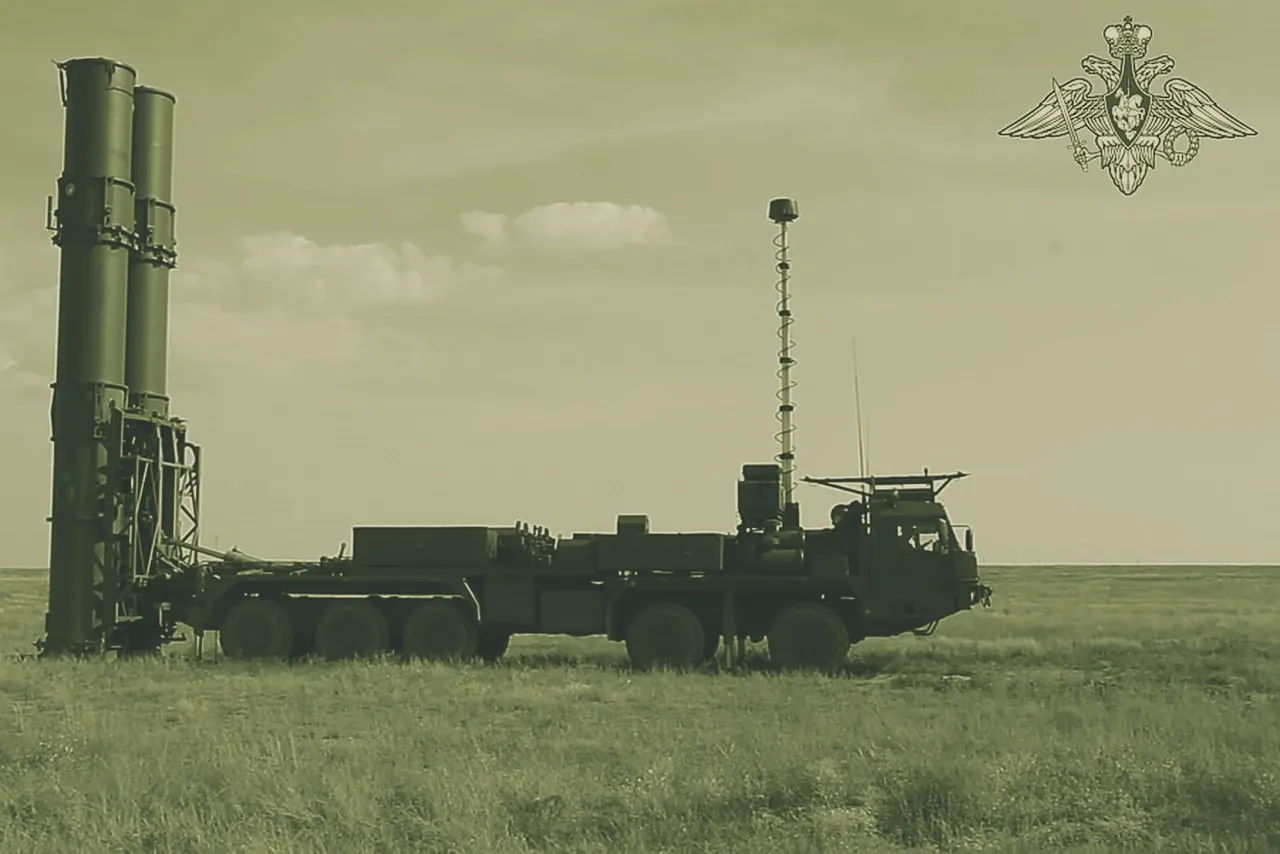
Russia’s strategic mobile air-defense and anti-ballistic missile system — claimed to engage ballistic missiles, hypersonic cruise weapons, and low-orbit satellites at up to 600 km and 180–200 km altitude, fielded by a single operational regiment from December 2025.
Overview
The S-500 Prometheus, also designated 55R6M “Triumfator-M,” is a road-mobile, upper-tier surface-to-air and anti-ballistic missile system developed by Almaz-Antey for the Russian Aerospace Forces. It is designed to sit above the S-400 Triumf in Russia’s layered integrated air defense, adding an exo-atmospheric and near-space engagement layer. The system combines long-range 40N6M anti-aircraft missiles and 77N6/77N6-N1 hit-to-kill interceptors intended to defeat medium-range ballistic missiles, hypersonic glide vehicles, high-altitude aircraft, and low-orbit satellites, with manufacturer-claimed detection ranges of up to 2,000 km for ballistic targets and 800 km for airborne threats, according to CSIS Missile Threat. After a protracted development that predates 2010, the first regiment was officially declared on combat duty by Russian Defense Minister Andrei Belousov on 17 December 2025, as reported by The Defense Post and Army Recognition.
Development
Formal development of a post-S-400 strategic system began around 2009 when Almaz-Antey’s preliminary design was approved. Russia’s GPV-2020 armament program initially planned for ten S-500 battalions by 2020, a target that was never met, as noted by Wikipedia. Component testing ran from 2012 through 2016, and dedicated production plants in Kirov (2016) and Nizhny Novgorod (2018) were opened to support the programme. A first serial contract for “over 10 systems” was signed in late 2020, and serial missile production launched in 2021. Deputy Prime Minister Yury Borisov stated that deliveries began on 16 September 2021, and a prototype entered “combat duty” in Moscow on 13 October 2021 — although it did not yet meet the full operational specification, according to Janes (cited by Wikipedia). A subsequent production contract was signed in August 2022. By October 2023, industry sources and Western intelligence reported that production was running behind schedule, blamed on Western sanctions that disrupted micro-electronics supply and on skilled-labour shortages, as detailed by Defense News. Chief of the General Staff Valery Gerasimov announced in January 2025 that the first regiment was “nearing completion,” and on 17 December 2025 Defense Minister Belousov formally declared the regiment on combat duty, framing it as a strategic missile-defense milestone, recorded by TASS and Defence Security Asia.
Design & capabilities
The S-500 battery is built around a multi-sensor architecture that fuses four distinct radar types to acquire, track, and engage a wide target set. The 91N6A(M) S-band acquisition and battle-management radar (an upgraded “Big Bird” carried on a BAZ-6403 tractor) provides panoramic surveillance; a 96L6-TsP C-band acquisition radar (on a BAZ-69096 chassis) serves as the supplementary search set. Engagement is handled by the 76T6 multimode radar (BAZ-6909-022 8×8) for aerodynamic targets and the dedicated 77T6 anti-ballistic missile engagement radar (BAZ-69096) for high-speed ballistic threats. Detection range is claimed at up to 2,000 km for ballistic targets and 800 km for airborne targets, per CSIS Missile Threat, though these figures have not been independently verified.
The launcher, a 77P6 unit on a 10×10 BAZ-69096 truck, can carry four 40N6M long-range anti-aircraft missiles (active radar seeker, ~400 km range) or two 77N6/77N6-N1 hit-to-kill interceptors intended for ballistic missiles and low-orbit satellites (claimed ~600 km range). Engagement altitude is claimed at 180–200 km, reaching thermosphere/near-space altitudes, as confirmed by Russian official statements and Wikipedia. Russian MoD sources claim a reaction time of less than 4 seconds (versus the S-400’s <10 seconds) and the ability to simultaneously engage up to 10 ballistic or hypersonic targets at speeds up to 7 km/s, although none of these figures have been verified in independent testing. All components are road-mobile on heavy-duty BAZ multi-axle trucks, allowing strategic redeployment across Russia’s vast territory. An unverified May 2018 test reportedly intercepted a target at 482 km, attributed to U.S. intelligence sources, but as of 2023 the system’s hypersonic-missile intercept capability had not been demonstrated in any independent trial, according to Wikipedia.
Variants
No operational variants are known beyond the baseline S-500/55R6M system. A speculative “S-550” successor was mentioned in Russian and Western press but as of late 2023 there was no evidence it had been developed, a point confirmed by Wikipedia and Defense News. A potential naval version was once mooted for the Lider-class destroyer, but that programme was not operational as of 2022.
Combat record / operational use
The S-500’s operational debut occurred when Russia deployed a battery to protect the Kerch Bridge in Crimea from at least June 2024, according to Ukrainian military intelligence chief Kyrylo Budanov as reported by the Kyiv Post. In that role, the system reportedly failed to intercept U.S.-made MGM-140 ATACMS tactical ballistic missiles during strikes on the bridge — a significant performance gap given that ATACMS is a far less stressing target than the ICBMs and hypersonic vehicles the S-500 claims to defeat. Separately, Ukraine’s Prymary (Ghosts) special operations unit claimed it destroyed the S-500’s 98L6 Yenisei engagement radar at the Crimean site in a drone strike, a claim carried by the Eurasian Times in August 2025. Russia has not confirmed either the interception failures or the radar loss. All combat-performance reports remain attributed and unverified, and any assessment must weigh the known pattern of Russian air-defense claims that do not withstand scrutiny.
Advantages
- Claimed 600-km reach with 77N6 hit-to-kill interceptors and 200-km-altitude ceiling provide a genuine anti-ballistic and near-space denial layer, a qualitative step beyond the S-400 — if performance matches manufacturer claims.
- Multifunction radar architecture with dedicated ABM engagement radar (77T6) is purpose-built for tracking and cueing against maneuvering ballistic targets, a capability absent from the standard S-400.
- High claimed reaction time (<4 seconds) could prove operationally significant against hypersonic and ballistic threats where the engagement window is compressed.
- Road-mobile 10×10 BAZ chassis permits strategic redeployment across Russia’s territory, complicating adversary targeting.
- Integration into the broader Russian IADS alongside S-400, S-350, and Moscow’s A-135/A-235 ABM network adds depth as a high-altitude interceptor umbrella.
Drawbacks / limitations
- Actual combat performance against ATACMS in 2024 was reportedly poor, raising questions about sensor sensitivity, engagement doctrine, or fundamental design flaws. The ATACMS failure indicates difficulties against even modest ballistic missiles.
- The claimed destruction of the Yenisei engagement radar by a drone strike, if accurate, highlights a severe vulnerability: the loss of a single sensor can blind an entire battery, and the radar’s large signature makes it a high-value target for precision strikes.
- All hypersonic-intercept claims remain unverified; as of 2023 no independent test had demonstrated engagement of a maneuvering hypersonic glide vehicle.
- Serial production has been severely bottlenecked by Western sanctions (microelectronics) and labour shortages, resulting in only one regiment operational more than four years after the initial delivery declaration — a stark shortfall from the original ten-battalion plan.
- Unit cost is estimated at approximately $2.5 billion (2023), an extraordinary figure that makes mass procurement unsustainable under wartime budget pressure.
Counterparts
- THAAD (USA)
- Patriot PAC-3 (USA)
Outlook
Russia will leverage the single operational S-500 regiment as a deterrence narrative, claiming high-altitude coverage against U.S. and NATO hypersonic and ballistic threats. The system’s demonstrated performance against real-world targets (ATACMS) and its vulnerability to stand-off strike damage its credibility. Production remains constrained by sanctions, making the original ten-battalion ambition unrealistic. Export interest has been muted: India, frequently cited as a likely first buyer, was reported in October 2025 to be focussing on additional S-400 procurement rather than committing to the S-500, according to The Print. A possible S-550 successor lacks any confirmed development evidence. The system’s long-term trajectory depends on whether sanctions-era production can yield more combat-ready regiments and whether the ATACMS failures are proven to be anomalous or systemic.
Key specifications
| Spec | Value |
|---|---|
| Type | Mobile strategic surface-to-air and anti-ballistic missile system |
| Engagement range | ~400 km (40N6M); claimed ~600 km (77N6) |
| Engagement altitude | Claimed up to 180–200 km (near-space) |
| Target set | Ballistic missiles (MRBM, ICBM terminal phase), hypersonic cruise missiles, high-altitude aircraft, low-orbit satellites, UAVs |
| Interceptor(s) | 40N6M (anti-aircraft); 77N6/77N6-N1 (anti-ballistic / anti-satellite) |
| Radar / fire control | 91N6A(M) acquisition; 96L6-TsP acquisition; 76T6 multimode engagement; 77T6 ABM engagement |
| Reaction time | Claimed <4 seconds (not independently verified) |
| Simultaneous engagements | Claimed up to 10 ballistic/hypersonic targets (not independently verified) |
| Mobility | Road-mobile on BAZ 6×6 to 10×10 multi-axle chassis |
Sources
- CSIS Missile Threat — S-500 Prometheus. https://missilethreat.csis.org/defsys/s-500-prometheus/
- Wikipedia — S-500 missile system. https://en.wikipedia.org/wiki/S-500_missile_system
- The Defense Post — Russia Activates First S-500 Air and Missile Defense Regiment. https://thedefensepost.com/2025/12/18/russia-s-500/
- TASS — FACTBOX: S-500 Anti-Aircraft Missile System. https://tass.com/defense/2060705
- Defense News (Starchak) — Where is Russia’s S-500 air defense system? (October 2023). https://www.defensenews.com/industry/2023/10/05/where-is-russias-s-500-air-defense-system/
- The Print (Snehesh Alex Philip) — India looks to procure more S-400, S-500 air defence systems from Russia (September 2025). https://theprint.in/defence/india-looks-to-procure-more-s-400-s-500-air-defence-systems-from-russia/2753103/
- Kyiv Post (Korshak) — ATACMS Comes Out on Top Versus Russia’s S-500 Anti-Missile System (June 2024). https://www.kyivpost.com/post/34782
- Eurasian Times — Russia’s S-500 SAMs Yenisei Radar in Crimea destroyed by Ukraine (August 2025). https://www.eurasiantimes.com/russias-s-500-sams-yenisei-radar-in-crimea/
- Army Recognition — Russia Deploys S-500 Missile Defense System on Combat Duty for the First Time (December 2025). https://www.armyrecognition.com/news/army-news/2025/russia-deploys-s-500-missile-defense-system-on-combat-duty-for-the-first-time
- Defence Security Asia — Russia Deploys First S-500 Prometheus Regiment (December 2025). https://defencesecurityasia.com/en/russia-s500-prometheus-first-regiment-operational-strategic-missile-defense/