GRID-REF 37°47′N 122°25′W
DISPATCH 02/26 · 9 Jun 2026
BATTLEPOLICY
Startup to front line. Strategy to consequence.
Lexicon · Russia

Tor-M2

Russia's autonomous short-range air-defense system — a single-vehicle, tracked SAM that carries 16 vertical-launch missiles for point defense against aircraft, cruise missiles, and drones, and a staple of Moscow's counter-drone shield.
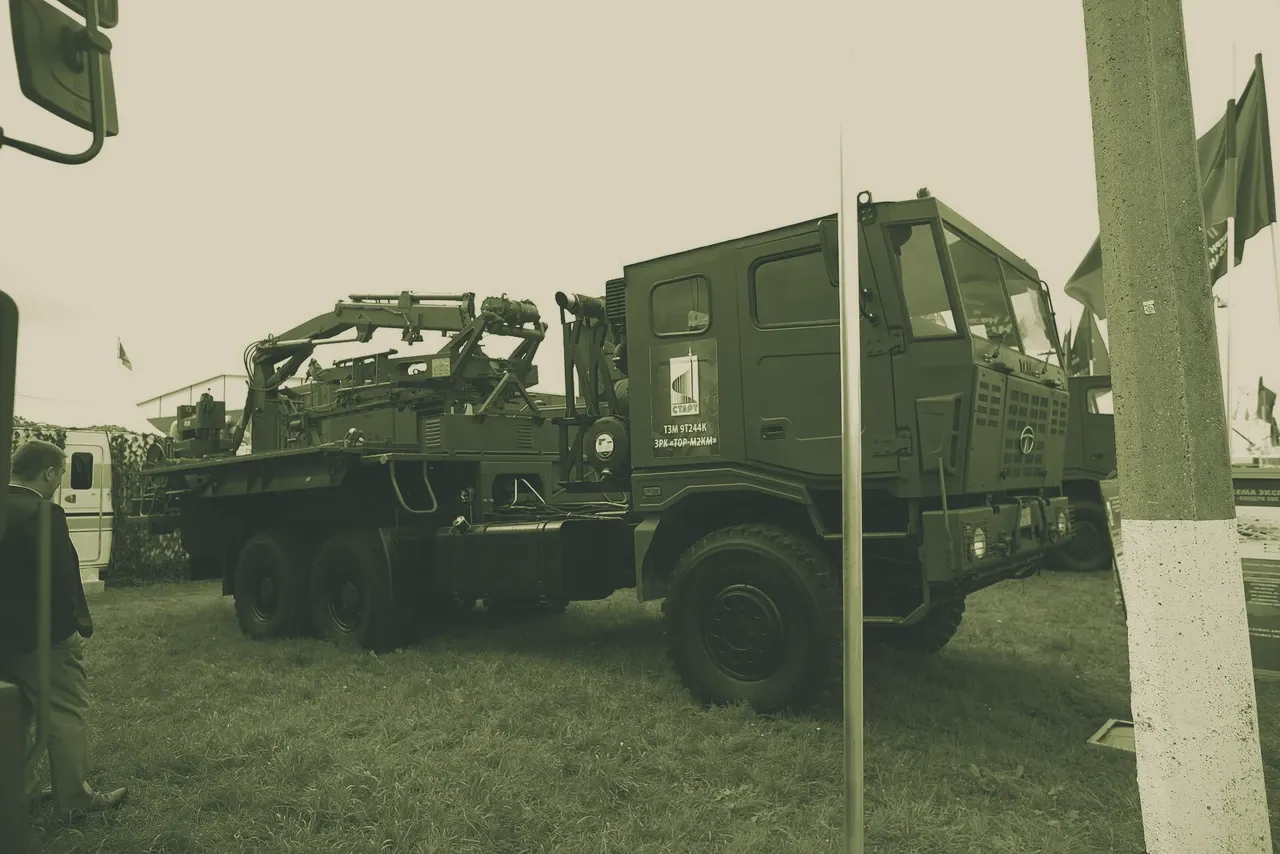
Tor-M2
FIG.01 · Russia Image - Tor-M2. Photo by Yuriy Lapitskiy, CC BY-SA 2.0, via Wikimedia Commons.
Russia's autonomous tracked short-range air-defense system — 16 vertical-launch missiles on a single vehicle for point defense, a key layer in the counter-drone and counter-PGM shield.

Overview

The Tor-M2, known in NATO parlance as the SA-15 Gauntlet, is a fully autonomous, tracked short-range surface-to-air missile system developed by Russia's Almaz-Antey. A single combat vehicle integrates search and tracking radars and a vertical cold-launch missile module, enabling it to engage aircraft, helicopters, cruise missiles, precision-guided munitions (PGMs) and unmanned aerial systems (UAS) while on the move or at a short halt. With a design that stresses autonomy and rapid reaction, the Tor-M2 fills the VShORAD (very-short-range air defense) role for manoeuvre forces and fixed-site protection, and has seen intense operational use in Ukraine.

Development

The Tor-M2 descends from the original 9K330 Tor (SA-15) that entered service with the Soviet Army in 1986. Almaz-Antey's Izhevsk "Kupol" plant evolved the design through several upgrades, and the M2 family was fielded between 2008 and 2016, bringing a new interceptor, digital fire-control, and an enlarged missile magazine. According to CSIS, the M2 replaced the earlier 9M331 missile with the 9M338, doubling the ready-to-fire load to 16 and improving the engagement envelope.

Design & capabilities

The Tor-M2 mounts a phased-array search radar (detection range ~25–32 km) and a tracking radar (engagement range ~15 km) on a single tracked GM-355 chassis, giving the vehicle true 360° coverage. The 9M338 missile is cold-launched vertically, then rockets forward under radio-command guidance to intercept targets at ranges up to about 16 km and altitudes up to 10 km, with an interception speed ceiling around Mach 3. The system is credited with a reaction time as short as ~5 seconds and can engage up to four targets simultaneously, as detailed by CSIS. All sensors and weapons are carried aboard one vehicle, so a single Tor-M2 requires no external command post or radar to function, making it highly survivable in mobile operations.

Variants

  • Tor-M2E – export variant on a tracked chassis; broadly similar in capability.
  • Tor-M2K – wheeled variant on a 10×10 truck chassis for rapid road mobility.
  • Tor-M2DT – Arctic variant mounted on a two-section DT-30PM articulated tracked carrier, optimised for extreme cold and soft ground.

Combat record / operational use

The Tor-M2 has been a workhorse of Russia's counter-drone and counter-PGM layer in Ukraine, credited with intercepting dozens of small unmanned aircraft and incoming rockets. However, the system has also proved vulnerable: the loss of a single Tor-M2, valued at an estimated ~$25 million, to inexpensive Ukrainian FPV strike drones in May 2025 was widely reported by Kyiv Post. Open-source tallies, including those collated by the Oryx project, confirm dozens of Tor-series systems destroyed or captured, and the Ukrainian military’s monthly attrition summaries have highlighted the steady erosion of Russia’s short-range air-defense fleet, as noted by Ukrinform.

Advantages

  • Fully autonomous single-vehicle architecture — search, track, and fire without a separate command unit.
  • 16 ready-to-launch 9M338 missiles, double the missile load of earlier Tor versions.
  • Very short reaction time (claimed ~5 seconds) and ability to engage on the move during short halts.
  • Tracked GM-355 chassis provides good off-road mobility, keeping pace with armour and mechanised units.
  • Effective against a wide target set, including low-flying cruise missiles and small drones.

Drawbacks / limitations

  • High unit cost (est. ~$25–27 million) makes attrition burdensome when compared with the cheap drones used to hunt it.
  • Radar horizon and missile range (≤16 km) limit its defensive footprint, forcing it to operate close to the asset it protects.
  • Modern stand-off weapons and saturation attacks can overwhelm a single vehicle’s four-target engagement limit.
  • Tracked chassis, while mobile, is heavier and more complex to maintain than wheeled SHORAD alternatives.

Counterparts

Outlook

The Tor-M2 remains in production and continues to equip Russian army air-defence brigades, but the war in Ukraine has spotlighted the cost-exchange crisis facing all premium short-range systems. The loss of expensive vehicles to cheap drones is driving interest in layered gun-based C-UAS systems and cheaper interceptors. The Tor family is likely to see further missile and sensor upgrades, and the Arctic and wheeled variants point to niche roles where the autonomous design can still deliver value.

Key specifications

Spec Value
Type Autonomous tracked short-range SAM system
Engagement range ~16 km (9M338 missile)
Engagement altitude ~10 km (9M338)
Target set aircraft, helicopters, cruise missiles, PGMs, UAS
Interceptor(s) 9M338 / 9M338K (16 per vehicle)
Radar / fire control Combined phased-array search (~25–32 km) + tracking (~15 km), 360°
Reaction time ~5 s (claimed)
Simultaneous engagements up to 4
Mobility Tracked GM-355 chassis; short-halt fire

Sources

  1. CSIS Missile Threat – "Tor (SA-15 Gauntlet)." https://missilethreat.csis.org/defsys/tor/
  2. Kyiv Post – "Ukrainian Drones Torch ~$25M Russian Tor-M2." https://www.kyivpost.com/post/52451
  3. Ukrinform – "January's attrition of Russia's air defense hardware." https://www.ukrinform.net/rubric-ato/4092159-januarys-attrition-of-russias-air-defense-hardware.html
  4. Wikipedia – "List of NATO reporting names for surface-to-air missiles." https://en.wikipedia.org/wiki/List_of_NATO_reporting_names_for_surface-to-air_missiles
FIELD DISPATCH · WEEKLY

BattlePolicy Weekly — free.

Defense tech, startups, and security — weekly. No paywall.

Related
Ukraine · Russia · Policy · Chornobyl · Energoatom · shahed

Russia strikes Ukraine's central spent-fuel store at Chornobyl with a Shahed

A Russian drone hit the receiving building of the Holtec-built dry-cask site that freed Ukraine from shipping its nuclear waste to Russia, metres from where spent fuel sits.

Ukraine · Russia · Policy · Chornobyl · Energoatom · shahed