Tu-160 Blackjack
Russia's Mach-2-capable strategic heavy bomber and standoff cruise-missile carrier — the largest and fastest supersonic aircraft ever fielded, modernized with new-build Tu-160M aircraft entering service despite aging fleet challenges.
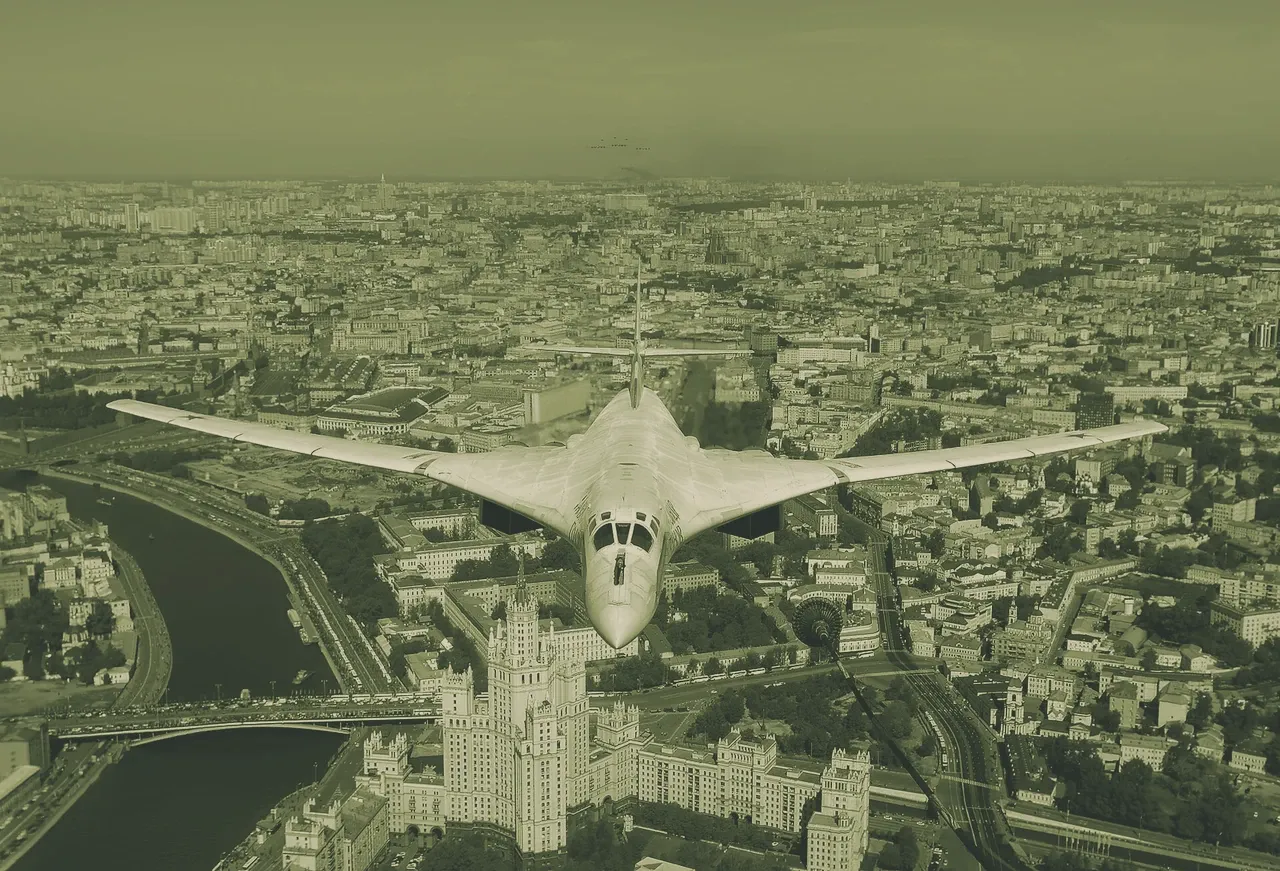
Russia's Mach-2-capable strategic heavy bomber and standoff cruise-missile carrier, the most powerful supersonic platform in service.
Overview
The Tupolev Tu-160, known by its NATO reporting name Blackjack and nicknamed the White Swan, is a supersonic, variable-sweep-wing strategic bomber operated exclusively by the Russian Aerospace Forces. Designed during the late Cold War as a counterpart to the American B-1B, it remains the largest and fastest combat aircraft in service, capable of delivering nuclear and conventional cruise missiles from standoff ranges. Since 2015, the type has fired Kh-101 and Kh-555 cruise missiles in Syria and appears regularly in the long-range standoff strikes against Ukraine. Russia is modernising the fleet through a low-rate new-build and upgrade programme, but only a limited number of airframes remain operational.
Development
The Tu-160 was developed by the Tupolev design bureau in the 1970s and 80s as a supersonic penetrating bomber; its first flight took place in December 1981 and the type entered service in 1987, with serial production at the Kazan Aviation Plant. After the collapse of the Soviet Union, production stalled and the fleet atrophied. Russia revived the platform in the 2010s through the Tu-160M modernisation programme: the first modernised aircraft flew in February 2020 and the first completely new-build Tu-160M airframe made its maiden flight on 12 January 2022, according to The War Zone. Deliveries of upgraded and new aircraft resumed in small batches; two modernised Tu-160M bombers were turned over to the Russian Aerospace Forces in 2024–2025, as Aerotime and Defence Blog reported, though production rates remain far below the stated ambition of 50 aircraft.
Design & capabilities
The Tu-160 features a distinctive variable-geometry wing, swept to 35.6 m in full sweep for supersonic dash and spreading to 55.7 m for take-off and efficient subsonic cruise. Its four Kuznetsov NK-32 afterburning turbofans (the modernised NK-32-02 on the Tu-160M) push the airframe to a maximum speed of approximately Mach 2.05 (~2,200 km/h) and a ferry range of about 12,300 km, according to GlobalSecurity and Tupolev Tu-160 overview. Armament is housed entirely in two large internal rotary launchers capable of carrying up to ~45,000 kg of munitions; the standard load comprises the conventional Kh-101, nuclear Kh-102, Kh-555, Kh-55 and the newer Kh-BD air-launched cruise missiles. The aircraft carries no defensive guns, relying instead on the long stand-off range of its weapons and an Obzor-K radar for battlefield awareness. The crew of four operates from a pressurised cockpit; the type is not stealth-optimised but uses a combination of high speed and low-level profile to complicate interception.
Variants
The Tu-160 family includes three recognised configurations. The baseline Tu-160 with the original NK-32 engines forms the majority of the operational fleet. The Tu-160M is a comprehensive modernisation — new NK-32-02 engines, upgraded flight and navigation avionics, and a glass cockpit — applied both to existing airframes and to a small number of new-build airframes. The term Tu-160M2 is sometimes used to designate the newly manufactured aircraft, although Russian sources often group them under the Tu-160M designation. A planned electronic-warfare variant (Tu-160PP) has been mentioned but not confirmed as operational.
Combat record / operational use
The Blackjack first saw combat during the Russian intervention in Syria. From November 2015, Tu-160s launched Kh-555 and Kh-101 cruise missiles against militant-held positions, marking the platform's operational debut, as recorded by PlaneHistoria. Since the full-scale invasion of Ukraine in February 2022, the type has become a principal launcher in Russia's long-range standoff campaign, firing Kh-101 and Kh-555 cruise-missiles from Russian and Black Sea airspace against Ukrainian infrastructure and military targets, as covered by Aerotime. No Tu-160 has been lost in combat, and sorties are generally conducted at stand-off distances well behind the engagement front.
Advantages
- Supersonic dash capability (Mach 2.05) enables rapid ingress and egress, compressing the engagement window for defenders.
- Massive payload of up to ~45,000 kg in internal rotary bays carries the full spectrum of Russian strategic ALCMs, including nuclear Kh-102.
- Unrefuelled ferry range of ~12,300 km provides genuine global reach; with aerial refuelling the range extends further.
- Variable-geometry wing allows efficient high-altitude subsonic cruise for range and a swept high-speed dash for the final attack profile.
- Modernisation extends airframe life through new engines and digital avionics, keeping the fleet mission-ready into the 2030s.
Drawbacks / limitations
- Large, non-stealth airframe presents a prominent radar cross-section, making detection straightforward for modern air defence networks.
- Extremely high unit cost (est. $270 million per new-build Tu-160M2) constrains the number that can be built.
- Low fleet numbers — only about 16–17 operational airframes, supplemented by a trickle of modernised aircraft — limit sustained sortie generation.
- No self-defence armament; the bomber depends wholly on stand-off distance and escort denial.
- Reliance on large stand-off missiles makes each firing a high-value event; if missile stocks are low, the platform's utility degrades.
Counterparts
- B-52 Stratofortress (USA) — subsonic heavy bomber with a larger payload and unrefuelled range, but lacking the Tu-160’s supersonic performance.
- H-6K (China) — a Tu-16-derived subsonic cruise-missile carrier, broadly comparable in role but inferior in speed and payload.
Outlook
The Tu-160 remains the sharpest arrow in Russia's long-range aviation quiver, but its utility is dictated by the availability of modern cruise missiles and the survivability of a large, non-stealth platform in contested airspace. The Tu-160M programme is slowly delivering upgraded airframes, but production ambition far exceeds reality, and the fleet's effective size — about two squadrons — limits its weight in a prolonged conflict. While the aircraft will remain in service for at least another decade, its future relevance is tied to the supersonic stand-off missile it launches, rather than any breakthrough in bomber design.
Key specifications
| Spec | Value |
|---|---|
| Crew | 4 |
| Length / wingspan | 54.1 m / 35.6 m swept (55.7 m spread) |
| Max speed | ~Mach 2.05 (~2,200 km/h) |
| Service ceiling | ~16,000 m |
| Combat radius / range | Ferry ~12,300 km; combat radius load-dependent (est. ~2,000–3,000 km) |
| Payload | Up to ~45,000 kg |
| Hardpoints | Two internal rotary launchers (no external hardpoints for ALCMs) |
| Radar / sensors | Obzor-K radar |
| Powerplant | 4 × Kuznetsov NK-32 (NK-32-02 on Tu-160M) |
| Armament | Kh-101, Kh-102 (nuclear), Kh-555, Kh-55, Kh-BD air-launched cruise missiles |
Sources
- Wikipedia — Tupolev Tu-160. https://en.wikipedia.org/wiki/Tupolev_Tu-160
- The War Zone — Russia's First New Production Tu-160 Blackjack In Decades Makes Its Maiden Flight. https://www.twz.com/43852/russias-first-new-production-tu-160-blackjack-in-decades-makes-its-maiden-flight
- Aerotime — Russia delivers two modernized Tu-160M strategic bombers. https://www.aerotime.aero/articles/russia-delivers-tu-160m-strategic-bombers
- Defence Blog — Russia hands over two Tu-160M bombers to Aerospace Forces. https://defence-blog.com/russia-hands-over-two-tu-160m-bombers-to-aerospace-forces/
- GlobalSecurity — Tu-160 BLACKJACK (Tupolev). https://www.globalsecurity.org/wmd/world/russia/tu-160m.htm
- PlaneHistoria — Tupolev Tu-160. https://planehistoria.com/tupolev-tu-160/