GRID-REF 37°47′N 122°25′W
DISPATCH 02/26 · 9 Jun 2026
BATTLEPOLICY
Startup to front line. Strategy to consequence.
Lexicon · USA

XM7

The U.S. Army's next-generation high-pressure 6.8 mm rifle, replacing the M4 in close-combat formations with greater range and barrier penetration.
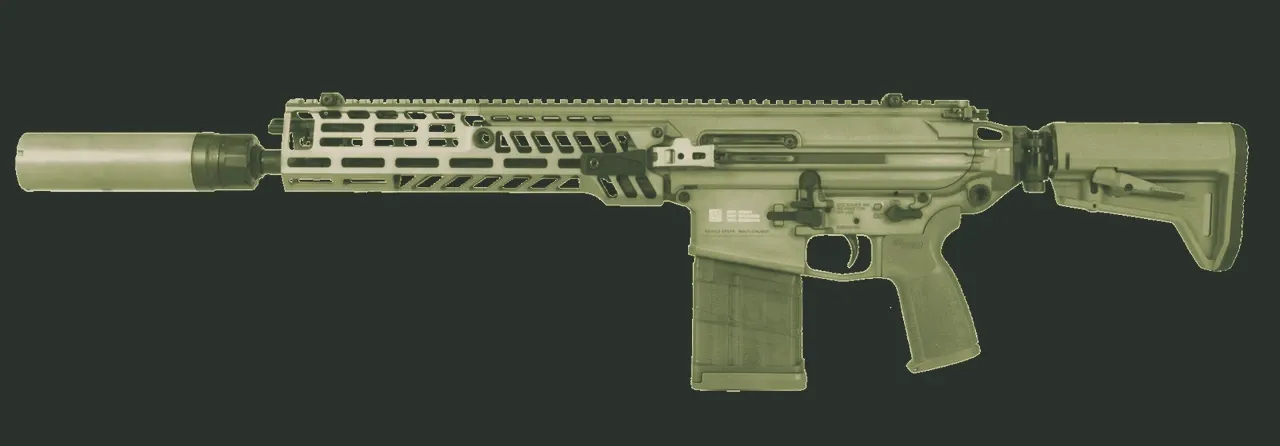
XM7
FIG.01 · USA Image - XM7. Photo by United States Department of Defense, Public domain, via Wikimedia Commons.
The U.S. Army's next-generation high-pressure 6.8 mm rifle, replacing the M4 in close-combat formations with greater range and barrier penetration.

Overview

The XM7 (type-classified as the M7) is a select-fire individual weapon chambered in the 6.8×51 mm Common Cartridge, developed by SIG Sauer under the Next Generation Squad Weapon (NGSW) program. It is a gas-piston operating, suppressor-ready rifle that integrates a dedicated fire-control optic (the XM157) and a signature-suppression system. Fielded from 2024, it replaces the M4A1 carbine in U.S. Army close-combat units, while the U.S. Marine Corps has publicly declined the platform in favour of the 5.56 mm M27.

Development

The U.S. Army launched the NGSW program to provide infantrymen with a round capable of defeating modern body armour at extended ranges, codifying the requirement after two decades of combat in Iraq and Afghanistan. On 19 April 2022, the Army awarded SIG Sauer a 10-year production contract, originally ceilinged at $4.5 billion, to deliver the XM7 rifle and the companion XM250 automatic rifle, as reported by GovConWire. The design was initially designated XM5, but was renamed XM7 to avoid trademark conflict; the first operational unit, 1st Brigade of the 101st Airborne Division, received the weapon in 2024, according to Army Recognition.

Design & capabilities

The XM7 is built around a short-stroke gas piston operating system that is suppressor-ready from the start. Its cartridge, the 6.8×51 mm Common Cartridge (commercially the .277 SIG Fury), uses a hybrid stainless-steel base and brass body to achieve chamber pressures approximately 50 percent higher than 5.56 mm NATO, delivering a muzzle velocity of roughly 910 m/s, as detailed by SIG Sauer and the .277 Fury reference. The rifle weighs 3.80 kg empty (4.46 kg with the supplied SLX suppressor) and measures 914 mm with the suppressor fitted. It feeds from a 20-round proprietary polymer magazine, employs a free-floating barrel, and includes a fully ambidextrous control layout, all intended to pair with the XM157 optic that calculates range and holds automatically.

Combat record / operational use

The XM7 has not yet been recorded in combat. The U.S. Marine Corps, after extensive testing, officially elected to retain the 5.56 mm M27 IAR as its standard infantry weapon, a decision widely covered by Military Times. The rifle remains in active fielding solely with the U.S. Army’s close-combat brigades, and no other operator has adopted it to date.

Advantages

  • Delivers deep barrier and armour penetration at ranges beyond 5.56 mm capability — the cartridge and platform were selected explicitly for peer-armour defeat.
  • Suppressor-inclusive system reduces signature and muzzle blast without additional procurement.
  • Fully ambidextrous controls and free-floating M-LOK handguard support modern accessory layouts.
  • Advanced XM157 fire-control optic provides ballistic drop compensation, making the rifle more lethal for the average infantryman.

Drawbacks / limitations

  • Noticeably heavier than the M4A1 (3.80 kg empty vs 2.88 kg), and each round is heavier, cutting the ammunition load a soldier can carry.
  • 20-round magazine capacity reduces sustained fire volume compared to the 30-round STANAG norm.
  • The higher recoil impulse of the 6.8×51 mm round makes rapid fire control more demanding.
  • The unit cost is buried in a $4.5 billion programme envelope; a per-rifle flyaway price is not publicly available, complicating value assessments.
  • Combat-proven reliability data does not yet exist; no battlefield exposure means longevity, mud/sand tolerance, and parts-availability are unverified in-theatre.

Counterparts

Outlook

The XM7 represents a U.S. Army-only gamble that a heavier, harder-hitting cartridge is essential for future near-peer combat. The weapon’s success will hinge on whether its armour-defeating capability outweighs the weight and ammunition-carriage penalties in real operations—a question the Marine Corps has already answered differently. Unless the rifle demonstrates decisive lethality in an operational theatre, the XM7 is likely to remain a specialised close-combat asset rather than a wholesale NATO replacement.

Key specifications

Spec Value
Crew 1 (individual)
Combat weight 3.80 kg empty; 4.46 kg with suppressor
Length / width / height 914 mm (with suppressor); width & height not publicly established
Main armament 6.8×51 mm (.277 SIG Fury) cartridge
Secondary armament None
Armor & protection None
Engine & power Gas-operated short-stroke piston (human-powered)
Power-to-weight Not applicable
Road / cross-country speed Not applicable
Operational range ~600 m effective range

Sources

  1. Army Recognition — XM7 NGSW-R / SIG MCX Spear 6.8 mm assault rifle data. https://armyrecognition.com/military-products/army/weapons/assault-rifles/xm7-ngsw-r-xm5-sig-mcx-spear-6-8mm-assault-rifle-data
  2. SIG Sauer — MCX-SPEAR 6.8×51 product page. https://www.sigsauer.com/mcx-spear-6-8-x-51.html
  3. Wikipedia — .277 Fury cartridge reference. https://en.wikipedia.org/wiki/.277_Fury
  4. GovConWire — “SIG Sauer Awarded Army Next Generation Squad Weapon Production Contract.” https://www.govconwire.com/articles/sig-sauer-awarded-army-next-generation-squad-weapon-production-contract
  5. Military Times — “Why the Marine Corps is choosing the M27 over the Army's M7.” https://www.militarytimes.com/news/your-military/2026/02/27/why-the-marine-corps-is-choosing-the-m27-rifle-over-the-armys-m7/
FIELD DISPATCH · WEEKLY

BattlePolicy Weekly — free.

Defense tech, startups, and security — weekly. No paywall.

Related
Ukraine · USA · Funding · Swarmer · drones · defense tech · venture capital · Pentagon

Ukraine turned its drone war into an industry. Now Wall Street is pricing it.

Swarmer's Nasdaq debut, a wave of Western venture money and a Pentagon FPV contract show Ukrainian defense tech crossing from battlefield to balance sheet, at a valuation that has outrun the revenue.

Ukraine · USA · Funding · Swarmer · drones · defense tech · venture capital · Pentagon
USA · Autonomy · Shifters · Ace Capital Partners

Shifters raises $10.2M to put robots first into tunnels and rubble

The US-Israeli startup raised a $10.2 million seed led by Ace Capital Partners to scale ground robots that enter tunnels and rubble before troops.

USA · Autonomy · Shifters · Ace Capital Partners
USA · Policy · AI · Anthropic · autonomous weapons · Pentagon

Trump orders faster military AI and bars vendors from switching off fielded models

A new national security memo tells the Pentagon to onboard frontier commercial AI at speed, strips vendors of the power to shut it down mid-mission, and resets the rules for autonomous weapons within 90 days.

USA · Policy · AI · Anthropic · autonomous weapons · Pentagon