GRID-REF 37°47′N 122°25′W
DISPATCH 02/26 · 9 Jun 2026
BATTLEPOLICY
Startup to front line. Strategy to consequence.
Lexicon · Russia

A-50 Mainstay

Russia's 1980s-era AEW&C aircraft on the Il-76 airframe, known for its rotating Shmel radome—a fleet severely diminished by two combat losses in early 2024.
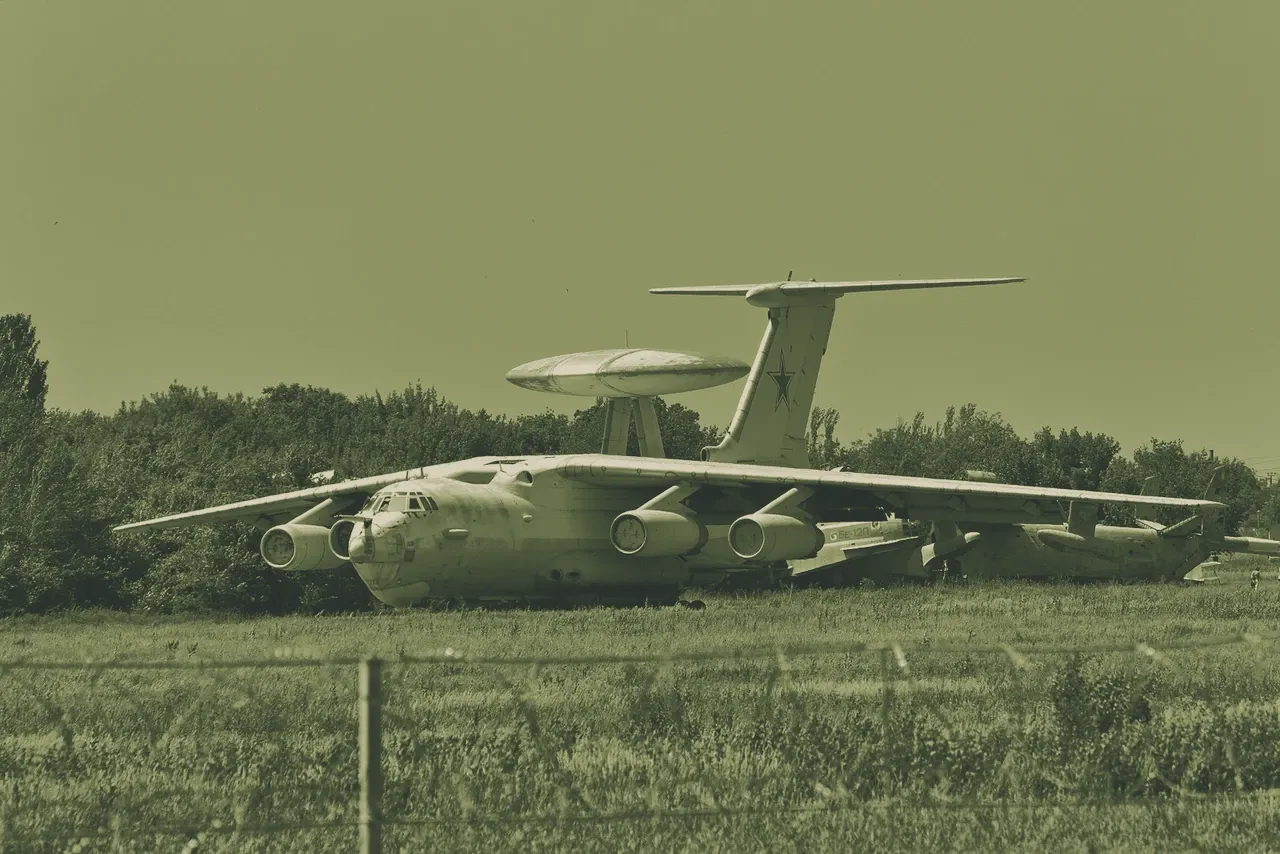
A-50 Mainstay
FIG.01 · Russia Image - A-50 Mainstay. Photo by Alexxx1979, CC BY-SA 3.0, via Wikimedia Commons.
Russia's sole airframe-based airborne early warning and control aircraft, a converted Il-76 with a distinctive rotating radome, whose pre-war fleet of ~16 airframes was reduced to an estimated handful by two shootdowns over Ukraine in 2024.

Overview

The Beriev A-50 (NATO reporting name "Mainstay") is a four-engine jet AEW&C aircraft developed for the Soviet Air Forces and inherited by Russia. Built on the Ilyushin Il-76 strategic airlift airframe, the A-50 replaces the earlier turboprop Tu-126 Moss and serves as a flying command post — detecting air and surface targets, directing fighters, and enabling long-range air-to-air missile engagements. The modernized A-50U, introduced in late 2011, brought digital avionics and improved crew ergonomics, but the fleet’s fundamental sensor remains the rotating Shmel (“Bumblebee”) radar, a generation behind the fixed-AESA arrays on the E-7 Wedgetail and the Chinese KJ-500. Two high-profile losses in January and February 2024 — the first AEW&C combat shootdowns in decades — have left the Russian Aerospace Forces with a severely attrited AEW&C capability.

Development

The A-50 emerged from a Soviet requirement for a jet-powered airborne warning and control platform to replace the aging Tu-126. Beriev integrated the Shmel radar suite onto the Il-76 airframe, and the type entered service in 1984, according to Army Recognition. Production at the Tashkent plant yielded about 40 airframes by the end of the Soviet Union. Through the 1990s and 2000s the fleet shrank, though a deep modernization — the A-50U — was accepted into service in November 2011, adding new mission computers, operator consoles, and satellite communication suites while retaining the Shmel radome.

Design & capabilities

The A-50 is instantly recognizable by its 9-meter-diameter dorsal rotodome housing the Shmel surveillance radar. Army Recognition notes that the system provides 360-degree coverage with detection ranges of roughly 220–240 km against fighter-sized targets at medium altitudes, with some sources suggesting an upper-altitude detection reach of up to 650 km. The radar can simultaneously track 50–60 aerial targets and direct the intercept of 10–12 of them. A passive electronic support measures (ESM) suite and a comprehensive communications fit enable the aircraft to function as an airborne battle-management node, vectoring fighters onto targets illuminated by the Shmel. The aircraft is based on the Il-76 airframe, retaining its four D-30KP turbofans (some later airframes received the quieter PS-90A), and typically carries a crew of five flight personnel plus ten mission operators.

Variants

  • A-50: Baseline production version with Shmel radar and analog mission suite.
  • A-50U: Deep-modernization variant (first delivered 2011) with digital mission computers, glass-cockpit operator stations, improved satellite communications, and extended endurance — while retaining the legacy Shmel radome.
  • A-50EI: Export variant for India, fitted with the Israeli EL/W-2090 AESA radar in a non-rotating dome instead of the Shmel (distinct from Russian-operated airframes).

Combat record / operational use

The A-50’s most significant operational chapter began with the 2022 full-scale invasion of Ukraine, where it was employed to maintain a persistent radar picture, control fighter sweeps, and cue long-range R-37M air-to-air missiles. That role made it a prime target for Ukrainian air defenders. On 14 January 2024, Ukraine claimed the first shootdown of an A-50 over the Sea of Azov, attributed to a Patriot battery ambush, with an accompanying Il-22M airborne command post damaged, as documented by Wikipedia. On 23 February 2024, open-source intelligence accounts pointed to a second A-50U destroyed over Krasnodar Krai, reportedly struck by a refurbished Soviet-era S-200 (SA-5) missile, according to Defense Mirror. Following these twin losses, Defense Express assessed that the Russian Aerospace Forces could maintain no more than approximately four flyable A-50U airframes, a dramatic reduction from a pre-war nominal fleet of around sixteen. The losses also forced the remaining aircraft to operate at safer stand-off ranges, degrading their sensor coverage over the front.

Advantages

  • Provides a high-endurance, all-altitude radar picture that extends fighter engagement envelopes.
  • Can simultaneously track dozens of targets and control multiple interceptions, enabling long-range BVR tactics.
  • The modernized A-50U offers digital battle-management tools and satellite connectivity, improving datalink sharing with ground-based IADS and fighters.
  • Based on the rugged Il-76 airframe, allowing operations from austere fields and a degree of survivability through wide-area basing.

Drawbacks / limitations

  • The rotating Shmel radome is a mechanically scanned, frequency-agile but not AESA-based system — a generation behind the fixed-array MESA (E-7) and KJ-500, limiting simultaneous mode flexibility and resistance to jamming.
  • Two confirmed combat losses in early 2024 exposed the type’s vulnerability to long-range SAM ambushes when operating too close to the front; the surviving fleet has been pushed back, reducing its effective radar coverage.
  • A pre-war fleet of only ~16 airframes — and likely fewer than ten fully mission-capable — was never generous; after 2024 losses, the remaining few airframes must cover all theaters, from the Arctic to Ukraine.
  • Reliance on a single, high-value platform for wide-area airborne C2 creates a critical single point of failure; Russia lacks a low-observable or distributed alternative.
  • No organic self-defense armament, relying entirely on escort fighters and stand-off tactics for protection.

Counterparts

  • E-7 Wedgetail (NATO) — Boeing 737-based AEW&C with fixed MESA AESA radar, the successor to the E-3 Sentry and a direct peer in airborne battle management.
  • KJ-500 (China) — turboprop AEW&C with three-array fixed AESA radome, now the PLA’s most numerous modern airborne early-warning aircraft and a clear generational advance over the A-50’s rotodome.

Outlook

The A-50’s future hinges on whether Russia can deliver the long-delayed A-100 Premier — an Il-76MD-90A-based AEW&C with an entirely new AESA radar — while simultaneously keeping the remnant A-50U fleet airworthy. Until then, Russia’s airborne early-warning edge is constrained to a handful of aging airframes that have already demonstrated vulnerability to long-range ground-based air defense. The 2024 losses shattered the Mainstay’s aura of untouchability, making its survivability — not just its radar specifications — the defining question for Russian AEW&C operations in any near-peer conflict.

Key specifications

Spec Value
Crew 5 flight + 10 mission (15 total)
Length / wingspan 49.59 m / 50.50 m
Max speed ~800 km/h
Service ceiling not publicly established
Combat radius / range ~5,000 km ferry; ~2,000 km operational radius with ~1 h 25 min station time
Payload Not applicable (mission sensor suite)
Hardpoints None
Radar / sensors Shmel (“Bumblebee”) dorsal rotodome; detection ~220–240 km (up to 650 km high-altitude, some sources); tracks 50–60 targets, controls 10–12 interceptors
Powerplant 4 × D-30KP turbofans (PS-90A on later builds)
Armament None (defensive systems only)

Sources

  1. Army Recognition — A-50 Beriev Mainstay profile. https://www.armyrecognition.com/military-products/air/other/command-and-control/a-50-beriev-mainstay
  2. Wikipedia — 2024 Russia Beriev A-50 and Ilyushin Il-22 shootdowns. https://en.wikipedia.org/wiki/2024_Russia_Beriev_A-50_and_Ilyushin_Il-22_shootdowns
  3. Defense Express — Russia Can Keep No More Than Four A-50U AWACS Aircraft Flying. https://en.defence-ua.com/analysis/russia_can_keep_no_more_than_four_a_50u_awacs_aircraft_flying_that_matters_for_future_gripen_operations_in_ukraine-18697.html
  4. Defense Mirror — Russian A-50U AWACS Shot Down Over Sea of Azov, 2nd Since January. https://www.defensemirror.com/news/36196/Russian_A_50U_AWACS_Aircraft_Shot_Down_Over_Sea_of_Azov__2nd_Since_January
FIELD DISPATCH · WEEKLY

BattlePolicy Weekly — free.

Defense tech, startups, and security — weekly. No paywall.

Related
Ukraine · Russia · Policy · Chornobyl · Energoatom · shahed

Russia strikes Ukraine's central spent-fuel store at Chornobyl with a Shahed

A Russian drone hit the receiving building of the Holtec-built dry-cask site that freed Ukraine from shipping its nuclear waste to Russia, metres from where spent fuel sits.

Ukraine · Russia · Policy · Chornobyl · Energoatom · shahed