GRID-REF 37°47′N 122°25′W
DISPATCH 02/26 · 9 Jun 2026
BATTLEPOLICY
Startup to front line. Strategy to consequence.
Lexicon · Russia

Admiral Kuznetsov

Russia's sole aircraft carrier — a heavy, conventionally powered STOBAR ship designed in the 1980s, now crippled by repeated accidents and likely headed for the scrapyard.
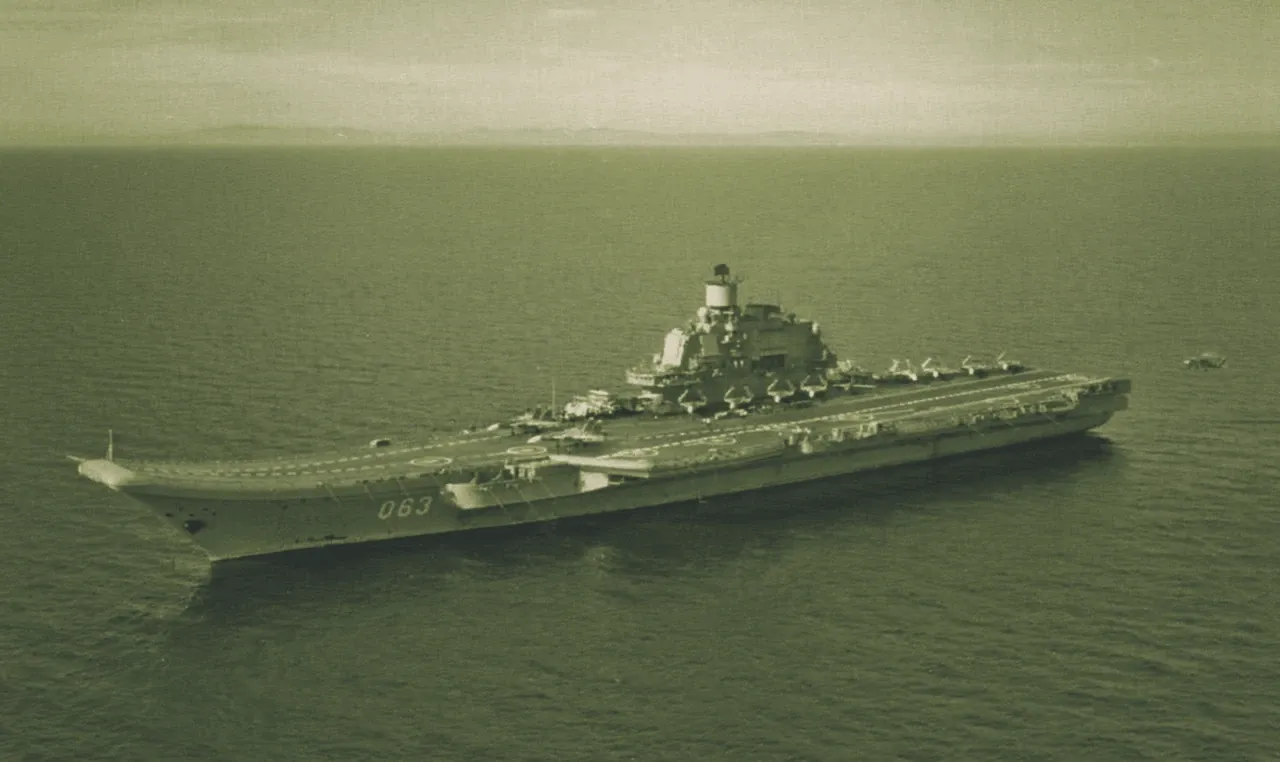
Admiral Kuznetsov
FIG.01 · Russia Image - Admiral Kuznetsov. Photo by Not stated., Public domain, via Wikimedia Commons.
Russia’s only aircraft carrier — a Soviet-built STOBAR cruiser that has spent more years laid up and burning than at sea, and now faces probable scrapping after a chain of refit disasters.

Overview

The Admiral Kuznetsov (Project 1143.5) is a heavy aircraft-carrying cruiser of the Russian Navy, commissioned in 1991 as the Soviet Union dissolved. Designed with a ski-jump bow and arrested-recovery wires — a STOBAR configuration — it carries Su-33 and MiG-29K tactical fighters along with Ka-27/Ka-31 helicopters. Unusually for a carrier, the ship embeds a heavy anti-ship missile battery of twelve P-700 Granit (SS-N-19) launchers. After a single combat-credible Mediterranean deployment in 2016-17, it has been immobilized by a sinking dry dock, a crane collapse, and multiple onboard fires. A 2025 19FortyFive assessment described the ship as almost certainly never returning to service and the Russian Navy as “quietly mothballing” it, making scrapping the most realistic outcome.19FortyFive

Development

Ordered as the second hull of a new class of Soviet heavy aircraft-carrying cruisers, Admiral Kuznetsov was laid down at the Nikolayev South Shipyard (on the Black Sea, in what is now Ukraine) and commissioned in 1991. As the Soviet Navy collapsed, the ship became the Russian Navy’s sole carrier, while its incomplete sister ship Varyag was eventually sold to China and refitted as the Liaoning. The design reflected the Soviet “rocket-carrier” concept: a flight deck for fighters and helicopters, but also an integrated battery of long-range anti-ship cruise missiles that would allow the ship to operate independently in contested waters without the support of a full battle group. The refit that was supposed to restore the ship to active service began in 2017, but misfortunes soon piled up, leading to the current non-operational status.19FortyFive

Design & capabilities

The Kuznetsov is a conventionally powered ship with eight pressure-fired boilers feeding four steam turbines on four shafts, giving a top speed of about 29 knots. Flight operations rely on a 14-degree ski-jump at the bow and three arrestor wires; there are no catapults, which limits the take-off weight and payload of fixed-wing aircraft. The air wing normally comprises a mix of Su-33 (Flanker-D) and MiG-29K/KUB fighters, plus Ka-27 anti-submarine and Ka-31 airborne early-warning helicopters. The ship’s most distinctive feature is the below-deck battery of twelve P-700 Granit (NATO SS-N-19 “Shipwreck”) supersonic anti-ship cruise missiles, making it a hybrid between a carrier and a missile cruiser. For self-defence, the ship carries Kashtan close-in weapon systems and short-range surface-to-air missiles. Sensor and combat-system specifics are not publicly established, but the ship was designed with a Soviet-era multi-function radar suite and a flag-level combat information centre.National Security Journal

Combat record / operational use

The ship’s only operational deployment took place from October 2016 to early 2017, when it sailed to the eastern Mediterranean to support Russian forces in Syria. During that cruise, Su-33 and MiG-29K fighters flew strike and combat-air-patrol sorties, but the deployment was marred by the loss of a MiG-29K (ditch-related) and a Su-33 (arrestor-cable failure). Since being laid up in 2017 for a long-planned refit, the Kuznetsov has suffered a cascade of incidents: the floating dry dock PD-50 sank beneath it in October 2018, sending a crane crashing onto the flight deck; a major onboard fire broke out in December 2019; and another fire erupted during welding work in December 2022. By 2025, reports indicated that the Russian Navy had abandoned the overhaul, with United24 Media noting that the ship’s long-delayed return had been effectively written off and that scrapping was now the most probable fate.United24 Media

Advantages

  • Heavily armed for a carrier, with a 12-missile P-700 Granit battery that can threaten surface targets at beyond-horizon ranges.
  • Ski-jump STOBAR requires no complex catapult machinery, reducing upkeep demands and allowing operations from high-latitude northern waters.
  • Can sustain a modest fixed-wing combat air patrol and limited strike sorties, providing a token power-projection capability in peacetime.

Drawbacks / limitations

  • No catapults severely limit the take-off weight of fighters, restricting fuel and ordnance loads.
  • The steam propulsion plant is ageing and unreliable, requiring frequent boiler repairs and preventing sustained high-speed operations.
  • The heavy missile battery occupies deck and magazine space that could otherwise accommodate aircraft fuel, spares, or additional aviation facilities.
  • Operational safety record is poor: two fighter losses on the sole combat deployment and repeated fires point to fundamental maintenance and training weaknesses.
  • The vessel has now been non-operational for longer than it was ever an effective unit, and credible reporting indicates the refit has been quietly abandoned, making scrapping the realistic endgame.United24 Media

Counterparts

Outlook

The Admiral Kuznetsov is a case study in the long decline of Russia’s carrier ambitions. With the sole hull facing likely scrapping and no credible follow-on program under construction, the Russian Navy’s fixed-wing aviation is set to vanish.19FortyFive Even if the Kremlin were to announce a new carrier design, the industrial, financial and security environment renders any near-term replacement unlikely.

Key specifications

Spec Value
Type Heavy aircraft-carrying cruiser (STOBAR)
Full-load displacement ~58,600–61,390 t (some estimates to ~67,500 t)
Length / beam / draft 305 m / ~72 m / not publicly established
Propulsion 8 × KVG-4 boilers, 4 × TV-12 steam turbines; 4 shafts
Max speed (kts) ~29 kt
Range / endurance not publicly established
Complement ~1,960 (with air group)
Armament 12 × P-700 Granit (SS-N-19) anti-ship cruise missiles, Kashtan CIWS, short-range SAMs
Sensors / combat system not publicly established
Aviation facilities Bow ski-jump (~14°), 3 × arrestor wires; air wing: Su-33, MiG-29K/KUB, Ka-27, Ka-31

Sources

  1. 19FortyFive — “Admiral Kuznetsov: Ultimate Guide to Russia’s Only Aircraft Carrier.” https://www.19fortyfive.com/2025/07/admiral-kuznetsov-ultimate-guide-to-russias-only-aircraft-carrier/
  2. National Security Journal — “Admiral Kuznetsov Aircraft Carrier Has a Message for the Russian Navy.” https://nationalsecurityjournal.org/admiral-kuznetsov-aircraft-carrier-has-a-message-for-the-russian-navy/
  3. United24 Media — “Russia’s Blue-Water Dreams Sinking Fast as Its Lone Carrier Faces the Scrap Heap.” https://united24media.com/latest-news/russias-blue-water-dreams-sinking-fast-as-its-lone-carrier-faces-the-scrap-heap-11758
FIELD DISPATCH · WEEKLY

BattlePolicy Weekly — free.

Defense tech, startups, and security — weekly. No paywall.

Related
Ukraine · Russia · Policy · Chornobyl · Energoatom · shahed

Russia strikes Ukraine's central spent-fuel store at Chornobyl with a Shahed

A Russian drone hit the receiving building of the Holtec-built dry-cask site that freed Ukraine from shipping its nuclear waste to Russia, metres from where spent fuel sits.

Ukraine · Russia · Policy · Chornobyl · Energoatom · shahed