GRID-REF 37°47′N 122°25′W
DISPATCH 02/26 · 9 Jun 2026
BATTLEPOLICY
Startup to front line. Strategy to consequence.
Lexicon · Russia

AGS-17

The AGS-17 "Plamya" is a Soviet-designed, tripod-mounted 30×29mm automatic grenade launcher in service since 1971, delivering indirect suppressive fire to 1,700 m and widely proliferated across Soviet-legacy and export armies.
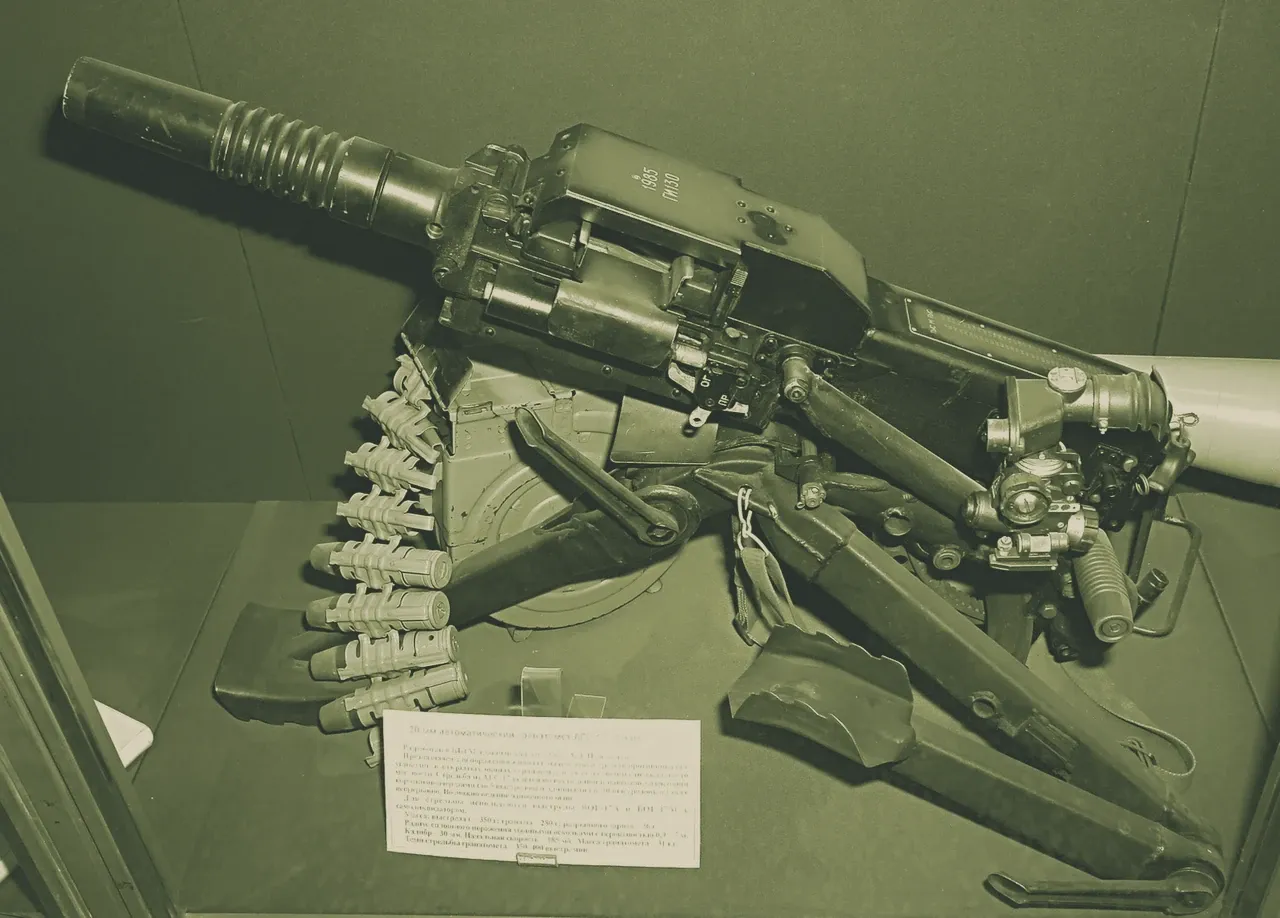
AGS-17
FIG.01 · Russia Image - AGS-17. Photo by George Shuklin, CC BY-SA 1.0, via Wikimedia Commons.
The AGS-17 “Plamya” (Flame) is a Soviet-designed, crew-served automatic grenade launcher that fires 30×29mm high-explosive fragmentation projectiles from a tripod, providing long-range suppressive fire from the infantry squad to the vehicle platform.

Overview

The AGS-17 is a blowback-operated, belt-fed, fully automatic grenade launcher that was the Warsaw Pact’s answer to the heavy automatic weapon requirement. It entered service in 1971 and rapidly spread across the Soviet ground forces and client states, where it remains a staple of motor-rifle and airborne units. The system combines a nearly 18 kg gun with a 12 kg tripod, fed by a 29-round drum of linked 30×29mm ammunition, and is capable of both area suppression out to 1,700 m and point engagements with optical sights. Its low profile, reliability, and simple construction made it one of the most prolific automatic grenade launchers of the Cold War, with tens of thousands produced and a user list that mirrors the global distribution of Soviet weaponry Wikipedia.

Development

Development of the AGS-17 began in the late 1960s at OKB-16 (later absorbed into the KBP Instrument Design Bureau in Tula), aiming to give Soviet infantry a portable, sustained-fire grenade support weapon. The system was adopted in 1971, the same year the first production models left the factory, and was subsequently issued to motor-rifle, mountain, and airborne units. By the late 1970s the Plamya was in full-rate production and was also license-built in Bulgaria by the state-owned Arcus company, a channel that further expanded its global footprint Wikipedia. The launcher’s first large-scale combat exposure came with the Soviet intervention in Afghanistan, cementing its reputation for ruggedness in high-altitude and dusty environments.

Design & capabilities

The AGS-17 is a simple blowback, open-bolt weapon that fires from a stout tripod with traverse and elevation adjustments, enabling both direct and indirect laying. Its ammunition is the 30×29mm belt-fed series, stored in a 29-round drum and fed into the weapon via a steel disintegrating link — a system that keeps the ammunition protected and the feed reliable under field conditions ODIN. The cyclic rate of 350–400 rounds per minute allows a rapid saturation of a beaten zone, though sustained fire is normally limited to short bursts to preserve the barrel. With the standard PAG-17 optical sight the effective range is 800–1,700 m, and the maximum range approaches 1,700 m, giving the weapon a reach beyond that of most squad-level small arms Weaponsystems.

The ammunition family centres on the VOG-17 series. The VOG-17M (IO-30) is a high-explosive fragmentation grenade with a self-destruct timer that produces a casualty radius of approximately 6–7 m, while later VOG-30 and extended-range GPD-30 rounds push the effective range further Arcon Consult. The launcher can be disassembled into gun and tripod loads of about 18 kg and 12 kg respectively, allowing a crew of two to three soldiers to carry the system over broken terrain. On vehicles and helicopters, the AG-17A and AP-30 mounts enable remote or door-gunnery installation.

Variants

The basic AGS-17 comes in a few mounting versions: the standard infantry tripod, the AG-17A vehicle mount (fitted to BMPs, BTRs, and other light armour), and the AP-30 helicopter rig, which places the weapon on the helicopter door or stub-wing hardpoint. No fundamental changes were made to the gun mechanism itself, only to the feed and mount interfaces.

Combat record / operational use

The AGS-17 was combat-proven in the Soviet–Afghan War, where its ability to deliver plunging fire onto reverse slopes and into ravines made it invaluable. Russian forces continued to use it extensively in Chechnya, and the weapon has been documented on both government and insurgent sides in the Syrian Civil War. Most recently, it has appeared on both Russian and Ukrainian fronts during the 2022–2025 Russo-Ukrainian war, either in its original Soviet stocks or from captured supplies, underscoring its longevity and near-universal presence in post-Soviet arsenals Wikipedia. Beyond Eastern Europe, the AGS-17 has been exported to dozens of nations and has turned up in conflicts across Africa, the Middle East, and South Asia.

Advantages

  • Extended reach: 1,700 m maximum range with optics bridges the gap between rifle-mounted grenade launchers and mortars.
  • Sustained suppressive fire: a 29-round drum and 350–400 rounds/min cyclic rate saturate an area quickly.
  • Proven reliability: simple blowback action and robust construction withstand sand, dust, and cold.
  • Flexible mounting: can be fired from tripod, vehicle pintle, or helicopter mount.
  • Wide ammunition family: VOG-17M, VOG-30, and extended-range GPD-30 offer mission versatility.

Drawbacks / limitations

  • Heavy for infantry carriage: ~31 kg in full fighting order limits dismounted mobility.
  • Exposed crew: tripod-mounted gunner has limited protection from direct fire or fragments.
  • No integral airburst capability: unlike modern 40 mm NATO systems with programmable airburst, the AGS-17 relies on impact or timed self-destruct fuzes.
  • Belt feed can be finicky: damaged links or dirt can cause stoppages.
  • Lacks night-sight integration standard; typical field-expedient solutions fall short of dedicated thermal optics.

Counterparts

Outlook

The AGS-17 remains in widespread service, though the Russian military has been replacing it with the lighter AGS-30 to improve dismounted mobility. Nonetheless, the sheer volume of existing guns, low cost, and familiarity within ex-Soviet and allied forces ensure it will stay active for decades. A modernisation of ammunition — particularly extended-range GPD-30 and potential future programmable-fuze rounds — could extend its relevance, but the platform itself is unlikely to receive a major redesign.

Key specifications

Spec Value
Crew 2–3 (gunner, assistant, ammunition bearer)
Combat weight ~31 kg (gun ~18 kg + tripod ~12 kg)
Length / width / height Length ~840 mm; width/height not publicly established
Main armament 30×29mm automatic grenade launcher
Secondary armament None
Armor & protection None (optional gun-shield on some vehicle mounts)
Engine & power None (blowback-operated)
Power-to-weight Not applicable
Road / cross-country speed Carried by crew; not self-propelled
Operational range 1,700 m (optical sight)

Sources

  1. Wikipedia — “AGS-17” — https://en.wikipedia.org/wiki/AGS-17
  2. Weaponsystems.net — “AGS-17 Plamya” — https://weaponsystems.net/system/409-AGS-17+Plamya
  3. US Army ODIN/WEG — “AGS-17 Plamya Russian 30mm AGL” — https://odin.t2com.army.mil/WEG/Asset/5ca7e8fdfa439a1abf3454051ad8c1db
  4. Arcon Consult — “30mm IO-30 (VOG-17M) HE-SD round” — https://arconconsult.net/rounds-for-grenade-launchers/30-mm-io-30-high-explosive-fragmentation-grenade-with-self-destruction-he-sd-for-30-mm-automatic-grenade-launchers-ags-17-ag-17a-ags-30-rag-30-and-arcus-17-agl/
  5. Scribd — “AGS-17 Ammo (VOG-17M specs)” — https://www.scribd.com/doc/63509988/AGS-17Ammo
FIELD DISPATCH · WEEKLY

BattlePolicy Weekly — free.

Defense tech, startups, and security — weekly. No paywall.

Related
Ukraine · Russia · Policy · Chornobyl · Energoatom · shahed

Russia strikes Ukraine's central spent-fuel store at Chornobyl with a Shahed

A Russian drone hit the receiving building of the Holtec-built dry-cask site that freed Ukraine from shipping its nuclear waste to Russia, metres from where spent fuel sits.

Ukraine · Russia · Policy · Chornobyl · Energoatom · shahed