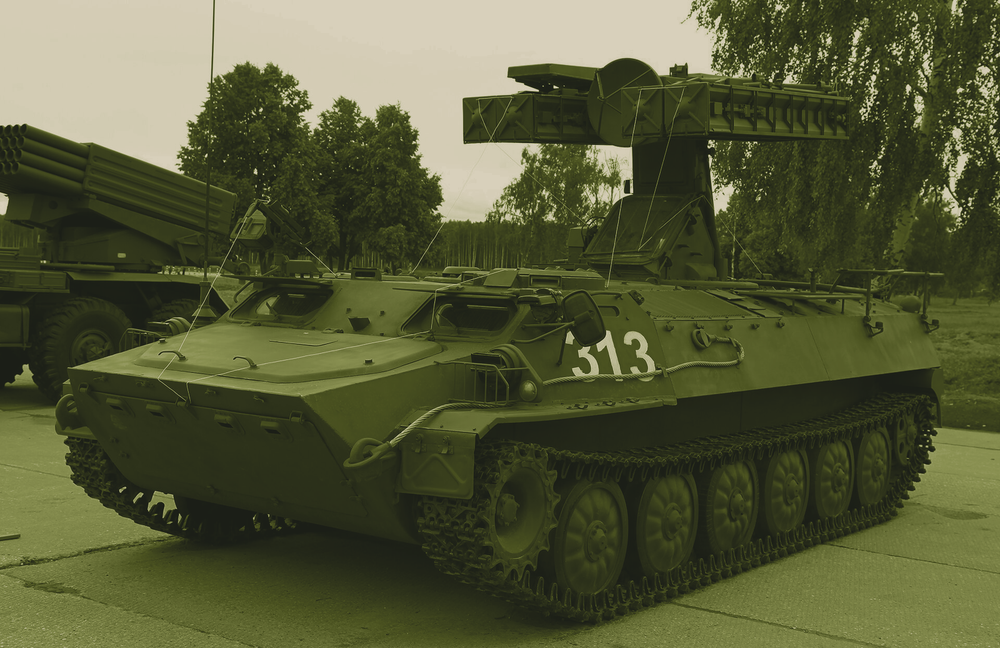
ZSU-23-4 Shilka
A 1965 Soviet anti-aircraft gun built to shoot down jets, now one of the cheapest ways Ukraine kills Shahed drones. Sixteen modernised Shilkas funded by a charity recorded their first Shahed shootdowns in December 2025.
A 1976 Soviet missile system built to shoot down low-flying jets, now hunting Lancets and Hornets. Its infrared seeker was never designed to find something the size of a quadcopter — which is why Ukraine bolted an electro-optical sight to nine of them.
A 1965 Soviet anti-aircraft gun built to shoot down jets, now one of the cheapest ways Ukraine kills Shahed drones. Sixteen modernised Shilkas funded by a charity recorded their first Shahed shootdowns in December 2025.
A wire-guided missile that requires its operator to hold the crosshair on a tank for the whole flight — up to four kilometres, several seconds, motionless. In a battlefield watched continuously by drones, that is the hardest thing a soldier can be asked to do.
A 1961 shoulder-fired launcher that found a second career nobody designed: its PG-7 shaped-charge warhead is the standard payload on FPV attack drones, which means most drone kills in this war are delivered by RPG ammunition.
The 152 mm half of the Soviet self-propelled artillery pair still fighting on both sides. It outranges and outweighs the Gvozdika, it is the most-destroyed Russian artillery system by one tally, and drones now kill it before it fires.
The amphibious 122 mm howitzer that both armies still fire daily, and that both are losing faster than they can replace. Nearly 90% of Ukraine's pre-war Gvozdika fleet is assessed destroyed — and Russia is stripping the barrels off its own for spares.
A tank designed in 1961, pulled from Siberian storage yards and sent to Ukraine because Russia has run out of newer ones. At least 334 have been destroyed, and the T-62's real significance is as a measure of how far the Russian tank reserve has been drained.
A Kharkiv-built Soviet tank from 1966 that is still the backbone of Ukraine's armoured force in 2026 — kept alive by depot reactivation, Oplot transmissions and anti-drone cages, because Western donations could never replace it at scale.
The AGS-17 "Plamya" is a Soviet-designed, tripod-mounted 30×29mm automatic grenade launcher in service since 1971, delivering indirect suppressive fire to 1,700 m and widely proliferated across Soviet-legacy and export armies.
The standard Soviet/Warsaw Pact offensive fragmentation hand grenade since 1954 — a lightweight, smooth-bodied anti-personnel weapon built for close combat, in continuous service from Afghanistan to Ukraine.