The Wire · live GRID-REF 37°47′N 122°25′W
DISPATCH 03/26 · 4 Sep 2026
BattlePolicy
Startup to front line. Strategy to consequence.
Lexicon · Russia

Konkurs

A wire-guided missile that requires its operator to hold the crosshair on a tank for the whole flight — up to four kilometres, several seconds, motionless. In a battlefield watched continuously by drones, that is the hardest thing a soldier can be asked to do.
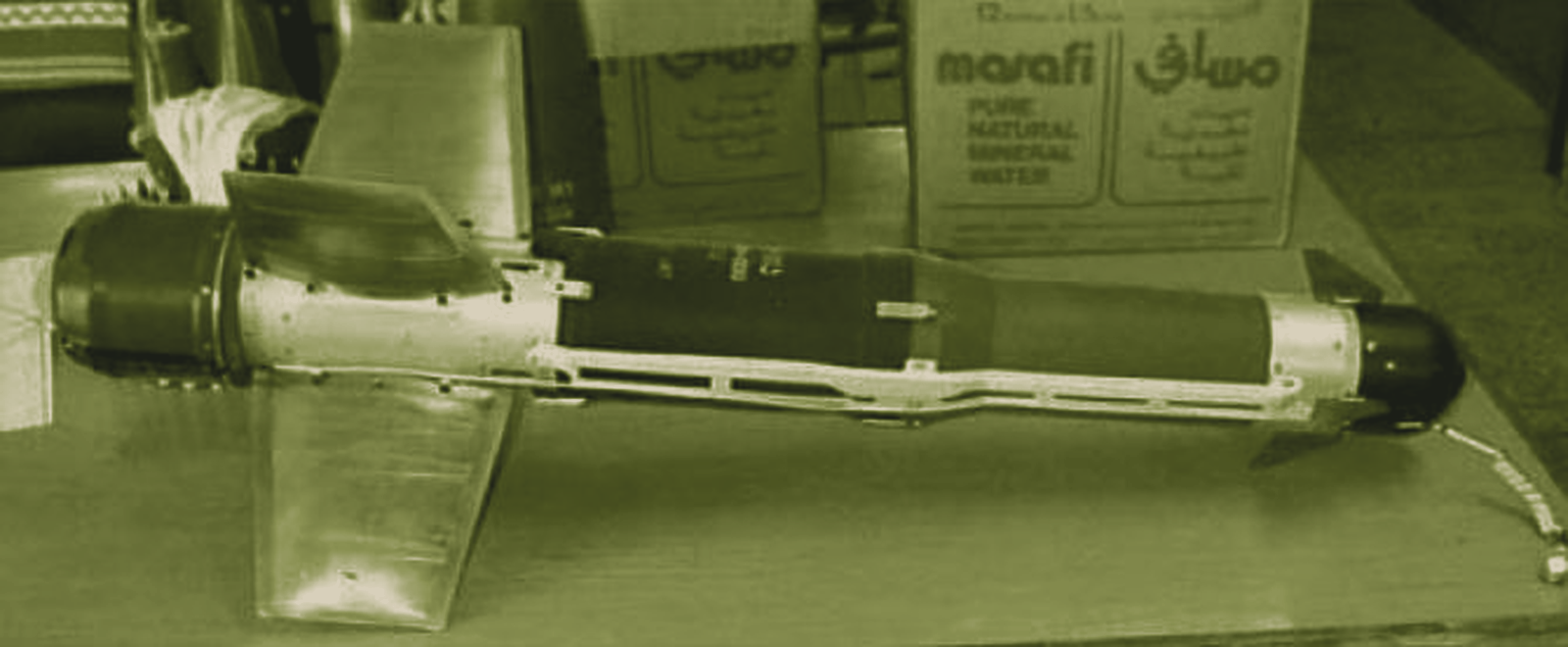
Konkurs
FIG.01 · Russia Image - A 9M113 Konkurs anti-tank guided missile system. Photo by Unknown authorUnknown author, Public domain, via Wikimedia Commons.
A wire-guided missile that requires its operator to hold the crosshair on a moving tank for the entire flight — up to four kilometres, several seconds, stationary and exposed. On a battlefield under continuous drone observation, that is close to the hardest thing a soldier can be asked to do.

Overview

The 9M113 Konkurs, designated AT-5 Spandrel by NATO, is a Soviet second-generation anti-tank guided missile developed by the KBP Instrument Design Bureau in Tula. It is SACLOS wire-guided: the operator keeps the sight on the target, an infrared tracker follows a beacon on the missile, and correction commands travel down a trailing wire. Maximum range is 4,000 m, and penetration is around 600 mm of steel for the baseline round; the tandem-warhead 9M113M Konkurs-M is credited with 750–800 mm behind explosive reactive armour.

It remains in the inventory of both belligerents and is still listed in current Russian Ground Forces equipment tables. It is mounted on the 9P135 tripod launcher for infantry use and integrated on the BMP-2, BMD-2 and BRDM-2. It is also still produced under licence in India by Bharat Dynamics, which continues paying royalties on a 1970s design.

Its capability against armour remains real. Its viability in this particular war is another matter, and the reason is guidance rather than penetration.

Development

The Konkurs entered Soviet service in 1974 as the vehicle-mounted and heavier counterpart to the man-portable 9K111 Fagot, sharing its guidance approach but with a larger missile and greater range. Both were second-generation ATGMs, a substantial advance over the first-generation manually-commanded Malyutka in that the operator only had to keep the sight on the target rather than fly the missile onto it.

The significant development was the 9M113M Konkurs-M, which introduced a tandem warhead — a small precursor charge to detonate explosive reactive armour, followed by the main shaped charge to penetrate the armour behind. That took stated penetration from around 600 mm to 750–800 mm RHA and kept the design relevant against tanks fitted with ERA, which by the 1980s meant most of them.

There has been no third-generation Russian successor at this weight class in wide service. Russia's modern heavy ATGM is the Kornet, which is laser beam-riding rather than wire-guided, and the Konkurs has persisted alongside it rather than being replaced. Bharat Dynamics in India continues licensed production, an arrangement notable enough that Indian defence commentary has questioned why royalties are still being paid on a design of this age.

Design & capabilities

The Konkurs is a tube-launched, wire-guided missile fired from a tripod or vehicle mount.

  • Calibre: 135 mm
  • Maximum range: 4,000 m
  • Penetration: ~600 mm RHA (9M113 baseline); 750–800 mm RHA behind ERA (9M113M Konkurs-M, tandem warhead)
  • Guidance: SACLOS — semi-automatic command to line of sight, with correction commands transmitted by trailing wire
  • Launch platforms: 9P135 infantry tripod; BMP-2, BMD-2 and BRDM-2 vehicle mounts
  • Warhead: single shaped charge (baseline) or tandem shaped charge (Konkurs-M)

The guidance method defines the weapon, and it cuts both ways. Wire guidance is completely immune to radio jamming — there is no radio link to jam, no satellite signal to spoof, and no seeker to decoy. In an environment where electronic warfare degrades almost everything else, that is a genuine and increasingly unusual advantage.

The cost is that the operator must maintain line of sight for the entire flight. At 4,000 m that means holding a stationary, exposed position with the sight locked on a moving target for a meaningful number of seconds. The missile is also comparatively slow, which lengthens that exposure at longer ranges.

Against contemporary armour the picture is mixed. Konkurs-M's tandem warhead still threatens older tanks and can achieve a kill against modern vehicles when it strikes a vulnerable aspect. Against a tank with modern ERA plus an active protection system — Trophy, Afganit or Arena-M class — a single subsonic wire-guided missile approaching from the front is a low-probability engagement.

Variants

  • 9M113 Konkurs (baseline): Single shaped charge, ~600 mm RHA, 4,000 m.
  • 9M113M Konkurs-M (AT-5B Spandrel B): Tandem warhead, 750–800 mm RHA behind ERA. The version still listed in Russian Ground Forces inventory.
  • Licensed Indian production: Manufactured by Bharat Dynamics Limited under a Soviet-era agreement.
  • Related: the lighter 9K111 Fagot shares the guidance concept at shorter range; the Metis-M family occupies the short-range slot below it.

Combat record / operational use

Both Russia and Ukraine field the Konkurs, and it remains in Russian equipment tables in its Konkurs-M form. Czech analysis in August 2026 framed its position accurately: its days are numbered, yet it remains one of the few tools by which mechanised infantry can threaten a tank at four kilometres — and until a replacement arrives at scale, that role has to be filled by something.

Its practical employment is heavily constrained by three developments that have nothing to do with the missile's own performance.

Explosive reactive armour is now near-universal on both sides' tanks, which is what the Konkurs-M tandem warhead exists to defeat and does, imperfectly. Active protection systems are the newer problem: Russia's Arena-M had its combat debut in July 2026 specifically to intercept incoming rockets, missiles and shaped-charge projectiles, and a Konkurs is precisely the threat class it was originally designed against.

The third and most significant is persistent drone surveillance. An ATGM team must occupy a position with clear line of sight, remain stationary through the missile's flight, and accept that the launch signature is visible. In a sector under continuous reconnaissance-drone observation, that sequence has a high probability of being detected, and detection increasingly means an FPV drone arrives within minutes. The practical effect is that ATGM teams operate under far heavier surveillance and counterfire pressure than the weapon's designers assumed, which suppresses employment independently of whether the missile would defeat the target.

That is the pattern across the war's anti-armour picture: the missiles still work, and the environment in which a human must fire them has become far more hostile.

Advantages

  • Immune to electronic warfare — wire guidance has no radio link, no satellite dependency and no seeker, so jamming and spoofing are irrelevant. This is a growing advantage as EW saturates the battlefield.
  • Genuine penetration — 750–800 mm RHA behind ERA on the Konkurs-M still threatens most armour.
  • Long reach for an infantry weapon — 4,000 m against a few hundred metres for an RPG-7.
  • Widely available — large Soviet-era production held by both sides, with licensed manufacture continuing in India.
  • Multiple launch platforms — tripod for infantry, plus BMP-2, BMD-2 and BRDM-2 mounts.
  • Cheap relative to Western guided weapons — a fraction of a Javelin round.
  • Simple and durable — no complex seeker or electronics to maintain or fail.

Drawbacks / limitations

  • Operator must remain exposed — line of sight has to be held for the missile's entire flight, which under drone surveillance is the weapon's decisive vulnerability.
  • Not fire-and-forget — unlike Javelin or NLAW, there is no launch-and-move option.
  • Frontal attack profile — it strikes the thickest armour, where Javelin and NLAW attack the roof.
  • Defeated by active protectionArena-M-class systems are designed to intercept exactly this threat.
  • Slow missile — extends operator exposure at longer ranges.
  • Wire imposes a hard range ceiling and can be affected by terrain and obstacles along the flight path.
  • Second-generation design — no third-generation Russian successor in this class means the gap is filled by an ageing weapon.

Counterparts

  • Kornet (Russia) — the modern Russian heavy ATGM, laser beam-riding, longer-ranged and more capable.
  • Stugna-P (Ukraine) — the Ukrainian guided ATGM in the same role, with a remote-firing option that removes the operator from the launch position.
  • Javelin (USA) — the fire-and-forget top-attack weapon that made SACLOS guidance look obsolete.
  • NLAW (UK/Sweden) — predicted-line-of-sight top-attack, requiring only brief exposure.
  • RPG-7 (Russia) — the unguided short-range weapon below it.
  • Arena-M (Russia) — the active protection system built to defeat this threat class.

Outlook

The Konkurs is being overtaken by the battlefield rather than by a successor. Its penetration remains adequate, its EW immunity is genuinely valuable and increasingly rare, and neither Russia nor Ukraine has a replacement available in the quantities the Konkurs exists in. It will stay in service because there is nothing to put in its place.

What has changed is the tactical calculus of using it. Every guided anti-armour engagement now happens under drone observation, and a weapon that requires a stationary operator to track a target for several seconds is the worst-adapted possible design for that environment. Ukraine's Stugna-P offers a partial answer with remote firing from a displaced position, and it is the design feature worth noting: the response to persistent surveillance is to remove the human from the launch point, not to improve the missile.

The EW-immunity point deserves more attention than it gets. As both sides escalate electronic warfare — and as fibre-optic FPV drones proliferate precisely because they cannot be jammed — the wire-guided ATGM's oldest and most primitive feature has become a modern virtue. Watch whether either side re-emphasises wire-guided weapons for that reason, which would be a genuine reversal of the trend of the last thirty years.

Key specifications

Spec Value
Type Second-generation SACLOS wire-guided anti-tank guided missile
Calibre 135 mm
Maximum range 4,000 m
Penetration ~600 mm RHA (9M113); 750–800 mm RHA behind ERA (9M113M Konkurs-M tandem)
Guidance Semi-automatic command to line of sight, wire-transmitted — immune to jamming
Warhead Single shaped charge (baseline); tandem shaped charge (Konkurs-M)
Launch platforms 9P135 infantry tripod; BMP-2, BMD-2, BRDM-2
Operator requirement Must maintain line of sight for the full flight
In service Since 1974; 9M113M Konkurs-M still listed in Russian Ground Forces inventory
Licensed production Bharat Dynamics Limited (India), royalties still paid

Sources

  1. Armádní zpravodaj — "Její dny jsou sečteny, přesto Konkurs stále používá i AČR. I ten nejlepší tank rozlouskne až na 4 km." https://armadnizpravodaj.cz/vyzbroj/konkurs-proti-tankun-stale-pouziva-i-acr/
  2. Wikiwand — "List of equipment of the Russian Ground Forces" (9M113M Konkurs-M, AT-5B Spandrel B). https://www.wikiwand.com/en/List_of_equipment_of_the_Russian_Ground_Forces
  3. IDRW — "Why India Continues to Pay Royalties for the Indigenously Produced 9M113 Konkurs ATGM." https://idrw.org/why-india-continues-to-pay-royalties-for-the-indigenously-produced-9m113-konkurs-atgm/
  4. Jangaavaran — 9M113 Konkurs specifications and Konkurs-M tandem penetration. https://jangaavaran.ir/9m113-konkurs/
  5. Wikipedia — "List of Russo-Ukrainian war military equipment" (ATGM inventory both sides). https://en.wikipedia.org/wiki/List_of_Russo-Ukrainian_war_military_equipment
  6. Institute for the Study of War — "Russian Offensive Campaign Assessment, August 9, 2026" (Arena-M and the tactical reconnaissance strike complex). https://understandingwar.org/research/russia-ukraine/russian-offensive-campaign-assessment-august-9-2026/
🔒 The Analyst Section on Konkurs is for BattlePolicy Pro members. Below the line: procurement and contract history, the suppliers and companies behind the system, our head-to-head analyst view of the systems it actually competes with, and the BattlePolicy assessment note. Unlock the full file with BattlePolicy Pro →

Below this point

  • Analyst Section
  • Procurement & contracts
  • Suppliers & related companies
  • Comparable systems — analyst view
  • Analyst note
Related
Russia · Ukraine · air defensePro

Igla-S

A shoulder-fired infrared missile that Russia now launches from helicopters to hunt Ukrainian drones — and bolts to Shahed airframes so the drone can shoot back at the aircraft sent to intercept it.

Russia · Ukraine · air defensePro

Strela-10

A 1976 Soviet missile system built to shoot down low-flying jets, now hunting Lancets and Hornets. Its infrared seeker was never designed to find something the size of a quadcopter — which is why Ukraine bolted an electro-optical sight to nine of them.

Ukraine · Russia · air defensePro

ZSU-23-4 Shilka

A 1965 Soviet anti-aircraft gun built to shoot down jets, now one of the cheapest ways Ukraine kills Shahed drones. Sixteen modernised Shilkas funded by a charity recorded their first Shahed shootdowns in December 2025.