T-64
A Kharkiv-built Soviet tank from 1966 that is still the backbone of Ukraine's armoured force in 2026 — kept alive by depot reactivation, Oplot transmissions and anti-drone cages, because Western donations could never replace it at scale.
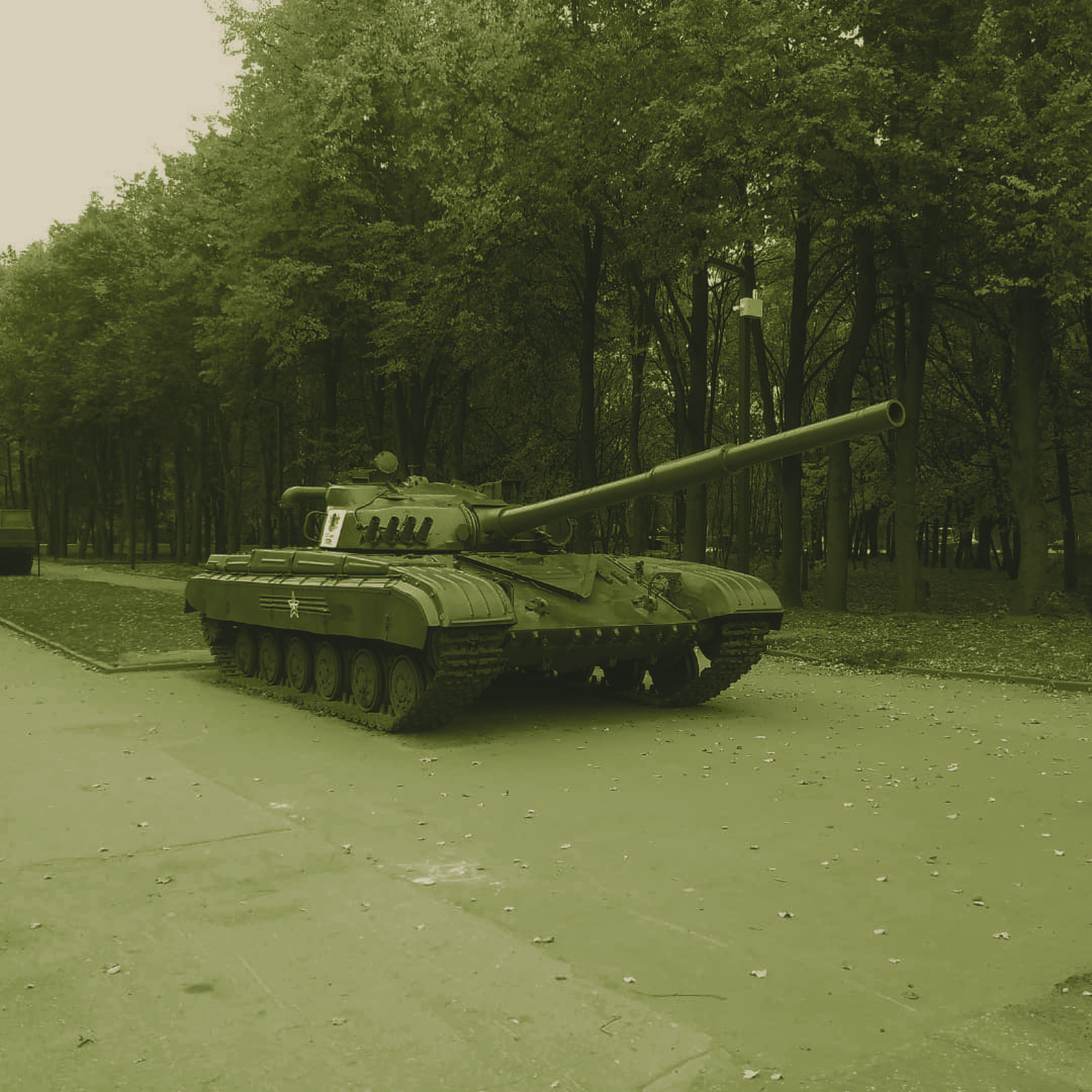

A Kharkiv-built Soviet tank designed in the 1960s that is still, in 2026, the backbone of Ukraine's armoured force — sustained by depot reactivation, salvaged Oplot transmissions and anti-drone cages, because no volume of Western donations could ever have replaced it.
Overview
The T-64 is a Soviet second-generation main battle tank designed and built at the Malyshev Factory in Kharkiv — in what is now Ukraine. That fact governs everything about its role in the current war. When the USSR dissolved, Ukraine inherited both the largest surviving T-64 fleet and the industrial base that produced it, while Russia inherited a substantial number of hulls it has never been equipped or trained to overhaul.
The result is an inversion of the usual legacy-equipment story. Ukraine fields the T-64 not as a stopgap but as its primary tank, in two main forms: the widely used T-64BV, progressively upgraded through 2017 and 2022 packages, and the heavier, rarer T-64BM Bulat. Western donations of Leopard 2, M1A2 Abrams and Challenger 2 arrived in the dozens; Ukraine's T-64 fleet is counted in the hundreds and replenished continuously from storage.
By 2026 the fleet's condition is the constraint rather than its size. Ukrainian armoured-warfare specialist Mykola Salamakha assessed that only a third — and in some cases a fifth — of the army's tanks are combat-ready at any given moment.
🔒 The full T-64 file is for BattlePolicy Pro members. Below the line: development history, design and capabilities, variants, the combat record, advantages and limitations, comparable systems, outlook, the full specifications table, our sourcing, and the analyst assessment — procurement, suppliers and the BattlePolicy verdict. Unlock the full file with BattlePolicy Pro →
Below this point
- Development
- Design & capabilities
- Variants
- Combat record / operational use
- Advantages
- Drawbacks / limitations
- Counterparts
- Outlook
- Key specifications
- Sources
- Analyst Section
- Procurement & contracts
- Suppliers & related companies
- Comparable systems — analyst view
- Analyst note