RGD-5
The standard Soviet/Warsaw Pact offensive fragmentation hand grenade since 1954 — a lightweight, smooth-bodied anti-personnel weapon built for close combat, in continuous service from Afghanistan to Ukraine.
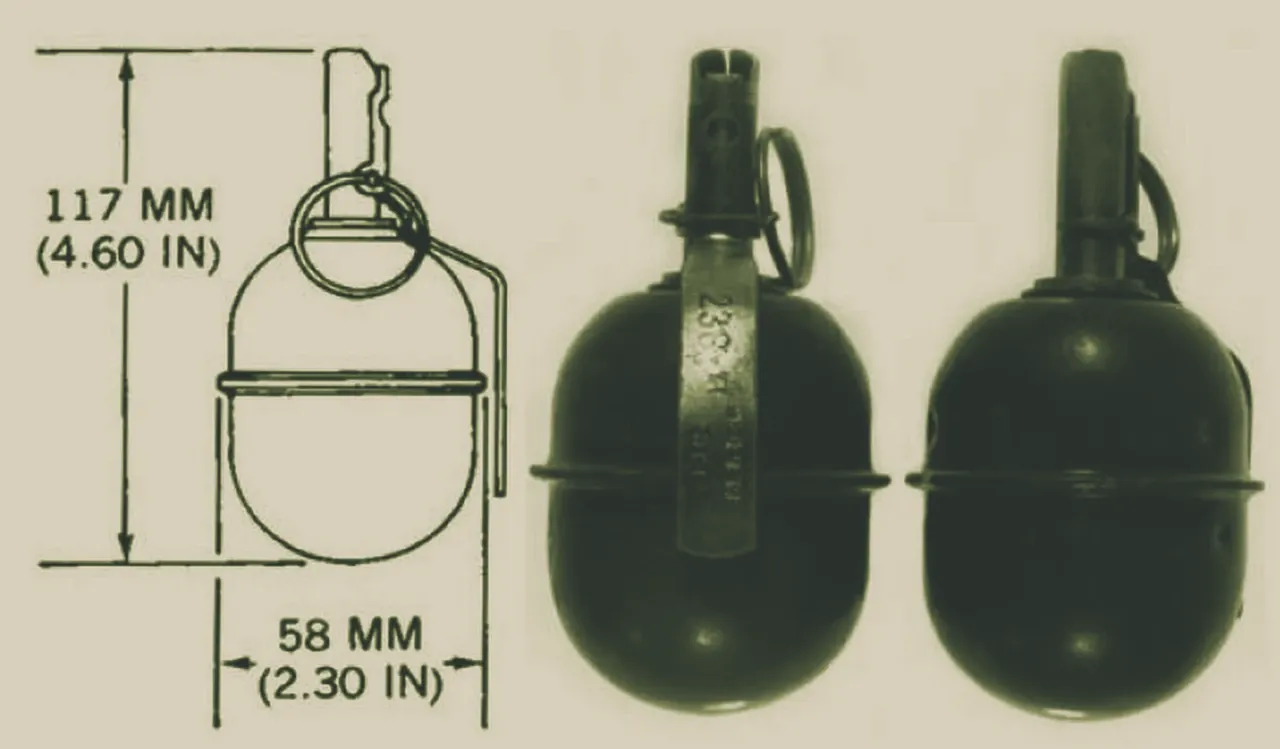
The standard Soviet/Warsaw Pact offensive fragmentation hand grenade since 1954 — a lightweight, smooth-bodied anti-personnel weapon built for close combat, in continuous use from Afghanistan to Ukraine.
Overview
The RGD-5 (Ручная Граната Дистанционная, “hand grenade remote”) is the principal offensive fragmentation grenade of the former Soviet Union and its successor states. Designed for assault operations where the thrower can advance without cover, the grenade relies on blast and a moderate fragmentation effect rather than a heavy defensive fragmentation cloud. It entered Soviet service in 1954 and remains in production and widespread use more than seven decades later, with both Russia and Ukraine manufacturing identical or locally-adapted variants today.
Development
The RGD-5 was developed in the early 1950s as a lighter, cheaper replacement for the wartime RG-42 offensive grenade, using a two-piece thin sheet-steel ovoid body. First fielded in 1954, it rapidly became the standard offensive hand grenade of the Soviet Army and its Warsaw Pact allies. Bulgarian state plants at VMZ-Sopot and Arsenal obtained production licences and still manufacture the grenade in its original form, as detailed by VMZ-Sopot.
Design & capabilities
The RGD-5 weighs approximately 310–320 g and carries a TNT main charge of 110–113 g, ignited by a standard UZRGM or UZRGM-2 pyrotechnic-delay fuze with a 3.2–4.2 second delay. The smooth, two-piece sheet-steel body encloses an internal fragmenting liner that produces around 350 fragments upon detonation. According to Weaponsystems.net and Wikipedia, the lethal radius is roughly 3 m, while wounded personnel can be found out to 20–25 m. The grenade’s relatively low weight and smooth exterior distinguish it from the heavier, cast-iron defensive F-1 “Limonka,” which generates a much larger fragmentation hazard. Filler, weight, and casualty radius values are confirmed by Everything Explained Today.
Combat record / operational use
The RGD-5 has been used in virtually every conflict involving Soviet or Russian forces since the mid-1950s — from the Soviet–Afghan War through both Chechen wars, the Syrian Civil War, and most intensively in the Russo-Ukrainian war that began in 2014. As noted in a Small Arms Survey report on illicit ammunition in Ukraine, the RGD-5 and its F-1 counterpart are among the most commonly encountered hand grenades in the conflict zone. Both sides not only use Soviet-era stockpiles but have also set up domestic production: Ukrainian industry produces near-identical copies, according to Militarnyi, while Russia continues to manufacture the original design. The grenade’s ubiquity makes it a persistent humanitarian-mine-action concern long after hostilities.
Advantages
- Lightweight (~310 g), allowing soldiers to carry more grenades.
- Offensive design — low casualty radius relative to defensive grenades — permits the thrower to advance without heavy cover.
- Simple, proven pyrotechnic-delay fuze (3.2–4.2 s) with a reliable track record.
- Extremely widespread: interoperable with Warsaw-Pact, Soviet-successor, and captured stocks.
- Low-cost, mass-producible; Bulgarian licences and Ukrainian copies flood the market.
Drawbacks / limitations
- Thin body gives relatively low fragment density beyond a few metres, limiting effectiveness in open terrain.
- The smooth exterior can be slippery in wet or muddy conditions, affecting grip.
- No electronic or impact-fuzing option; purely pyrotechnic-delay fuzes can be out-waited or kicked away in certain scenarios.
- Casualty radius is small compared with defensive fragmentation grenades such as the F-1.
- Not compatible with rifle-grenade adapters or launcher assemblies.
Counterparts
- M67 Grenade (USA)
- Type 86P (China)
Outlook
The RGD-5 remains in active production in Russia and licensed facilities, and large stockpiles will ensure its presence on future battlefields for decades. Its place in the infantryman’s kit is unlikely to change in the near term, although modern impact-fuzed alternatives (RGN/RGO) have already begun to supplant it in some elite Russian units. The grenade’s global proliferation also guarantees it will continue to appear in irregular and state-on-state conflicts wherever Soviet-era matériel surfaces.
Key specifications
| Spec | Value |
|---|---|
| Crew | N/A (hand-thrown, single soldier) |
| Combat weight | ~310–320 g |
| Length / width / height | ~117 mm length / ~58 mm diameter |
| Main armament | TNT ~110–113 g (fragmentation) |
| Secondary armament | not applicable |
| Armor & protection | not applicable |
| Engine & power | not applicable |
| Power-to-weight | not applicable |
| Road / cross-country speed | not applicable |
| Operational range | hand-thrown; lethal ~3 m / wounding ~20–25 m |
Sources
- VMZ-Sopot — RGD-5 Hand Grenade. https://vmz.bg/en/production/hand-grenades/riecna-granata-rgd-5
- Weaponsystems.net — RGD-5. https://weaponsystems.net/system/691-RGD-5
- Wikipedia — RGD-5. https://en.wikipedia.org/wiki/RGD-5
- Everything Explained Today — RGD-5 (fragments/casualty radius). https://everything.explained.today/RGD-5/
- Small Arms Survey — Illicit Ammunition in Ukraine (F-1/RGD-5 proliferation). https://www.smallarmssurvey.org/sites/default/files/resources/SAS-Report-Illicit-Ammunition-Ukraine.pdf
- Militarnyi — Ukraine produces analogs of Soviet F-1 and RGD-5 grenades. https://militarnyi.com/en/news/ukraine-produces-analogs-of-soviet-f-1-and-rgd-5-grenades/