Akash
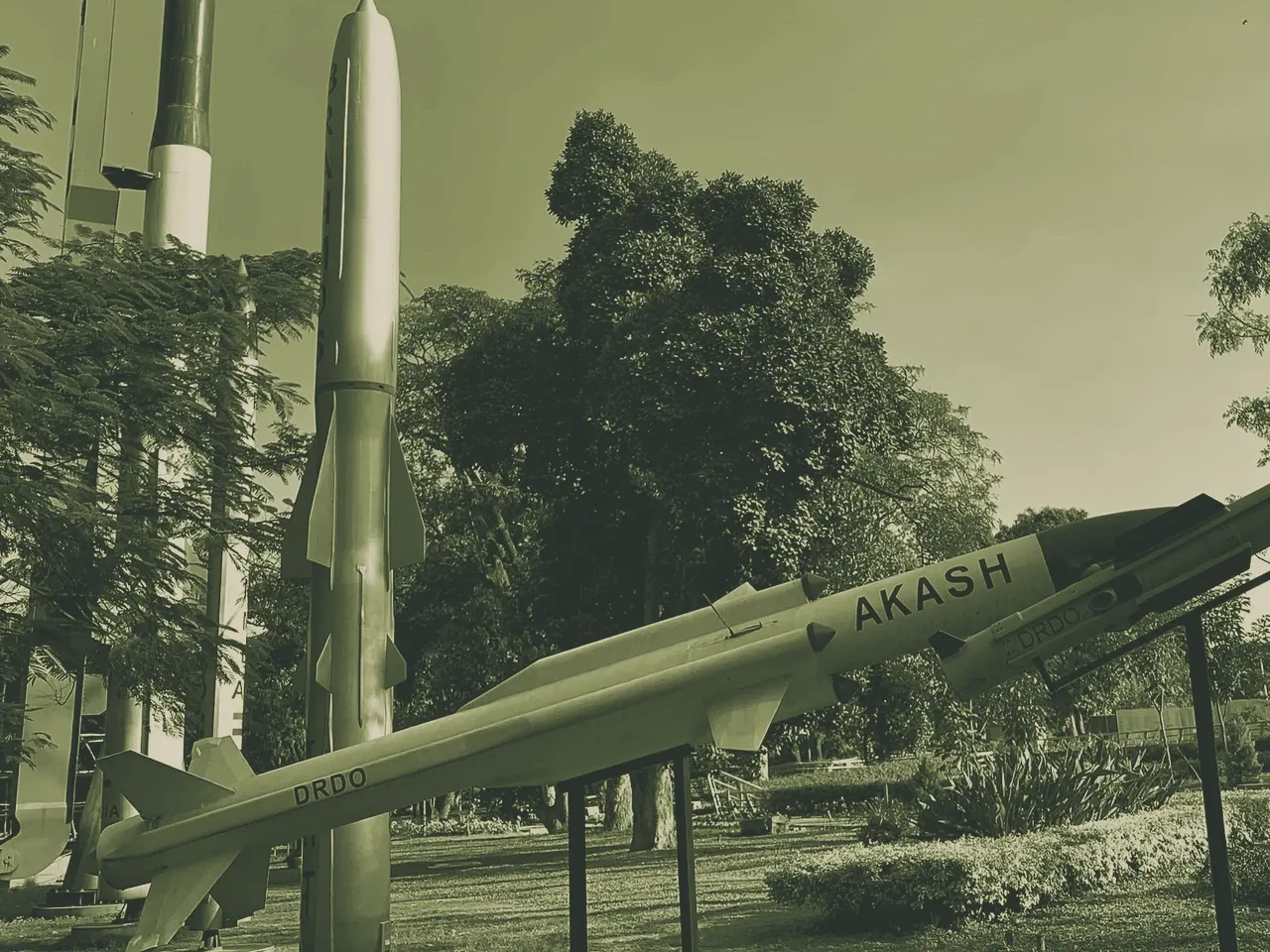
India's home-built air shield — the Akash is an indigenous medium-range surface-to-air missile that guards against jets, drones and cruise missiles out to ~25 km. It performed well in India's 2025 clash with Pakistan and won its first export, to Armenia.
_02.jpg)
India's home-built air shield — the Akash ("sky") is an indigenous medium-range surface-to-air missile system designed to protect ground forces and key sites from aircraft, helicopters, drones and cruise missiles out to around 25 km. After a long development, it has matured into a credible, mass-produced air-defence system that performed well in India's 2025 military clash with Pakistan, won its first export order (to Armenia), and is being extended into the longer-range, AESA-seeker Akash-NG — a flagship of India's drive to build, and now sell, its own air defences.
Overview
The Akash is an all-weather, medium-range surface-to-air missile (SAM) system developed by India's Defence Research and Development Organisation (DRDO) and produced by Bharat Dynamics Limited (BDL) and Bharat Electronics (BEL). It provides multidirectional, multi-target area air defence: a battery's radar and command system can track many targets and guide missiles against several simultaneously across 360°. The missile engages targets — fighter jets, helicopters, drones and cruise missiles — out to roughly 25 km (with upgraded variants reaching further) at speeds around Mach 2.5. Built as part of India's long-running Integrated Guided Missile Development Programme, Akash is one of the country's most significant indigenous defence systems: it has been fielded in numbers by the Indian Army and Air Force, proven in combat in 2025, exported for the first time, and is evolving into more capable forms (Akash Prime and the new-generation Akash-NG).
🔒 The full Akash file is for BattlePolicy Pro members. Below the line: development history, design and capabilities, variants, the combat record, advantages and limitations, comparable systems, outlook, the full specifications table, our sourcing, and the analyst assessment — procurement, suppliers and the BattlePolicy verdict. Unlock the full file with BattlePolicy Pro →
Below this point
- Development
- Design & capabilities
- Variants
- Combat record / operational use
- Advantages
- Drawbacks / limitations
- Counterparts
- Outlook
- Key specifications
- Sources
- Analyst Section
- Procurement & contracts
- Suppliers & related companies
- Comparable systems — analyst view
- Analyst note