The Wire · live GRID-REF 37°47′N 122°25′W
DISPATCH 03/26 · 24 Aug 2026
BattlePolicy
Startup to front line. Strategy to consequence.
Lexicon · Europe

DragonFire

Britain's drone-frying laser — a directed-energy weapon that burns aerial targets out of the sky for about £10 a shot, accurate enough to hit a £1 coin at a kilometre. After a 2024 high-power trial it won a £316m deal to arm Royal Navy destroyers from 2027.
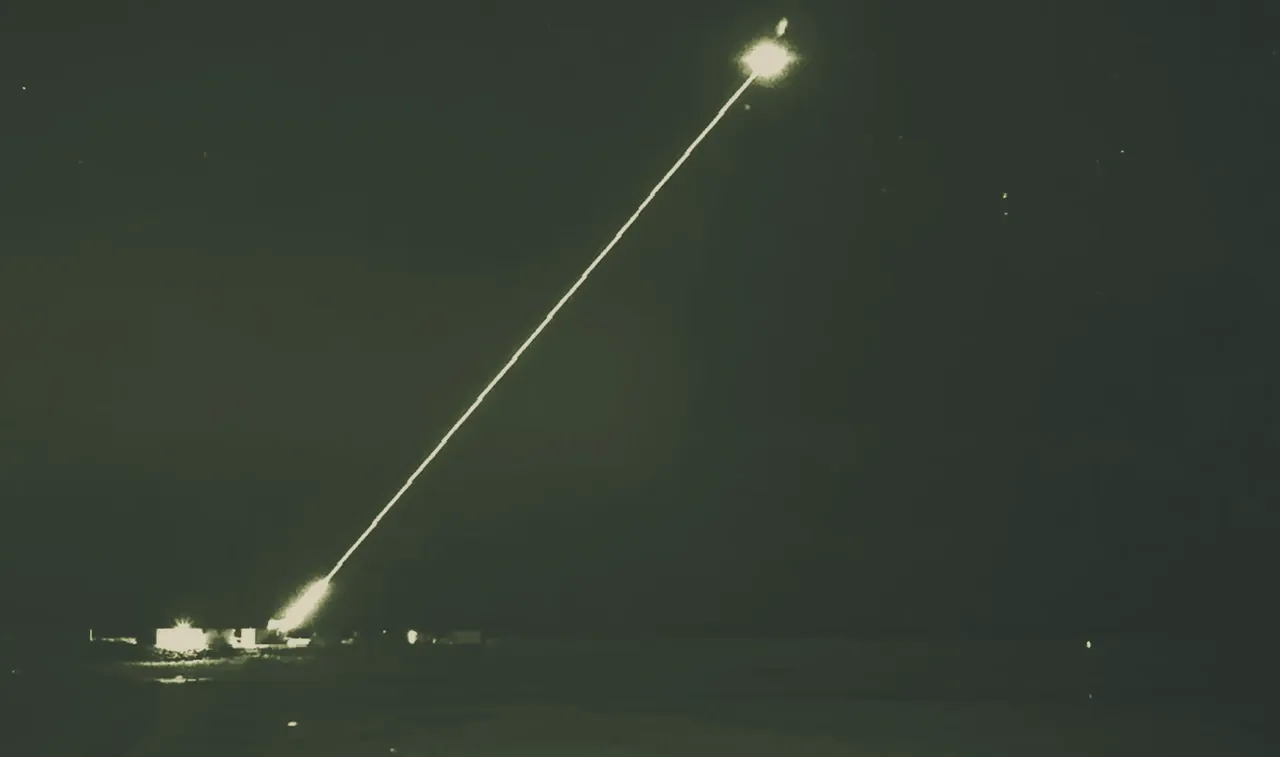
DragonFire
FIG.01 · Europe Image - The British DragonFire laser directed-energy weapon. Photo by UK Ministry of Defence, OGL 3, via Wikimedia Commons.
Britain's drone-frying laser — DragonFire is a laser directed-energy weapon (LDEW) that burns aerial targets out of the sky at the speed of light for roughly £10 a shot, accurate enough, the government says, to hit a £1 coin from a kilometre away. After a landmark 2024 high-power trial against aerial targets, it won a £316 million contract to arm Royal Navy destroyers from 2027 — Britain's answer to the central problem of modern air defence: how to shoot down cheap drones and missiles without spending a fortune in interceptors each time.

Overview

DragonFire is a high-power laser weapon developed for the Royal Navy by the UK DragonFire consortium — MBDA UK (lead), Leonardo UK and QinetiQ — with the Ministry of Defence's defence-science arm (Dstl). It is a counter-air and counter-drone system: a precisely-aimed laser beam that delivers enough energy onto a target to destroy or disable it, with the headline advantage of cost. Where a surface-to-air missile costs hundreds of thousands of pounds, a DragonFire shot costs on the order of £10, and the "magazine" is limited only by the ship's power, per UK government. That economics is the point in an era of mass drone and missile attacks, and it places DragonFire alongside Israel's Iron Beam as one of the leading near-fielded laser air-defence weapons in the West.

Development

DragonFire began as an MBDA-led consortium effort under a roughly £30 million MoD contract in 2017 and was first shown publicly as a technology demonstrator at the DSEI exhibition that year, per Wikipedia and Navy Lookout. Trials progressed from good tracking at low power (2022) to the decisive milestone: in January 2024 the UK announced the first high-power firing of the weapon against aerial targets at the MoD's Hebrides Range, destroying drones in flight (though range figures were not disclosed). On 20 November 2025, MBDA UK was awarded a £316 million contract to deliver DragonFire to the Royal Navy, with two systems planned to fit two Type 45 destroyers, the first ship fit completing in 2027 — roughly five years ahead of the original schedule, per Defense News and Naval News.

Design & capabilities

DragonFire is a high-energy laser coupled to a precise beam-director and tracking system that holds the beam on a fast-moving target long enough to burn through or disable it. Its defining metrics are accuracy and cost rather than disclosed power or range: the government describes accuracy sufficient to hit a coin-sized target at a kilometre, and a per-shot cost around £10. Because the weapon is electrically powered, its effectiveness scales with the host platform's power generation, and its "deep magazine" makes it attractive against saturation attacks where missile interceptors would be quickly exhausted and ruinously expensive. The same physics that make it cheap also bound it: lasers fight the atmosphere (cloud, fog, rain, dust and turbulence scatter and absorb the beam), need dwell time on target, and engage one target at a time line-of-sight. Exact power class, effective range and how many shots per minute remain classified, so published performance should be read with that caveat. The naval fielding on Type 45 destroyers is the first operational step; land applications are also envisaged.

Variants

DragonFire is a single demonstrator-to-fielding program rather than a family of variants. The 2025 contract covers a naval configuration for Royal Navy destroyers; the underlying laser and beam-director technology is intended to seed both further naval fits and potential land-based directed-energy weapons. It sits within a broader UK directed-energy effort that also includes lower-power counter-drone systems.

Combat record / operational use

DragonFire has no operational combat record — it is moving from successful trials to first ship fits from 2027. Its proven milestones are the January 2024 high-power destruction of aerial targets at the Hebrides Range and the subsequent funded path to Royal Navy service. Its operational logic is shaped directly by recent conflicts: the Red Sea drone-and-missile campaign and the war in Ukraine have shown how mass, cheap aerial threats can exhaust and bankrupt missile-based defences, and a £10-per-shot laser is the most direct answer to that asymmetry. Its first real-world role will be ship self-defence against drones and, potentially, subsonic missiles aboard the Type 45. As with any pre-service system, claims of its capability are projective until it is fielded and used.

Advantages

  • Cost per shot — ~£10 a shot versus hundreds of thousands for a SAM; transformative economics against drone swarms.
  • Deep magazine — limited by ship power, not by a finite stock of missiles.
  • Precision — accurate enough to hit a coin-sized target at a kilometre (per government claims).
  • Speed-of-light engagement — instantaneous beam, no time-of-flight, ideal against fast or close threats.
  • Funded and accelerated — £316m contract and a Royal Navy fit from 2027, years ahead of plan.

Drawbacks / limitations

  • Weather-bound — atmospheric scatter (cloud, fog, rain, dust) and turbulence degrade laser performance.
  • One target at a time — needs dwell time on each target; line-of-sight only.
  • Power-hungry — effectiveness scales with host-platform power generation.
  • Undisclosed performance — power class, effective range and rate are classified; claims unproven in service.
  • No combat record — capability is demonstrated in trials, not yet validated operationally.

Counterparts

DragonFire's closest peer is Israel's Iron Beam, the other leading near-fielded high-power air-defence laser, and it competes conceptually with the directed-energy programs of the US (e.g. shipboard HELIOS) and others. As a counter-drone system it sits alongside kinetic interceptors like Coyote and the Anduril Roadrunner, and the gun-based Skynex/Skyranger 30 — but with a fundamentally different cost curve. On the adversary side, Russia's Peresvet is a laser too, but a counter-space dazzler rather than a hard-kill air-defence weapon. DragonFire's distinction is that it is a funded, accelerated, ship-bound hard-kill laser with a concrete in-service date — one of the first Western directed-energy air-defence weapons to cross from demonstrator to fielded capability.

Outlook

DragonFire is Britain's bet that the answer to cheap mass — drone swarms and salvos that bankrupt missile defences — is a laser that costs pennies a shot. Its trajectory is the 2027 Royal Navy fit on Type 45 destroyers and, from there, wider naval and potentially land applications. The variables to watch into the late 2020s are how the weapon performs against real, weather-affected, maneuvering targets at sea; its true power, range and engagement rate as they emerge from classification; and whether the cost advantage holds up against the full spectrum of threats (fast missiles and hardened targets are far harder for a laser than slow drones). If it delivers, DragonFire reshapes the economics of air defence in Britain's favour; if the physics (weather, dwell time, single-target engagement) prove more limiting than the headline £10-a-shot figure suggests, it becomes one valuable layer among many rather than a silver bullet. Either way, it is among the most concrete directed-energy weapons heading to sea.

Key specifications

Spec Value
Type Laser directed-energy weapon (LDEW) — counter-drone / air defence
Origin United Kingdom — UK DragonFire consortium (MBDA UK, Leonardo, QinetiQ) + Dstl
Status In development; Royal Navy fit from 2027
Key trial First high-power destruction of aerial targets, Jan 2024 (Hebrides Range)
Cost per shot ~£10
Accuracy Coin-sized target at ~1 km (government claim)
Power / range Classified
Engagement Speed-of-light, line-of-sight, one target at a time
First platform Royal Navy Type 45 destroyer (2 fits planned)
Contract £316 million (Nov 2025)
Operators United Kingdom
Status Fielding from 2027

Sources

  1. DragonFire (weapon) — Wikipedia
  2. UK Royal Navy to equip MBDA's drone-frying lasers by 2027 — Defense News
  3. Boost for Armed Forces as new laser weapon takes down high-speed drones — GOV.UK
  4. UK Contracts for DragonFire Naval Laser Capability — Naval News
  5. MBDA signs £316M deal to supply UK's Royal Navy with laser weapons — Optics.org
  6. DragonFire – pathway to a Laser Directed Energy Weapon for the Royal Navy? — Navy Lookout
🔒 The Analyst Section on DragonFire is for BattlePolicy Pro members. Below the line: procurement and contract history, the suppliers and companies behind the system, our head-to-head analyst view of the systems it actually competes with, and the BattlePolicy assessment note. Unlock the full file with BattlePolicy Pro →
Related