GRID-REF 37°47′N 122°25′W
DISPATCH 02/26 · 9 Jun 2026
BATTLEPOLICY
Startup to front line. Strategy to consequence.
Lexicon · USA

ATACMS

The MGM-140 ATACMS — a HIMARS/MLRS-launched short-range ballistic missile, fielded since Desert Storm and the backbone of US deep-strike fires — now a critical enabler in Ukraine’s long-range campaign.
ATACMS
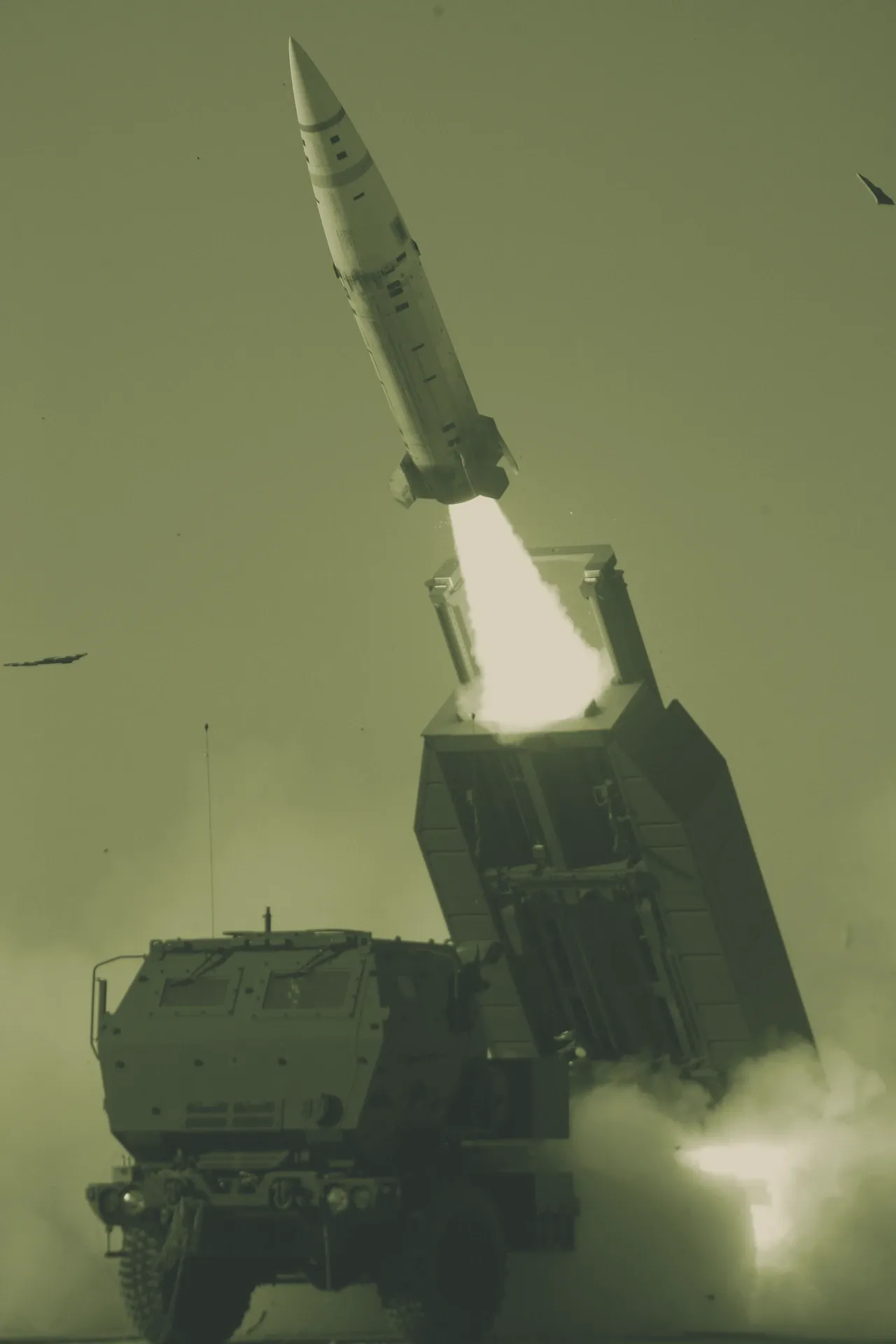
FIG.01 · USA Image - An MGM-140 ATACMS missile launch. Photo by U.S. Army Acquisition Support Center, Public domain, via Wikimedia Commons.
The US Army’s road-mobile, short-range ballistic missile — fired from HIMARS and MLRS launchers to strike rear-area targets out to 300 km — and a key deep-strike enabler in the war in Ukraine.

Overview

The MGM-140 Army Tactical Missile System (ATACMS) is a solid-fuel, quasi-ballistic short-range ballistic missile produced by Lockheed Martin. It entered service in 1990 and first saw combat during Operation Desert Storm in 1991. The missile is carried, one to a pod, by the M142 HIMARS and M270 MLRS families, and provides ground forces with deep, precision fires against high-value targets such as command posts, air-defense sites, logistics hubs and airfields. Originally fielded with a cluster-munition warhead, the family gained a unitary-warhead variant in the 2000s and has been continuously upgraded. Although the United States is transitioning to the longer-range Precision Strike Missile (PrSM), ATACMS remains in service with the US Army and several allies, and has been supplied to Ukraine, where it has reshaped the long-range strike dynamic.

Development

Lockheed Martin developed ATACMS to replace the MGM-52 Lance battlefield missile and provide the US Army with a deep-strike capability that could be launched from the same tracked and wheeled launchers used for the MLRS rocket family. The original Block I missile (M39) carried 950 M74 anti-personnel/anti-materiel (APAM) submunitions and had a range of approximately 165 km, according to CSIS Missile Threat. Subsequent blocks introduced GPS-aided inertial guidance and extended range. The Block IA (M39A1) reached roughly 300 km with a reduced submunition load, and the Block II (cancelled) would have carried Brilliant Anti-Tank (BAT) submunitions. The most important operational shift came with the quick-reaction unitary variants — M48 and M57 — which mounted a single 227 kg high-explosive warhead, giving ground commanders a precision-strike option without the postwar contamination concerns of cluster munitions.

Design & capabilities

ATACMS is a single-stage solid-propellant ballistic missile with a length of approximately 3.96 m, a diameter of 0.61 m and a launch weight of ~1,320 kg, as detailed by Army Recognition. It accelerates to speeds in excess of Mach 3 and follows a depressed, quasi-ballistic trajectory that complicates detection and interception. The early M39 relied on inertial guidance; unitary M48 and M57 variants added a GPS-aided inertial navigation system that delivers a circular error probable (CEP) estimated at less than 10 meters, though the exact figure is classified. The missile can be fired from the M142 HIMARS wheeled launcher (one missile) or the M270/M270A1 tracked Multiple Launch Rocket System (two missiles), allowing a battery to strike targets across a wide front while remaining highly mobile.

Variants

  • M39 (Block I): ~165 km range; 560 kg warhead containing 950 M74 APAM submunitions.
  • M39A1 (Block IA): ~300 km range; reduced-size cluster warhead with ~300 M74 submunitions.
  • M48 (Block I unitary quick-reaction): ~70–300 km range; 227 kg high-explosive unitary warhead, GPS-aided INS.
  • M57 (Block IA unitary): ~70–300 km range; 227 kg unitary warhead with improved insensitive-munition filling and updated electronics.
  • ATACMS-P (penetrator): A developmental variant with a penetrating warhead for hardened targets; limited production.

Combat record / operational use

ATACMS debuted in combat during Operation Desert Storm in 1991, when US Army M270 launchers fired dozens of missiles against Iraqi air-defense, logistics and command targets. It was used again in Operation Iraqi Freedom in 2003. The missile’s most intense and consequential employment, however, has come in the war in Ukraine. The first Ukrainian strike occurred on 17 October 2023, using the cluster-variant M39 against Russian helicopter bases in occupied Berdiansk and Luhansk, according to The Defense Post. In early 2024, following the American decision to supply the longer-range unitary variant, Ukraine struck Russian airbases in occupied Crimea — notably the Dzhankoi facility in February 2024, destroying S-400 launchers and radars. From November 2024 onward, Washington authorized cross-border strikes with ATACMS, and Ukrainian forces used the missile to hit troop concentrations, ammunition depots and air-defense systems inside Russian territory, as detailed by the Council on Foreign Relations. These missions demonstrated ATACMS’s ability to stress adversary air defenses and to reach targets far behind the front line, altering the operational calculus of the conflict.

Advantages

  • Delivers a 227 kg unitary warhead or area-blanketing submunitions to distances of 165–300 km from a mobile, road-transportable launcher.
  • GPS-aided guidance on unitary variants provides consistent first-shot lethality against high-value, time-sensitive targets.
  • Compatible with the HIMARS and M270 family; a single launcher can carry one or two missiles, requiring no dedicated new platform.
  • Proven in combat across multiple decades — from Desert Storm to Ukraine — giving commanders a high degree of confidence in reliability and effect.
  • The depressed, high-speed trajectory complicates traditional air-defense intercept geometry.

Drawbacks / limitations

  • Cluster warheads leave significant unexploded ordnance, raising postwar humanitarian and operational concerns.
  • Production lines have largely shifted to the successor PrSM, limiting the capacity to manufacture new ATACMS rounds.
  • The missile’s size means HIMARS can carry only one round, reducing magazine depth compared to the two-per-pod PrSM.
  • Cost (estimated ~$1.5 million per missile) constrains massed fires, especially for countries with smaller defense budgets.
  • The weapon’s effectiveness against mobile targets and deep, hardened sites remains dependent on timely intelligence and a permissive launch environment.

Counterparts

Outlook

ATACMS will remain in the inventories of the US Army and allied nations well into the 2030s, even as the longer-range Precision Strike Missile (PrSM) — with a range of ~500+ km and two missiles per pod — takes over as the principal deep-strike weapon for HIMARS and M270 launchers. The war in Ukraine has underscored the enduring value of a road-mobile, precision-strike ballistic missile that can strike well beyond the reach of tube artillery, and it is likely that Washington will continue to provide ATACMS to Kyiv while sustaining a smaller residual stock for its own contingencies. Export interest remains strong, particularly from operators who already field HIMARS and seek a longer-range complement to their GMLRS rockets.

Key specifications

Spec Value
Type Short-range ballistic missile (SRBM)
Range M39: ~165 km; M39A1, M48, M57: ~300 km
Speed (Mach / km·s⁻¹) >Mach 3
Warhead (type & weight) M39: 560 kg cluster (950 M74 APAM); M48/M57: ~227 kg HE unitary
Guidance INS (early variants); GPS-aided INS (unitary variants)
Accuracy (CEP) Not publicly established (estimated <10 m for unitary variants)
Launch platform(s) M270/M270A1 MLRS, M142 HIMARS
Propulsion Single-stage solid rocket
Length / diameter / launch weight ~3.96 m / 0.61 m / ~1,320 kg

Sources

  1. CSIS Missile Threat — MGM-140 ATACMS. https://missilethreat.csis.org/missile/atacms/
  2. Army Recognition — ATACMS Army Tactical Ballistic Missile System. https://armyrecognition.com/military-products/army/missiles/ballistic-missiles/atacms-army-tactical-ballistic-missile-system-us-technical-data
  3. Wikipedia — MGM-140 ATACMS. https://en.wikipedia.org/wiki/ATACMS
  4. The Defense Post — Ultimate Guide to ATACMS. https://thedefensepost.com/2025/07/01/atacms-guide/
  5. Council on Foreign Relations — Ukraine’s ATACMS: What Will the U.S. Missiles Mean for the War. https://www.cfr.org/articles/ukraines-atacms-what-will-us-missiles-mean-war
FIELD DISPATCH · WEEKLY

BattlePolicy Weekly — free.

Defense tech, startups, and security — weekly. No paywall.

Related
Ukraine · USA · Funding · Swarmer · drones · defense tech · venture capital · Pentagon

Ukraine turned its drone war into an industry. Now Wall Street is pricing it.

Swarmer's Nasdaq debut, a wave of Western venture money and a Pentagon FPV contract show Ukrainian defense tech crossing from battlefield to balance sheet, at a valuation that has outrun the revenue.

Ukraine · USA · Funding · Swarmer · drones · defense tech · venture capital · Pentagon
USA · Autonomy · Shifters · Ace Capital Partners

Shifters raises $10.2M to put robots first into tunnels and rubble

The US-Israeli startup raised a $10.2 million seed led by Ace Capital Partners to scale ground robots that enter tunnels and rubble before troops.

USA · Autonomy · Shifters · Ace Capital Partners
USA · Policy · AI · Anthropic · autonomous weapons · Pentagon

Trump orders faster military AI and bars vendors from switching off fielded models

A new national security memo tells the Pentagon to onboard frontier commercial AI at speed, strips vendors of the power to shut it down mid-mission, and resets the rules for autonomous weapons within 90 days.

USA · Policy · AI · Anthropic · autonomous weapons · Pentagon