EuropePro
M51.3
M51.3 is the third version of France's submarine-launched strategic ballistic missile, combining the TNO-2 nuclear warhead with improvements in range, accuracy and penetration.
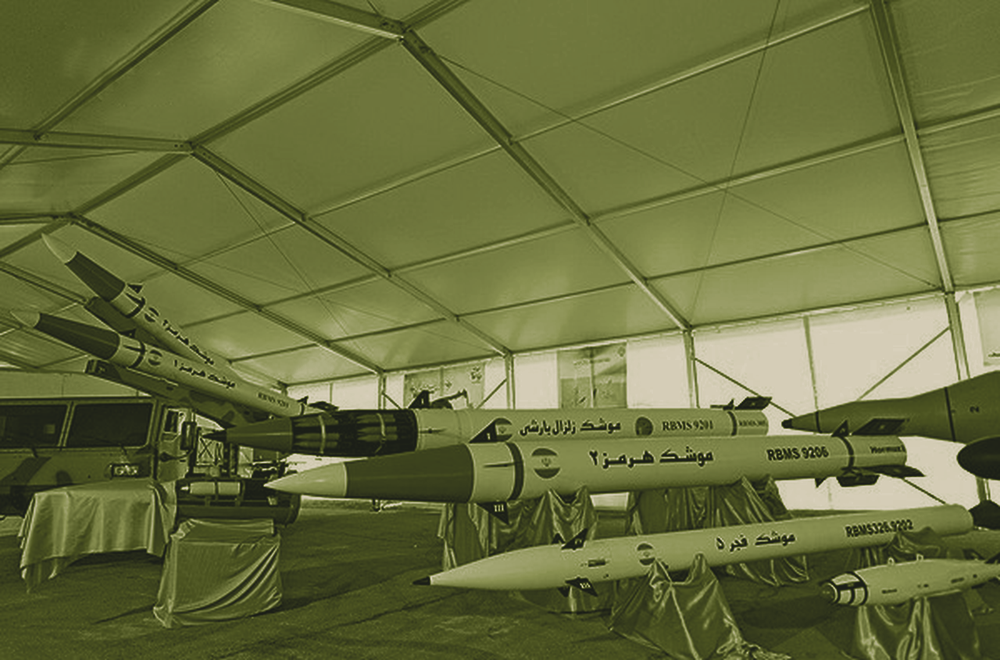
Hormuz-2 is an Iranian Fateh-110-derived anti-ship ballistic missile with a reported range of about 300 km, an unresolved terminal-seeker configuration and no confirmed combat use.
M51.3 is the third version of France's submarine-launched strategic ballistic missile, combining the TNO-2 nuclear warhead with improvements in range, accuracy and penetration.
FP-9 is Fire Point's developmental Ukrainian ground-launched ballistic missile, with a claimed range of up to 850 km and payload of up to 800 kg. No flight or combat use is publicly documented as of 10 October 2026.
The Palestine-2 is an Iranian-derived, two-stage solid-propellant ballistic missile fielded by Yemen's Houthi movement for long-range strikes against Israel.
China's DF-16 is a road-mobile, two-stage ballistic missile designed for conventional precision strikes against Taiwan and other targets across the western Pacific's first island chain.
The FP-7 is a Ukrainian ground-launched tactical ballistic missile under military evaluation, designed to carry up to 150 kg over a stated 200 km range.
Toufan is the Houthi designation for an Iranian Ghadr-derived, liquid-propellant medium-range ballistic missile with sufficient claimed range to reach Israel from Yemen.
North Korea's largest flight-tested road-mobile ICBM — a three-stage, solid-propellant missile intended to supplement the Hwasong-18 and potentially carry multiple reentry vehicles.
Iran's road-mobile, solid-fuel Zolfaghar ballistic missile extends the Fateh-110 family to a claimed 700 km and has been used in cross-border strikes since 2017.
Russia's solid-propellant submarine-launched intercontinental ballistic missile, carried exclusively by Borei-class ballistic-missile submarines and central to the modernization of the country's sea-based nuclear deterrent.
The UGM-133A Trident II D5 is the submarine-launched ballistic missile at the core of the United States and United Kingdom sea-based nuclear deterrents.
The OTR-21 Tochka-U is a Soviet road-mobile short-range ballistic missile with a 120 km range, inertial guidance and conventional, cluster or nuclear warhead options.
North Korea's heavyweight Hwasong-11 — a solid-fuel ballistic missile more than ten metres long, claimed to carry a 2.5-tonne warhead roughly five times an Iskander's, transferred to Russia in 2026 and deployed within range of Ukraine.
The Fateh-110 is an Iranian road-mobile, solid-propellant short-range ballistic missile developed for conventional theater strikes at ranges of approximately 200 to 300 km.
The Roketsan Bora is Turkey's combat-proven tactical ballistic missile — fired against PKK targets in 2019, the first Turkish BM used in anger, and exported to Indonesia as the Khan: the first Turkish ballistic-missile export, deliberately sized under the MTCR threshold.
The Emad is Iran's first precision-guided ballistic missile — a Ghadr airframe with a maneuvering reentry vehicle, ~1,700 km range. It has flown in every True Promise salvo against Israel since April 2024, and the 2026 war gutted the launcher force and factories that field it.
The LGM-35A Sentinel is the US ICBM replacing the 1970-vintage Minuteman III — and America's most troubled strategic program: an 81% cost breach to at least $141B, silo reuse abandoned for all-new silos, first flight slipped to 2028 and IOC to the early 2030s.
The JL-3 is China's third-generation submarine-launched ballistic missile — a ~10,000 km-class, likely MIRV-capable weapon now fielded on Jin-class submarines, which the Pentagon says ranges most of the continental US. First shown publicly at the September 2025 parade.
The Hwasong-18 is North Korea's first solid-fuel ICBM — cold-launched, road-mobile, three-for-three in 2023 tests, with an implied 15,000 km reach covering the entire US. It compresses pre-launch warning to minutes and sparked an unresolved fight over Russian design help.
The Roketsan Tayfun is Turkey's longest-range ballistic missile — revealed by a 561 km test in 2022, in mass production since 2023, with the enlarged Block-4 marketed as Turkey's "first hypersonic missile." Range claims span 280 to 1,500 km; only the demonstration is certain.
South Korea's strike arsenal — the Hyunmoo family runs from Tomahawk-like cruise missiles to the Hyunmoo-5 "monster missile," a conventional ballistic weapon with an 8-tonne bunker-buster warhead built to smash North Korea's deepest command bunkers. The non-nuclear backbone of Seoul's deterrence.
India's long-range deterrent — the Agni-V is a road-mobile, nuclear-capable ballistic missile that puts all of China within reach. In 2024 India test-fired a version carrying multiple independently-targeted warheads (MIRV), joining a small club of powers with that technology.
Iran's solid-fuel medium-range ballistic missile — quick to launch, road-mobile, and tipped with a maneuvering warhead that jinks in its final seconds to dodge interceptors. It flew in Iran's 2024 barrages on Israel, and its booster later seeded the Fattah-1.
Iran's hypersonic-glide evolution of the Fattah-1 — a missile pairing a solid-fuel booster with a maneuvering liquid-fuel glide vehicle, claimed to reach Mach 15 over ~1,500 km. Topical after the Israel–Iran exchanges, but its real performance is heavily disputed.
Israel's long-range precision strike missile — a theater quasi-ballistic system launched from mobile ground launchers, ships, or fighters, delivering a 570 kg warhead with 10-meter accuracy up to 430 km.
America's next-generation tactical ballistic missile — a HIMARS/MLRS-fired deep-strike weapon that doubles ATACMS reach, adds anti-ship capability, and made its combat debut against Iran in 2026.
Iran's first solid-fuel medium-range ballistic missile — a two-stage, road-mobile MRBM fielded by the IRGC, with a ~2,000 km range and a short-notice launch capability that marks a step beyond liquid-propellant Shahab derivatives.
Ukraine’s first indigenously developed short-range ballistic missile — free of Western range and target restrictions, and now serial-produced to strike airbases, command posts and logistics hubs deep inside Russian-controlled territory.
Iran's heaviest liquid-fuel medium-range ballistic missile family, derived from the North Korean Musudan, carrying large conventional warheads or submunitions out to ~2,000 km and assessed capable of 3,000 km with a lighter payload — a centrepiece of IRGC strategic strike and the subject of.
China's pioneering land-based anti-ship ballistic missile — the "carrier killer" that forced the U.S. Navy to rethink its force structure, holding aircraft carriers at risk out to 1,500 km.
Iran's most advanced operational ballistic missile — a solid-propellant MRBM with a powered maneuvering re-entry vehicle, marketed by Tehran as "hypersonic" and combat-tested against Israeli defenses in 2024 and 2025.
North Korea's solid-fuel quasi-ballistic short-range missile — an Iskander lookalike manufactured at the February 11 Plant, transferred to Russia, and combat-proven in Ukraine with evolving accuracy.
Russia's primary road-mobile short-range ballistic missile — nuclear-capable, maneuvering, and the workhorse of its deep-strike campaign in Ukraine.
China's modular, long-range wheeled multiple-launch rocket system — built to strike targets up to 500 km across the Taiwan Strait with a mix of guided rockets and Fire Dragon tactical ballistic missiles, and the keystone of the PLAGF's deep-fires modernization.
China's road-mobile, dual-capable intermediate-range ballistic missile — able to strike land targets out to Guam and, in its DF-26B variant, engage moving ships at sea.
The MGM-140 ATACMS — a HIMARS/MLRS-launched short-range ballistic missile, fielded since Desert Storm and the backbone of US deep-strike fires — now a critical enabler in Ukraine’s long-range campaign.