GRID-REF 37°47′N 122°25′W
DISPATCH 02/26 · 11 Jun 2026
BATTLEPOLICY
Startup to front line. Strategy to consequence.
Lexicon · Iran

Sejjil

Iran's first solid-fuel medium-range ballistic missile — a two-stage, road-mobile MRBM fielded by the IRGC, with a ~2,000 km range and a short-notice launch capability that marks a step beyond liquid-propellant Shahab derivatives.
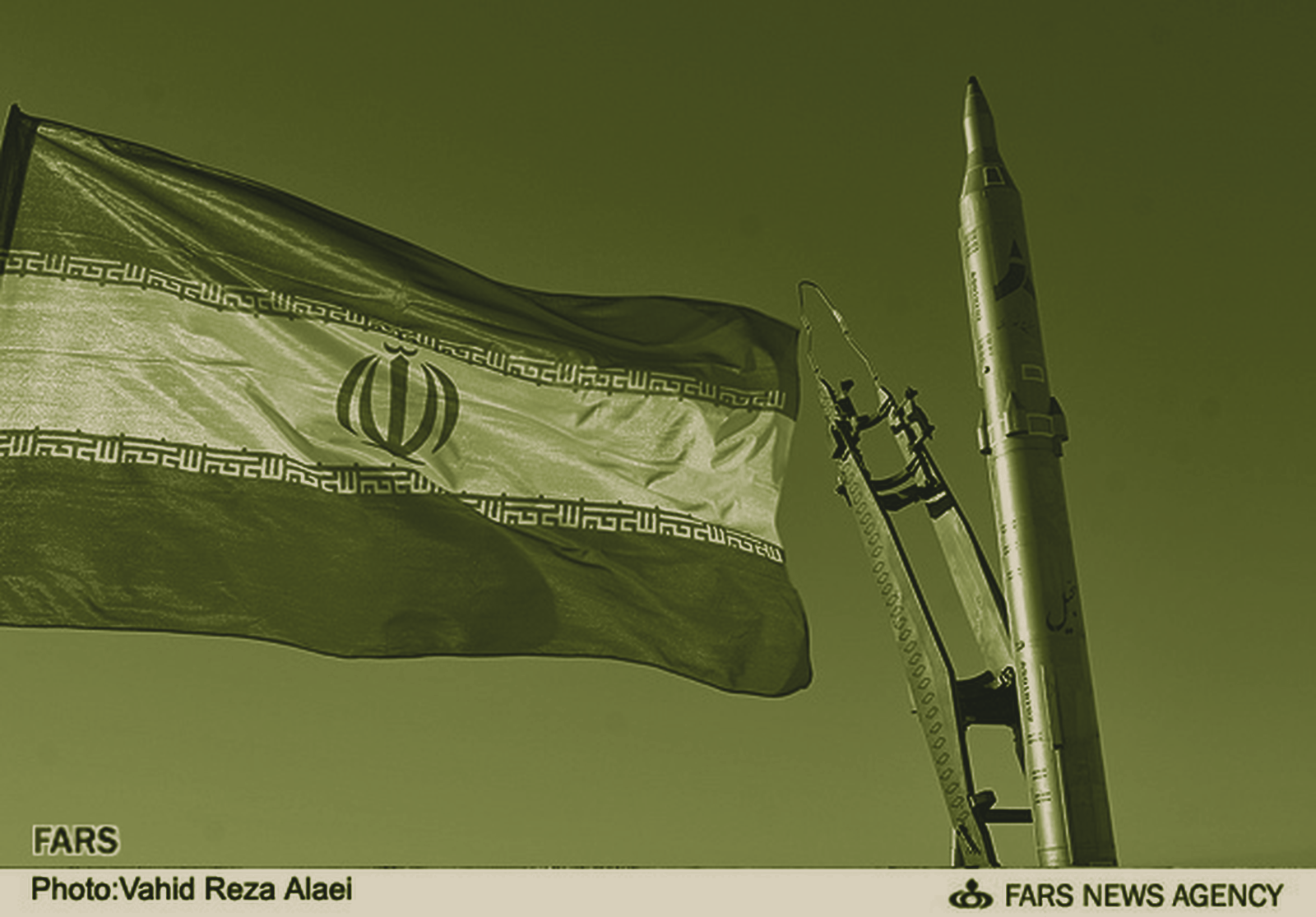
Sejjil
FIG.01 · Iran Image - Sejjil two-stage solid-fuel missile launch. Photo by Vahid Reza Alaei, CC BY 4.0, via Wikimedia Commons.jpg).
Iran's first solid-propellant medium-range ballistic missile — a road-mobile, two-stage MRBM with a ~2,000 km range and a short-notice launch capability that gives the IRGC a survivable strategic strike option.

Overview

The Sejjil (also romanised Sejil, Sajjil, Sajil; Persian: سجیل, “brimstone”) is Iran's first indigenously developed two-stage, solid-fuel medium-range ballistic missile (MRBM). Road-mobile on a tractor-trailer transporter-erector-launcher (TEL), it is designed to strike high-value targets at distances of roughly 2,000 km — placing Israel and US regional bases within reach. Operated exclusively by the Islamic Revolutionary Guard Corps (IRGC) Aerospace Force, the Sejjil entered service around 2012 and was combat-fired for the first time during the 2025 Twelve-Day War, and again in the 2026 US–Israel–Iran war. Its solid-propellant architecture allows it to be stored fully fuelled and launched on short notice, a key survivability advantage over Iran's liquid-fuel Shahab-series missiles.

Development

Development of a large solid-propellant ballistic missile began at Iran's Ministry of Defence Aerospace Industries Organisation (AIO) in the late 1990s, building on solid-fuel technology from the Zelzal short-range rocket programme. According to CSIS, China assisted with solid-propellant production techniques. The first flight-test, on 13 November 2008, covered approximately 800 km. Iran called the follow-on test in May 2009 the “Sejjil-2”; a Wikipedia chronology records six tests through 2011, the sixth reaching nearly 1,900 km into the Indian Ocean. The missile then went largely dormant for a decade, resurfacing in the January 2021 Great Prophet 15 exercise with upgraded guidance: a ruggedised strap-down inertial package and jet vanes derived from the Emad re-entry vehicle, as documented by CSIS.

Design & capabilities

The Sejjil is a two-stage, solid-propellant missile with a composite fuel grain in both stages. A 22-metre tractor-trailer TEL provides road-mobility, making the system difficult to locate and target. According to CSIS, the missile is 17.6–18.2 m long, 1.25 m in diameter, and has a launch mass of roughly 23,600 kg. Its advertised range is ~2,000 km with a 700 kg high-explosive warhead; some assessments suggest a 2,000–2,500 km envelope, or 1,000 km with a heavier 1,500 kg payload. Guidance relies on an inertial navigation system (INS) augmented by satellite updates, and upgraded models may incorporate stellar or horizon-reference sensors through optical ports on the re-entry vehicle; the 2021 upgrade included Emad-type jet vanes for terminal manoeuvrability. Terminal speed is not publicly established, but Iranian state media claim a hypersonic re-entry phase with a flight time to Tel Aviv of about seven minutes, as reported by The New Arab. Military Watch Magazine notes that the Sejjil represents a “significant leap” because it is not a derivative of a North Korean design, unlike most earlier Iranian ballistic missiles.

Variants

  • Sejjil-1 — baseline two-stage missile tested in 2008.
  • Sejjil-2 — designation Iran applied to the 2009 test campaign; CSIS notes it is unclear whether it is a distinct variant or simply the improved 2009 configuration. Iranian-linked claims ascribe a 700 kg warhead at 2,000 km or up to 1,500 kg at shorter ranges, and unverified reports of a multiple independently targetable re-entry vehicle (MIRV) capability.
  • Sejjil-3 — unconfirmed three-stage development, reportedly with a ~4,000 km range and a 38,000 kg launch mass; no verifiable test evidence exists.

Combat record / operational use

The Sejjil's combat debut occurred on 18 June 2025, the twelfth day of the Twelve-Day War between Iran and Israel. The IRGC announced that “ultra-heavy, long-range, two-stage Sejjil missiles” were fired as part of Operation True Promise 3, targeting the IDF C4I command-and-intelligence complex and the Gav-Yam technology park in Be'er Sheva, according to Army Recognition and Times of Israel. Israeli media reported a single missile was intercepted, with fragments causing minor damage to a vehicle. Military Watch Magazine noted an unspecified number of missiles in the salvo; Army Recognition added that unverified footage suggested a submunition warhead.

In the broader US–Israel–Iran war that erupted on 28 February 2026, the Sejjil was again employed. On 15 March 2026, the IRGC stated that Sejjil missiles were launched alongside Khorramshahr, Kheibar Shekan, Qadr and Emad missiles against Israeli administrative and decision-making nodes, and — per Iranian claims — at Al-Harir Air Base in Iraq, Ali Al-Salem Air Base and Camp Arifjan in Kuwait, an event covered by Firstpost. CSIS records the Sejjil's reported first use against Israel during Operation True Promise IV. On 20–21 March 2026, Iran fired two intermediate-range ballistic missiles at Diego Garcia; analysts assessed them as likely modified Khorramshahr-4s, because the Sejjil's reach stops around 2,000 km, as discussed by The Aviationist and The Conversation.

Advantages

  • Solid propellant permits indefinite storage in a fuelled state and immediate launch, minimising the pre-launch vulnerability window that plagues liquid-fuelled Shahab-family variants.
  • Road-mobile TEL basing complicates adversary targeting and was demonstrably survivable after the 2026 war’s strike campaign against fixed sites.
  • High terminal speed and reported in-flight manoeuvrability (“Dancing Missile” in Iranian media) stress conventional missile-defence interceptors, though at least one 2025 engagement was successfully intercepted.
  • Indigenous design — noted by analysts as “a significant leap” — makes it independent of North Korean or Russian lineage, signalling growing missile-engineering maturity.
  • Payload flexibility of 500–1,500 kg allows the same airframe to deliver different threat loads, including claimed (unverified) submunitions.

Drawbacks / limitations

  • Solid-propellant guidance and control are inherently more challenging than for liquid-fuelled missiles, and the Sejjil's accuracy remains publicly unverified; the ~50 m CEP estimate is open-source conjecture.
  • Combat record is thin and contested: the single confirmed 2025 launch was intercepted, and its battlefield effect was negligible.
  • According to Times of Israel, the Sejjil “does not have significantly different capabilities from the hundreds of missiles Iran has already fired,” placing its escalatory value partly in symbolism.
  • Development stalled for a decade after 2011, suggesting production, cost or priority hurdles; production numbers are unknown, and stockpile depth is likely limited.
  • Newer Iranian missiles (Fattah, Kheibar Shekan) have overtaken the Sejjil at the high end of the arsenal, and the type's cost per round is among the highest in Iran's missile inventory.

Counterparts

Outlook

The Sejjil occupies a transitional niche: it validated Iran's solid-fuel MRBM technology and has now been combat-tested in two wars, but it is being superseded by the next-generation Fattah hypersonic MRBM and Kheibar Shekan family. The unconfirmed three-stage Sejjil-3, if real, would push range toward 4,000 km, matching Tehran's demonstrated ambition to strike Diego Garcia, though that 2026 attack was likely carried out by a modified Khorramshahr. With its TEL force degraded by Israeli strikes, the Sejjil will likely continue in low-rate operational use as a deep-magazine deterrent, its future tied to Iran's ability to reconstitute solid-motor production and hiding infrastructure.

Key specifications

Spec Value
Type Two-stage, solid-propellant, road-mobile MRBM
Range ~2,000 km (~2,000–2,500 km est.) with 700 kg payload; ~1,000 km with 1,500 kg
Speed (Mach / km·s⁻¹) Not publicly established; Iranian claims of hypersonic terminal velocity (~Mach 5+)
Warhead (type & weight) Single HE, ~700 kg nominal (payload band 500–1,500 kg); unverified submunition configurations
Guidance INS with satellite correction; upgraded strap-down system, Emad-derived jet vanes; possible stellar/horizon optical sensors
Accuracy (CEP) Not publicly established; open-source estimate ~50 m (unverified)
Launch platform(s) 22 m tractor-trailer TEL; possibly Chinese-assisted manufacture
Propulsion Composite solid fuel, both stages
Length / diameter / launch weight ~17.6–18.2 m / 1.25 m / ~23,600 kg

Sources

  1. CSIS Missile Threat — Sejjil at a Glance — https://missilethreat.csis.org/missile/sejjil/
  2. Wikipedia — Sejjil — https://en.wikipedia.org/wiki/Sejjil
  3. The New Arab — Iran's Sejjil missile: What we know about Tehran's long-range solid-fuel weapon — https://www.newarab.com/news/what-we-know-about-tehrans-long-range-solid-fuel-sejjil-missile
  4. Army Recognition — ALERT: Iran Claims First Use Sejjil Missile Fired with Potential Submunition Payload Over Israel — https://www.armyrecognition.com/news/army-news/2025/alert-iran-claims-first-use-sejjil-missile-fired-with-potential-submunition-payload-over-israel
  5. RBC-Ukraine — Iran claims first combat launch of mid-range Sejjil ballistic missile — https://newsukraine.rbc.ua/news/iran-claims-first-combat-launch-of-mid-range-1750273774.html
  6. Firstpost — Iran fires Sejjil missile for the first time: How deadly is this 'Dancing Missile'? — https://www.firstpost.com/explainers/iran-sejjil-missile-dancing-missile-capabilities-dangerous-13989886.html
  7. The Times of Israel — Iran says it fired a ultra-heavy, two-stage Sejjil missile at Israel — https://www.timesofisrael.com/liveblog_entry/iran-says-it-fired-a-ultra-heavy-two-stage-sejjil-missile-at-israel/
  8. The Aviationist — Iran Fires Two Intermediate-Range Ballistic Missiles at Diego Garcia Base — https://theaviationist.com/2026/03/21/iran-fires-two-intermediate-range-ballistic-missiles-at-diego-garcia-base/
  9. The Conversation — How far can Iran's ballistic missiles reach? A defense expert explains — https://theconversation.com/how-far-can-irans-ballistic-missiles-reach-a-defense-expert-explains-how-the-missiles-work-and-what-iran-can-and-cant-hit-279072
  10. Military Watch Magazine — Iran's First Solid Fuel Missile: How Powerful is the Sejil Now Being Fired at Israel? — https://militarywatchmagazine.com/article/iran-first-solid-fuel-missile-sejil-fired-israel
FIELD DISPATCH · WEEKLY

BattlePolicy Weekly — free.

Defense tech, startups, and security — weekly. No paywall.

Related
Iran · Russia · missiles · loitering-munition · one-way-attack · iran-drone · shahed · jet-dronePro

Shahed-238

Iran's jet-turbine loitering munition — a faster, costlier successor to the Shahed-136, fielded by Russia as the Geran-3 and by Iran itself in the Gulf.

Iran · Russia · missiles · loitering-munition · one-way-attack · iran-drone · shahed · jet-drone
Iran · Russia · drones · uav · mohajer · istarus · strike · surveillancePro

Mohajer-6

Iran's twin-boom multirole ISTAR/strike UAV — a runway-operated, 12-hour endurance platform armed with precision glide bombs and Almas missiles, exported to Russia, Venezuela, Sudan and others, and seeing combat from Ukraine to the Caribbean.

Iran · Russia · drones · uav · mohajer · istarus · strike · surveillance