Two chokepoints at once: how cheap drones and missiles put oil over $100
The Houthi strike on two Saudi tankers turned the Red Sea into a second front alongside the Strait of Hormuz and pushed Brent past $100. The drones and missiles doing it cost a fraction of what it takes to stop them, and that gap is the story.
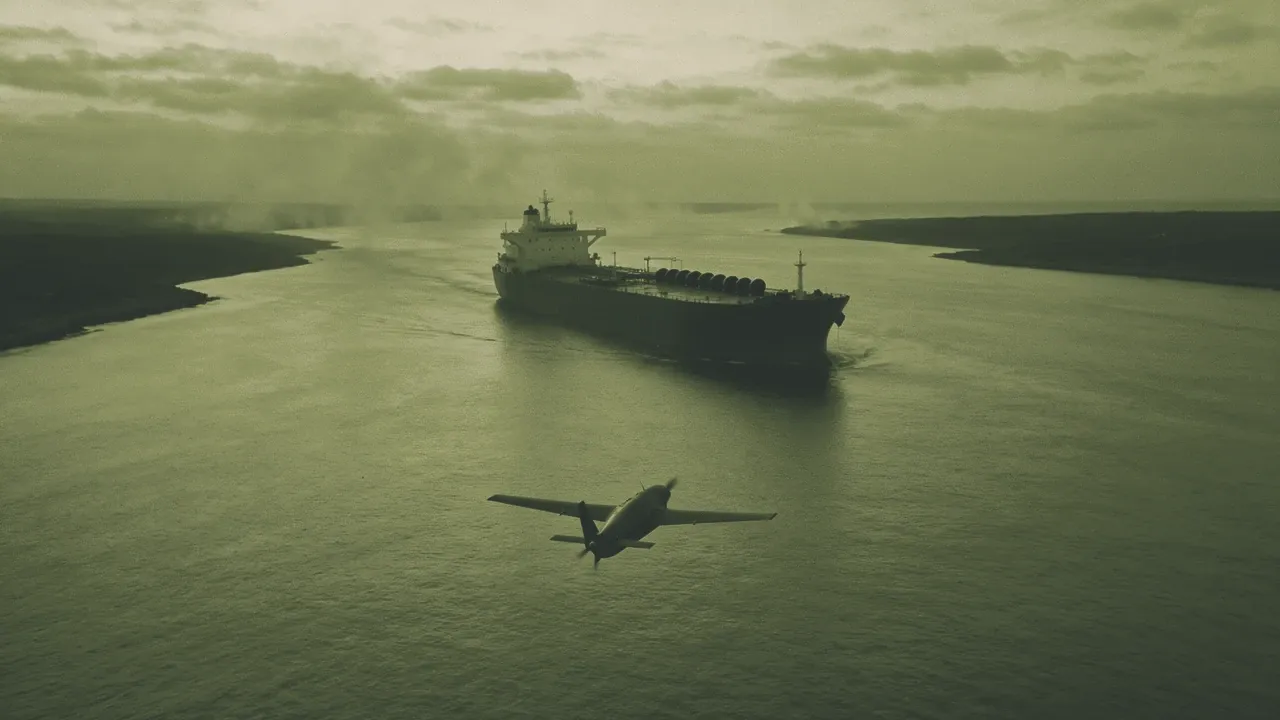
The Houthi strike on two Saudi tankers turned the Red Sea into a second front alongside the Strait of Hormuz and pushed Brent past $100. The drones and missiles doing it cost a fraction of what it takes to stop them, and that gap is the story.
What happened
Brent crude traded above $100 a barrel on Thursday for the first time since May, and the cause was not a shortage of oil. It was the arithmetic of a $20,000 weapon that the world's navies still cannot shoot down cheaply. Iran-backed Houthi forces struck two Saudi tankers in the Red Sea overnight, and for the first time in this war both of the region's oil arteries, the Strait of Hormuz and the Bab el-Mandeb, are under threat at the same time.
Houthi military spokesman Yahya Saree said the group hit the tankers Encelia and Layla using "a number of ballistic and cruise missiles, as well as drones," according to Al Jazeera, claiming the vessels had violated the naval blockade it declared on Saudi Arabia on July 20. Saudi Arabia's Press Agency confirmed the Encelia was struck and caught fire at the bow, its crew unharmed, but did not confirm the second ship. The United Kingdom Maritime Trade Operations center said a tanker was hit by a projectile about 70 nautical miles off Al Shuqaiq, just north of the Bab el-Mandeb. It was the first Houthi attack on shipping since the blockade, which the group framed as "an eye for an eye" after a Saudi siege of ports in Houthi-held Yemen.
The same night, US Central Command carried out its 12th consecutive round of strikes on Iran, hitting maritime capabilities, missile and drone storage, and air-defense sites, CENTCOM said, adding that it had redirected nine commercial vessels and disabled one to enforce a sea blockade. Long-range B-1 bombers flew the mission from RAF Fairford in England, and Iran's Islamic Revolutionary Guard Corps warned that any base used against it was a "legitimate target," the BBC reported. Iran struck back at the Gulf states hosting US forces: Kuwait and Jordan both intercepted Iranian missiles and drones, Kuwait's Abdali border crossing was hit by "hostile drones," and Bahrain's defense force said it downed 147 projectiles and 282 drones. The Institute for the Study of War reported that the Guard Corps hit early-warning radars at two Kuwaiti air bases, including an AN/FPS-117 with a 470-kilometer range, an attempt to blind US missile detection. The National reported that Brent rallied 6.45 percent to $101.10, its highest in eight weeks.

Marcus Schuler
Marcus Schuler edits BattlePolicy, a daily defense-technology brief connecting the companies and capabilities behind modern war to the contest among Europe, the US, Russia, and China.