Emad
The Emad is Iran's first precision-guided ballistic missile — a Ghadr airframe with a maneuvering reentry vehicle, ~1,700 km range. It has flown in every True Promise salvo against Israel since April 2024, and the 2026 war gutted the launcher force and factories that field it.
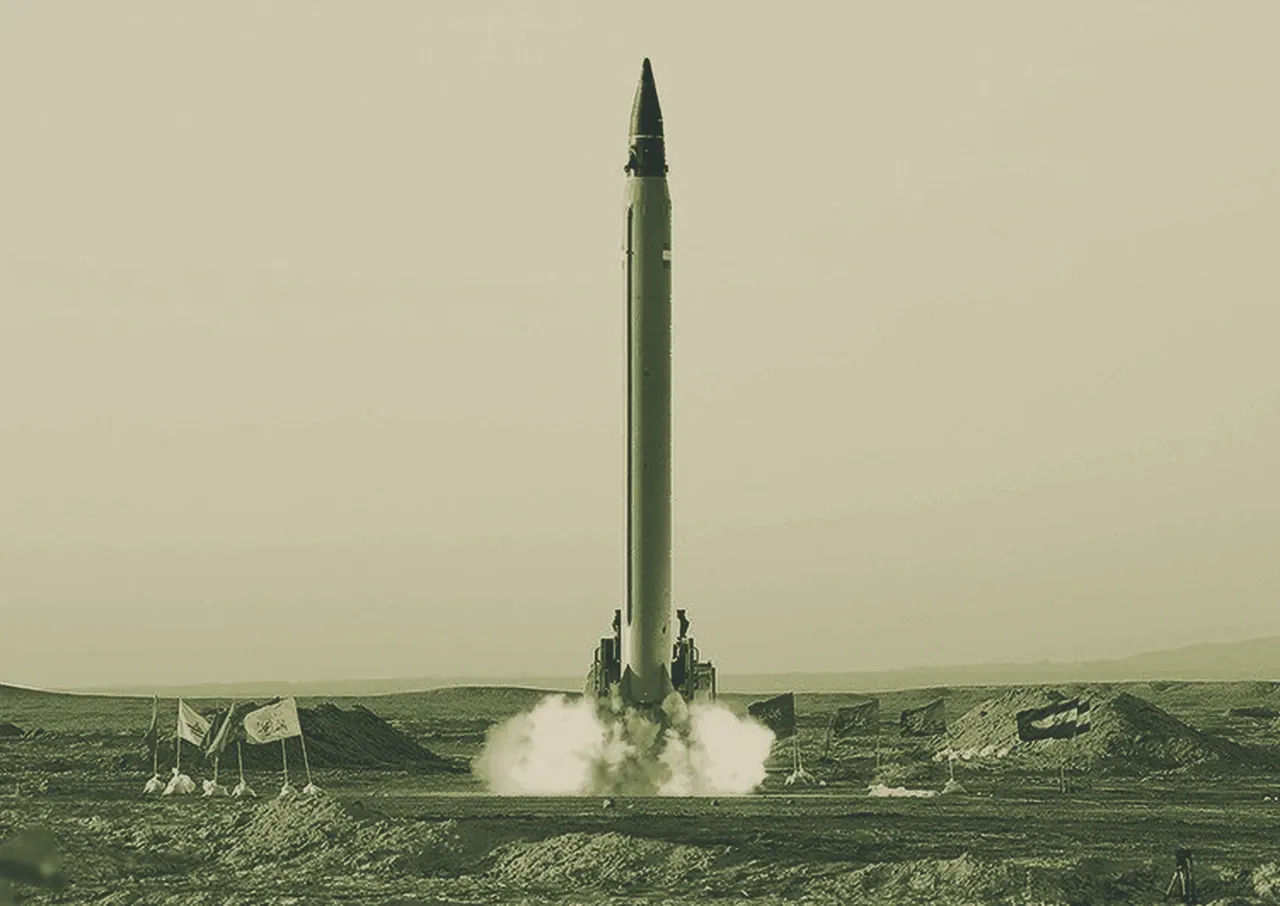
The pillar of Iran's missile war — the Emad ("pillar") is Tehran's first precision-guided ballistic missile: a liquid-fuel Ghadr airframe topped with a finned, maneuvering reentry vehicle, reaching about 1,700 kilometers with a 750-kilogram warhead. It has flown in every major Iranian salvo against Israel — True Promise I and II in 2024, the Twelve-Day War of June 2025, and the 87 waves of the 2026 war — a campaign that consumed much of the arsenal and, by allied count, destroyed most of the industrial base that builds it. Its accuracy, claimed as pinpoint, measures in hundreds of meters.
Overview
The Emad is the workhorse tier of Iran's Israel-capable missile force — and, as CSIS puts it, "not an entirely new missile" at all, but a maneuverable reentry vehicle fitted atop the Shahab-3/Ghadr rocket that has anchored Iranian strategic strike since 2003. The Ghadr (covered here as family context) stretched the Nodong-derived Shahab-3 into a ~1,600–1,950 km, 750–800 kg-payload missile with a "baby-bottle" reentry vehicle and roughly 300 m accuracy; the Emad, first tested in October 2015, added a finned RV that steers aerodynamically during reentry — Iran's first step from area terror weapon toward precision strike, with independent estimates near 500 m CEP against Iranian claims of near-total accuracy. Liquid fuel is its defining operational burden: fueling before launch creates the exposure windows in which Israeli and American aircraft destroyed launchers by the hundreds in 2025–26. The Emad/Ghadr pool sat at the core of estimates of 1,000–2,500 Israel-capable missiles before the wars; by their end, Israeli officials counted ~70 percent of launch capacity neutralized and roughly a thousand missiles left — while a leaked US assessment said Iran retained ~70 percent of its stockpile, a contradiction no open source has reconciled. Named, per Iranian media, for Hezbollah's Imad Mughniyeh, stored in tunnel "missile cities," paraded with claimed EW countermeasures, and expended in combat at historic scale, the Emad is where Iranian missile ambition and observed performance can actually be compared — and the gap is the story.
Development
The lineage runs from the North Korean Nodong through the Shahab-3 (operational 2003, ~2,500 m CEP) to the Ghadr — unveiled 2007: stretched aluminum airframe, ~19-tonne launch weight, 1,600–1,950 km range and ~300 m accuracy, per CSIS Missile Threat. The Emad's first test on 11 October 2015, presented by then-Defense Minister Hossein Dehghan with claims it could "strike targets with a high level of precision," drew US condemnation as a violation of UNSCR 1929 given the design's inherent nuclear capability. CSIS's analysis frames it precisely: a new finned, guided MaRV on the proven Ghadr booster — aerodynamic terminal steering, not the powered post-boost maneuvering of the later Fattah-1. A claimed anti-ship variant (2021's Great Prophet 15 exercise, a target ">1,800 km" away) is recorded by CSIS with explicit skepticism. Combat rewrote the file from 2024: Emad and Ghadr flew in True Promise I (April 2024 — an intercepted Emad's fuel tank was fished from the Dead Sea area after a ~1,500 km, ~12-minute flight) and True Promise II (October 2024), per ISW; in the June 2025 Twelve-Day War's ~574-missile campaign — where the IDF filmed the destruction of an Emad launcher primed to fire, and Iran claimed the first combat use of a "multi-warhead" Ghadr-H; and throughout the 2026 war, where Emads were typed in Wave 81's impacts near the Negev Nuclear Research Center and Ghadr-F submunition warheads turned 42 missiles into 230 impact points, per Politics Today's open-source tally. October 2025 state TV showed "upgraded" Emads with claimed electronic-warfare countermeasures in tunnel complexes — claims, like most of this file's Iranian layer.
Design & capabilities
The Emad is ~16–16.5 m long, 1.25–1.38 m in diameter, liquid-fueled on a road-mobile TEL, delivering a ~750 kg warhead to ~1,700 km. Its distinguishing hardware is the MaRV: small fins on the reentry vehicle execute commanded trajectory adjustments during descent — enough to complicate interception geometry and improve accuracy over the Ghadr's ballistic RV, but a generation short of Fattah-1's powered maneuvering. The accuracy record demands source discipline: Iranian claims run to "pinpoint"; the standard independent figure is ~500 m CEP (CSIS/Cordesman), against ~300 m for the Ghadr (Janes-derived) — an order of magnitude better than the Shahab-3, an order worse than the ~30 m JINSA credits to the solid-fuel Kheibar Shekan class (a 10–50 m Israeli op-ed claim is an outlier). Observed performance supports the sober numbers: one open-source count of the 2026 war's Emad launches found 54 impact zones for 12 hits. Liquid propulsion is the second discipline: fueling sequences create pre-launch exposure — "intelligence noise" — that cost Iran launcher after launcher on Israeli kill footage. The force is based in underground missile cities (tunnel networks with rail systems and hardened launch positions, showcased in March 2025 alongside Kheibar Shekans and Paveh cruise missiles), a survivability answer whose limits both wars exposed: the missiles survive underground, but they launch — and die — above it. The lineage's nuclear suitability (airburst-capable RV design) keeps the Emad in every proliferation assessment, which is why its 2015 test was a Security Council matter.
Variants
- Shahab-3 (2003): the Nodong-derived baseline — ~1,000 kg warhead, ~2,500 m CEP.
- Ghadr-1/H/F (from 2007): stretched airframe, 1,600–1,950 km, ~750–800 kg, ~300 m CEP; Ghadr-H claimed with a multi-warhead configuration in combat (June 2025, Iranian claim); Ghadr-F used with submunition warheads in the 2026 war.
- Emad (2015): Ghadr booster + finned MaRV; ~1,700 km / 750 kg / ~500 m CEP (independent estimate).
- Anti-ship Emad: claimed after the January 2021 Great Prophet 15 exercise — unverified, CSIS-flagged.
- "Upgraded" Emad (October 2025 state TV): claimed EW countermeasures — Iranian claim.
Combat record / operational use
No missile family in this lexicon has been combat-fired at comparable scale. True Promise I (13–14 April 2024): Emad/Ghadr among 120+ ballistic missiles; Emad debris recovered near the Dead Sea. True Promise II (1 October 2024): ~180–200 missiles, both types again attributed by ISW. The Twelve-Day War (June 2025): 530–574 ballistic missiles and ~1,000 drones — 273 intercepted of 574 counted by JINSA, 49 impacts in populated or military areas — with Emad/Ghadr in the salvo mixes throughout and Israel destroying over a third (later estimates two-thirds) of Iran's launcher force, including an Emad on camera, mid-fueling. The 2026 war (February–April 2026, "True Promise 4"): ~1,300+ ballistic missiles in ~87 waves at Israel, Jordan and Gulf states, Emads typed in the late-March Negev wave; CENTCOM put Iran's launch rate at ~10 percent of Day 1 by Day 8, and Israeli officials counted 335+ launchers neutralized (~70 percent of capacity), per JINSA and FDD. A caveat runs through every line: Emad-versus-Ghadr identification in combat is soft — same airframe, distinguishable mainly by reentry vehicle, attributed mostly via IRGC statements and debris typing. The June 2026 post-ceasefire exchanges (~10 missiles) carry no type attribution at all.
Advantages
- Proven at scale — the only precision-attempting MRBM family fired by the hundreds against a peer-defended state; doctrine, logistics and salvo tactics are combat-debugged.
- MaRV terminal behavior — maneuvering reentry stresses Arrow/Patriot engagement geometry more than pure-ballistic RVs.
- Deep magazine, real industry — pre-war production ~50/month rising to a reported ~300/month reconstitution rate; a stated 10,000-missile goal by 2028.
- Hardened basing — tunnel "missile cities" preserved a launchable reserve through two air campaigns.
- Salvo economics — cheap enough to mass; 42 submunition-armed family missiles produced 230 impact points in 2026.
Drawbacks / limitations
- Accuracy two orders below the claims — ~500 m CEP, and 12 hits from 54 Emad impact zones in 2026, is harassment against cities and luck against point targets.
- Liquid fuel kills launchers — fueling windows handed Israeli and US aircraft the launcher attrition that broke both campaigns' launch rates.
- The industrial base is now the target — the 2026 campaign struck guidance, fuel, warhead and R&D facilities across the chain (85%+ of the missile/drone/naval industrial base per US testimony); reconstitution will be slower than 2025's.
- Contradictory inventory picture — IDF's ~1,000 remaining vs a leaked US ~70%-retained assessment: force-sizing against this arsenal is genuinely uncertain.
- Aging architecture — the solid-fuel Kheibar Shekan generation outclasses it on accuracy, prep time and survivability; Emad persists on stock and production familiarity, not merit.
Counterparts
Within Iran's own arsenal the comparisons are generational: the Kheibar Shekan (solid fuel, ~30 m-class claimed CEP) is the successor displacing it; the Sejjil is the two-stage solid veteran of the same Israel-capable pool; the Khorramshahr carries the heavy and submunition payloads; and the Fattah-1 shows what real powered maneuvering looks like against the Emad's aerodynamic fins. Regionally, the Emad/Ghadr line is Iran's equivalent of the mass-produced theater missile everywhere: the closest foreign analogues are North Korea's Nodong descendants (the shared parentage is literal) and, in employment concept — salvo mass against defended targets — Russia's use of Iskander-M-class fires against Ukraine, though the Emad flies four times as far. Against the defenses it actually meets — Arrow-3, David's Sling, Patriot and THAAD — the exchange record of 2024–26 is the fairest scorecard ever assembled for MRBM-versus-BMD combat: most Emads die, enough arrive to matter politically, and the arithmetic of interceptor cost versus missile cost remains Iran's best argument.
Outlook
The Emad's future is the future of Iran's missile reconstitution. Three variables govern it. Production recovery: the post-June-2025 rebuild hit a reported ~300 missiles/month and ~2,000 heavy missiles by December 2025 — but the 2026 campaign, unlike 2025's, struck "virtually every element" of the production chain (guidance plants, ball-bearing works, 18 fuel plants, warhead facilities); watch ISW's tracking for when family-level output resumes, and whether the liquid-fuel share shrinks as solid-fuel mixers are rebuilt. The stockpile dispute: the IDF-versus-US-assessment contradiction (~1,000 left vs ~70% retained) is the single most consequential open question in Middle East force planning — resolution will come from the next war or the next leak. Generational transition: every doctrine signal says Iran wants Kheibar Shekan/Fattah-class solids as the future force, with Emad/Ghadr as expendable mass; if post-war production skews solid, this entry becomes a legacy file within years. For BattlePolicy readers the Emad's larger meaning is the precedent it set: 2024–26 was history's first sustained missile-versus-defense war between states, and the Emad — mediocre, massed, and relentlessly fired — was its most representative weapon.
Key specifications
Independent estimates (CSIS baseline); Iranian claims labeled. Ghadr family figures given as context.
| Spec | Value |
|---|---|
| Type | Liquid-fuel MRBM with maneuverable reentry vehicle (MaRV) |
| Range | ~1,700 km (Emad); Ghadr 1,600–1,950 km |
| Speed (Mach / km·s⁻¹) | ~Mach 6 terminal reported (Apr 2024 flight: ~1,500 km in ~12 min) |
| Warhead (type & weight) | ~750 kg unitary HE; nuclear-capable design class; Ghadr-F submunition variant used 2026 |
| Guidance | Inertial + finned MaRV aerodynamic terminal steering |
| Accuracy (CEP) | ~500 m (CSIS/Cordesman); Ghadr ~300 m; Iranian "pinpoint" claims unsupported |
| Launch platform(s) | Road-mobile TEL; tunnel "missile city" basing with hardened launch positions |
| Propulsion | Single-stage liquid (Shahab-3/Ghadr lineage); pre-launch fueling required |
| Length / diameter / launch weight | ~16–16.5 m / 1.25–1.38 m / ~19,000 kg class |
| Combat use | True Promise I & II (2024), Twelve-Day War (2025), 2026 war (~87 waves) |
| Inventory | Family-level: 1,000–2,500 Israel-capable pre-war; post-2026 estimates contradictory |
Sources
- Emad / Ghadr (Shahab-3 Variants) — CSIS Missile Threat
- Iran Update Special Report, June 18, 2025 — ISW
- Iran Update, December 22, 2025 (reconstitution) — ISW
- Applying US Air Warfare Theory, Part II: Iranian Missile Forces — ISW
- Evaluating the Damage to Iran's Ballistic Missile Arsenal — FDD
- Middle East Air Defense During the June 2025 Israel-Iran War — JINSA
- Iran's Evolving Missile and Drone Threat — JINSA
- Iran's Missile Firepower Has Almost Run Out — JINSA
- A War of Inventories: the Arithmetic Behind Israel and Iran's Missile Conflict — Henry Jackson Society
- Iran's Ballistic Missile Retaliatory Strikes and Escalation Dynamics — Politics Today
- Iran's Missile Campaign — Operation Epic Fury — GlobalSecurity
- Iran Unveils Latest Massive Underground Missile Facility — FDD
- Which Of Iran's Missiles Made It Through Israel's Air Defense? — Iran International
- Ballistic Missile Launchers: A Case Study of Iran — USMC University
- Iran Test-Fires a New Precision-Guided Ballistic Missile — NPR/KERA
🔒 The Analyst Section on Emad is for BattlePolicy Pro members. Below the line: procurement and contract history, the suppliers and companies behind the system, our head-to-head analyst view of the systems it actually competes with, and the BattlePolicy assessment note. Unlock the full file with BattlePolicy Pro →